DEKALB, IL – They might not have walked the red carpet at the star-studded gala dubbed the “Oscars® of Science,” but three NIU professors and seven of their former students are sharing in a prestigious 2026 Breakthrough Prize.
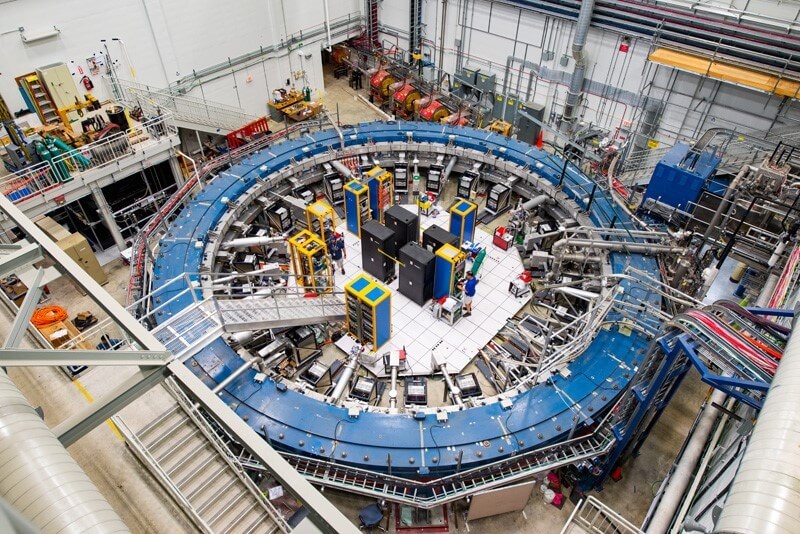
The Muon g-2 ring at Fermilab. Photo courtesy of Fermilab
To be sure, it’s a conversation starter and résumé-worthy honor. What’s more, each Huskie will get a small cut of $3 million in prize money for the award.
Scientists, CEOs and celebrities—including Ron Howard, Robert Downey Jr., Margot Robbie and Salma Hayek—gathered for the annual Breakthrough Prize Ceremony on April 18th, in Santa Monica, Calif. Actor and Emmy Award-winner James Corden hosted the event, where six Breakthrough Prizes of $3 million each were announced. The prizes are among the world’s most notable and prestigious scientific awards celebrating new discoveries.
NIU Physics Professor Michael Eads, Mechanical Engineering Professor Nicholas Pohlman and Physics Professor Emeritus Michael Syphers contributed to the Fermilab collaboration and are listed among the official award contributors.
The Muon g-2 experiment began at CERN decades ago, shifted to Brookhaven in the 1990s and concluded at Fermilab with final publication in 2025. Roughly 400 collaborators listed in publications of experimental results will each receive prize money amounting to $7,500 per person.
A cousin of the electron, the muon is one of the fundamental subatomic particles, the most basic building blocks of the universe. Like the electron, it can behave like a tiny magnet. As described by Fermilab, Muon g-2 experiments were designed to measure the magnetic moment of the muon with ever-increasing precision, exploring the quantum realm where particles briefly appear and vanish—and where even tiny deviations could point to entirely new laws of nature outside of the current Standard Model of Particle Physics.
Pohlman said helping to custom build equipment for the experiment was a great experience for students that required partnership and precision. But until recently he wasn’t fully aware of the impact of experimental results in the physics community.
“This award made me realize the Muon g-2 results had an outcome that goes well beyond the high energy physics research community,” Pohlman said.
Collaborators listed among the award winners also include NIU alumni who worked on the experiment as students under the direction of Eads and Pohlman: Aaron Epps (physics), Mary Shenk (physics), Michael McEvoy (physics), Daniel Boyden (physics), Andrew Fiedler (physics), Greg Luo (mechanical engineering) and Andrew Behnke (mechanical engineering).
“It’s incredibly exciting to see the Muon g‑2 project earn a Breakthrough Prize after all these years,” Luo said. He conducted thermal simulations on a muon-capturing device to assess heat-dissipation designs needed for safe and reliable operation in a vacuum environment. Nowadays, he works as a Manager of Data Engineering at CIBC, one of Canada’s “big five” banks.
“I’m proud to have played even a small part in something that became such a milestone for fundamental physics,” Luo said.
Behnke contributed to the experiment as part of his master’s thesis. The work included designing a test stand for muon beam detectors to ensure that they worked properly. Now an analysis engineer at an engineering services company, Behnke was surprised to learn of the Breakthrough Prize.
“I didn’t really expect to be revisiting this project in this way almost 10 years after the fact,” he said.
Professor Eads said he is thrilled to see the entire collaboration recognized, including NIU alumni. The university’s location in Chicago’s backyard is often a boon for students.
“Being close to two federal labs—not only Fermilab but also Argonne National Laboratory—continues to be a big bonus for our students in the sciences and engineering because it provides extraordinary hands-on learning opportunities,” Eads said.
Amazingly, for Eads, this wasn’t his first rodeo when it comes to breakthroughs.
He also was among the winners of the Breakthrough Prize in Fundamental Physics in 2025—along with NIU Physics Professors Jahred Adelman, Dhiman Chakraborty and Hector de la Torre Perez; students Will Kostecka, Gretel Mercado, Alec Lancaster and Arthur Charles Kraus; postdocs Kevin Sedlaczek and Ana Maria Rodriguez Vera; and software engineers Ioannis Maznas and Yuri Smirnov.
That award went to co-authors of research publications based on CERN’s Large Hadron Collider Run-2 data released between 2015 and 2024, at four experimental collaborations. In all there were 4,000 collaborators, and the prize money was distributed to the experimental groups, rather than individuals.
The Breakthrough Prizes were founded by Sergey Brin, Priscilla Chan and Mark Zuckerberg, Julia and Yuri Milner, and Anne Wojcicki and have been sponsored by foundations established by them. Selection Committees composed of previous Breakthrough Prize laureates in each field choose the winners. Information on the Breakthrough Prize is available at breakthroughprize.org.
Northern Illinois University is a student-centered, nationally recognized public research university, with expertise that benefits its region and spans the globe in a wide variety of fields, including the sciences, humanities, arts, business, engineering, education, health and law. The Wall Street Journal and CollegeNET recognize NIU as a leading institution for social mobility, or helping its students climb the socioeconomic ladder. Through its main campus in DeKalb, Illinois, and education centers for students and working professionals in Chicago, Naperville and Rockford, NIU offers more than 100 areas of study while serving a diverse and international student body.
Date posted: May 8, 2026 | Author: Tom Parisi | Comments Off on NIU physics and engineering professors, alumni share in $3M Breakthrough Prize
BATAVIA, IL – The U.S. Department of Energy’s Fermi National Accelerator Laboratory (Fermilab) has signed a Cooperative Research and Development Agreement with Northern Illinois University, officially launching a collaborative, cutting-edge quantum science program for graduate students. The inaugural class will begin in the fall semester of 2026.
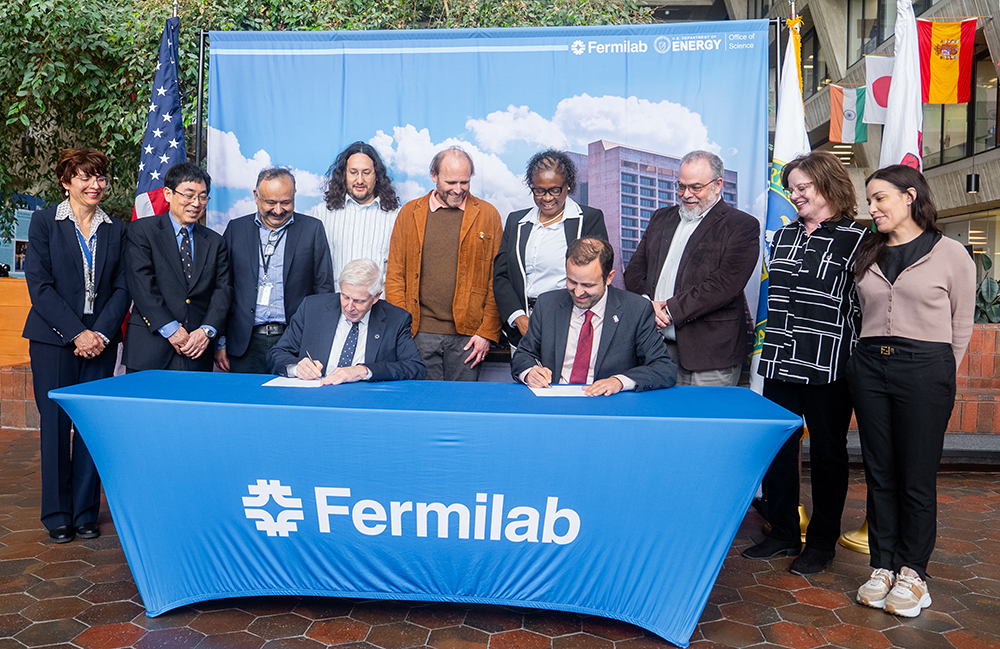
Fermilab Director Norbert Holtkamp and NIU Vice President of Research and Innovation Partnerships Richard Mocarski sign a formal agreement ushering in the new Master of Science in Physics program with a specialization in quantum science and technology.
Through this partnership, the two institutions will launch a Master of Science in Physics program with a specialization in quantum science and technology (QST). This new offering in the NIU Department of Physics will provide an interactive, hands-on educational experience for students interested in manipulating, fabricating and advancing tools and technologies that leverage key features of quantum mechanics — including superposition, entanglement and interference. Students will begin taking classes in fall 2026, and they will start their research with Fermilab in the summer of 2027.
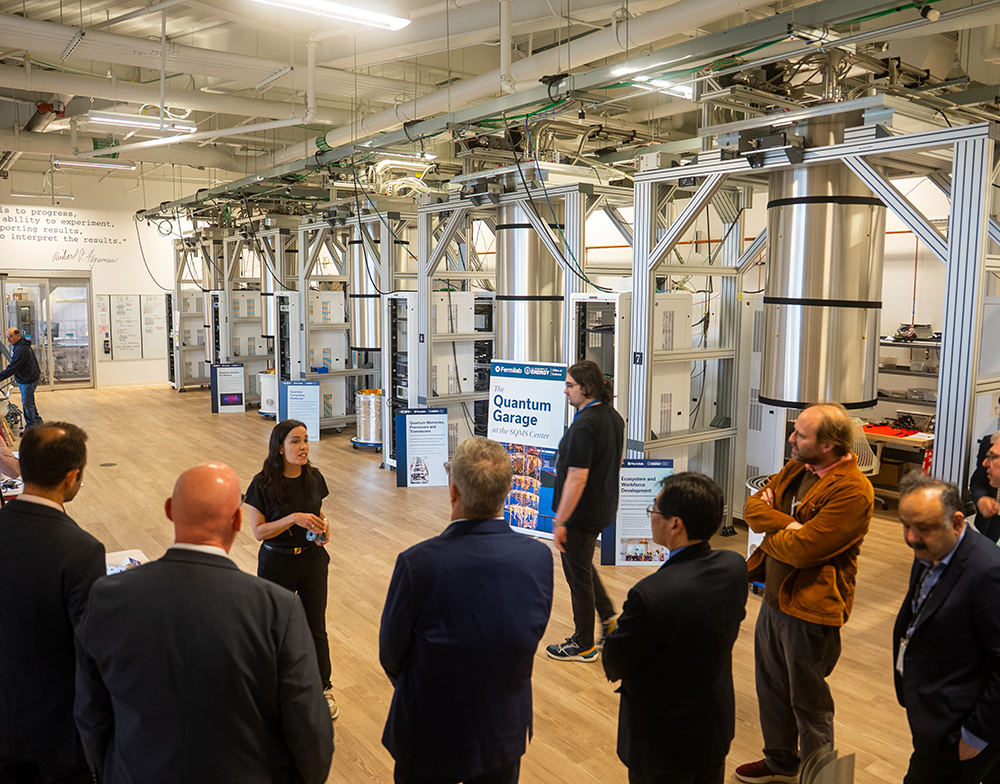
Officials from Fermilab and NIU met on April 29 to mark the milestone in their partnership. During the event, representatives toured Fermilab’s Superconducting Quantum Materials and Systems (SQMS) Center, which serves as a national hub for advanced research and innovation in quantum science and technology and will be an important resource for the new program.
Prior to the April 29th ceremony marking the new master’s specialization, NIU physicists and representatives toured Fermilab’s Superconducting Quantum Materials and Systems Center, a national hub for advanced research and innovation in quantum science and technology.
The tour was followed by a signing of the formal agreement, solidifying the institutions’ collaborative commitment to the innovative graduate program. The newly established specialization will offer graduate students formal instruction at the NIU and Fermilab campuses, with hands-on learning experiences at the SQMS Center.
“We are thrilled to partner with NIU in educating the next generation of quantum scientists, right here in our backyard. Students in this program will learn tangible skills in quantum science, skills and experiences directly connected to Fermilab’s science goals, ultimately preparing them to become the next generation of subject matter experts in the field,” said Norbert Holtkamp, Fermilab director.
The program is an innovative partnership of a state university with a U.S. DOE national laboratory research center. By partnering with a national lab, NIU students enrolled in this program will be able to leverage the research, expertise and facilities available at the SQMS Center, one of five DOE quantum information science research centers. The centers are part of DOE’s national initiative to develop and deploy the world’s most powerful quantum computers and sensors.
“For decades, our students and faculty have had close and productive working relationships with nearby Fermilab, a global leader in quantum science and technology as well as particle and accelerator physics,” NIU President Lisa Freeman said. “We’re excited to expand our collaboration with Fermilab to include our new master’s specialization in quantum science and technology. This partnership creates a powerful new opportunity for students to study at a leading-edge facility where discovery is happening every day.”
The program was jointly developed by Fermilab and NIU, with leadership from Fermilab’s Office of Education and Public Engagement, the SQMS Center and NIU’s Department of Physics. Together, the partners designed a specialized curriculum shaped by subject matter experts and delivered by leading scientists and instructors in the field. By combining interactive coursework with hands-on research opportunities led by SQMS researchers, the program will equip students with the skills and experience needed for careers in quantum science and technology.
NIU is a research partner with SQMS, contributing and leveraging its expertise in materials science, nanofabrication, characterization and superconducting radio-frequency cavities.
More information on the master’s specialization in quantum science and technology is available here.
Fermi National Accelerator Laboratory is supported by the Office of Science of the U.S. Department of Energy. The Office of Science is the single largest supporter of basic research in the physical sciences in the United States and is working to address some of the most pressing challenges of our time. For more information, please visit science.energy.gov.
About NIU
Northern Illinois University is a student-centered, nationally recognized public research university, with expertise that benefits its region and spans the globe in a wide variety of fields, including the sciences, humanities, arts, business, engineering, education, health and law. The Wall Street Journal and CollegeNET recognize NIU as a leading institution for social mobility, or helping its students climb the socioeconomic ladder. Through its main campus in DeKalb, Illinois, and education centers for students and working professionals in Chicago, Naperville and Rockford, NIU offers more than 100 areas of study while serving a diverse and international student body.
Date posted: April 30, 2026 | Author: Tom Parisi | Comments Off on Fermilab teams up with NIU to launch quantum science program
DEKALB, IL – Whether it’s an intuitive hunch, a sour mood or a belly pain, scientists have confirmed that signals between the gut and the brain can affect our cognition, emotions and physical health. It’s why the gut (or our intestines) is sometimes called the “second brain” of the body.
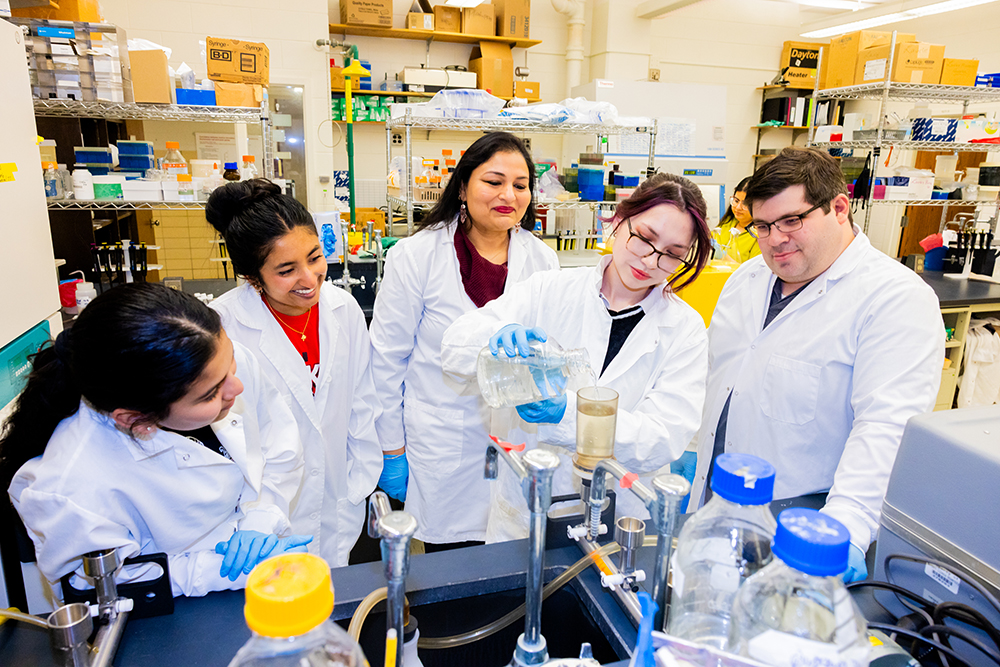
Biological Sciences Professor Pallavi Singh (center) will involve NIU students in her newly funded research, exploring how stress changes the gut-brain-microbe connection.
“Our gut is home to trillions of tiny organisms—bacteria and other microbes—that help us grow, stay healthy and even influence how we feel,” says NIU Biological Sciences Professor Pallavi Singh.
“Recent research shows that the microbes in our gut can affect our mood and help our immune system,” she says. “But when this microbial balance is disturbed—especially by stress—it can lead to long-term health problems like Inflammatory Bowel Disease (IBD) or even Type 2 diabetes.”
Now Singh is embarking on research to gain a better understanding of the brain-belly connection. The National Institutes of Health recently awarded the NIU professor with a $553,000 grant over three years to study how the gut, brain and these microbes all work together—a system called the Gut-Brain-Microbiota Axis. Specifically, the work is funded by NIH’s National Institute of Diabetes and Digestive Kidney Diseases.
“Scientists are especially interested in how this gut-brain system is affected by stress, and how that might lead to diseases,” Singh said. “The goal of our research is to figure out how stress changes the gut-brain-microbe connection, and how that might lead to IBD.
“The research also will engage graduate and undergraduate students, providing them with valuable hands-on experience,” Professor Singh added.
The researchers will interpret the interplay of chronic stress and anxiety-relevant behaviors, which lead to changes in the gut microbiome, ultimately causing IBD. Additionally, they hope to further our understanding of specific bacterial community members related to stress, anxiety and chronic systemic diseases.
The study will be conducted in collaboration with NIU Psychology Professor Angela Grippo. Her laboratory focuses on the interactions of stress, emotion and neurobiological functioning, using the prairie vole as a research model. Prairie voles engage in social behaviors like humans.
“The broader impact includes identifying microbial markers linked to better health and diet interventions, and to develop insights into the effects of social isolation on mental and digestive health,” Singh said. “Through development of a stress-IBD model, future studies also could include the effects of stress on Type-2 diabetes, cardiovascular health and mental well-being.”
Northern Illinois University is a student-centered, nationally recognized public research university, with expertise that benefits its region and spans the globe in a wide variety of fields, including the sciences, humanities, arts, business, engineering, education, health and law. The Wall Street Journal and CollegeNET recognize NIU as a leading institution for social mobility, or helping its students climb the socioeconomic ladder. Through its main campus in DeKalb, Illinois, and education centers for students and working professionals in Chicago, Naperville and Rockford, NIU offers more than 100 areas of study while serving a diverse and international student body.
Date posted: October 16, 2025 | Author: Tom Parisi | Comments Off on From gut feelings to real science: Exploring the brain-belly connection
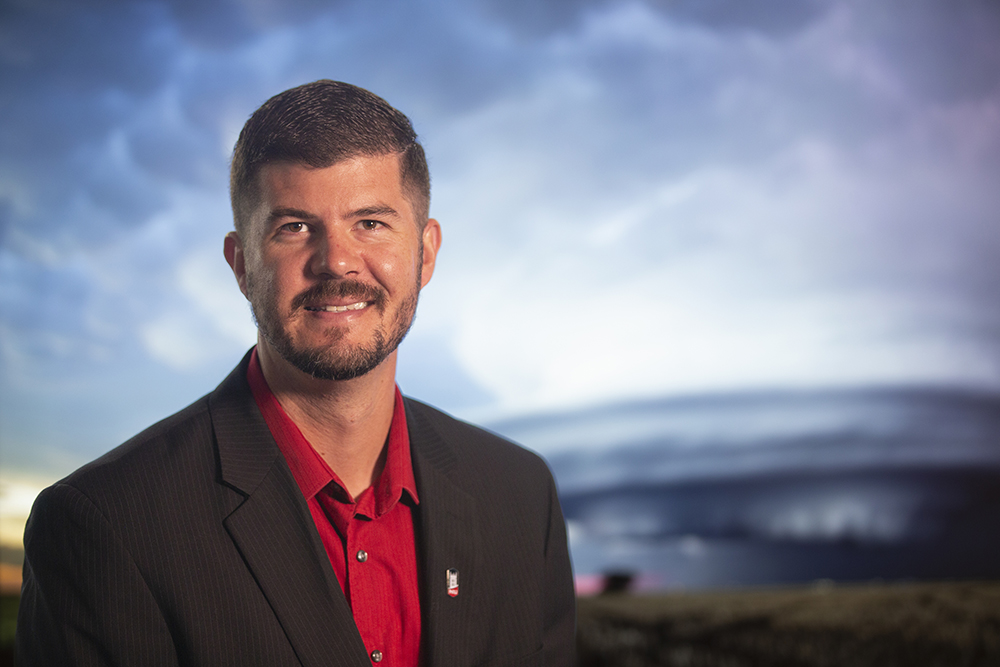
NIU Professor Victor Gensini serves as director of the Center for Interdisciplinary Research on Convective Storms.
CIRCS will conduct research that aims to make society more resilient and better able to withstand the impacts of convective storms—from tornadoes and hail to extreme rainfall and floods. The collaborative center includes nearly two dozen scientists from the fields of atmospheric science, engineering, geography, physics, computer science, actuarial science, and risk and insurance.
The U.S. National Science Foundation (NSF) is providing $1.5 million in funds over five years to establish the center, which will be further supported by about a dozen private companies, with each paying an annual membership fee and in return helping to direct the focus of CIRCS research.
“This particular award comes under a unique Industry-University Cooperative Research Center (IUCRC) model within NSF, which is supplying funds that will help administer the center,” said Gensini, who will serve as CIRCS director. “The other path of funding for research, students and lab equipment, that’s all coming from private industry. The center’s members are mostly insurance and reinsurance companies interested in research on convective storms.”
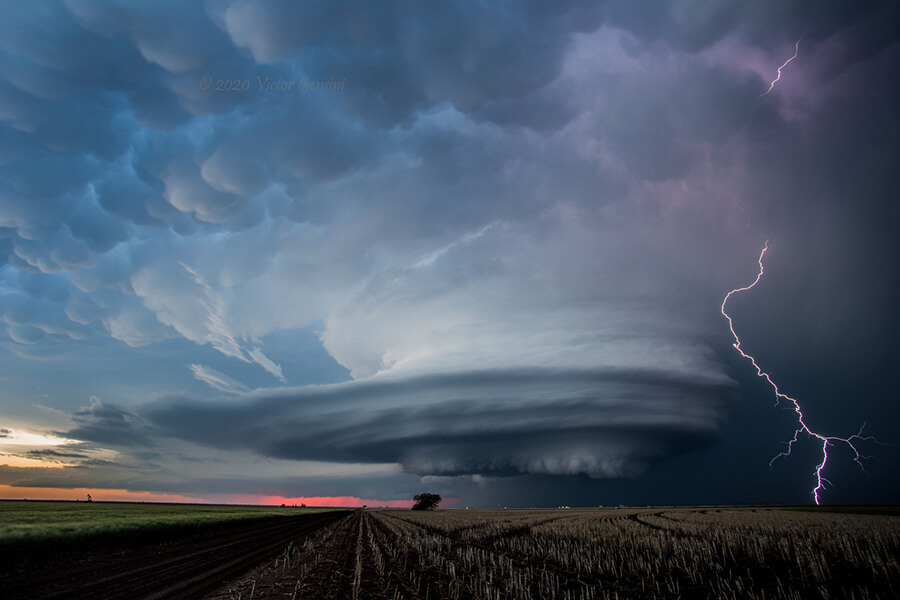
Damage from severe convective storms has been on the rise in recent decades, driven by changing weather patterns and shifting geographical populations.
Photo Credit: Victor Gensini, Northern Illinois University
According to the NOAA’s National Centers for Environmental Information, the United States was buffeted by 190 separate billion-dollar weather and climate disasters from 2015 through 2024. These events, which are often driven by convective storms, killed more than 6,300 people and caused roughly $1.4 trillion in damage. CIRCS research thrusts will focus on convective storm risk, prediction, societal impacts, changing weather patterns and data science modeling.
NIU faculty serving as the center’s principal investigators include Walker Ashley and Alex Haberlie (Earth, Atmosphere and Environment); Lei Hua (Statistics and Actuarial Science); Christine Nguyen (Industrial and Systems Engineering); Sahar Vahabzadeh (Mechanical Engineering); and Hamad Alhoori, Reva Freedman, Nicholas Karonis, David Koop and Maoyuan Sun (Computer Science).
Gensini said the UW-Madison, which also has about a dozen faculty members associated with the new center, will play a large role.
“We have to approach this specific peril from multiple directions,” Gensini said. “When dealing with insurance and reinsurance, you also better have actuaries at the table. So getting our statistics departments involved from both universities was very important.”
The UW-Madison site director is Daniel Wright, the university’s Arno Lenz Memorial Associate Professor of Water Resources Engineering.
“There are synergies with people in atmospheric sciences who do field observations or use satellites for observations, while we create models,” Wright said. “The idea with this center is that it will bring all of these people together with expertise from across different disciplines to make the research bigger than it would otherwise be.”
Gensini and Wright are in discussions with representatives from NASA and the Federal Emergency Management Agency for potential involvement with the center as well.
At NIU, the idea for CIRCS first occurred during a car ride Gensini took three years ago with former NIU vice president for research Jerry Blazey and Professor Ashley.
“We were driving to Madison to meet with an insurance company,” Gensini said. “We’ve had longstanding relationship with the insurance and reinsurance industry because our research has direct applicability to their businesses. We thought we had developed enough relationships over the years that this particular model would work. When you’re consulting for many companies, and they all want similar information, it makes sense to advance the needle in a collective fashion.”
In the spring of 2023, NOAA announced a new agreement it had with NSF to support the creation of an IUCRC focused on modeling catastrophic impacts and risk assessment of climate change to help better support the needs of the insurance sector.
“We responded to the call and were awarded the initial planning grant,” Gensini said. “We received a significant amount of positive feedback and then moved to responding to a full phase I center proposal.”
IUCRCs are consortia developed by NSF where university faculty and students work with members of industry to accelerate the impact of research focused on the collective needs of a sector of the U.S. economy. IUCRCs connect corporate partners, government agencies and academia through mutual interest, creating spaces that build partnerships and usher in science and technology breakthroughs in their respective fields.
“The IUCRC model is unique and powerful, as it is a collaborative funding effort between the federal government and industry,” said Richard Mocarski, NIU Vice President for Research and Innovation Partnerships. “Due to the unique nature of the mechanism, the National Science Foundation only funds one IUCRC per area of expertise, making the awarding a significant honor for the team and NIU.”
CIRCS will be located on the first floor of Davis Hall on the NIU campus. A kickoff meeting will be held in mid-November to construct bylaws for the organization and pitch potential research projects.
“It’s kind of like Shark Tank,” Gensini said. “Researchers will pitch projects, and industry members will vote on projects for the fiscal year.”
Any NIU faculty member who is interested in pitching a research project can contact Gensini at vgensini@niu.edu.
Northern Illinois University is a student-centered, nationally recognized public research university, with expertise that benefits its region and spans the globe in a wide variety of fields, including the sciences, humanities, arts, business, engineering, education, health and law. The Wall Street Journal and CollegeNET recognize NIU as a leading institution for social mobility, or helping its students climb the socioeconomic ladder. Through its main campus in DeKalb, Illinois, and education centers for students and working professionals in Chicago, Naperville and Rockford, NIU offers more than 100 areas of study while serving a diverse and international student body.
Date posted: September 25, 2025 | Author: Tom Parisi | Comments Off on With NSF, NOAA and industry support, NIU and UW-Madison launch convective storms center
DEKALB, IL – Enrollment at Northern Illinois University grew this fall, with surges in the numbers of new freshmen and transfers, along with strong reenrollment for continuing students, powering an overall increase of 663 Huskies.
By the Numbers
NIU Fall 2025 Enrollment
Total Enrollment: 16,078 — 4%
New Freshmen: 2,435 — 22%
2nd largest class in a decade
New Transfers: 1,622 — 11%
3rd consecutive year of increases
First-Gen College Students:
54% of new freshmen
Average HSGPA of Freshmen: 3.42
Ties highest on record
On-Campus Housing: 4,477
Highest occupancy in a decade
The university welcomed 2,435 new freshmen, a 22% jump over last fall and the second largest freshman class since 2014. Total university enrollment on the 10th day of classes reached 16,078, an increase of 4.3% over fall 2024.
“NIU’s enrollment momentum comes from students connecting to what matters most: excellent academic programs with proven career outcomes; a community where they feel they belong; and life-changing opportunities inside and outside the classroom,” NIU President Lisa C. Freeman said. “That combination is why more students are choosing to be Huskies.”
The average high school GPA for freshman Huskies is 3.42, tying a record high set in 2022 and again in 2023; 18% of this year’s freshmen had stellar 4.0 high school GPAs, with each earning a merit scholarship of $7,000. Similarly, new freshmen with high school GPAs of 3.7 or higher represented 37% of the 2025 class.
The university, which was recently recognized nationally for its commitment to students coming from community colleges, enrolled 1,622 new transfers, a year-over-year increase of 11% and the largest class of new transfers in eight years.
HSI designation
For the first time in its history, NIU is now recognized as a federally designated Hispanic-Serving Institution (HSI), with Hispanic students representing more than one-quarter of the total undergraduate full-time equivalent population for three consecutive years.
The designation reflects NIU’s commitment to fostering access and success for all students.
“Being designated an HSI affirms NIU’s commitment to access, affordability, social mobility and our longstanding tradition of matching talent with opportunity,” said Carol Sumner, NIU’s vice president for Diversity, Equity and Inclusion and chief diversity officer.
“This recognition opens doors to new opportunities and partnerships that will further strengthen advising, student support and academic programs, benefiting all students—Hispanic, African American, Asian, Native American, rural, first-generation, low-income, Pell eligible, transfer and returning learners.”
Continued reenrollment success
An important contributor to NIU’s growing student population is reenrollment of continuing students. The reenrollment rate of first-time, full-time freshmen is the highest in five years; the combined reenrollment rate for freshmen, transfers and continuing students is the highest in over 25 years of record-keeping.
“Strong reenrollment signals that our vast support system to ensure student success—which includes tutoring, coaching, mentoring, writing assistance, community building, leadership development, financial assistance and career-preparation services—is helping our students succeed,” Executive Vice President and Provost Laurie Elish-Piper said. “Our university is committed to investing our time, energy and resources into helping our students achieve their goals in college and beyond.”
More students are choosing NIU
Year-over-year total enrollment increased in all seven NIU colleges. Among the colleges, a particular bright spot this fall is the NIU Law School, which grew by 4% to its largest enrollment ever with 352 students.
“We’re grateful for the efforts of our entire Huskie community,” said Sol Jensen, NIU vice president for Enrollment Management, Marketing and Communications.
“With strong academic programs, substantial financial support—including generous merit scholarships—and a wealth of resources dedicated to student success, NIU continues to gain recognition from students and parents as a leading choice for educational excellence, affordability and an enriching college experience,” he added.
Northern Illinois University is a student-centered, nationally recognized public research university, with expertise that benefits its region and spans the globe in a wide variety of fields, including the sciences, humanities, arts, business, engineering, education, health and law. The Wall Street Journal and CollegeNET recognize NIU as a leading institution for social mobility, or helping its students climb the socioeconomic ladder. Through its main campus in DeKalb, Illinois, and education centers for students and working professionals in Chicago, Naperville and Rockford, NIU offers more than 100 areas of study while serving a diverse and international student body.
Date posted: September 9, 2025 | Author: Tom Parisi | Comments Off on NIU enrollment up over 4% as new freshman, transfer, reenrollment numbers soar
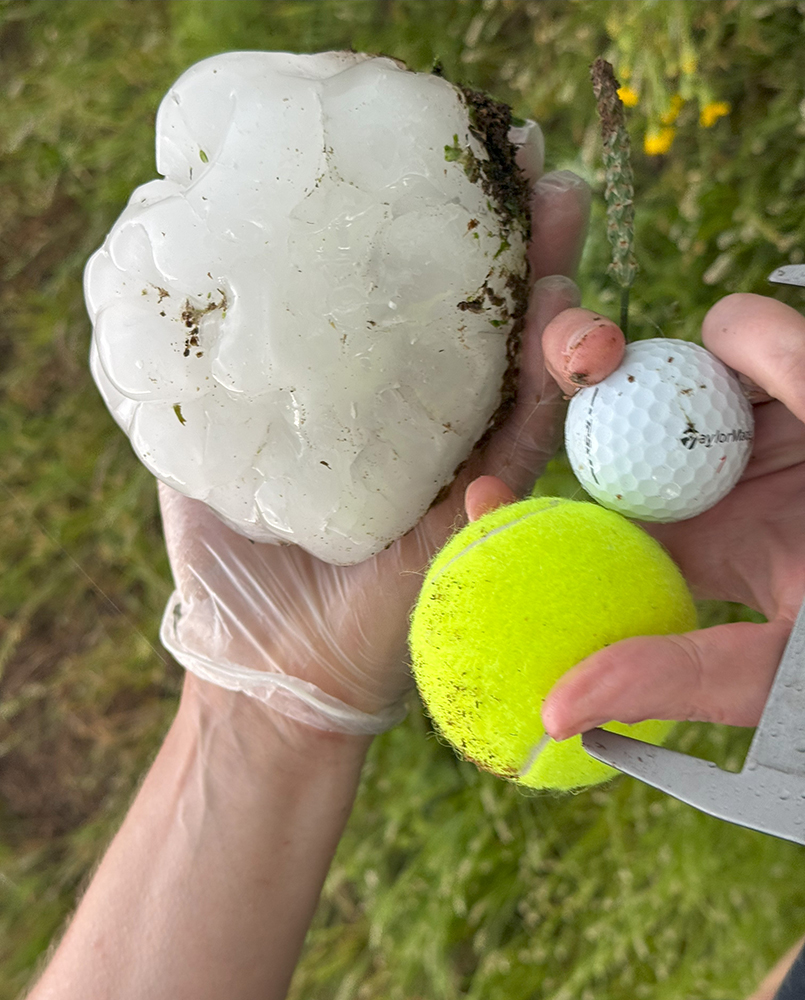
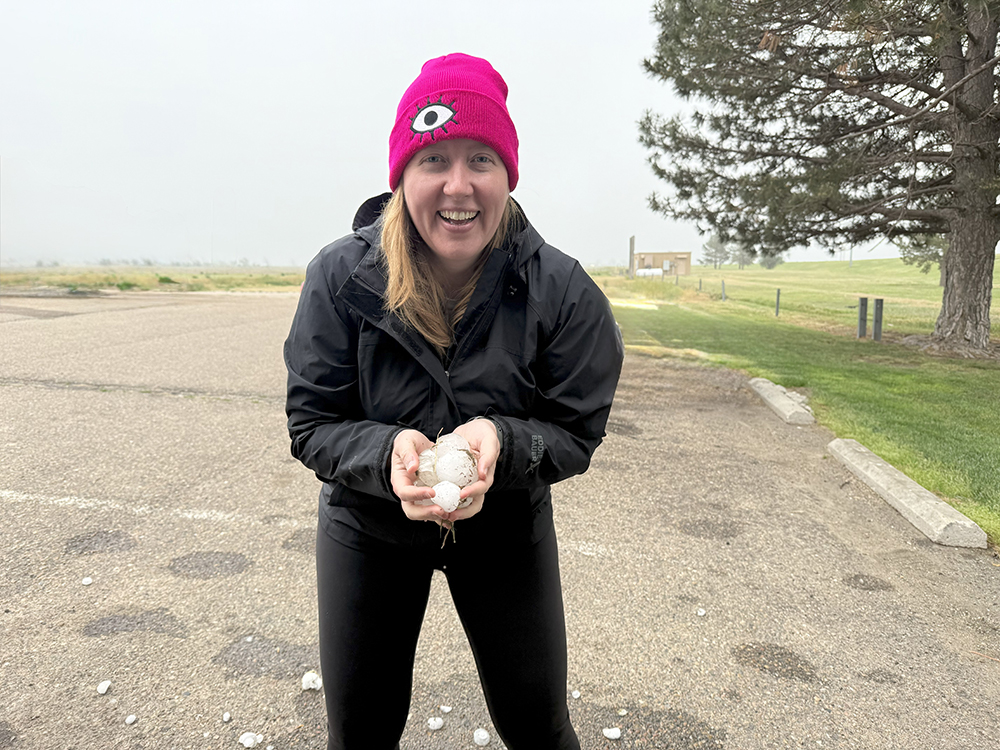
DEKALB, IL – Let’s just say you wouldn’t want to get hit in the head with the hailstone that NIU Ph.D. student Caitlin Roufa found near Roaring Springs, Texas, on May 25th.
NIU Ph.D. student Caitlin Roufa recovered the biggest hailstone during the largest ever field study of hail. The stone weighed more than a pound. Photo by Caitlin Roufa, NIU.
Resting under a tree in a pasture, the cantaloupe-sized stone measured 5.5 inches in diameter and weighed a smidge over a pound, about the same weight as a pint of beer. Before she picked it up, it had been melting for nearly an hour.
Roufa couldn’t believe her eyes.
“I shouted and startled another student from Central Michigan University,” Roufa said, adding that the student saw the hailstone and gave her a big high five. “It’s just hard to imagine that air was suspending this big chunk of ice in the sky. It really makes you feel the power of storms.”
Largest hail study ever
Roufa’s discovery would later be duly noted as the biggest intact hailstone retrieved during a project known as ICECHIP, short for In-situ Collaborative Experiment for Collection of Hail in the Plains.
The largest hail study ever, ICECHIP brought together more than 100 scientists and students from across the country and beyond to document and analyze hailstorms. The massive effort, which aims to hone hailstorm forecasts and mitigate damage, will likely yield new research findings for years to come.
“We couldn’t have had a better year for studying hail, especially in the Southern Plains,” NIU Atmospheric Science Professor Victor Gensini said.
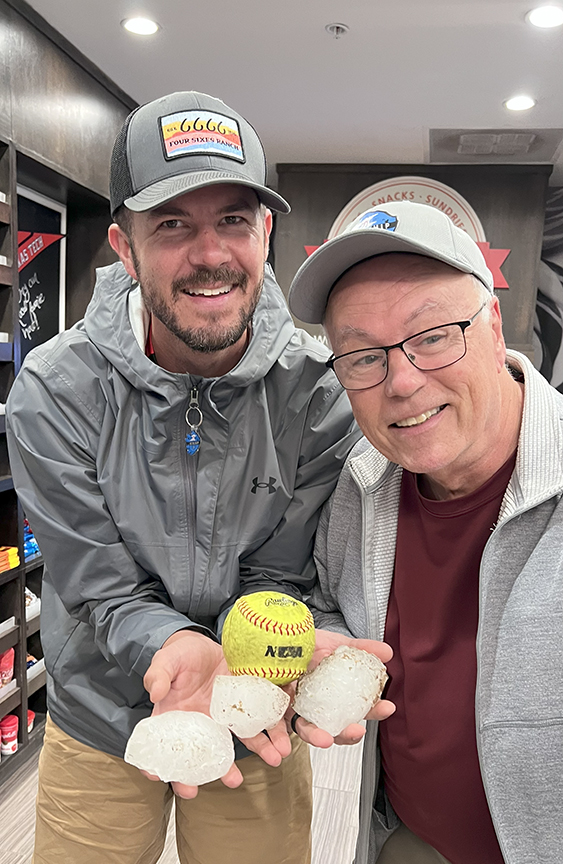
NIU Atmospheric Science Professor Victor Gensini and alumnus Tim Marshall show off some giant hail. Gensini is a co-leader of the ICECHIP research campaign. Photo by Landon Moeller, NIU.
Among the nation’s leading extreme weather researchers, Gensini serves as one of four principal investigators on ICECHIP, which is supported by an $11 million grant from the National Science Foundation (NSF). He brought along 19 NIU students and one alumnus for the ICECHIP field season, which ran for six weeks, from mid-May through June.
“Our goal for the field season was to get 20 operating days taking measurements in storms,” Gensini said. “We ended up with 24.”
The why and how of studying hail
As anyone who has had roof damage knows, hail can wreak havoc. Not only on houses, but also vehicles, businesses, aircraft, crops and solar panels. In fact, it is the most consistently damaging thunderstorm hazard, producing U.S. losses exceeding $10 billion per year.
Yet, relative to other weather phenomenon, little is known about forecasting hail. The last U.S. hail-focused campaign was over 40 years ago. ICECHIP researchers hope the new data they gathered will help improve hailstorm prediction, lessen its impact on property damage and help answer fundamental questions, such as how climate change will affect the frequency of hailstorms and stone size.
In addition to student scientists, ICECHIP field-season participants included university, governmental and private industry experts. They arrived armed with high technology instruments that included drones; weather balloons; mobile Doppler radars; hailpads and disdrometers to measure hail impact; and specially outfitted trucks equipped to quickly deploy instruments to capture localized weather data.
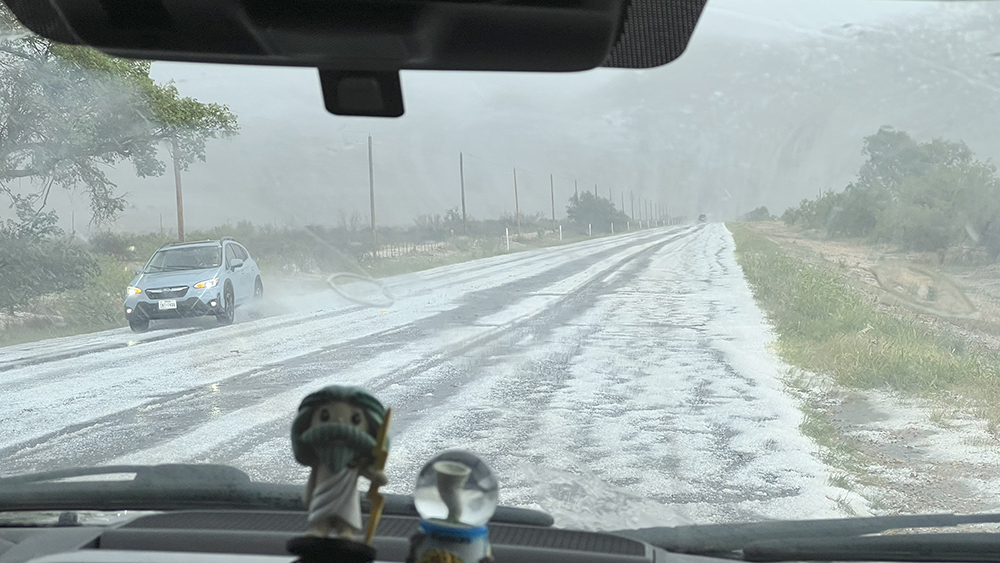
NIU students set out to find hail, and they found it plenty of times, on this occasion in Texas near the border with Mexico. Photo by Landon Moeller, NIU.
After three days of training in Boulder, Colorado, the team hit the road. Traveling in 30 vehicles, they moved from storm to storm, crisscrossing the Great Plains as they traversed over 15,000 miles. At different times, they nearly touched the Mexican and Canadian borders.
Along the way, ICECHIP teams overwhelmed fuel stops, restrooms, small-town restaurants, motels and hotels (60 rooms a night) and big-box parking lots that served as makeshift staging areas. They also attracted substantial media attention as journalists from the Associated Press, NBC News and the London-based New Scientist embedded for short periods with researchers.
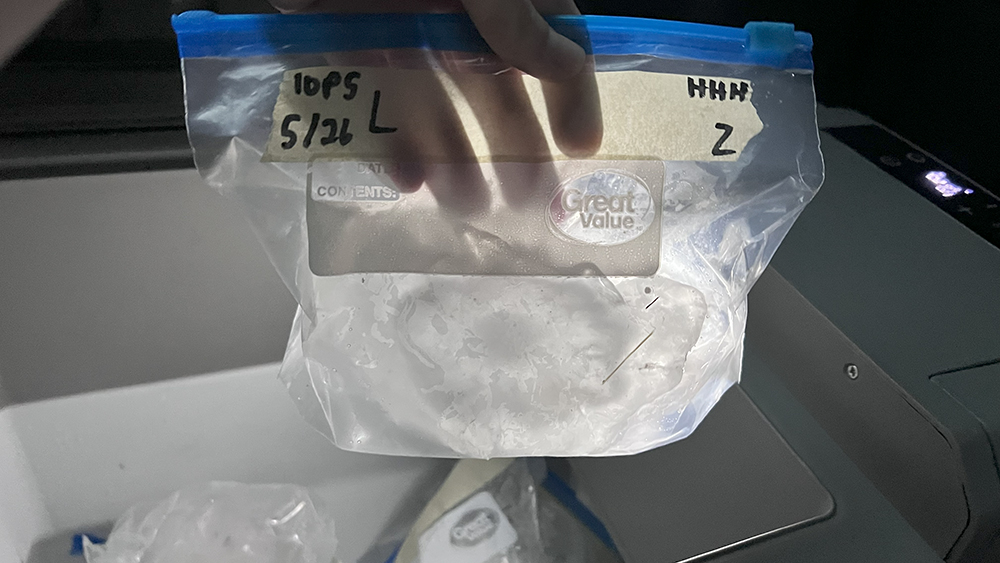
Researchers collected more than 10,000 hailstones on the field campaign. Many were bagged and transported for study to the NSF-funded National Center for Atmospheric Research cold labs in Boulder. Photo by Landon Moeller, NIU.
Big haul of hail and data
In all, more than 10,000 hailstones were collected for study, along with hundreds of terabytes of weather data.
Like snowflakes, no two hailstones are alike. The scientists weighed, measured, sliced, 3-D scanned and crushed the stones to reveal structure and hardness. Students bagged, tagged and packed away others in sub-zero-temperature coolers. Much of the hail haul was transported for study to the NSF-funded National Center for Atmospheric Research cold labs in Boulder. Some hail will find its way back to DeKalb to be analyzed in NIU’s stable isotope laboratory.
“We recovered tennis-ball-sized hail or greater in about half of our instrument deployments,” Gensini said. “You hope and dream for these kinds of observations in order to push forward hail science.”
NIU alumnus Tim Marshall and the Huskie Hail Hunter in North Dakota, with a sight to behold in the background. Photo by Landon Moeller, NIU.
Long days, logistics and safety
For much of the trip, Gensini was the lead field coordinator, making sure equipment and vehicles were in place to safely capture storm data. He used a special software program to keep track of each vehicle and to guide scientists into positions where they would be out of harm’s way—no small task with scores of researchers encountering storms that sometimes spawned tornadoes.
“I was basically chief of air-traffic control for a majority of the campaign,” said Gensini, adding that 40-plus days in the field was physically and mentally exhausting for the team.
“You have to make hay when, in this case, the sun doesn’t shine,” he said. “Many of us felt like this trip was a once-in-a-lifetime opportunity.”
NIU meteorology student Landon Moeller (left) chronicled the ICECHIP adventure in video and photos. Here he and classmates Katie Wargowsky and Tony Illenden enjoy a little downtime. Photo by Landon Moeller, NIU.
Landon Moeller, a senior meteorology major from Schaumburg, was among the Huskie undergraduates who took part in the field season. Tasked with documenting the trip in video and photography, Moeller shared his front-row seat with the public. On X (@nsf_icechip) and Facebook (@Icechip2025), his social media accounts attracted more than 413,000 views.
“The days were longer than I expected but it was good,” said Moeller, who collected some “gorilla hail” as well. “I learned to be more independent and more confident in myself, and about the importance of teamwork—that was the biggest one.
“Dr. Gensini provided excellent direction to us,” he added. “He was very receptive to our questions and concerns and aimed to provide us with the best experience possible.”
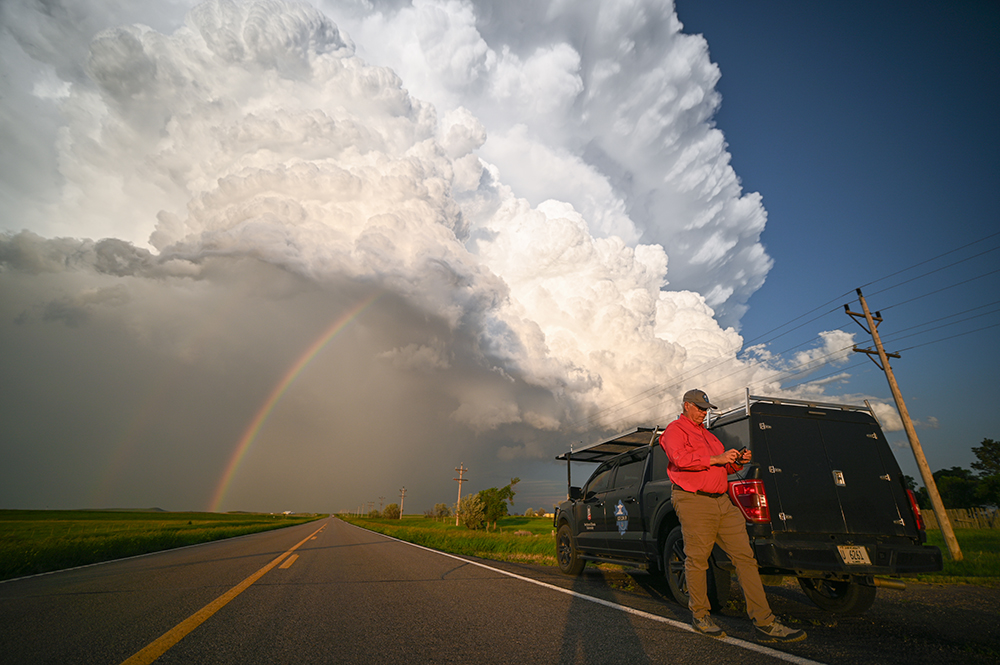
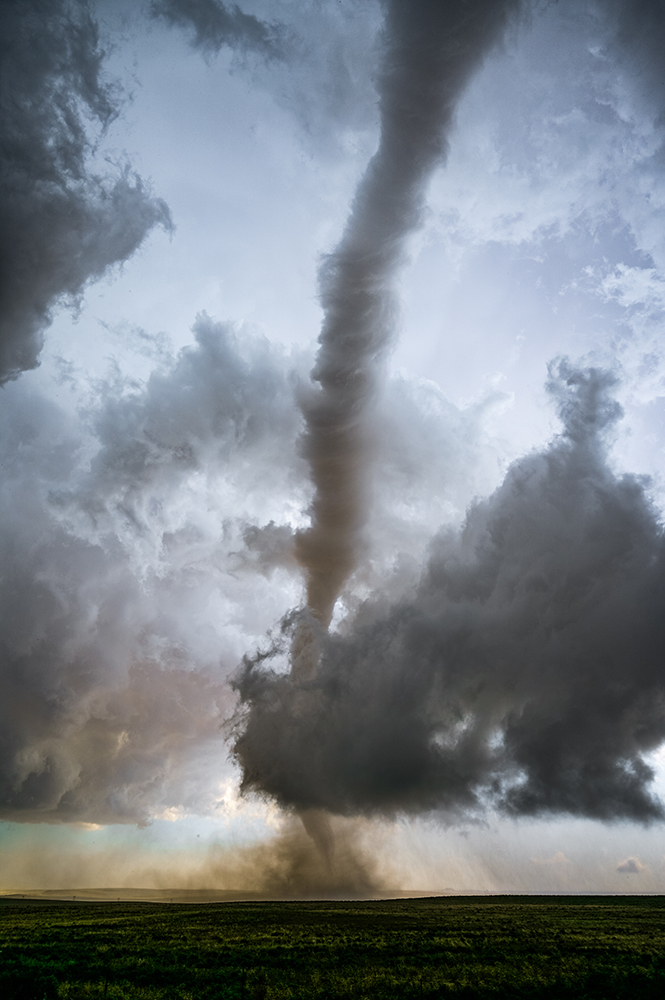
A twister encounter in Colorado. Photo by Landon Moeller, NIU.
Tower of power
For Moeller, the trip’s highlight happened along State Route 63 in Colorado. He was traveling in the backseat of a Ford F-150 pickup truck specially outfitted by NIU engineering students. Known as the Huskie Hail Hunter, a metal mesh frame protected the truck’s windshield and cab. But the pickup’s body was still being battered by hail stones, some the size of tennis balls.
Ping-ping-ping-thunk. Ping-ping-thunk.
Fellow meteorology graduate student Tony Illenden drove the vehicle with NIU alumnus Tim Marshall, a forensic engineer and meteorologist well known for his expertise in hail and wind damage, riding shotgun. With real-time forecasts coming in via radio, computer and cell phone, Marshall used his decades of experience to guide the team into an area where they might safely view a spectacular sight.
As the hail waned, the trio spotted it. In a farm field in the distance. Beginning as swirling wisps of dust. Building, piping, spiraling. Then a slender but towering tornado, kicking up crop debris as it needled the field for 30 minutes before roping out.
“I was shocked,” Moeller said. “You could see the spirals and the spin.”
“There’s probably a decade’s worth of research papers here,” said Ph.D. student Caitlin Roufa. Photo by Caitlin Roufa, NIU.
Sheltering in a storm
For Roufa, who recovered the largest ICECHIP hailstone, the project rekindled her love of scientific instrumentation. A former physics teacher who is now working on her doctorate in earth, atmosphere and environment, the Caledonia, Illinois native drove a mobile mesonet truck during the field season.
Owned by the University of Alabama-Huntsville, the mesonet truck comes equipped with a custom-designed instrument mast and other technology to collect surface observations of temperature, pressure, humidity and wind. As storms approached, Roufa would unload several instrument pods, each weighing more than 100 pounds, and tote them to sites in the storm’s path. (It was a great workout, considering she did this 110 times—but who’s counting?)
“We usually were the first line of attack on a storm,” Roufa said. “We’d get our instruments in position before the worst weather arrived, and then we’d get out of the way.”
A highly structured supercell at sunset in New Mexico, with the updraft visible in the cloud and rain and hail falling on a grassy field. Photo by Landon Moeller, NIU.
Her days typically started with equipment checks at 7 a.m. and ended with data dumps during the wee hours of the next morning. In between: a planning briefing, driving toward forecasted storms, hours of waiting, pre-storm instrument deployment, then hustling to collect hailstones and retrieve the pods before dark.
Roufa could watch the movement of a storm and other ICECHIP vehicles on her laptop. Safety, she said, was always the top priority.
“If anyone felt unsafe, we would abort deployment—no questions asked,” Roufa said. “But if you know where you are in relation to a storm, you know where to be safe. We had multiple ways to communicate with the larger team, and we also had mapped out exit routes in advance of a storm’s arrival.”
Roufa said the ICECHIP field season will have a lasting impact on her career. Currently, her research focuses on connecting largescale climate dynamics to forecasting.
“Now I have so many ideas,” she said. “I’d love to start an instrumentation program, teaching students how to use these instruments. I also have so many new questions to explore. There’s probably a decade’s worth of research papers here.”
Gensini expects ICECHIP to result in numerous dissertations and master’s-level theses at NIU and other universities. Scientists will analyze the data for years to come, sifting through the voluminous data for forecasting gold.
Northern Illinois University is a student-centered, nationally recognized public research university, with expertise that benefits its region and spans the globe in a wide variety of fields, including the sciences, humanities, arts, business, engineering, education, health and law. The Wall Street Journal and CollegeNET recognize NIU as a leading institution for social mobility, or helping its students climb the socioeconomic ladder. Through its main campus in DeKalb, Illinois, and education centers for students and working professionals in Chicago, Naperville and Rockford, NIU offers more than 100 areas of study while serving a diverse and international student body.
Date posted: September 2, 2025 | Author: Tom Parisi | Comments Off on On the highway to hail: 21 Huskies spent 6 weeks in the Great Plains pursuing hailstorms
DEKALB, IL — As business graduate student Samarth Shiramshetty earned his M.S. in management information systems from NIU’s College of Business this month, he couldn’t help but reflect on how far his interest in information technology had taken him.
“HiveMind was born from a simple yet powerful idea: How can we support students who are struggling silently during virtual learning?” Shiramshetty said. “At hackathons, my team and I kept seeing the same issue — students weren’t engaging or getting the help they needed online. We envisioned HiveMind as a collaborative AI platform that integrates with tools like Zoom to assess students’ understanding in real time using quizzes, transcriptions and AI-powered insights.”
Leveraging technology to enhance learning
Based on performance, this tool groups students into peer nodes for personalized learning and support. Apart from Zoom, HiveMind also integrates OpenAI and Perplexity’s API for building, and it includes new technology, such as deploying AI agents.
“The whole project was about building cognitive intelligence and learning from it,” he said. “Winning the Grand Prize in Education at TreeHacks validated the importance of this problem and our approach to solving it. Moving forward, we want to continue developing HiveMind to support hybrid learning environments, incorporate advanced analytics and, eventually, make it available to schools and universities around the world.”
The TreeHacks Education Grand Prize focuses on projects that leverage technology to enhance learning experiences, improve educational access, or increase student engagement. This prize celebrates projects that aim to redefine how people learn, connect and grow, creating more inclusive and accessible learning environments, according to Zoom. The winner received $1,000 cash, four pairs of Meta Ray-Ban Smart Glasses and four Marine Layer Zoom Hoodies.
“It was surreal [to win the grand prize,]” Shiramshetty shared. “Being recognized at Stanford, competing against some of the brightest minds from top universities, and having our work acknowledged by Zoom, OpenAI and other industry leaders was an emotional and humbling experience. It felt like a tribute to all the years of hard work, the all-nighters and the belief that education can and should be more inclusive and intelligent.”
Always fascinated by how things work
Growing up in Hyderabad, India, Shiramshetty was a part of a close-knit community where curiosity and creativity were always encouraged. From a young age, he was fascinated by how things worked, especially computers.
“I spent countless hours tinkering with hardware and experimenting, which gradually turned into a deep passion for software development,” he said. “I also had a strong interest in solving puzzles and logical challenges.”
When it came time to go to college, choosing IT was a natural decision. It was the perfect blend of his interests in problem-solving, innovation and technology, and he was especially drawn to the dynamic nature of the field, where there’s always something new to learn or build.
Shiramshetty was awarded a grant for a departmental project on deep learning, a subset of machine learning which uses artificial neural networks to analyze data and make predictions or decisions. These networks, inspired by the human brain, are structured in multiple layers, allowing them to learn complex patterns from large datasets. This was one of the earliest highlights in his burgeoning tech career.
Diverse work and school experiences
After earning his bachelor’s degree in information technology from Osmania University, Shiramshetty carved out an incredibly diverse and enriching niche for himself.
“I’ve had the chance to work with amazing people in my life,” he said. “I got an opportunity to work for Accenture as a software engineer and worked closely with Microsoft, which was great exposure.”
He also did an internship for Webacy and Episensor before pursuing his M.S. in MIS at NIU’s College of Business.
“Right now, I’m focused on applying my skills in data engineering and AI engineering to meaningful, real-world problems. I’m also exploring internship and full-time opportunities where I can make a real impact,” Shiramshetty said. “The support from faculty and the strong sense of community have truly stood out. Professors like Biagio Palese have been incredibly encouraging and open to student-driven innovation.”
Growing as a leader
He also noted that he has also been pleasantly surprised by how much interdisciplinary collaboration is encouraged within the MIS program.
“It’s helped me grow, not just as a technologist, but also as a thinker and leader,” he said. “It felt like everything I had learned and experienced came together in that project. I’ve always been driven by the desire to create solutions that have real-world impact. Whether it was leading fundraising efforts in India or building passion projects with friends, I’ve always gravitated toward initiatives that allow me to innovate, collaborate and push boundaries.
Assistant Professor Biagio Palese has gotten to know Shiramshetty in class, and he has been impressed by the student’s hard work and vision.
“I couldn’t be prouder of Samarth for earning this prestigious honor and shining a spotlight on the NIU College of Business’ MIS program,” Palese said. “His achievement is a testament to what is possible when you step beyond your comfort zone and put classroom lessons into real-world action. I am especially glad he embraced the challenge and seized the opportunity to innovate, rather than just focusing on grades. Samarth’s journey is proof that our students have the talent and drive to make a meaningful impact on their own lives and in the world around them.”
Looking ahead, Shiramshetty’s goal is to become a leader in the field of data and AI, ideally working at the intersection of technology and social impact.
“In five years, I envision myself as a senior AI engineer or product innovator at a tech-forward company, or even running my own startup focused on AI for education or health care,” he said. “I want to keep building tools that solve meaningful problems.”
Northern Illinois University is a student-centered, nationally recognized public research university, with expertise that benefits its region and spans the globe in a wide variety of fields, including the sciences, humanities, arts, business, engineering, education, health and law. The Wall Street Journal and CollegeNET recognize NIU as a leading institution for social mobility, or helping its students climb the socioeconomic ladder. Through its main campus in DeKalb, Illinois, and education centers for students and working professionals in Chicago, Naperville and Rockford, NIU offers more than 100 areas of study while serving a diverse and international student body.
Date posted: May 14, 2025 | Author: Tom Parisi | Comments Off on NIU student Samarth Shiramshetty wins grand prize at Stanford University’s TreeHacks
DEKALB, IL — Not much is known about the impacts of microplastics in our environment, except that there’s a lot—and it doesn’t go away or biodegrade like many other materials.
The widespread and rapidly accumulating presence of microplastics in waterways and the air poses a concern for potential risks to living creatures. Microplastics are unknowingly ingested by a wide range of animals, including people. It’s in our blood, and in our brains.
Now NIU faculty and student researchers are using cutting-edge technology to learn more, focusing on identifying and quantifying microplastics in creeks, rivers and groundwater. Their work is taking them across the region—and around the world.
Northern Illinois University is a student-centered, nationally recognized public research university, with expertise that benefits its region and spans the globe in a wide variety of fields, including the sciences, humanities, arts, business, engineering, education, health and law. The Wall Street Journal and CollegeNET recognize NIU as a leading institution for social mobility, or helping its students climb the socioeconomic ladder. Through its main campus in DeKalb, Illinois, and education centers for students and working professionals in Chicago, Naperville and Rockford, NIU offers more than 100 areas of study while serving a diverse and international student body.
Date posted: May 5, 2025 | Author: Tom Parisi | Comments Off on NIU researchers are identifying and quantifying microplastics in our environment
DEKALB, IL – To be sure, NIU scientists aren’t afraid to get their hands dirty, but a group of faculty and student researchers are taking the old saw to new extremes to safeguard our food supply.
The work starts with scientists collecting and combing through what might be delicately described as bison manure. With the commercial and wild populations of bison growing in Illinois, the aim is to analyze the waste and identify any harmful pathogens that could be transmitted to humans.
Northern Illinois University is a student-centered, nationally recognized public research university, with expertise that benefits its region and spans the globe in a wide variety of fields, including the sciences, humanities, arts, business, engineering, education, health and law. The Wall Street Journal and CollegeNET recognize NIU as a leading institution for social mobility, or helping its students climb the socioeconomic ladder. Through its main campus in DeKalb, Illinois, and education centers for students and working professionals in Chicago, Naperville and Rockford, NIU offers more than 100 areas of study while serving a diverse and international student body.
Date posted: April 28, 2025 | Author: Tom Parisi | Comments Off on NIU scientists go to great lengths to safeguard food supplies
If I could turn back time/If I could find a way/I’d take back those words that hurt you/and you’d stay —Cher, “If I Could Turn Back Time”
DEKALB, IL – Everyone occasionally has rough patches in their relationships with family, friends, significant others or coworkers. And often the first step toward making amends is a sincere apology.
But what prompts people to apologize—or not—for their transgressions?
That’s a question that intrigued NIU senior Isabelle Van Winkle, a double major in both psychology and women, gender and sexuality studies. So Van Winkle conducted research around the question and found that a lot depends on the perception of the person who’s saying, “I’m sorry.”