DEKALB, IL – Because of the need for comprehensive assessments and other factors, the average age for a diagnosis of autism isn’t until about 4 ½ years old.
Now researchers at Northern Illinois University and Southern Illinois University Edwardsville are developing an app that analyzes a young child’s gait, or walking pattern, to predict the child’s likelihood of autism.
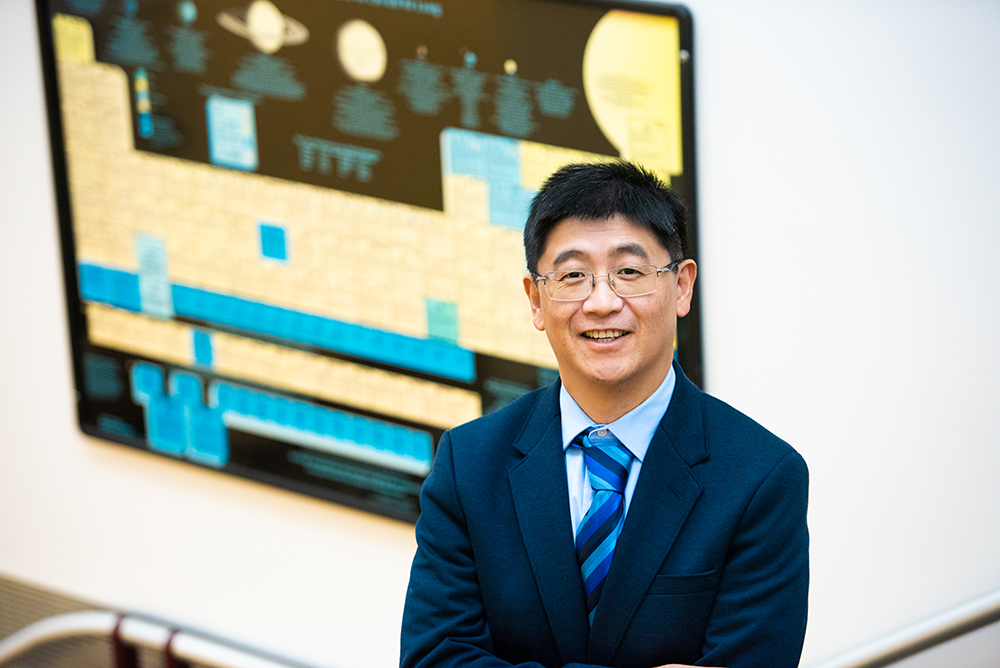
“Without a timely diagnosis, autistic children are prevented from receiving early intervention services,” said Ziteng Wang, Ph.D., associate professor in the NIU Department of Industrial and Systems Engineering. “There is a critical need for accessible, innovative, less subjective, and more inclusive tools for early detection of autism.”
The app would allow users to upload short videos of a child walking. Preliminary tests reveal 80% accuracy in predicting the likelihood of autism. Having this app at the fingertips of parents across the country could lower the barrier to autism screening and diagnosis, especially for low-income and rural families. It also could raise autism awareness and reduce intervention delays.
Learn more about the researchin the accompanying video from the second annual “Huskie Trek Talks: Ideas in Motion.”
Northern Illinois University is a student-centered, nationally recognized public research university, with expertise that benefits its region and spans the globe in a wide variety of fields, including the sciences, humanities, arts, business, engineering, education, health and law. The Wall Street Journal and CollegeNET recognize NIU as a leading institution for social mobility, or helping its students climb the socioeconomic ladder. Through its main campus in DeKalb, Illinois, and education centers for students and working professionals in Chicago, Naperville and Rockford, NIU offers more than 100 areas of study while serving a diverse and international student body.
Date posted: April 14, 2025 | Author: Tom Parisi | Comments Off on How AI-powered gait analysis is transforming autism screening
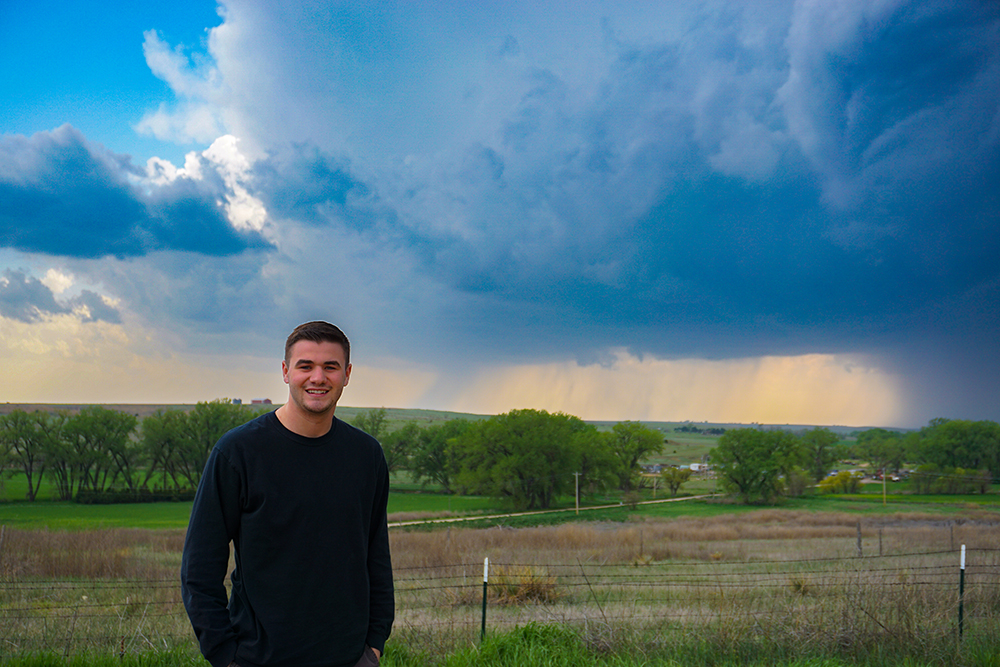
DEKALB, IL — Logan Bundy knows the exact day he decided to pursue his interest in meteorology. It was his 12th birthday: Saturday, June 5, 2010.
Logan Bundy
That’s when a tornado struck his hometown of Streator, Illinois, destroying homes and injuring more than a dozen people.
“Learning about the casualties and witnessing the storm’s impact firsthand sparked a deep curiosity in me,” Logan said. “I wanted to understand how nature could produce such powerful forces.”
Now a 26-year-old Ph.D. student at Northern Illinois University, Logan will be part of a large team of researchers who will conduct a six-week field study of severe weather beginning in mid-May. The researchers won’t be searching for tornadoes, however, but rather hail, which can wreak havoc on roofs, vehicles, businesses, aircraft, crops and solar panels—and even injure livestock, pets and people.
First big hail campaign in 40 years
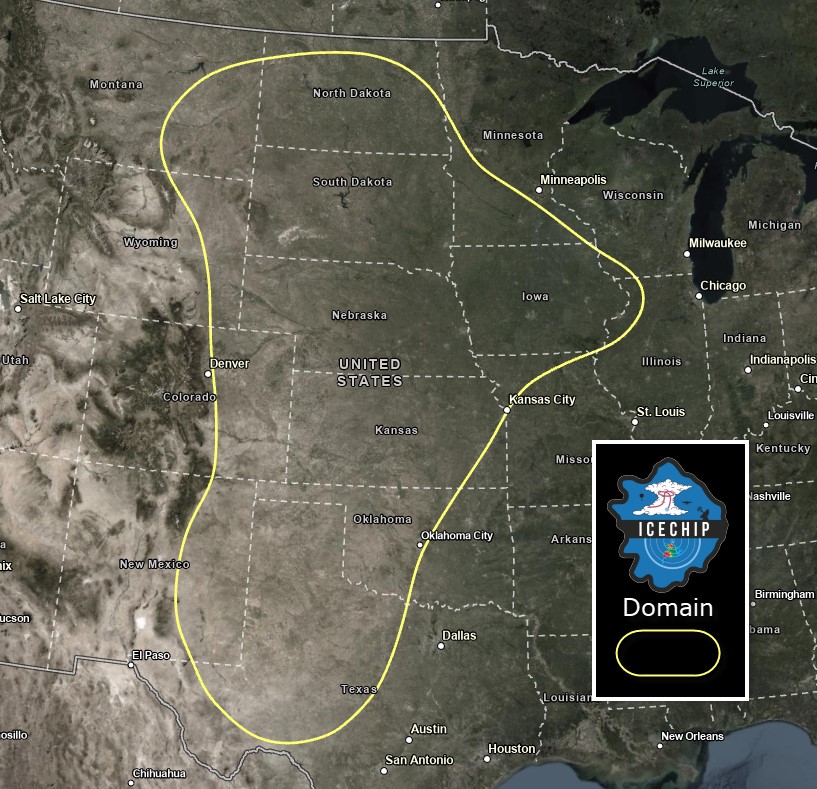
A map of the field study area. Researchers will travel to areas where the greatest hail threats exist.
The new field study is dubbed ICECHIP, short for In-situ Collaborative Experiment for Collection of Hail in the Plains. The project will include roughly 100 researchers, including NIU faculty and students, who are planning fieldwork in and around the U.S. Central Plains and the Front Range of the Rocky Mountains.
NIU Atmospheric Science Professor Victor Gensini is one of four leaders of the $11 million National Science Foundation-supported project, the world’s largest ever coordinated effort to study hail. Gensini notes that hail causes about $10 billion in damages across the country annually. Yet, the field study will be the first large hail-focused campaign in over 40 years.
“Tornadoes often dominate the headlines, but hail actually causes far more damage to property and agriculture,” Gensini explained. “Our goal is to leverage cutting-edge technology to enhance forecasters’ ability to detect and predict severe hail, ultimately helping people protect themselves, their property and their livelihoods.”
‘Huskie Hail Hunter’
In addition to Gensini, the project’s co-leaders are Becky Adams-Selin, a hail scientist at Atmospheric and Environmental Research, John Allen of Central Michigan University and Andy Heymsfield of the National Center for Atmospheric Research.
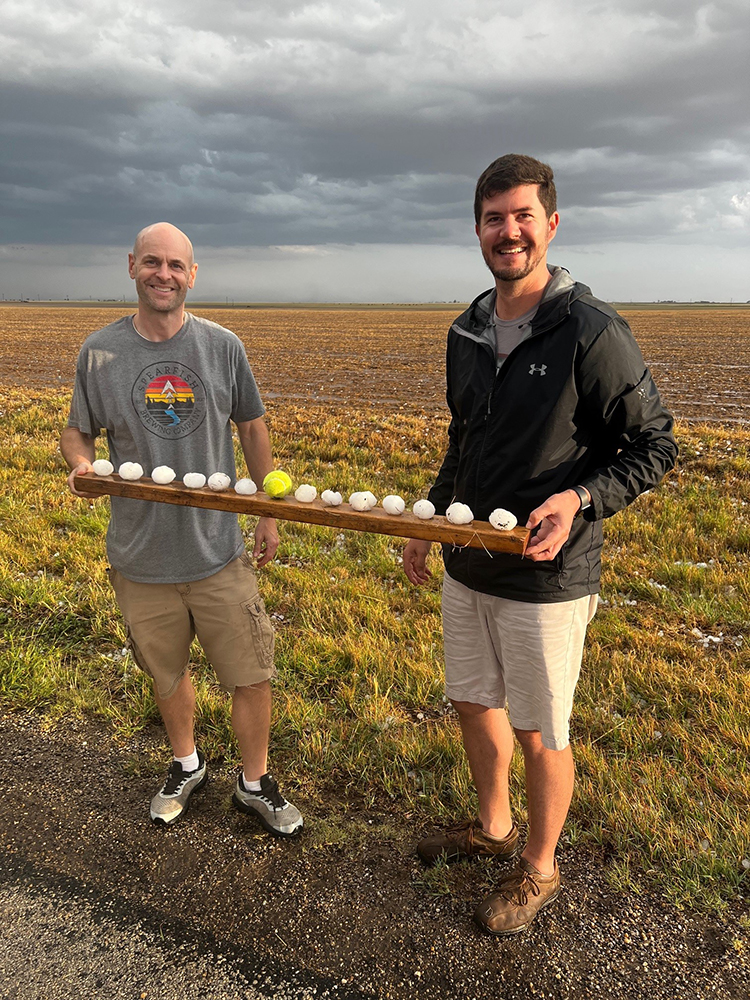
NIU Professors Walker Ashley and Victor Gensini hold a flight of severe hailstones in a field near Tulia, TX on May 31, 2022. Photo courtesy of Laura Hedien.
Participating NIU researchers include Atmospheric Science Professor Walker Ashley, Geochemistry Professor Justin Dodd and Mechanical Engineering Professors Nicholas Pohlman and Iman Salehinia, who are overseeing a crew of six undergraduate student engineers outfitting a 2022 Ford F-150 pickup truck to make it hail resistant.
Dubbed the “Huskie Hail Hunter,” the vehicle will undergo verification testing that will include launching 2-inch ice balls from the top of Huskie Stadium onto the vehicle.
“It has been a practical challenge for the engineers whose primary focus is to protect the glass surfaces on an established vehicle frame,” Pohlman said. “A cracked windshield is repairable but could consume valuable field-work time for collecting hail samples. The team considered a deployable system to be more fuel efficient but ultimately decided to keep it simple with a rail-mounted protective mesh.”
The ICECHIP project is truly a cross-disciplinary effort, Dodd adds.
“As a geochemist, I primarily study fluid-rock interactions through measuring the chemistry of geologic materials from around the world, including places like Antarctica,” Dodd said.
“For ICECHIP, I will measure the oxygen and hydrogen isotope values of the hailstones we plan to collect. Large hailstones form by adding new ice in sequential layers, so by looking at the water isotopes in the hail we hope to reconstruct the history of each hailstone from formation to when we collect it on the ground.”
Hands-on experience for students
In all, 15 NIU Atmospheric Science students are involved in the field study. For students like Bundy, the project presents an incredible opportunity to participate in leading-edge research.
“I’m eager to see how this experience shapes my personal and professional growth,” said Bundy, who’s pursuing his Ph.D. in Earth, Atmosphere and Environment. “After nine years in college, I see this as one of the best opportunities I have had. It is incredible to be part of something with such a meaningful impact.”
Technology to be deployed in the field will include drones, weather balloons, hail-impact disdrometers for distinguishing hail sizes, hail pads measuring strike impacts and vehicles equipped with radar and environmental monitoring equipment.
“I look forward to gaining hands-on knowledge of advanced instrumentation and technologies, deepening my understanding of hail science in real time,” Bundy said. “Just as exciting is the opportunity to connect with leading scientists and peers from other universities—building relationships with some of the top minds in the field will be invaluable.”
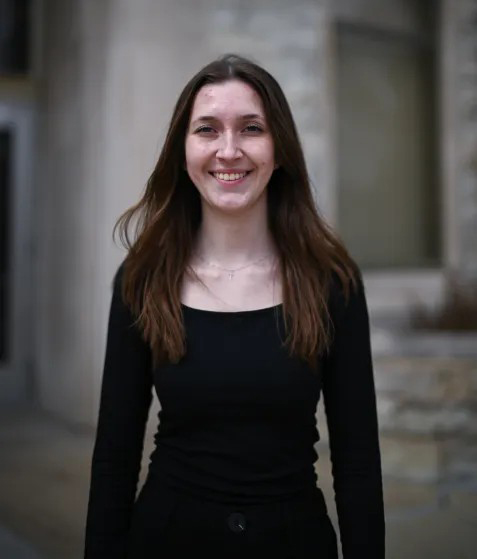
Evelynn Mantia
Like Bundy, Evelynn Mantia, a senior meteorology major from Joliet, got hooked on weather as a youngster. Learning about severe weather helped her ease her storm anxiety. Now meteorology is her passion.
“My main research interest is hail,” Mantia said. “I’m thrilled to contribute to the goals of this field campaign, which will help us gain a deeper understanding of hail processes in thunderstorms. The data we collect will be invaluable, not only to the meteorological community but also to industries such as insurance and agriculture, which are directly impacted by hail. Being part of this data collection effort, which will support those who rely on our science, is incredibly exciting.”
Aiming for improved forecasting
Gensini hopes the project will make strides in forecasting that students will use throughout their careers.
“Storm forecasting has improved dramatically in recent decades, but there’s still no current hail forecasting method that produces reliable, skillful forecasts of significantly severe hail occurrence a day in advance or even at less than an hour lead times,” he said. “Even one successful forecast of hail enabled by the campaign could save millions of dollars.”
The study will kick off on May 13, when the NIU Team will head to Boulder, Colo., for training. Thereafter, the scientists will travel toward wherever the greatest risk for hail potential occurs—likely somewhere in the Great Plains.
Northern Illinois University is a student-centered, nationally recognized public research university, with expertise that benefits its region and spans the globe in a wide variety of fields, including the sciences, humanities, arts, business, engineering, education, health and law. The Wall Street Journal and CollegeNET recognize NIU as a leading institution for social mobility, or helping its students climb the socioeconomic ladder. Through its main campus in DeKalb, Illinois, and education centers for students and working professionals in Chicago, Naperville and Rockford, NIU offers more than 100 areas of study while serving a diverse and international student body.
Date posted: March 26, 2025 | Author: Tom Parisi | Comments Off on To hail and back: NIU students, professors prepare for largest ever field study on hailstorms
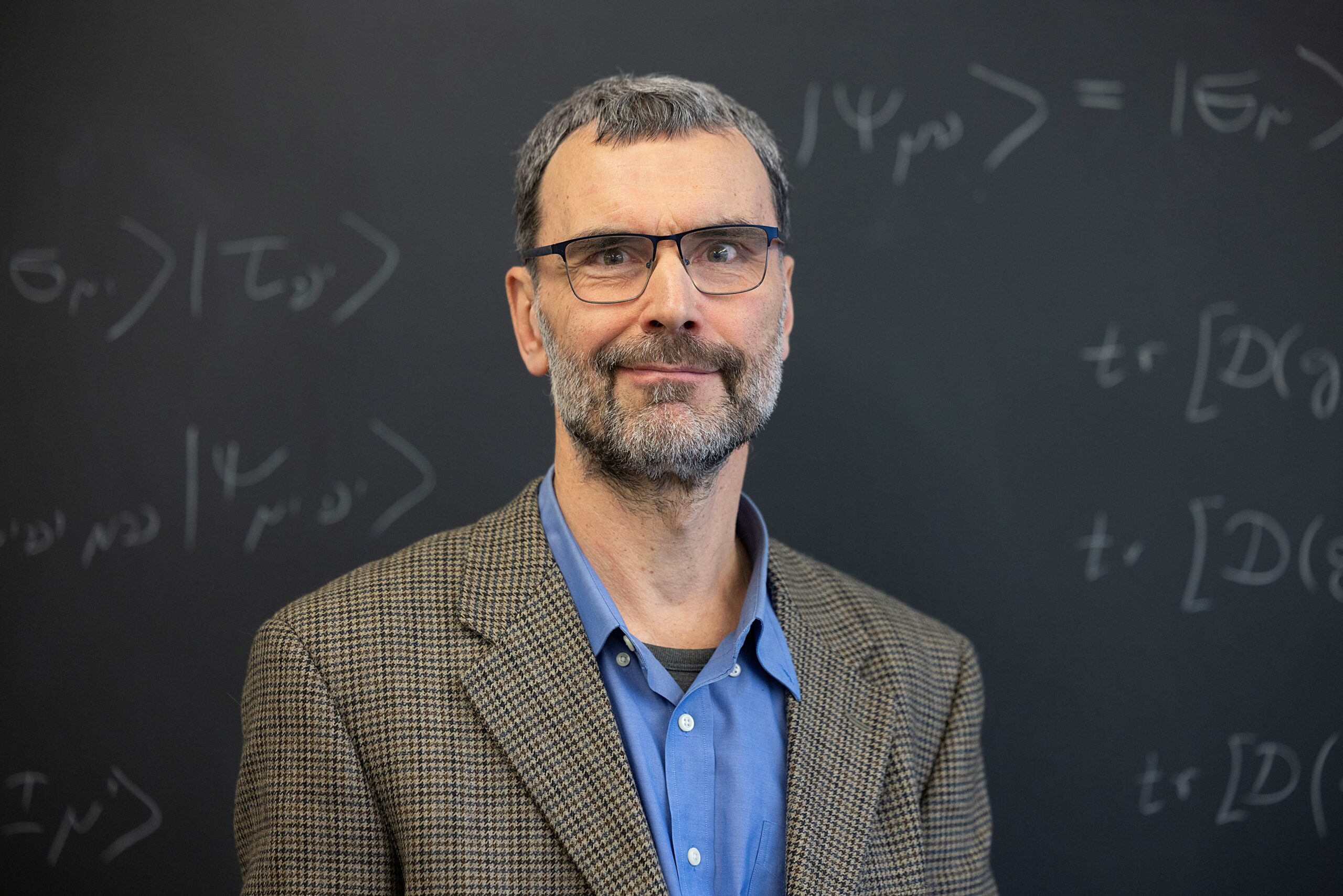
DEKALB, IL — NIU Physics Professor Roland Winkler presented a talk and was interviewed on a new kind of magnetism early this month at the Annual Meeting of the American Association for the Advancement of Science (AAAS), one of the world’s most prestigious scientific organizations.
NIU Physics Professor Roland Winkler
The meeting was held in Boston. Winkler’s presentation was one of several lectures introducing science breakthroughs of 2024, as selected by the editors of Science, the flagship journal of AAAS.
Previously, physicists knew of only two types of permanently magnetic materials. Now, they’ve found a third.
Well known types of magnetism
The most well-known form of magnetism is ferromagnetism, which was first recognized more than 2,000 years ago. In familiar ferromagnets such as iron, unpaired electrons on the atoms spin in the same direction, magnetizing the material so that, for example, it sticks to a refrigerator.
“If one zoomed into such a bar magnet so we could see individual atoms, we’d see that each atom acts like a tiny bar magnet, where all these tiny bar magnets are aligned in parallel,” Winkler said. “Basically, in a ferromagnet all the tiny magnets on the atoms work together to create the big magnet.”
Scientists discovered antiferromagnets almost hundred years ago. They realized that the tiny magnets on the atoms can also line up antiparallel or in yet more complicated patterns, with neighboring electrons spinning in opposite directions, such that the effect of the tiny magnets cancels out. Antiferromagnets such as chromium have zero overall magnetism, but they possess an atomic-scale magnetic pattern nonetheless.
Newly discovered altermagnets
The newly discovered types of magnets are known as altermagnets.
It was realized that certain materials that do not stick to a fridge so that previously they were classified as antiferromagnets really share aspects of both ferromagnets and conventional antiferromagnets. Neighboring electrons spin in opposite ways, ensuring zero net magnetism, but on a deeper level, the materials resemble ferromagnets, too.
“The past two or three years, multiple groups demonstrated the split personality of altermagnets,” Winkler said. “Several groups around the world—including my long-term collaborator Uli Zülicke from Victoria University of Wellington, New Zealand, and myself— realized that several such ‘antiferromagnets’ are quite different from conventional antiferromagnets.
“Nature is very creative regarding the many ways how the tiny magnets on the atoms in magnetic materials can arrange each other,” he added. “This richness is one of the reasons why magnetism, though its basics are long known, has remained a very fascinating area of research.”
Future research implications
Magnetic materials play an important role in devices such as the hard disk drives of computers where they are used for data storage. An important advantage of magnetic materials lies in the fact that they can preserve their magnetic state without power supply.
“So a larger goal of research involving magnetic materials is motivated by the question whether we can just switch off computers when they are not needed, instead of draining batteries in a stand-by mode,” Winkler said. “Here, antiferromagnets are potentially yet more robust than ferromagnets, but also more difficult to work with. Altermagnets, that fall in between ferromagnets and conventional antiferromagnets, may offer new avenues for this research.”
Winkler’s talk at the AAAS meeting was well received, including by a group of high schoolers from England. They had their photograph taken with Winkler and told him they had traveled across the pond to hear him speak.
“I was certainly impressed by their dedication,” Winkler said.
Northern Illinois University is a student-centered, nationally recognized public research university, with expertise that benefits its region and spans the globe in a wide variety of fields, including the sciences, humanities, arts, business, engineering, education, health and law. The Wall Street Journal and CollegeNET recognize NIU as a leading institution for social mobility, or helping its students climb the socioeconomic ladder. Through its main campus in DeKalb, Illinois, and education centers for students and working professionals in Chicago, Naperville and Rockford, NIU offers more than 100 areas of study while serving a diverse and international student body.
Date posted: February 26, 2025 | Author: Tom Parisi | Comments Off on Roland Winkler presents ‘science breakthrough’ on magnetism at AAAS annual meeting
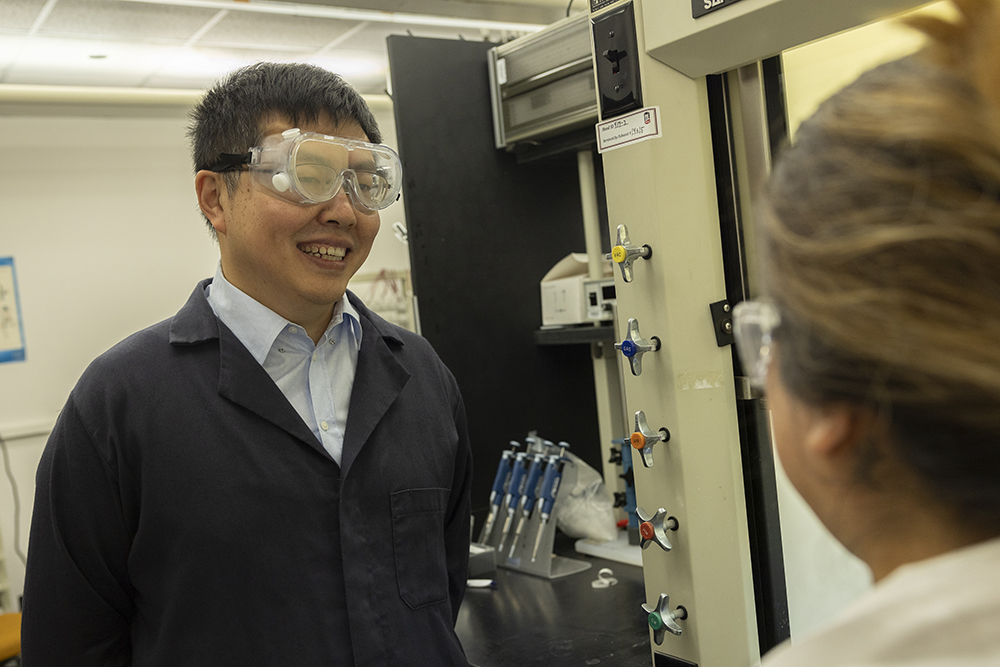
DEKALB, IL – The U.S. Department of Energy (DOE) has awarded NIU Chemistry Professor Tao Li with a new grant of $600,000 to develop improvements in lithium-ion batteries, used in everything from cell phones and electric vehicles to solar energy storage.
NIU Chemistry Professor Tao Li .
Over the next three years, Li and two NIU postdoctoral students will work with DOE’s Argonne National Laboratory on the project. Argonne is receiving an additional $200,000 award for the research.
“Li continues to be at the forefront of discovery,” said Richard Mocarski, NIU vice president of the Division of Research and Innovation Partnerships. “This funding represents his continued commitment to research and to partnership building and is an embodiment of the work NIU is proud to produce.”
Metal ions like nickel, cobalt or manganese, which are part of the cathode material in lithium-ion batteries, gradually dissolve into the electrolyte solution, reducing a battery’s lifespan and performance. The work aims to develop optimum electrolyte formulations that will prevent the dissolution of transition metals from lithium-ion battery cathodes and improve battery performance.
“The project seeks to understand and control the solvation structures of lithium ions,” said Li, who holds a joint appointment with NIU and Argonne. “These solvation structures are critical to how the electrolyte interacts with the cathode surface. Insights into these interactions will inform the rational design of next-generation electrolytes that minimize transition-metal loss, enhancing battery stability and longevity. “
The collaboration between NIU and Argonne combines expertise in chemistry and materials science with state-of-the-art experimental resources. Researchers will use sophisticated equipment at Argonne to employ a combination of advanced characterization techniques, including X-ray scattering, X-ray fluorescence microscopy, and high-resolution transmission electron microscopy.
“Using these tools, we’ll investigate the atomic-level changes at the electrolyte-cathode interface and map the distribution of transition metals within the battery,” Li said. “Understanding these dynamics will be crucial for developing electrolytes that effectively inhibit transition metal dissolution during battery operation.”
The DOE award to NIU was announced in November as part of $31 million in funding that aims to build research capacity at academic institutions nationwide.
Since arriving at NIU in 2018, Li has secured four DOE grants and nine National Science Foundation grants for his research. His work develops a highly fundable bio‐inspired interdisciplinary program to design and synthesize novel nanomaterials with a wide‐range applications in nanomedicine and energy‐related fields.
Northern Illinois University is a student-centered, nationally recognized public research university, with expertise that benefits its region and spans the globe in a wide variety of fields, including the sciences, humanities, arts, business, engineering, education, health and law. The Wall Street Journal and CollegeNET recognize NIU as a leading institution for social mobility, or helping its students climb the socioeconomic ladder. Through its main campus in DeKalb, Illinois, and education centers for students and working professionals in Chicago, Naperville and Rockford, NIU offers more than 100 areas of study while serving a diverse and international student body.
Date posted: January 23, 2025 | Author: Tom Parisi | Comments Off on NIU’s Tao Li secures 600K DOE research grant to improve lithium-ion batteries
DEKALB, IL — The lifeblood of supercomputers is a relatively old-school technology—electricity.
Photo courtesy of Matthew Henry on Unsplash
And supercomputers need lots of it. Over the course of a year, some supercomputers can consume as much power as a small city.
One solution to the skyrocketing power demand might be superconductivity—the property of certain materials, cooled below a critical temperature, to conduct direct current electricity without energy loss. Energy-efficient superconducting circuits would be a key element in such future supercomputers.
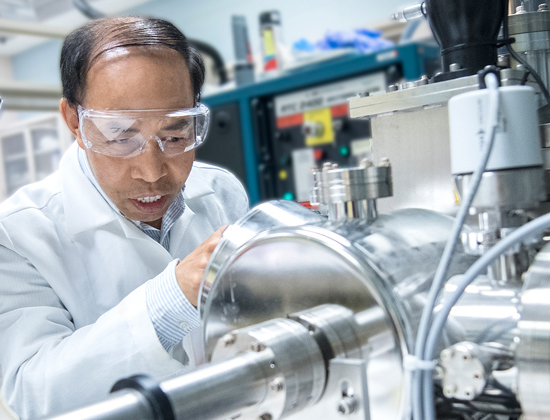
NIU Professor Andreas Glatz.
Now Northern Illinois University physicists Andreas Glatz and Zhili Xiao are participating in a new four-year effort to improve circuitry in superconducting logic devices, which use superconductors to perform operations at high speeds and low power and can be used in quantum computing.
The Army Research Office (ARO), a directorate of the U.S. Army Combat Capabilities Development Command Research Office, is funding the project, which is led by Notre Dame University physicist Boldizsár Jankó. Six co-principal investigators include Glatz and Xiao, along with researchers from the University of Bath in England and the University of Antwerp in Belgium.
NIU Professor Zhili Xiao.
The scientists will work to better understand and overcome tiny magnetic whirlpools, known as magnetic fluxes or vortices, which can occur in superconducting circuits, rendering a device useless.
“Superconductors can be used to create circuits with unprecedented functionalities,” says Xiao, an NIU Board of Trustees professor. “For example, a junction formed by two thin layers of superconductors separated by an insulating layer just a few nanometers thick can function as a quantum bit, or qubit, as implemented in IBM’s quantum computers.”
“Our project aims at designing these superconducting microelectronic devices in such a way that trapped magnetic fluxes within these circuits can be avoided or removed, since they disrupt the functionality of those devices,” adds Glatz, an NIU Presidential Research, Scholarship and Artistry Professor. “This is a major challenge, which needs to be addressed before a widespread adoption of this superconducting technology is possible.”
The grant will support the hiring of two NIU postdoctoral researchers and five graduate students, providing them with excellent training opportunities in frontier research while strengthening NIU’s involvement and contributions to the national microelectronics initiative and pursuit of quantum information science.
“The success of this ARO grant is a significant recognition of NIU’s investment in nanoscale research,” Xiao says.
Two decades ago, Xiao was the first hire at NIU in nanoscale science, engineering and technology, and Glatz also was later recruited to bolster the research area. NIU’s research on nanoscale superconductors also has been extensively funded by the National Science Foundation and the U.S. Department of Energy.
Northern Illinois University is a student-centered, nationally recognized public research university, with expertise that benefits its region and spans the globe in a wide variety of fields, including the sciences, humanities, arts, business, engineering, education, health and law. The Wall Street Journal and CollegeNET recognize NIU as a leading institution for social mobility, or helping its students climb the socioeconomic ladder. Through its main campus in DeKalb, Illinois, and education centers for students and working professionals in Chicago, Naperville and Rockford, NIU offers more than 100 areas of study while serving a diverse and international student body.
Date posted: November 4, 2024 | Author: Tom Parisi | Comments Off on NIU physicists involved in new four-year research effort on superconducting microelectronics
DeKalb, IL – In 2018, a $1 million National Science Foundation grant enabled NIU to offer scholarships and mentoring for high-achieving, low-income students in pursuit of a STEM degree.
Photo courtesy of Hans Reniers, Unsplash
This coming year, those efforts are expanding, thanks to a $2 million NSF grant, dubbed Scholarships and Enhanced Mentoring to Promote Equity and Excellence in Science, Technology, Engineering, and Mathematics.
The first grant, spanning six years, served 49 students. This one, at minimum, will serve 68 students over a five-year span starting in January 2025. Students to be supported by the effort will come from the College of Liberal Arts and Sciences—mirroring the prior grant’s scope—as well as the College of Engineering and Engineering Technology (CEET).
‘Changing students’ lives’
NIU Professor Ralph Wheeler
“I am thrilled,” Wheeler said. “We’re changing the lives of these students. We’ve got students who work full-time, they support families, they couldn’t make it without the sort of support we give. They wouldn’t graduate.”
NIU rates among the nation’s leading institutions of higher education for social mobility, according to national rankings from Wall Street Journal/College Pulse and CollegeNET. Colleges near the top of these rankings take in high proportions of low-income students and excel at improving those students’ graduation rates and their salaries later in life.
Starting in the Fall 2025 semester, NIU’s new STEM project will recruit new community college transfer students or rising juniors who are pursuing bachelor’s degrees in biology, chemistry/biochemistry, computer science, engineering, geosciences, mathematics, physics or statistics. The focus is to help them graduate and embark on technical careers, with research, internship and mentoring opportunities along the way.
“I thought it was natural to open it up to the engineering students as well,” Wheeler said. “This now covers essentially all the STEM programs at NIU. I know we have lots of fine students in engineering who would benefit from this program.”
In addition to demonstrated financial need, grant selection of students will be based on a personal statement and two recommendation letters.
High faculty involvement
NIU Professor Christine Nguyen
Other NIU faculty members working on the initiative are Timothy Hagen, a professor in the Department of Chemistry and Biochemistry; Christine Nguyen, an associate professor in CEET’s Industrial and Systems Engineering Department; and Jason Rhode, associate vice provost for Teaching, Learning, and Digital Education and associate professor of Instructional Technology in the Center for Innovative Teaching and Learning.
Nguyen, whose parents came from Vietnam, is the first member of her family to earn a doctoral degree in the U.S. Her parents worked extra shifts to support her and her two brothers to secure a college education.
“I had student loans and worked 15 to 20 hours a week as a student worker for all four years, including summers, to afford textbooks, a laptop, and other course materials,” Nguyen recalled. “Over the years at CEET, I have met many highly talented students that would benefit from a scholarship like this. I’m really excited that this opportunity includes students in CEET.”
Mentoring provided to students
The grant entails peer mentoring, near-peer mentoring and professional development activities that focus on career planning, time management, critical thinking, communication and leadership skills.
Near-peer mentoring consists of graduate students each meeting with eight to 10 undergraduates once a week. They partake in relationship-building activities such as bowling, as well as talking with undergrads about navigating the stresses of college and life, Wheeler noted.
External evaluators of the program will be faculty members from the College of Education, Associate Professor Todd Reeves and Assistant Professor Ximena Burgin. They will survey students in the program, summarizing how the experience is going for them and rendering recommendations annually on how to improve the program.
Program addresses needs of Huskies
One of every two NIU undergraduates is Pell Grant-eligible. Pell Grants are federal education grants earmarked for students who have exceptional financial need. About half of all Huskies are first-generation college students.
“This grant matters because it addresses NIU’s demographics so well,” Wheeler said. “We are providing not just financial support but helping these students to navigate a university culture that they and their families are not familiar with.”
The previous grant period had numerous success stories, including one student who was NIU’s Student Lincoln Laureate in 2020 and spent a year working at pharmaceutical company AbbVie before enrolling in the University of Chicago’s graduate chemistry program.
“There are so many stories I could share,” Wheeler said, “but this one’s pretty representative: one young lady who was in the program wasn’t sure she would fit in or if she would make it. As time went on and she received support along her journey, she would say, `Now I know I’m as good as anybody else. I’m going to go out and change the world.’
“It has been a fantastic program,” Wheeler added. “Stories like that student’s is the reason we do this. Our students are inspiring their family members and their peers as well.”
Northern Illinois University is a student-centered, nationally recognized public research university, with expertise that benefits its region and spans the globe in a wide variety of fields, including the sciences, humanities, arts, business, engineering, education, health and law. The Wall Street Journal and CollegeNET recognize NIU as a leading institution for social mobility, or helping its students climb the socioeconomic ladder. Through its main campus in DeKalb, Illinois, and education centers for students and working professionals in Chicago, Naperville and Rockford, NIU offers more than 100 areas of study while serving a diverse and international student body.
Date posted: October 31, 2024 | Author: Tom Parisi | Comments Off on $2 million National Science Foundation grant builds on prior efforts to support STEM students
The following article was provided courtesy of the U.S. Department of Energy’s Argonne National Laboratory.
Many scientists are studying different materials for their potential use in quantum technology. One important feature of the atoms in these materials is called spin. Scientists want to control atomic spins to develop new types of materials, known as spintronics. They could be used in advanced technologies like memory devices and quantum sensors for ultraprecise measurements.
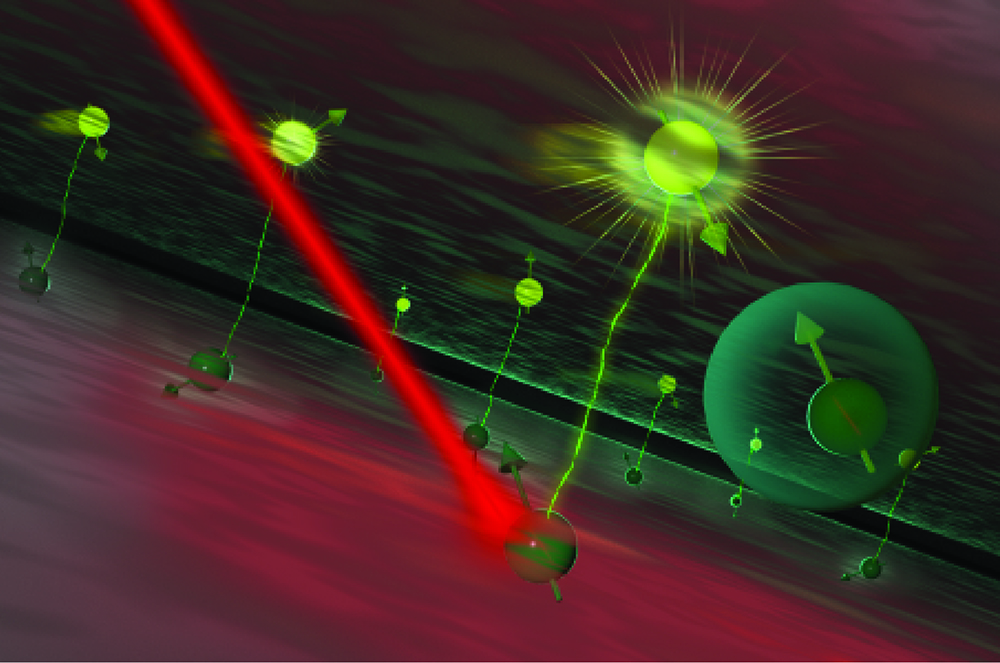
Illustration showing exciton formation in a new semiconducting material used for quantum sensing. Image courtesy of Ellen Weiss/Argonne National Laboratory.
In a recent breakthrough, researchers at the U.S. Department of Energy’s (DOE) Argonne National Laboratory and Northern Illinois University discovered that they could use light to detect the spin state in a class of materials called perovskites (specifically in this research methylammonium lead iodide, or MAPbI3). Perovskites have many potential uses, from solar panels to quantum technology.
To understand spin, consider electrons orbiting the atomic nucleus. When atoms are close together, they can share some of their outer electrons, which creates a bond between them. Each bond contains two electrons that are “paired,” meaning they share an orbital — the region where they move.
Now, each of these paired electrons has one of two possible spin states: spin up or spin down. If one electron is spin up, the other is spin down. Since we can’t know exactly which electron has which spin without looking at them, we say they exist in a quantum superposition — a state where they are both spin up and spin down until observed.
This is the same concept used in quantum computing. A quantum bit, or qubit, can represent both zero and one at the same time, unlike a classical bit which is only one or the other. This makes quantum computers much more powerful in some ways than regular computers.
Identifying and controlling electron spins are key to creating quantum devices like computers and sensors.
In their study, the researchers used light to excite one of the two paired electrons in the perovskite material. This caused the electron to move to a higher-energy level, leaving a “hole” in the lower-energy level. This pairing of one excited electron and one hole is called an exciton.
Excitons are formed when the energy from light gets converted into electric potential energy. Normally, excitons don’t last long because the excited electron eventually falls back into the hole, a process called recombination, which releases light. In MAPbI3, such excitons usually last just a few tens of nanoseconds.
NIU Professor Tao Xu.
The research group led by Northern Illinois University Chemistry Professor Tao Xu discovered a way to extend the exciton’s lifetime by more than ten times. They did this by adding a rare earth metal called neodymium to the material. Neodymium has unpaired electrons in its outer orbital, which makes it a good candidate to interact with the exciton’s electrons.
An electron that is promoted to a higher orbital in the exciton ends up also partially occupying an orbital in a neodymium atom. This creates a spin-entangled state with the localized spins in the neodymium atom. The entangled electron in the neodymium is still connected to its partner electron in the perovskite. Even though they’re separated, they can still “communicate” with each other, which gives scientists useful information about the material and could be used for quantum sensing.
“We can use neodymium to act as a probe to observe the spins in the exciton,” said Argonne Physicist Saw Wai Hla, a co-author of the study.
“The main point is that we can communicate with the individual electrons in an exciton through their interactions with the neodymium atoms. This is exciting because, normally, these electrons just decay and release light,” said Argonne Nanoscientist Benjamin Diroll, another co-author.
Neodymium works as a quantum sensor under a relatively low magnetic field, according to Xu. But if the magnetic field is too strong, the spins in the neodymium get locked, and the connection to the exciton breaks down.
“The exciting part is that by adjusting the neodymium concentration, we can detect the spins of excitons. This could potentially allow us to entangle up to 10 electron spins, which would be a very interesting qubit material for quantum computing,” Xu said.
This research would not have been possible without the many advanced scientific capabilities available at Argonne. The researchers made extensive use of Argonne’s Center for Nanoscale Materials (CNM), a DOE Office of Science user facility. At the CNM, Hla and Kyaw Zin Latt performed scanning tunneling microscopy measurements. Additionally, Christopher Fry performed electron paramagnetic resonance measurements, Yuzi Liu conducted a transmission electron microscopy study and John Pearson performed magnetic measurements. Finally, Diroll performed a photoluminescence spectroscopy study, and Richard Schaller provided interpretation of the results and insights into the electronic mechanisms.
In addition, Taewoo Kim and Justin G. Connell from Argonne’s Materials Science Division contributed to ultraviolet photoemission studies, and Zhenzhen Yang from Argonne’s Chemical Sciences and Engineering division conducted X-ray photoemission spectroscopy and scanning electron microscopy studies.
An article based on the study was published in Nature Communications. The study was funded by DOE’s Office of Basic Energy Sciences and the National Science Foundation.
About NIU
Northern Illinois University is a student-centered, nationally recognized public research university, with expertise that benefits its region and spans the globe in a wide variety of fields, including the sciences, humanities, arts, business, engineering, education, health and law. The Wall Street Journal and CollegeNET recognize NIU as a leading institution for social mobility, or helping its students climb the socioeconomic ladder. Through its main campus in DeKalb, Illinois, and education centers for students and working professionals in Chicago, Naperville and Rockford, NIU offers more than 100 areas of study while serving a diverse and international student body.
About Argonne’s Center for Nanoscale Materials
The Center for Nanoscale Materials is one of the five DOE Nanoscale Science Research Centers, premier national user facilities for interdisciplinary research at the nanoscale supported by the DOE Office of Science. Together the NSRCs comprise a suite of complementary facilities that provide researchers with state-of-the-art capabilities to fabricate, process, characterize and model nanoscale materials, and constitute the largest infrastructure investment of the National Nanotechnology Initiative. The NSRCs are located at DOE’s Argonne, Brookhaven, Lawrence Berkeley, Oak Ridge, Sandia and Los Alamos National Laboratories. For more information about the DOE NSRCs, please visit https://science.osti.gov/User-Facilities/User-Facilities-at-a-Glance.
The U.S. Department of Energy’s Office of Science is the single largest supporter of basic research in the physical sciences in the United States and is working to address some of the most pressing challenges of our time. For more information, visit https://energy.gov/science.
Date posted: October 15, 2024 | Author: Tom Parisi | Comments Off on New light-induced material shows powerful potential for quantum applications
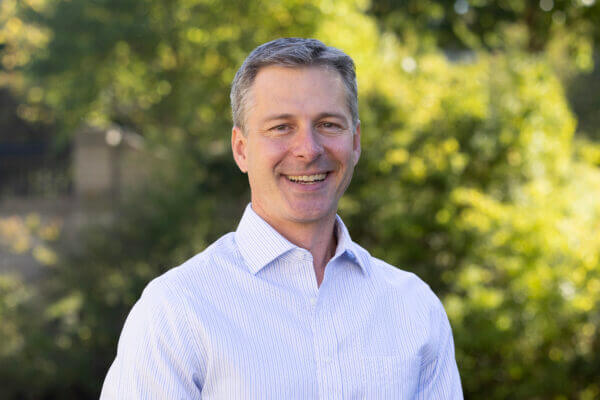
Matt Deitch, the new director of the Northern Illinois Center for Community Sustainability.
After a long road trip from his former home in Florida, he and his wife Victoria rolled up to their new home outside of Sycamore in a red 2016 Honda Odyssey van carrying their three children, a cat, a dog and nine chickens, the latter all named after mystery writers and characters (think Nancy, Agatha and Tuppence).
“It was like something out of a Muppet movie with feathers flying out of the van,” Deitch said. “That’s my life.”
His life over the next few years won’t be any less exciting or demanding, as Deitch (pronounced dīCH) turns his attention to strengthening NICCS research collaborations and getting the new $23 million center built and equipped on the western edge of NIU’s campus. Construction is likely to begin in early 2026.
NICCS is part of the Illinois Innovation Network (IIN), a group of state-funded research and innovation hubs that are under development and aimed at driving economic growth in Illinois while addressing critical global issues. The NIU center will focus on water resources, environmental change and food-systems innovation.
A native of Matteson, IL, Deitch holds a Ph.D. in Environmental Planning from the University of California, Berkeley, as well as a master’s degree in forestry and natural resources and bachelor’s degree in chemistry.
He previously directed a hydrology program for a nonprofit environmental science firm. Most recently, he served as a faculty member at the University of Florida, where he taught classes, managed a lab, and mentored undergraduate and graduate students on topics focusing on water quality, stormwater management and climate adaptation. His research focuses on a broad range of water- and sustainability-themed issues.
The NIU Newsroom caught up with Deitch for a Q&A on his new role at the university.
What excites you most about your new position as NICCS director? I’m amazed by the broad perspectives of NIU faculty whose work relates to the three NICCS pillars—water, food and adaptation. Our sustainability challenges are complex. We’ll need the broad perspectives of people in the natural sciences, social sciences and the humanities, health fields, engineering and technology, education, business and the arts to fully address sustainability in meaningful ways. Building diverse partnerships to shape sustainability solutions is what I’m most excited about.
What are your top priorities as you get started? First, I need to learn more about faculty and their areas of interest, and I want to understand how faculty see their work connecting to NICCS. I also am learning about the sustainability challenges in northern Illinois. My experience has been that there are sustainability challenges everywhere, and resource managers are eager to talk about them.
How did you get involved in environmental work and research in the first place? Like a lot of people in this field, I’ve always felt a connection to the outdoors. But my interest in sustainability started after graduate school, when I worked on water issues with farmers and rural homeowners in northern California. I saw their interest in the environment and understood their concerns about water regulations, and together we collected data to inform new policies that explained how they could use water and still protect endangered salmon. Then in Florida, I worked with local government to find ways that green stormwater infrastructure could reduce chronic flooding. In both cases, I experienced firsthand how science could make peoples’ lives better.
Tell us a little bit about your background, and how it fits into your responsibilities with NICCS? I credit my background in teaching and my years in high school theater for my love of communicating science. Whether it’s with farmers at big growers’ meetings or in small groups at kitchen tables, I love sharing histories and perspectives on conservation. Also, I recently presented to a Chamber of Commerce group in Florida. We talked for a half hour about increased storm intensity and local impacts on small businesses. To me, sharing perspectives sets the foundation for long-term partnerships.
What is your vision for the center? My vision for NICCS is a robust program of externally supported activity to address sustainability challenges in northern Illinois and beyond. When our building is complete in a couple years, we’ll have lab and teaching spaces where faculty from different disciplines can teach to classes together, and where students can work on research projects. It will also be a place to showcase green building techniques and our region’s agricultural history, and to bring the community together for events.
How will students benefit from NICCS? NICCS will provide opportunities for students to connect with real-world environmental challenges and to approach those issues with a broad perspective. NIU is really interested in transdisciplinary research and teaching, which is a key theme of NICCS. I think a broad perspective is necessary to solve our sustainability challenges, and it will make our graduates better prepared to work on these issues.
NICCS-related research is already ongoing, correct? Right! NIU faculty are already working on research in groundwater quality, prairie restoration, climate dynamics, environmental communication, and microplastics in the environment. They’re designing everything from vegetable growing towers to EV batteries to food-based math curriculum. NIU faculty are already innovating in many projects, and my job is to help grow that research and expand partnerships across disciplines.
Northern Illinois University is a student-centered, nationally recognized public research university, with expertise that benefits its region and spans the globe in a wide variety of fields, including the sciences, humanities, arts, business, engineering, education, health and law. Through its main campus in DeKalb, Illinois, and education centers for students and working professionals in Chicago, Naperville and Rockford, NIU offers more than 100 areas of study while serving a diverse and international student body.
Date posted: October 3, 2024 | Author: Tom Parisi | Comments Off on New NICCS director brings family of chickens and big sustainability goals to NIU
DeKalb, IL – Northern Illinois University will help lead an $11 million National Science Foundation-backed field study that will send scientists into the teeth of severe weather in the Great Plains next spring to shed light on the most damaging hazard associated with thunderstorms.
NIU Atmospheric Science Professor Victor Gensini.
The peril is not tornadoes as you might expect. Rather, hail is the most consistently damaging thunderstorm hazard, producing U.S. losses exceeding $10 billion per year over the past 14 years.
Ranging in size from peas to grapefruits, the ice orbs can wreak havoc where they fall, including on homes, vehicles, businesses, aircraft, crops and solar panels.
“With improved detection and prediction of severe hail—and with a better understanding of hail characteristics and surface impacts—people could better protect themselves and their belongings,” said NIU Atmospheric Science Professor Victor Gensini, who is helping to lead the study. “The enormous annual monetary losses could be substantially lessened.”
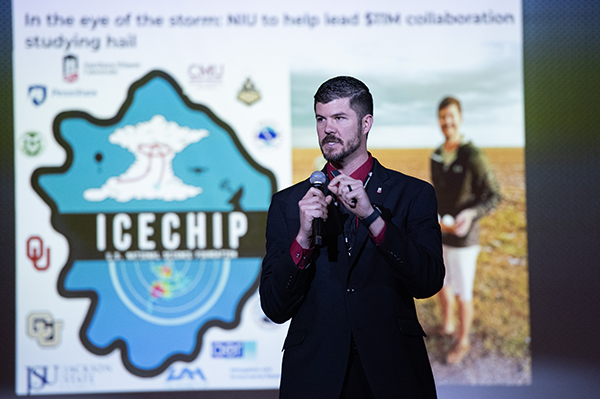
The new field study is dubbed ICECHIP, short for In-situ Collaborative Experiment for Collection of Hail In the Plains. The project will include roughly 100 researchers (including NIU students) who are planning fieldwork in and around the U.S. Central Plains this coming May and June.
NIU Professors Walker Ashley and Victor Gensini hold a flight of severe hailstones in a field near Tulia, TX on May 31, 2022. Photo courtesy of Laura Hedien
In addition to Gensini, the project’s co-leaders are Becky Adams-Selin, a hail scientist at Atmospheric and Environmental Research, John Allen of Central Michigan University and Andy Heymsfield of the National Center for Atmospheric Research. ICECHIP researchers hope to gather data that could improve hailstorm prediction and help answer fundamental questions, such as how climate change will affect the frequency of hailstorms and the size of the stones.
“As the first U.S. hail-focused campaign in over 40 years, ICECHIP aims to make a generational leap forward in our scientific understanding of all critical aspects of hail,” Gensini said.
“Even one successful forecast of hail occurrence enabled by this campaign could save millions of dollars in assets,” Gensini said, pointing to an unexpected hailstorm in 2016 that caused $46 million in damage to aircraft at Laughlin Air Force Base in Texas.
“Uncertainties in hail forecasting, coupled with the economic impact of these storms, motivate the need for greater understanding of the processes that produce hailstones, the radar-derived structure of their parent storms, and the characteristics of hailstones reaching the ground,” said NIU Atmospheric Science Professor Walker Ashley, who along with Geochemistry Professor Justin Dodd will be participating in ICECHIP. All three of the participating NIU professors are faculty in NIU’s Department of Earth, Atmosphere and Environment.
Previous hail-focused U.S. field campaigns in the 1970s and 1980s provided the foundation for the current understanding of hail development, in-storm growth and trajectory structure. However, significant gaps in hail science remain. No current hail forecasting method produces reliable, skillful forecasts of significantly severe hail occurrence a day in advance or even at less than an hour lead times.
“Hail forecasting currently relies on public reports of hail size or radar-based estimates that have substantial shortcomings,” Gensini said. “ICECHIP will leverage use of modern instrumentation and numerical modeling capacity to provide a long-awaited advancement in hail science.”
Technology to be deployed in the field over a course of six weeks from mid-May through June will include drones, weather balloons, hail-impact disdrometers for distinguishing hail sizes, hail pads measuring strike impacts and vehicles equipped with radar and environmental monitoring equipment. In addition, NIU engineering students will be working to outfit a hail-resistant truck that will be used as a weather station on wheels.
“We’ll go wherever there’s hail,” Gensini said. “It could be as far east as northern Illinois but more likely we’ll be working in Texas, Oklahoma and Kansas in the early spring, then in Nebraska, Colorado and the Dakotas as the season progresses.”
Gensini recently published a new study on hail projections for the future. The study found that under current human-driven climate-warming trajectories, hailstorms will more frequently produce larger hailstones by mid-to-late century.
Northern Illinois University is a student-centered, nationally recognized public research university, with expertise that benefits its region and spans the globe in a wide variety of fields, including the sciences, humanities, arts, business, engineering, education, health and law. Through its main campus in DeKalb, Illinois, and education centers for students and working professionals in Chicago, Naperville and Rockford, NIU offers more than 100 areas of study while serving a diverse and international student body.
Date posted: October 1, 2024 | Author: Tom Parisi | Comments Off on In the eye of the storm: NIU to help lead $11M collaboration studying hail
DeKalb, IL – Northern Illinois University’s overall enrollment held steady this fall, buoyed by a surge in transfers, an academically talented freshman class, an uptick in the number of new graduate and law students and continued reenrollment successes.
The annual 10-day count shows enrollment of new transfer students increased over last fall by more than 10%—for a total of 1,462 new students coming to NIU from other colleges.
The average high school GPA of the almost 2,000 new freshman Huskies is 3.39, the third highest on record; nearly 20% of those students had 4.0 high school GPAs, with each earning a merit scholarship of $7,000. Similarly, new freshmen with stellar high school GPAs of 3.7 or higher represented 36% of the 2024 class.
In recent years, NIU has been recognized nationally numerous times as a leader in inclusive excellence—attributes reflected in this year’s crop of new students. The university has built upon recruitment initiatives and partnerships to ensure that the incoming class reflects the demographic diversity of our region and changing face of America.
One of every two new freshmen is a first-generation college student; 66% of new freshmen and 47% of new transfers are students of color. NIU also remains on a trajectory to become a fully designated Hispanic-Serving Institution (HSI), with Latinx students representing more than one-quarter of the total undergraduate population for the second consecutive year.
Meanwhile, in the Graduate School, the total number of new students pursuing master’s degrees increased by nearly 3% year over year, while the number of new students pursuing doctoral degrees jumped by 27% compared to last fall. The NIU Law School also saw a substantial year-over-year increase in new students and a jump in its overall enrollment of nearly 8%, to 338 students, a 10-year high or better.
“I’m thrilled that we continue to experience promising enrollment trends in key areas, including in the diversity and academic quality of our students; substantial increases in new transfer and new graduate and law students; and successful reenrollment of continuing students,” NIU President Lisa C. Freeman said. “Our focus on removing barriers to a high-quality education continues to attract talented students from all backgrounds who clearly see NIU as a place where they will succeed.”
Guided by strategic enrollment management planning and the belief that every student who attends NIU deserves the support necessary to achieve success, the university works actively to foster a sense of student belonging and self-efficacy and to provide resources that help Huskies successfully navigate their paths toward graduation and fulfilling careers. The reenrollment rate of continuing undergraduates is at a seven-year high.
“Our entire NIU community has made student reenrollment a shared campus responsibility,” Executive Vice President and Provost Laurie Elish-Piper said. “They’ve done a terrific job of supporting our students year-round.”
NIU’s overall enrollment held steady at 15,415 students. The undergraduate enrollment of 11,349 students was about the same as last fall, with more transfers year over year but fewer freshmen. The colleges of Education and Visual and Performing Arts each recorded 10-year-high enrollment numbers.
“NIU was likely impacted more than most other universities because we traditionally enroll many students from underserved populations, such as lower-income and/or first-generation college students,” said Sol Jensen, NIU vice president for Enrollment Management, Marketing and Communications. “Nationwide, the FAFSA problems negatively impacted students from these vulnerable communities the most, and indeed we saw a lower number of FAFSA form completions among prospective freshmen.
“We’re concerned about, and have plans to reach out to, any students who may have put off or delayed college because of the FAFSA delays,” he added.
President Freeman said the university was able to manage the FAFSA delays as best as possible only because of the incredible work of NIU financial aid staff.
“I can’t talk about focused efforts related to enrollment without recognizing the commitment and heroism of our financial aid team,” President Freeman said. “The team worked day and night to process data that arrived months behind schedule, find workarounds to recurring technical issues, and minimize harm to the university and aspiring Huskies and their families.”
Another bright spot this fall is the university’s Rockford Promise Program, a partnership guaranteeing tuition and general fee costs for up to four years at NIU, which earlier this summer was recognized nationally for innovation. The program welcomed 130 freshman Rockford Scholars, bringing the total of scholars at NIU to 365.
NIU has been a leading champion of access to higher education in Illinois and nationally in recent years. In addition to Rockford Promise, NIU joined the Common App; eliminated undergraduate application fees; became one of the nation’s first public universities to announce test-free admission and merit scholarship processes; and expanded criteria for its AIM HIGH Huskie Pledge program.
“These and other efforts represent a major university financial commitment to our vision as an engine for innovation to advance social mobility and promote intellectual growth,” Jensen said.
Northern Illinois University is a student-centered, nationally recognized public research university, with expertise that benefits its region and spans the globe in a wide variety of fields, including the sciences, humanities, arts, business, engineering, education, health and law. Through its main campus in DeKalb, Illinois, and education centers for students and working professionals in Chicago, Naperville, Oregon and Rockford, NIU offers more than 100 areas of study while serving a diverse and international student body.
Date posted: September 12, 2024 | Author: Tom Parisi | Comments Off on 10-day count: Overall enrollment holds steady, new transfers surge and new freshmen bring high academic credentials