
DEKALB, IL – Whether it’s an intuitive hunch, a sour mood or a belly pain, scientists have confirmed that signals between the gut and the brain can affect our cognition, emotions and physical health. It’s why the gut (or our intestines) is sometimes called the “second brain” of the body.
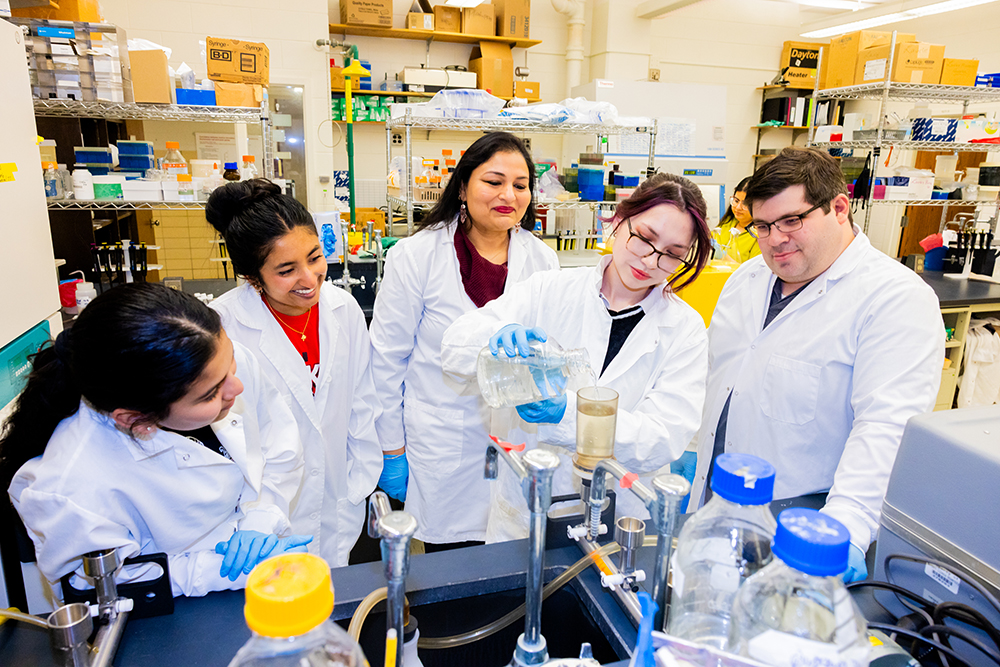
Biological Sciences Professor Pallavi Singh (center) will involve NIU students in her newly funded research, exploring how stress changes the gut-brain-microbe connection.
“Our gut is home to trillions of tiny organisms—bacteria and other microbes—that help us grow, stay healthy and even influence how we feel,” says NIU Biological Sciences Professor Pallavi Singh.
“Recent research shows that the microbes in our gut can affect our mood and help our immune system,” she says. “But when this microbial balance is disturbed—especially by stress—it can lead to long-term health problems like Inflammatory Bowel Disease (IBD) or even Type 2 diabetes.”
Now Singh is embarking on research to gain a better understanding of the brain-belly connection. The National Institutes of Health recently awarded the NIU professor with a $553,000 grant over three years to study how the gut, brain and these microbes all work together—a system called the Gut-Brain-Microbiota Axis. Specifically, the work is funded by NIH’s National Institute of Diabetes and Digestive Kidney Diseases.
“Scientists are especially interested in how this gut-brain system is affected by stress, and how that might lead to diseases,” Singh said. “The goal of our research is to figure out how stress changes the gut-brain-microbe connection, and how that might lead to IBD.
“The research also will engage graduate and undergraduate students, providing them with valuable hands-on experience,” Professor Singh added.
The researchers will interpret the interplay of chronic stress and anxiety-relevant behaviors, which lead to changes in the gut microbiome, ultimately causing IBD. Additionally, they hope to further our understanding of specific bacterial community members related to stress, anxiety and chronic systemic diseases.
The study will be conducted in collaboration with NIU Psychology Professor Angela Grippo. Her laboratory focuses on the interactions of stress, emotion and neurobiological functioning, using the prairie vole as a research model. Prairie voles engage in social behaviors like humans.
“The broader impact includes identifying microbial markers linked to better health and diet interventions, and to develop insights into the effects of social isolation on mental and digestive health,” Singh said. “Through development of a stress-IBD model, future studies also could include the effects of stress on Type-2 diabetes, cardiovascular health and mental well-being.”
Media Contact: Tom Parisi
About NIU
Northern Illinois University is a student-centered, nationally recognized public research university, with expertise that benefits its region and spans the globe in a wide variety of fields, including the sciences, humanities, arts, business, engineering, education, health and law. The Wall Street Journal and CollegeNET recognize NIU as a leading institution for social mobility, or helping its students climb the socioeconomic ladder. Through its main campus in DeKalb, Illinois, and education centers for students and working professionals in Chicago, Naperville and Rockford, NIU offers more than 100 areas of study while serving a diverse and international student body.
