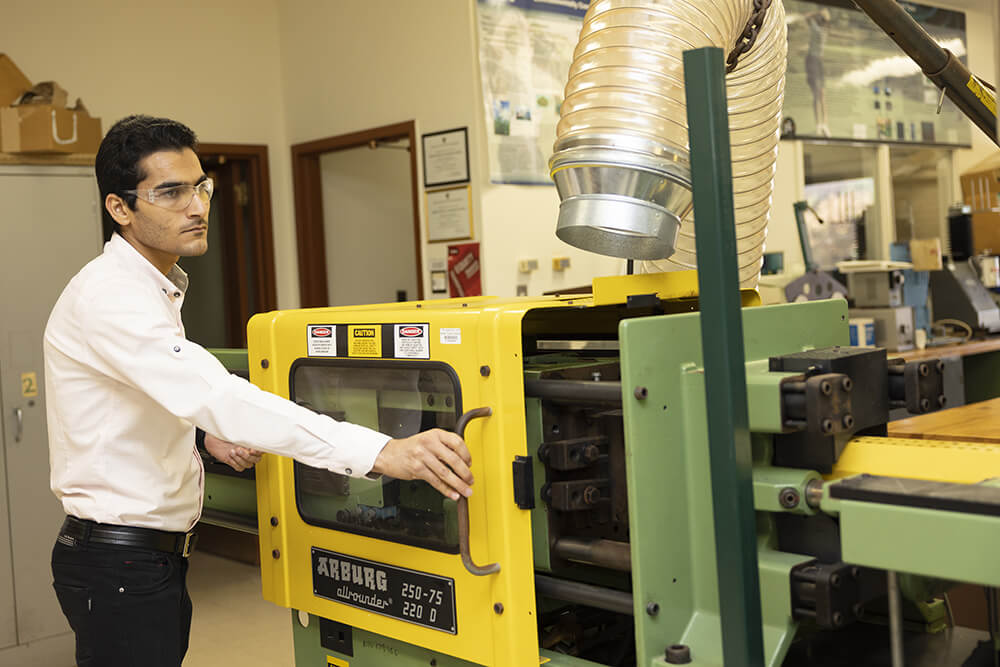
DeKalb, IL – NIU’s Mahdi Vaezi is investigating the feasibility of constructing an innovative, first-of-its-kind biomass pipeline.
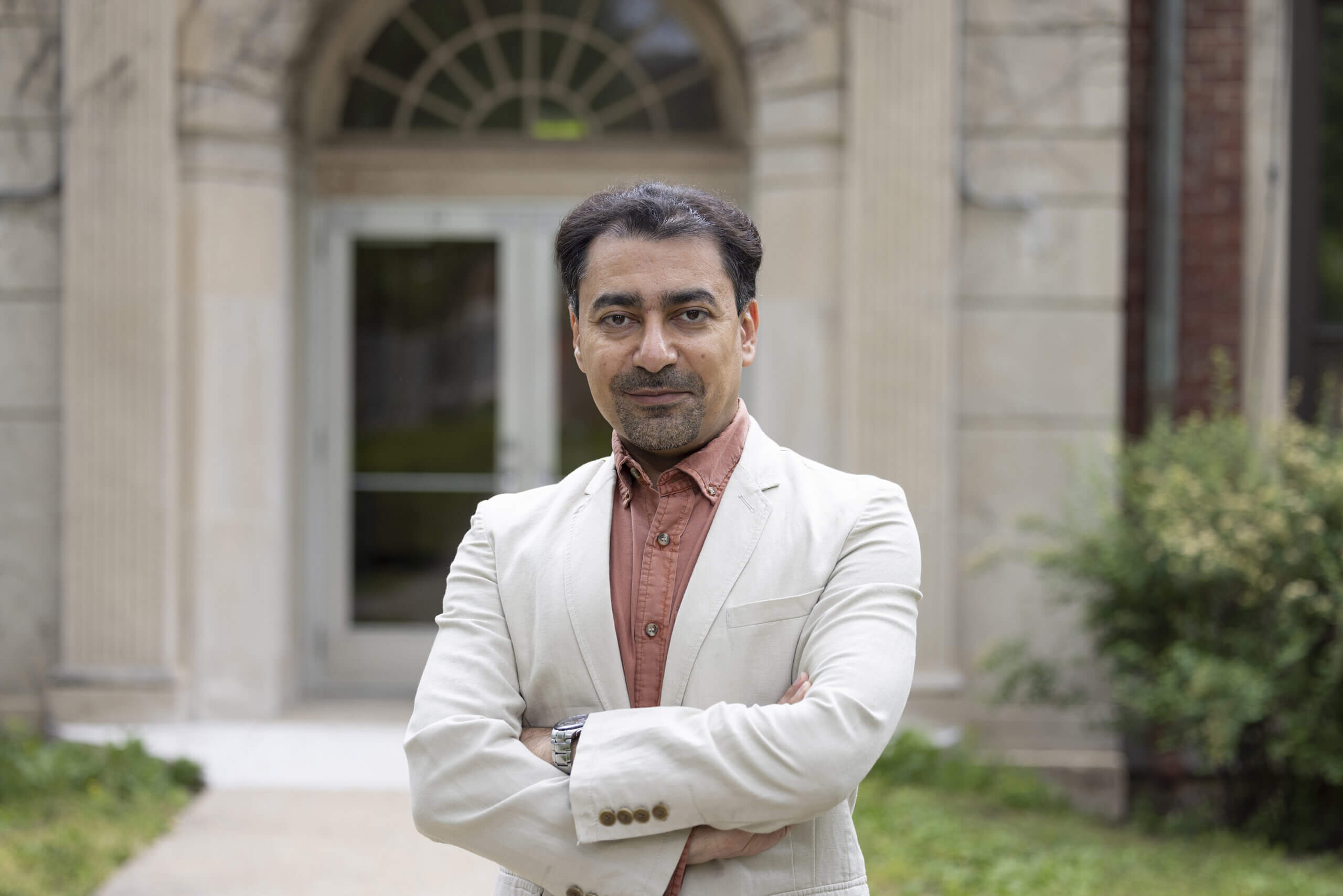
Engineering Technology Professor Mahdi Vaezi
The research project, supported by a $650,000 award over four years to NIU from the U.S. Department of Agriculture, could lay the groundwork for the world’s first biomass pipeline in the state of Maine, says Vaezi, a professor of Engineering Technology.
Simply put, biomass is renewable organic material that comes from plants and animals. It has been used to cook and stay warm since the dawn of humankind—think of a wood-burning stove or fireplace, for example.
Biomass continues to be an important fuel in many countries, especially for cooking and heating in developing countries, according to the U.S. Energy Information Administration. The use of biomass fuels for transportation and for electricity generation is increasing in many developed countries as a means of avoiding carbon dioxide emissions from fossil fuel use.
Today’s biomass feedstocks can include dedicated energy crops, agricultural crop residues, forestry residues, algae, wood processing residues and the organic components of municipal and industrial waste. Benefits from the use of biomass energy include reducing dependence on foreign oil, supporting U.S. agricultural and forest-product industries and the potential to greatly reduce greenhouse gas emissions.
“Much of the world is dependent on fossil fuels, and everyone is looking for replacement options,” Vaezi said. “Yet we have vast sources of biomass that are wasted or underutilized.”
Vaezi first studied the feasibility of a biomass pipeline for his dissertation nearly a decade ago at the University of Alberta in Canada. For the new project, he’ll have considerably more resources at his disposal.
The USDA grant will be used in part to purchase roughly $100,000 in instruments and equipment for a new Waste Advanced Solution Technologies and Ecosystems Laboratory (WASTE Lab) in Still Gym, where a 30-foot, closed circuit prototype pipeline will be assembled in coming months. NIU’s Department of Engineering Technology, College of Engineering and Engineering Technology and Division of Research and Innovation Partnerships (RIPS) are supporting the laboratory development as well.
RIPS also helped Vaezi find industry and scientific partners for the project. Collaborators on the grant are Dr. Parisa Mirbod (the Mirbod Lab) at the University of Illinois at Chicago (UIC) and Biofine Developments Northeast Inc., a biomass user and biorefinery. Mirbod and her group at UIC will investigate the phenomena behind plug flow formation and drag reduction effect in the flow of fibrous biomass particles slurries in pipes and pumps using flow visualization techniques such as Particle Image Velocimetry (PIV).
“This is a great example of a research collaboration that connects a faculty expert with innovators, entrepreneurs, industry and students,” said Gerald Blazey, vice president of RIPS. “We’re happy to help support this important research.”
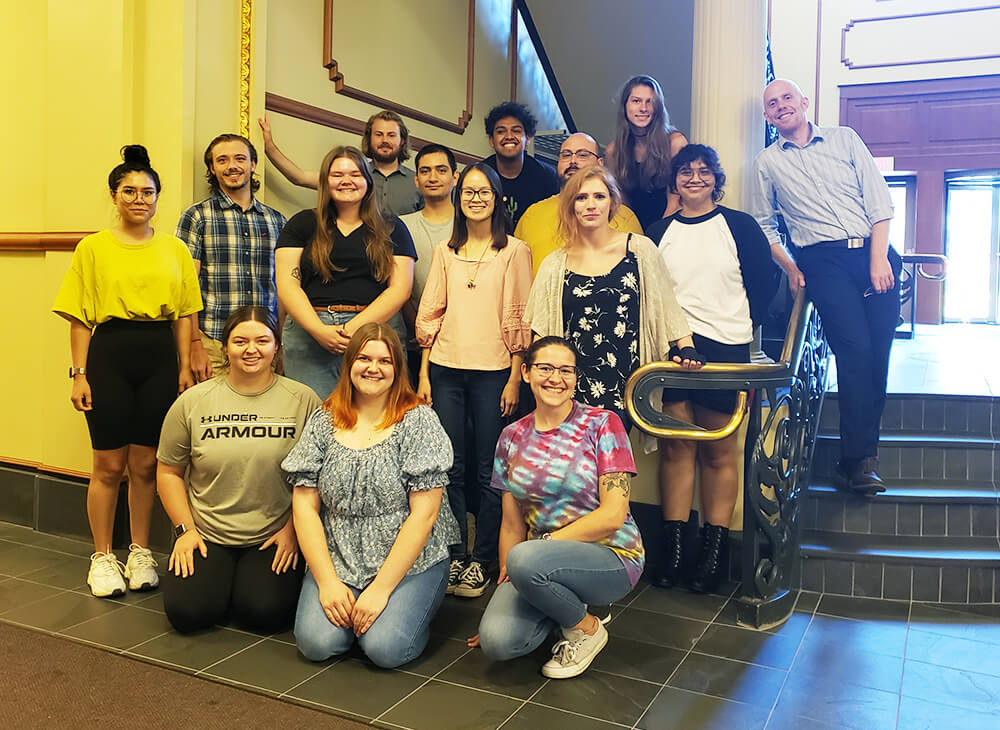
Vaezi intends to hire a Ph.D. student, three master’s students and several undergrads to work on lab components, and Senior Design teams also will tackle project aspects.
“Besides research applications, this project has teaching applications in such areas as fluid mechanics, pump and piping systems, energy management and flow instrumentation,” Vaezi said.
In consultation with the Construction Management Institute of Maine, the project will include a case study of the techno-economy of large-scale and long-distance biomass pipelines, for a potential 10-mile long woodchips pipeline to supply a commercial port in Eastport, Maine. The woodchips would be pipelined in a slurry (a mixture with water) to the port and shipped to Europe.
“Maine has a massive port used in part to send woodchips to Europe, but they can’t get enough material to the port because of transportation issues,” Vaezi said. “A pipeline could eliminate the need for thousands of woodchip truckloads per year.”
In the past, the high cost of transporting biomass feedstock, most often by truck, has been a major barrier toward increasing the scale of biomass-based energy facilities. The current study will include technological and economic analyses to compare the pipeline hydro-transport of biomass with truck, train and ship transportation in short, medium and long distances.
“Pipelining is considered a near-zero emission process, which eliminates environmental and social issues associated with overland transportation,” Vaezi said.
An added benefit of a pipeline system is that the biomass slurry can be heated to destroy contaminants or infestation that may be subject of biomass shipping regulations, Vaezi said. Once delivered, biomass could be screened to recycle water and moved to an open space, where it could be naturally or mechanically air dried at little to no cost.
In addition to wood chips, the NIU team will study the economic and mechanical feasibility of pumping sawdust and wheat straw water mixtures via pipeline.
“Biomass feedstock provides energy security,” Vaezi said. “It’s the only type of renewable energy that can be directly converted into biofuel.
“We anticipate this novel work will introduce pipeline as a technically feasible and economically viable mode of delivery to transport biomass feedstock in large scales and over long distances at costs noticeably lower than other modes of delivery, such as truck, train and ship,” he added. “This will make biomass-based energy facilities scale- and economy-wise competitive with fossil fuel-based plants.”
Northern Illinois University is a student-centered, nationally recognized public research university, with expertise that benefits its region and spans the globe in a wide variety of fields, including the sciences, humanities, arts, business, engineering, education, health and law. Through its main campus in DeKalb, Illinois, and education centers for students and working professionals in Chicago, Naperville, Oregon and Rockford, NIU offers more than 100 areas of study while serving a diverse and international student body.
Date posted: June 5, 2023 | Author: Tom Parisi | Comments Off on $650K USDA award to NIU could lead to world’s first biomass pipeline
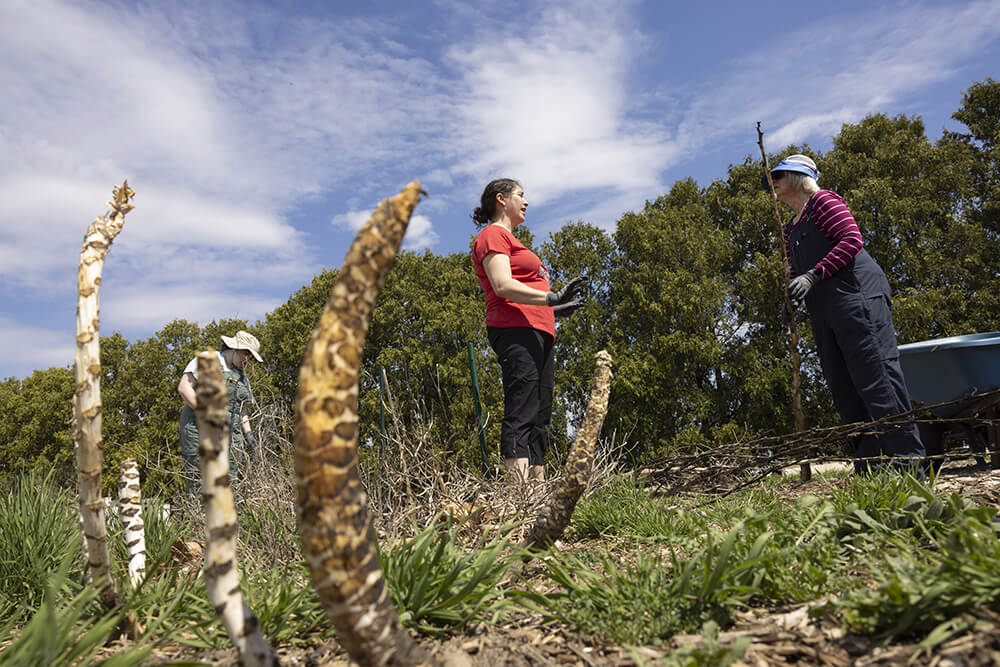
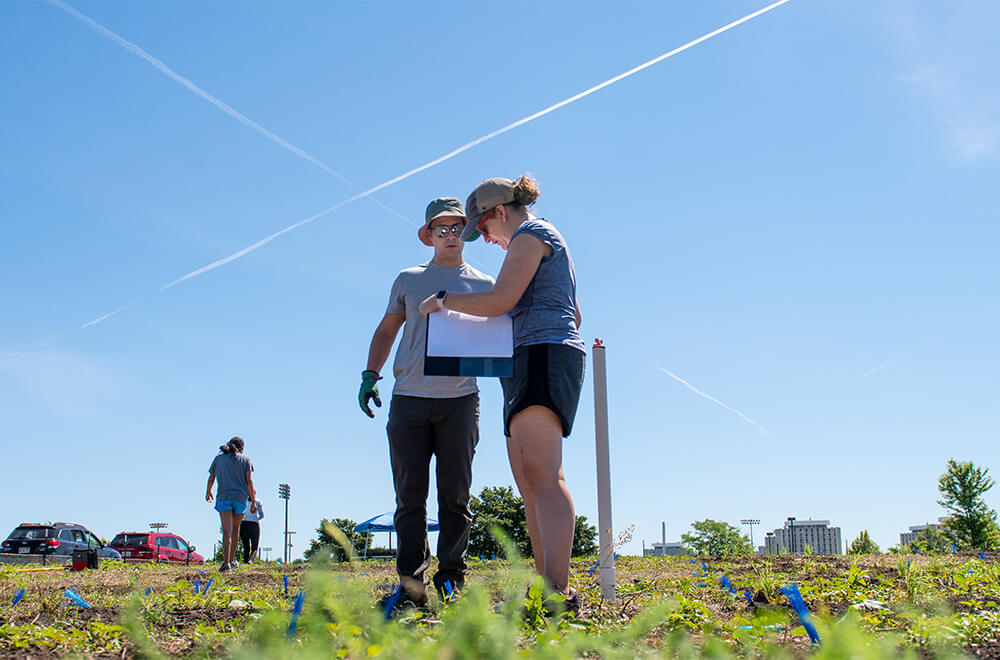
Student volunteer Sarah Lighthiser and Bryan Flower, assistant director of food systems innovation, help prepare the Anderson Market Garden for the growing season.
DeKalb, IL – NIU students and faculty have installed nearly 100 garden beds on campus this spring as part of an expansive new Edible Campus initiative.
The ambitious partnership among different NIU units and outside partners aims to transform parts of the NIU campus into a landscape you can eat.
Edible plants such as kale, beans, squash and herbs will fill the garden beds, located in three areas of central campus. In addition, the project is currently developing:
a one-acre Market Garden near Anderson Hall;
indoor aeroponic and hydroponic grow systems;
and plans for “food forests” made up of berry bushes, fruit- and nut-bearing trees.
‘The best kind of community engagement’
With support from U.S. Senator Dick Durbin, NIU’s Division of Outreach, Engagement and Regional Development (OERD) is receiving federal funding over three years to establish the Edible Campus and related workforce development training.
NIU Sustainability Coordinator Courtney Gallaher and Kris Borre, associate director of sustainable food systems for ESE, are among those who have started groundwork on the Anderson Market Garden.
“Edible Campus represents the best kind of community engagement, and we’re grateful to Senator Durbin for his support in gaining initial funding for the program,” says Vice President and Chief Engagement Officer Rena Cotsones.
“The program brings together partners from multiple units on campus and throughout the region, including the DeKalb County Community Gardens. Together, we’re advancing shared goals: addressing food insecurity, building a local foods culture, improving public health and creating a more sustainable future. The Edible Campus team is doing a wonderful job of co-creating an exciting initiative that will have tremendous positive impacts in our community.”
Committed to sustainability
Some of the Edible Campus produce will be distributed through the Huskie Food Pantry to provide nutritious food to students facing food insecurity. And Huskies will be encouraged to pick ripe food as they see it from the central-campus garden beds.
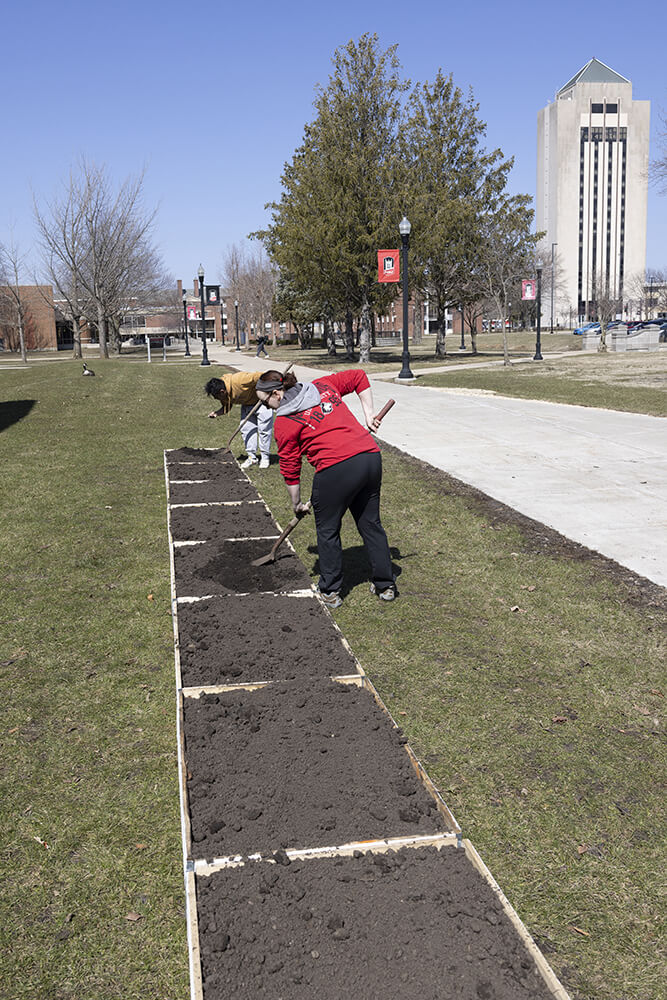
Students Alyssa Edwards and Gabriel Cabrera Ruiz prepare garden beds in central campus.
But the university is committed to making the program financially self-sustaining, partly by selling produce from the Anderson Market Garden to Campus Dining Services and by attracting donors who recognize the project value.
“We’re grateful to the many companies and organizations who are donating necessary supplies,” says Chef Bryan Flower, NIU assistant director of food systems innovation.
“The response has been overwhelmingly positive. Ball Horticultural Company is donating all of the seeds. Gordon Hardware in DeKalb has given us gardening equipment. Garden Prairie Organics provided 20 cubic yards of compost and has committed to more. Innovative Growers Equipment is contributing two aeroponic towers, and the nonprofit Feeding Illinois donated 200 raised garden beds. We’re also in the process of developing partnerships with orchards and other local growers.”
A living laboratory
NIU’s Edible Campus reflects growing efforts among universities to study and improve food systems and to prepare students for the field’s many career opportunities. Illinois is ripe for the picking, so to speak. In spite of an abundance of farms, most of the food consumed in the state is not locally produced.
NIU Sustainability Coordinator Courtney Gallaher says the primary Edible Campus goal is to create a teaching tool for students, encouraging them to see food systems as part of a larger conversation about sustainability. The effort also complements existing courses in sustainable food systems that are part of the environmental studies major and certificate programs in the NIU Institute for the Study of Environment, Sustainability and Energy (ESE).
“By serving locally grown food in the residence halls, we hope that students learn about locally grown food,” Gallaher says. “Using the Edible Campus Program as a laboratory space, the students can deepen their knowledge of food systems. Our goal is to train students to ask important questions and prepare them for jobs where they can make a difference.”
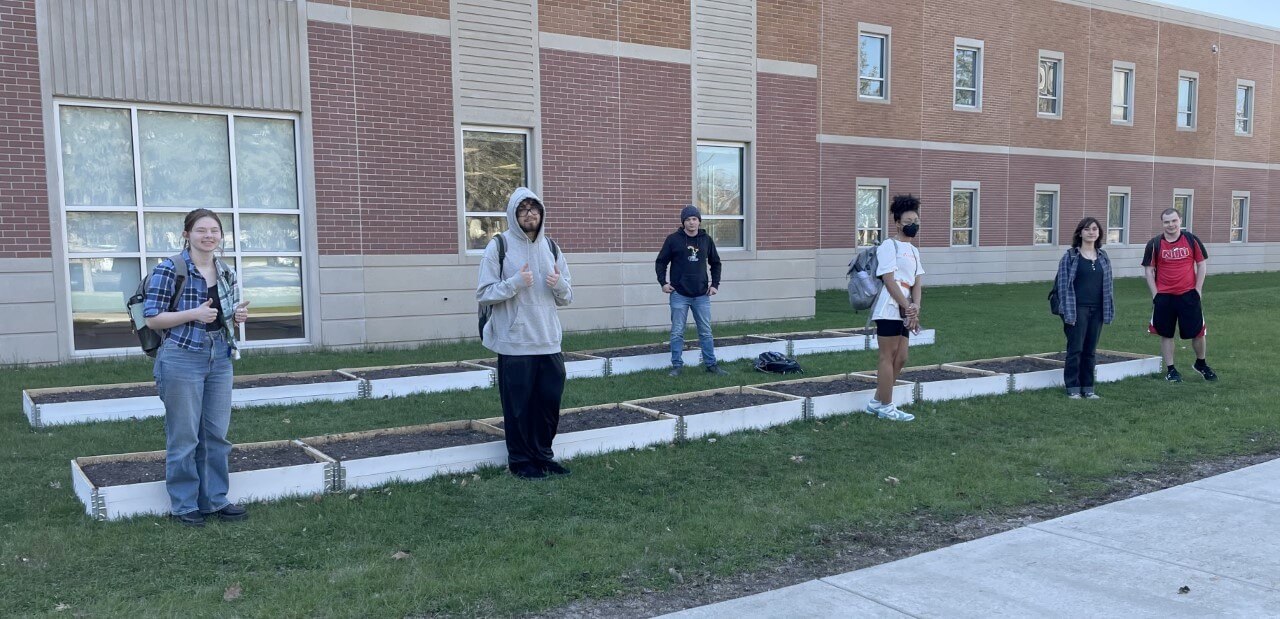
ENVS 210 students selected their garden beds and sowed the first set of seeds on April 12.
Students are already involved
Other members of the Edible Campus transdisciplinary leadership team include ESE Director Thomas Skuzinski and Amy Jo Clemens, OERD assistant vice president. Many students also have been involved as researchers and student workers. For example:
Students in ENVS 210 Introduction to Sustainable Food Systems are using the garden beds in their laboratory assignments, under the guidance of Dr. Kristen Borre.
College of Business students are writing feasibility reports to help Edible Campus establish long-term revenue sources, including a possible community-supported agriculture program in the coming years.
Senior design students in the College of Visual and Performing Arts are creating sculptures for the gardens.
College of Health and Human Sciences students are planning for fall meal-prep sessions for the campus community in their Wirtz Hall food labs, using the Edible Campus produce.
Student groups are making plans for indigenous crops, building hydroponic towers and exploring different systems for growing food.
In late March, NIU students and faculty installed raised garden beds around the MLK commons, Founders Memorial Library and Stevens Building. More students have planted seeds in the NIU greenhouses and the greenhouses of four local high schools, starting the plants that will fill these gardens.
Research, engagement opportunities
Ph.D. student Alyssa Edwards is a core member of the Edible Campus team who is conducting research on the initiative.
Alyssa Edwards, a Ph.D. student in the NIU Department of Earth, Atmosphere and Environment, is a core member of the Edible Campus team who is conducting research on the project. She is exploring how Edible Campus impacts the way college students understand food systems and sustainability.
“Edible Campus is a great research topic for me because of its adaptability and wide-reaching nature,” she says. “I am interested in a broad range of topics, and it has great educational and engagement opportunities.”
Joe Brynteson and Gabriel Cabrera Ruiz helped to install the initial garden beds and will continue working in the gardens. Brynteson, who graduated in December with his bachelor’s degree in environmental studies, will return to NIU this fall to earn his Master of Science in geology.
“Throughout my environmental studies courses, the concept of food insecurity was brought up frequently,” he says. “I’m incredibly excited to be assisting with a possible solution to the problem as well as actively improving NIU.”
Cabrera Ruiz is a senior majoring in environmental studies with an emphasis on sustainability. “The NIU environmental studies major emphasizes community outreach, environment and advocacy. This is why involvement in local projects like the Edible Campus garden is essential to me,” Cabrera Ruiz says.
“These small projects will create the foundation and motivation for other institutions and communities to adopt these practices for the social and environmental benefits they bring. To me, this project is a call to action for sustainability.”
One part of a bigger picture
Edible Campus is related to broader campus efforts addressing sustainability. In August, the university became a signatory to the Second Nature Presidents Climate Leadership Carbon Commitment.
Additionally, an NIU task force later this spring will complete the first campus-wide sustainability and climate action plan. In the fall, the plan will be presented to shared governance, and all faculty, staff and students will have opportunities to provide feedback.
The sustainability plan will encompass a wide range of topics, including transitioning to renewable energy, low-emissions transportation, reducing waste, improved management of campus grounds as either natural habitats or food production spaces, improving sustainability in campus food and dining, and creating greater opportunities for hands-on learning and research.
Meanwhile, the Edible Campus project is full speed ahead. The team has workdays planned for Friday, April 28, and Saturday, April 29. Email ediblecampus@niu.edu to find out how you can get involved.
Northern Illinois University is a student-centered, nationally recognized public research university, with expertise that benefits its region and spans the globe in a wide variety of fields, including the sciences, humanities, arts, business, engineering, education, health and law. Through its main campus in DeKalb, Illinois, and education centers for students and working professionals in Chicago, Naperville, Oregon and Rockford, NIU offers more than 100 areas of study while serving a diverse and international student body.
Date posted: April 25, 2023 | Author: Tom Parisi | Comments Off on NIU is making parts of campus eatable
DeKalb, IL – Decoys are commonly associated with hunting, but when it comes to threatened seabirds, a new study shows such trickery can also be used as species savers.
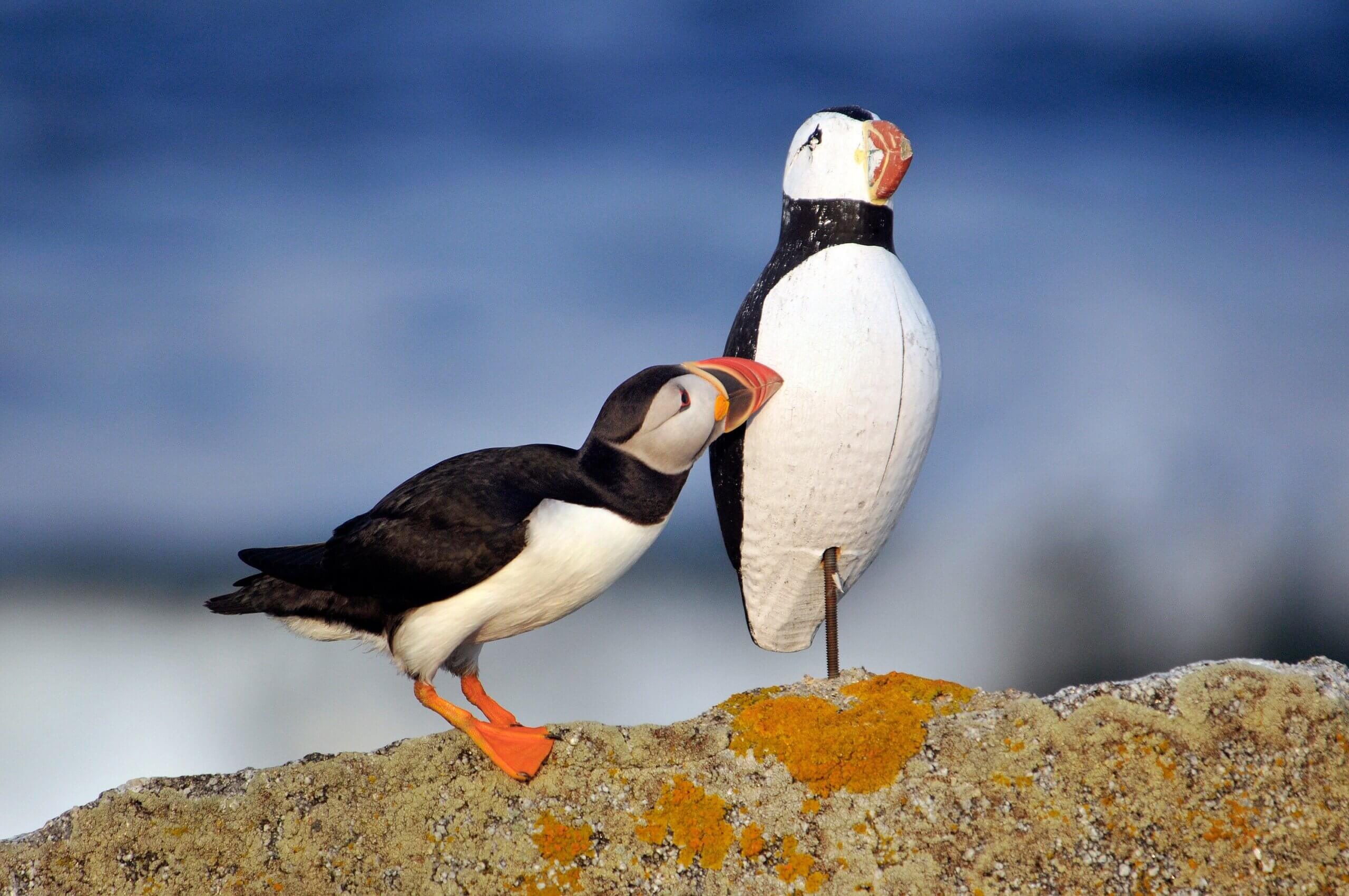
An Atlantic Puffin interacts with a decoy on a nesting island in Maine. Photo: Derrick Z. Jackson
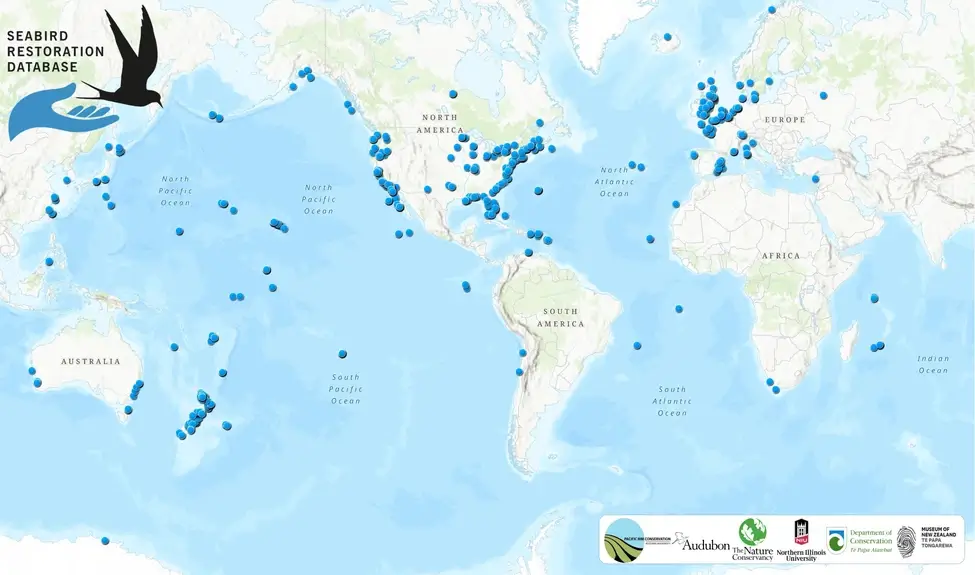
Northern Illinois University Professor Holly Jones, Ph.D., is a member of a research team that for the first time demonstrates the effectiveness of restoring seabird populations around the world. The study is a global synthesis of all reported seabird translocation and social attraction restoration efforts, which spans nearly 70 years and over 850 efforts across 36 countries, targeting 138 seabird species—roughly one-third of all seabirds worldwide.
“Seabirds play key roles in coastal and island ecosystems, yet they are suffering massive declines across the planet,” said Dena Spatz, Ph.D., senior conservation scientist at Pacific Rim Conservation and lead author of the paper. “That’s why it’s crucial that conservationists world-wide have shared knowledge on their restoration experiences, which can now help to restore seabirds in the most efficient way possible.”
Seabirds are one of the most threatened bird groups on the planet with about 30% of species at enhanced risk of extinction, primarily due to threats from invasive predators at breeding sites, habitat loss, and harmful fishing practices. Climate change poses yet another challenge, as sea-level rise and increasing storms can flood low-lying seabird breeding habitat.
“These methods can include decoys, vocalization playbacks and/or mirrors to trick seabirds into thinking a colony is there, which entices new birds to breed,” Jones said. “Another common method is to translocate chicks before they’ve imprinted on their birth colony to a restoration site in hopes they will imprint there and return to breed.”
The Seabird Restoration Database includes an interactive map of over 850 efforts to restore seabird populations across 36 countries.
To understand which restoration methods have been most successful and guide future best-practices, Spatz and co-authors created the Seabird Restoration Database, an interactive catalog of efforts to help seabirds recover based on a review of over 1,400 resources and communications with over 300 experts.
The study authors analyzed the success of these seabird projects, finding the outcomes largely positive—within an average of two years from the project’s start, 80% of seabird projects resulted in birds visiting the site, and 76% achieved breeding.
The researchers also found that terns, gulls and auks are among the seabird groups seeing the most success, as these groups are among the most commonly restored. The most highly threatened seabird group—petrels, shearwaters and albatrosses—have also been common targets for active restoration, typically using social attraction or a combination of social attraction and translocation, both of which have also had high success rates.
“Fifty years ago, Audubon first combined translocation and social attraction to successfully bring a healthy population of Atlantic Puffins back to Maine’s coast, so it was amazing to learn of more than 800 projects undertaken since then,” said coauthorDonald Lyons, Ph.D., Director of Conservation Science for Audubon’s Seabird Institute. “These projects are a powerful testament to the dedication of seabird practitioners around the globe, and Audubon is proud to have supported restoration training for many of these devoted conservationists.”
“Seabird restoration projects are game changers for these incredibly important, and often endangered birds, many of whom won’t be able to stave off extinction if we don’t do something to help,” Jones said. “Helping out seabirds helps to restore entire island ecosystems because as top ocean predators, they bring marine nutrients to islands on which they’re restored, positively impacting flora, fauna and functioning.”
The Seabird Restoration Database partners include NIU, Pacific Rim Conservation, the National Audubon Society, The Nature Conservancy, New Zealand Department of Conservation and the Museum of New Zealand Te Papa Tongarewa.
Northern Illinois University is a student-centered, nationally recognized public research university, with expertise that benefits its region and spans the globe in a wide variety of fields, including the sciences, humanities, arts, business, engineering, education, health and law. Through its main campus in DeKalb, Illinois, and education centers for students and working professionals in Chicago, Hoffman Estates, Naperville, Oregon and Rockford, NIU offers more than 100 areas of study while serving a diverse and international student body.
Pacific Rim Conservation is a Hawaii-based 501(c)3 non-profit organization. We are a conservation organization whose primary focus is wildlife research and management, with a specialty in native birds. Our mission is to maintain and restore native bird diversity, populations, and ecosystems in Hawaii and the Pacific Region.
The National Audubon Society protects birds and the places they need, today and tomorrow. Audubon works throughout the Americas using science, advocacy, education, and on-the-ground conservation. State programs, nature centers, chapters, and partners give Audubon an unparalleled wingspan that reaches millions of people each year to inform, inspire, and unite diverse communities in conservation action. A nonprofit conservation organization since 1905, Audubon believes in a world in which people and wildlife thrive.
The Nature Conservancy is a global conservation organization dedicated to conserving the lands and waters on which all life depends. Guided by science, we create innovative, on-the-ground solutions to our world’s toughest challenges so that nature and people can thrive together. We are tackling climate change, conserving lands, waters and oceans at an unprecedented scale, providing food and water sustainably and helping make cities more sustainable. Working in 79 countries and territories, we use a collaborative approach that engages local communities, governments, the private sector, and other partners. To learn more, visit www.nature.org or follow @nature_press on Twitter.
Date posted: April 11, 2023 | Author: Tom Parisi | Comments Off on New research reveals scale and success of seabird recovery efforts worldwide
DeKalb, IL – In warming U.S. climates toward the end of this century, supercell storms could become more frequent, more intense and more active earlier in the storm season, especially in the nation’s eastern regions, a new study by Northern Illinois University researchers finds.
A June 2019 supercell over a field in Kansas. Photo Credit: Walker Ashley
A supercell is a distinct type of intense, long-lived thunderstorm that contains a rotating updraft. Supercells are responsible for most damaging hail and deadly tornadoes, causing billions of dollars in losses and hundreds of casualties annually.
“These results suggest the potential by the century’s end for more significant tornadoes, hail and extreme rainfall that, when combined with an increasingly vulnerable society, might produce disastrous consequences,” said lead author Walker Ashley, an NIU professor of meteorology.
The study is published online in the Bulletin of the American Meteorological Society.
Ashley and his co-authors, NIU Atmospheric Science Professors Victor Gensini and Alex Haberlie, tracked future supercell storms using supercomputer-powered simulations of climate under two greenhouse gas concentration trajectories, one considered “intermediate” and the other “pessimistic.” They compared simulated late-20th-century supercell populations (similar to actual populations) with their late-21st-century counterparts.
Under both future trajectories, the number of annual supercell storms becomes more frequent and intense, with the mean U.S. supercell activity increasing by 7% (intermediate) to 15% (pessimistic).
“These high-resolution simulations took about 18 months to run and are groundbreaking in terms of their scale and resolution,” Gensini said. “They allow us to extract detailed information and peer inside these specific types of storms in the future.”
Ashley said the rise in supercell storm counts is only part of the story.
“What’s most concerning from an impact standpoint is that the cumulative footprint of the most intense portions of the strongest supercells is projected to increase from 26% (intermediate) to 60% (pessimistic),” he said.
Ashley added that society is becoming more vulnerable to violent weather in part because of the “expanding bull’s eye effect,” or sprawl, which enlarges targets for severe storms.
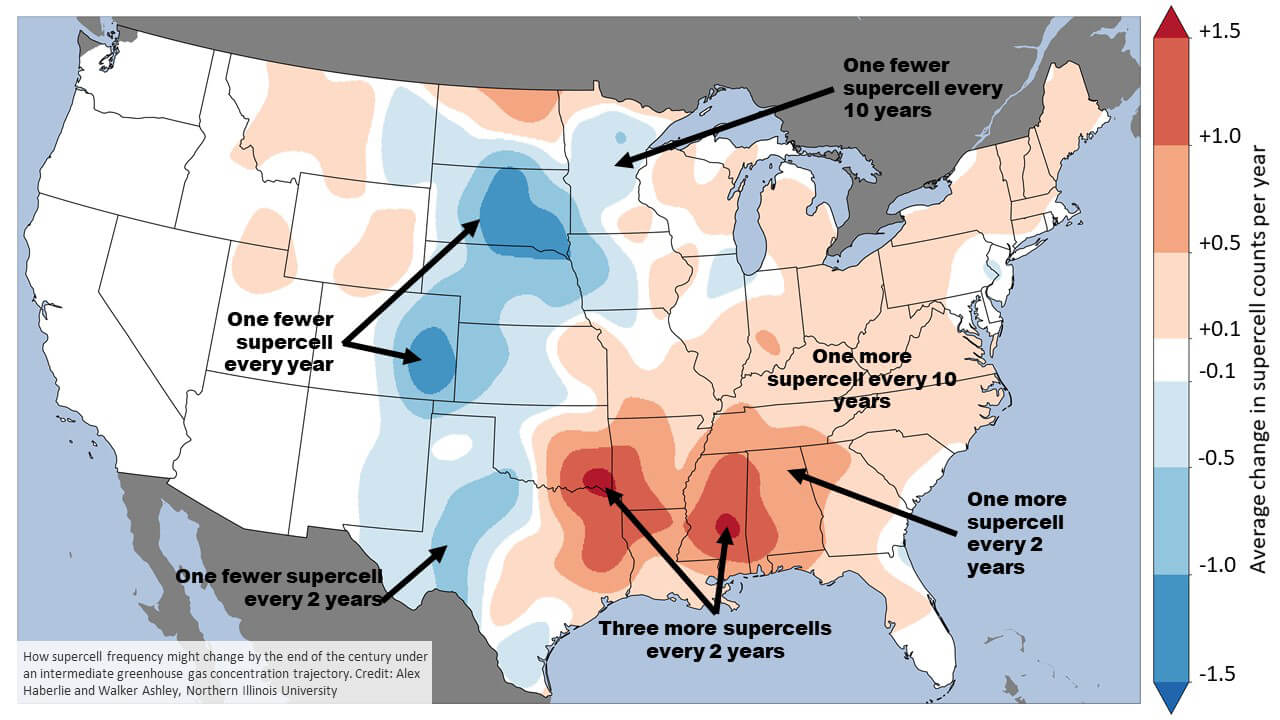
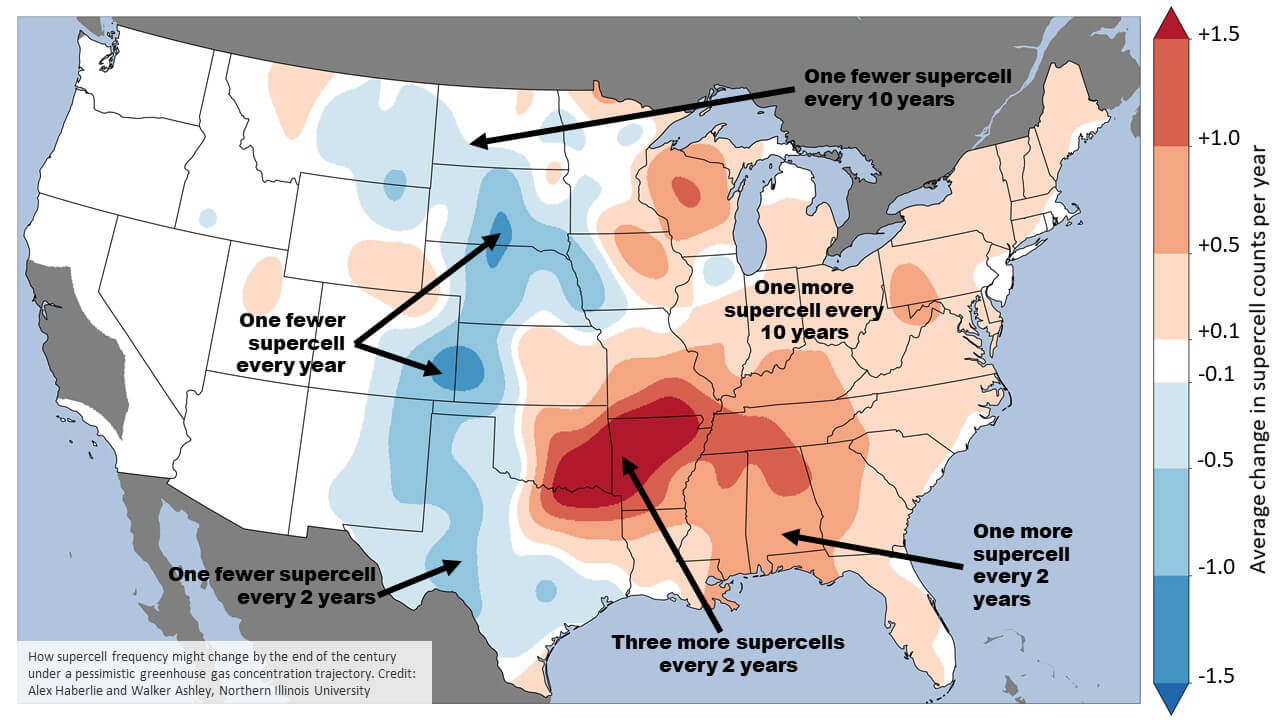
The study identified a projected eastward shift in heightened supercell activity under both climate scenarios, particularly in the Ozarks and mid-South. North and central regions of the Eastern U.S., where these severe storms are now infrequent, are also projected to experience slight increases.
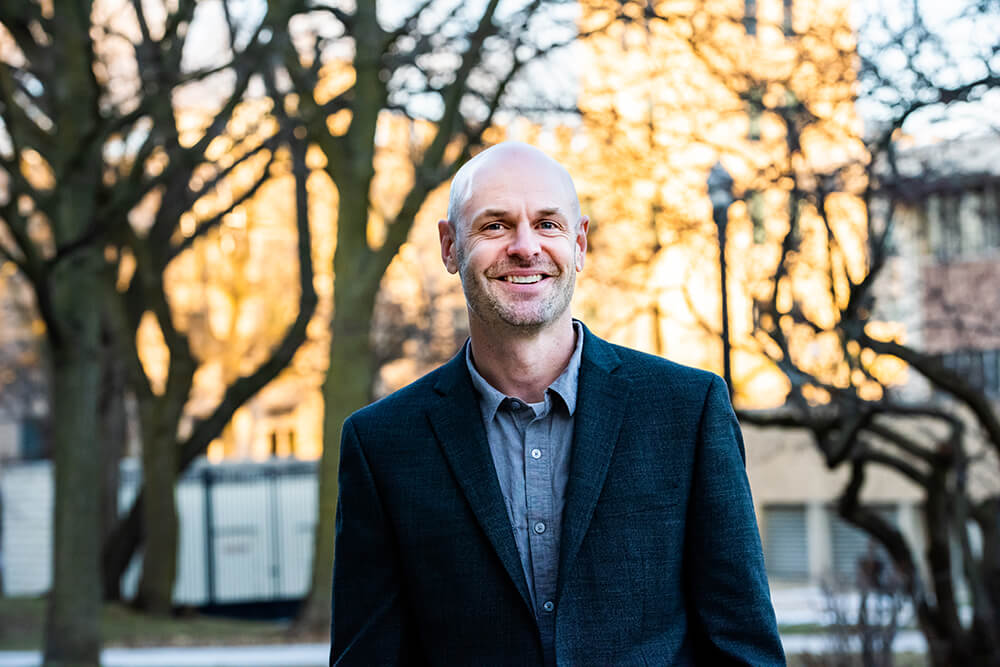
NIU Professor Walker Ashley.
The simulations, however, show regions of the U.S. roughly west of the Interstate 35 corridor experiencing diminished supercell activity. That region includes much of the U.S. Great Plains, which is traditionally thought of as “tornado alley.”
Under the warming scenarios, the timing of late 21st century supercell storms shift as well.
“Supercells are projected to be more prevalent in the early severe weather season—with more in February, March and April—while trailing off somewhat in frequency in the late season months,” Ashley said.
Historically, May and June have been the peak months for supercell storms.
“The simulations indicate March and April will see marked increases in supercell activity,” Haberlie said. “May and June continue to be active months for supercell activity, but the simulations project that July will not be as active as it has been historically.”
Climate simulations for the new study, supported by the National Science Foundation, were conducted at the NCAR-Wyoming Supercomputing Center. The intermediate greenhouse gas concentration trajectory (Representative Concentration Pathway 4.5) used end-of-the century global-climate-warming projections of 2 degrees to 5 degrees Fahrenheit, while the more pessimistic trajectory (RCP 8.5) factored in a warming of 5 degrees to 9 degrees Fahrenheit.
Ashley cautioned that scientists’ understanding of how human-caused climate change will affect severe storms remains in its early stages.
“This study provided an initial set of perspectives on how the climatology of supercells might change, but more research is needed,” he said.
Northern Illinois University is a student-centered, nationally recognized public research university, with expertise that benefits its region and spans the globe in a wide variety of fields, including the sciences, humanities, arts, business, engineering, education, health and law. Through its main campus in DeKalb, Illinois, and education centers for students and working professionals in Chicago, Naperville, Oregon and Rockford, NIU offers more than 100 areas of study while serving a diverse and international student body.
Date posted: April 4, 2023 | Author: Tom Parisi | Comments Off on How supercell storms might change this century
DeKalb, IL – For all those who prefer April Fools’ Day practical jokes over puns, well, the yolk might just be on you.
Turns out, most people actually enjoy punning, according to a new study by Northern Illinois University psychologists. And unlike practical jokes, puns are victimless.
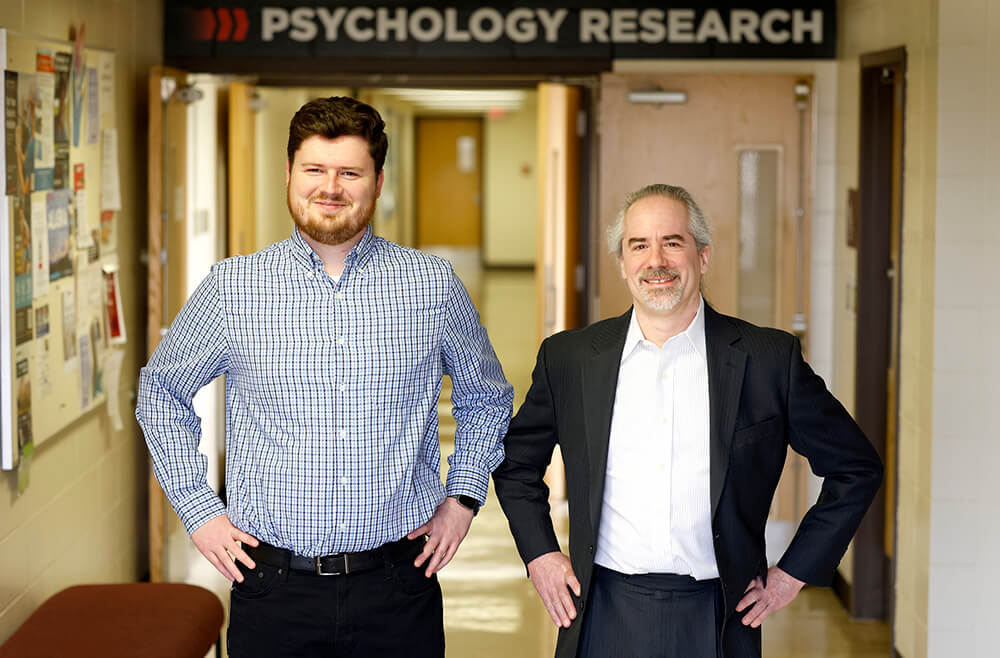
Cody Gibson and NIU Professor Brad Sagarin.
A pun is a joke that creates ambiguity in a sentence or a phrase through wordplay, or what the researchers call “linguistic tomfoolery.” For example, the sentence, “a backward poet writes inverse,” creates ambiguity through the homophonous and equally viable “inverse” and “in verse.”
Cody Gibson, a psychology student pursuing his doctorate degree at NIU, and Psychology Professor Brad Sagarin, got the idea for the punning research project while the two were “cutting up” during office hours. They noticed that it’s not uncommon for puns to elicit what appear to be painful reactions in listeners, rather than belly laughs.
“We wondered: Why do people groan at puns?” Gibson said.
Initially, the two set out to determine whether punsters actually took sadistic enjoyment out of the pained responses from listeners. However, after conducting two related surveys on humor with a total of more than 300 college-student respondents, Gibson and Sagarin discovered otherwise.
First, most punsters were not found to have a penchant for causing pain in others. As for people on the receiving end: “Puns were found to be one of the types of jokes most enjoyed by audiences,” said Gibson, a humor aficionado who conducted the study as part of his master’s program.
“We learned that groans in response to puns might actually be insincere, or even an indication of approval,” Gibson said. “It may seem like it’s popular to hate on puns, but it’s sort of a tongue-in-cheek way of saying, ‘That’s a good one.’ ”
Along with observational humor, puns appeared to be enjoyed by more than 90% of survey respondents, the researchers said.
Their study is now published online ahead of print in the journal, “Personality and Individual Differences,” and the news media has taken a liking to the work. In fact, Gibson was interviewed recently by none other than The Times of London, a British daily national newspaper.
Interestingly, the researchers did find hints of everyday sadism—a personality trait that describes an individual’s tendency to find enjoyment in the suffering of others—in some other types of jokes, such as scatological and insult humor. These types of jokes were found to be more divisive than others and avoided by nearly half of survey participants.
“Humor is pretty complicated and can serve different functions for tellers and listeners,” Sagarin said. “It may be appealing to different people for different reasons.”
For example, humor can be used to relieve stress, demonstrate one’s superior cleverness or to build or tear down relationships. “All humor,” Sagarin added, “is not created equal.”
Of course, April 1 is known for gags. While the researchers did not study practical jokes, Sagarin does see similarities to insult humor. “We want to be careful to not speak beyond our data, but the type of humor that we looked at that has a target was definitely seen as more negative,” Sagarin said.
Northern Illinois University is a student-centered, nationally recognized public research university, with expertise that benefits its region and spans the globe in a wide variety of fields, including the sciences, humanities, arts, business, engineering, education, health and law. Through its main campus in DeKalb, Illinois, and education centers for students and working professionals in Chicago, Naperville, Oregon and Rockford, NIU offers more than 100 areas of study while serving a diverse and international student body.
Date posted: March 22, 2023 | Author: Tom Parisi | Comments Off on Humor more than just for the pun of it
DeKalb, IL – A group of 15 NIU students had a tall order ahead of them this academic year—with nearly $60 million at stake—and many of them celebrated their accomplishments in style this week in Springfield.
Credit: Photo by Myles Tan on Unsplash.
The students served as supervised grant reviewers for the Illinois Department of Natural Resources (IDNR). As such, the upperclassmen and graduate students selected the best of hundreds of proposals from park, forest preserve and conservation districts seeking a share of $59 million in funding through this year’s Open Space Land Acquisition and Development (OSLAD) Program.
Six of the students traveled with Professor Thomas Skuzinski to the state capital Monday and Tuesday, where they rubbed shoulders with federal and state park leaders, toured the IDNR and the state Capitol building, and were formally acknowledged on the State House floor by Rep. Jeff Keicher.
“Not only did we get great professional assistance from the students at NIU, but the students got an inside look at how IDNR serves its constituents,” IDNR Director Natalie Phelps Finnie said. “I look forward to building on this partnership.”
Professor Thomas Skuzinski (center) and NIU students visited earlier this week with leaders from the National Parks Service at the Illinois Department of Natural Resources.
The funding supported program costs, including stipends for 10 upper-level Huskie undergraduates and two semesters of full-time funding plus tuition for five graduate students. Students selected for the program reflected both the rich diversity and academic excellence of NIU.
“This was the first time any state agency in Illinois has allowed students the opportunity to serve as supervised grant reviewers,” Skuzinski said. “It’s truly a first-of-its-kind program.”
The state-financed OSLAD Program provides funding assistance to local government agencies for acquisition and/or development of land for public parks and open space. Project sites vary from small neighborhood parks or tot lots to large community and county parks and nature areas. Financed by a percentage of the state’s Real Estate Transfer Tax, the program provides funding assistance up to 50% (100% for distressed communities) of approved project costs.
Fulfilling community-engagement mission
“NIU has a mission-driven commitment to community engagement, and this effort will have a sizeable impact on communities throughout Illinois,” said Skuzinski, who holds a law degree as well a Ph.D. in urban and regional planning.
Credit: Photo by Honey Yanibel Minaya Cruz on Unsplash.
The ESE institute he oversees fosters research, education and community engagement about the environment and sustainability, and also offers two undergraduate degrees in environmental studies, as well as a minor and two certificate programs.
All of the undergraduates who participated in the grant program are environmental studies majors, so the experience related closely to their academic expertise. The contract with IDNR also supports the ability of the institute to grow new programs for faculty and student success in transdisciplinary research, experiential learning and community engagement.
“Our students are really excited about the impact this program will have on neighborhoods, communities and counties,” Skuzinski said.
“They remember the impact that parks and open spaces had on the communities where they grew up, and they want others to be able to share in those experiences. The students not only put their expertise in environmental studies to good use but also learned to work at a high level of professionalism with a state agency.”
Educational experience for students
Senior environmental studies major Jennifer Schaumberg, whose focus area is water sciences, said she couldn’t pass up the opportunity to work on the project. The experience helped her more clearly understand the importance of community access to bodies of water and provided her with other valuable lessons.
“Working with the Illinois Department of Natural Resources has been educational and insightful, and I am very grateful for this opportunity,” said Schaumberg, a native of Streator. “This project has not only taught me how to better manage my time, but to be more communicative about questions and concerns, become familiar with official documents, work collaboratively, and much more. Through this project, I gained insights on the behind-the-scenes processes of what IDNR does for communities.”
Graduate student reviewer Virginia Sotelo is pursuing her master’s degree in philosophy, and she also has benefitted from the experience.
“This project is only loosely related to my area of study through ethics,” said the 27-year-old from Laredo, Texas. “However, because of the impact that it seems to have on local communities, especially those with higher needs, I consider it to be a pretty positive addition to my experience as a graduate student.
“Working on this project has really shown me the crucial role that each individual’s involvement in local affairs plays on the improvement of their community,” Sotelo added.
How the process worked
The NIU students weren’t without support as they reviewed grants for potential funding.
Professor Skuzinski (right) on campus with NIU student grant reviewers.
Skuzinski said the undergraduates were grouped into teams. Graduate-level students oversaw a pair of student reviewers and in turn were supervised by one of five retired park district administrators who participated in the program. Skuzinski and ESE Assistant Director Melissa Burlingame reviewed all recommendations as well, while office manager Rave Meyer provided project support.
“It makes for an objective process,” Skuzinski said. “Every grant was assessed by five people.”
Margaret Resnick previously served as executive director for the Mundelein Park & Recreation District and spent more than three decades in parks and recreation. She was happy to lend her expertise to the project, reviewing and scoring grant applications.
“I believe (NIU students) will get an insight into how a large state agency determines how to distribute funds, as well as the recreational needs of large and small communities throughout the state,” Resnick said. “The OSLAD program is a vital funding source for agencies throughout the State of Illinois, and I was thrilled to be able to help in any way I could.”
In addition to Schaumberg and Sotelo, students involved in the project included graduate students Jonathan Adsit (history), Ali Oku (biological sciences), Orlando Reyes (philosophy) and Kristin Vrona (economics); and undergraduates Ashley Barry, Gabriel Cabrera Ruiz, Eric Faulkner, Julia Graczyk (graduated December 2022), Christiana Guthrie, Samuel Lepien, Allyson Thompson, Marty Trujillo and Kate Vos.
Northern Illinois University is a student-centered, nationally recognized public research university, with expertise that benefits its region and spans the globe in a wide variety of fields, including the sciences, humanities, arts, business, engineering, education, health and law. Through its main campus in DeKalb, Illinois, and education centers for students and working professionals in Chicago, Naperville, Oregon and Rockford, NIU offers more than 100 areas of study while serving a diverse and international student body.
Date posted: March 1, 2023 | Author: Tom Parisi | Comments Off on State taps expertise of NIU students to help shape tomorrow’s parks
DeKalb, Ill. – The U.S. Department of Education has awarded a $5.1 million grant to Northern Illinois University to address the critical shortage of K-12 school psychologists in the state’s northern region.
Photo by Agence Olloweb on Unsplash.
NIU’s School Psychology Program will use the funding to launch an effort to enlist working educators into a three-year program to become school psychologists. Courses will be primarily online to meet the schedules of these working educators, who will pay no tuition or fees and receive laptop computers and stipends for certain expenses.
Those new psychologists will provide services to an estimated 12,000 students annually in the project’s partnering school districts: the DeKalb School District, Harlem School District (near Rockford) and Belvidere School District, as well as the Northwest Special Education Cooperative, which covers 11 rural districts in Jo Daviess, Stephenson and Carroll counties.
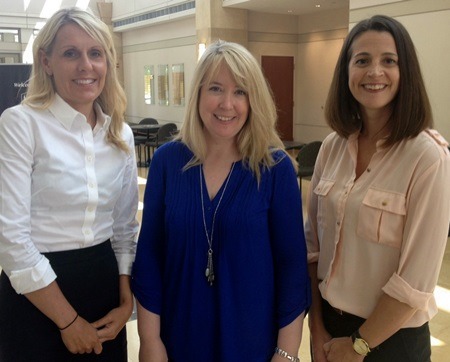
NIU Psychology Professors (left to right) Michelle Demaray, Christine Malecki and Julia Ogg are co-directing the PESP-NI project
“In Illinois and across the nation, there is a desperate need for school psychologists to address mental health needs of students,” said NIU Psychology Professor Christine Malecki, director of NIU’s School Psychology Program. Malecki said she regularly fields inquiries from school administrators who are seeking ways to meet the shortage of school psychologists.
“Our traditional school psychology program is nationally known, has been very successful and has a long history of engaging and being collaborative with partners,” Malecki added. “But we haven’t been able to grow our traditional program because of the required additional resources. This new project will take our efforts to the next level, in terms of responding to a dramatic need in our region.”
The grant funding was highly competitive, and the Department of Education indicated NIU had one of the highest scoring applications.
“I am so proud of our School Psychology faculty and students,” NIU College of Liberal Arts and Sciences Dean Robert Brinkmann said. “Our program in School Psychology is one of the best in the nation, and I am so pleased that their work is recognized through this impressive grant.”
Photo by Jeswin Thomas on Unsplash.
When NIU’s grant proposal was written last fall, Illinois school districts had nearly 150 unfilled positions for school psychologists, Malecki said.
“Even the best trained school psychologists are not able to employ best-practice approaches when they are experiencing excessively large caseloads,” said Professor Michelle Demaray, co-director of the PESP-NI project with Malecki and Professor Julia Ogg.
“Importantly, this lack of mental health services specifically affects underrepresented students in high-need districts more profoundly,” Demaray said. “Students living in poverty are less likely to have insurance making it more difficult to receive services outside of schools.”
Program participants must make a five-year, post-graduation commitment to fill shortages in their current district.
NIU’s traditional program conflicts with educator school-day working hours, so the project directors said it was important to build a new program around the schedules of working teachers, with classes offered remotely, during evenings, on weekends and during the summer.
“Our partner districts indicated that many of their educators are interested in training to become school psychologists,” Ogg said. “But they couldn’t afford to quit teaching to attend graduate school full-time. Our new program addresses these financial and time concerns.”
Recruitment will focus on the partner districts, with educators of color, bilingual teachers and men (all groups underrepresented in the profession) particularly encouraged to apply.
At the end of the three-year program, participants will earn the Specialist in School Psychology degree (an advanced graduate degree that is beyond a master’s) and Professional Educator License, with a school psychologist endorsement in Illinois.
The project directors will hire a PESP-NI coordinator and faculty for the program. Recruitment of additional professors for the project has already begun, including among the ranks of NIU alumni. Nearly two dozen alumni have already indicated strong interest in teaching.
“It’s incredible to see our alumni step up in this way,” Malecki said, adding that the partner school districts have stepped up as well.
During the second year of coursework, candidates will complete a school psychology practicum one day a week, with support from their school districts and the grant for covering substitute teacher expenses. During the third year, candidates will complete a full-time school psychology internship with their districts, with resources from the districts and grant used to cover an educator’s typical salary while serving the internship.
Educators from partner districts who are interested in the program are encouraged to visit the project website or email Christine Malecki at cmalecki@niu.edu for more information.
Northern Illinois University is a student-centered, nationally recognized public research university, with expertise that benefits its region and spans the globe in a wide variety of fields, including the sciences, humanities, arts, business, engineering, education, health and law. Through its main campus in DeKalb, Illinois, and education centers for students and working professionals in Chicago, Naperville, Oregon and Rockford, NIU offers more than 100 areas of study while serving a diverse and international student body.
Date posted: February 16, 2023 | Author: Tom Parisi | Comments Off on U.S. Dept. of Ed awards $5M to NIU to train school psychologists
DeKalb, Ill. – Rep. Lauren Underwood visited Northern Illinois University Friday, Jan. 20, to celebrate Congressionally directed funding of $1.5 million to the College of Engineering and Engineering Technology for modernization of its Microelectronic Research and Development Lab.
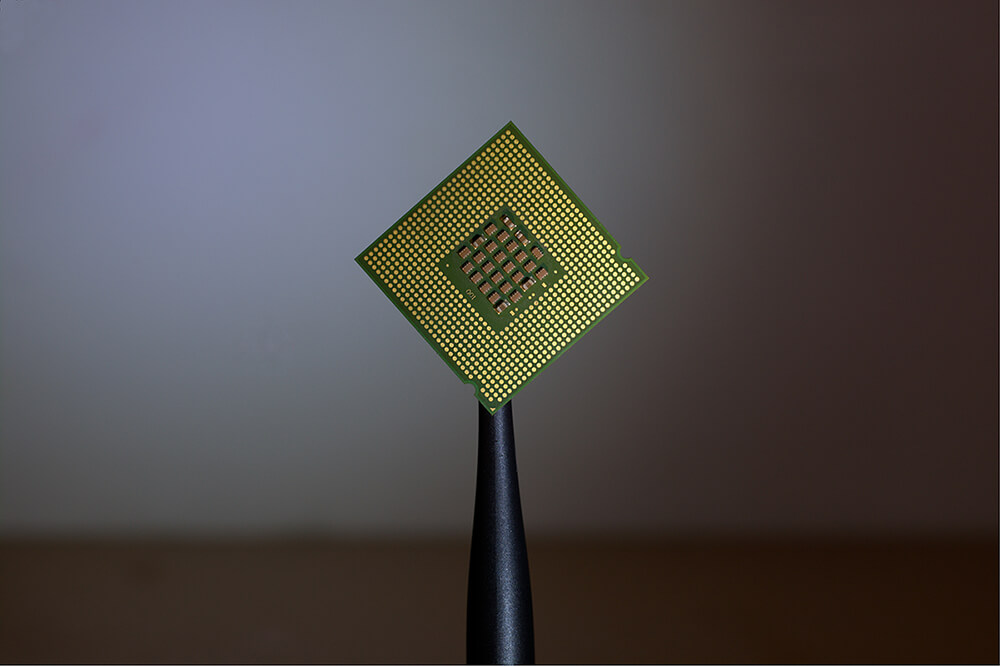
Photo courtesy of Brian Kostiuk, Unsplash.
The Community Project Funding grant will help transform the college’s existing 4,200-square-foot cleanroom lab space into a state-of-the-art fabrication lab dedicated to microchip research, design, workforce development and small business innovation and prototyping, said Dean Donald Petersen.
The improvements will allow faculty and students to focus on three areas of direct relevance to the U.S. economy and national security: microelectronic devices, microelectromechanical systems (MEMS) and chemical/biological sensors. The lab will support the needs of the local industries through workforce development, training, research, and serve as a valuable resource for high-tech industry start-ups to prototype and test their designs.
“Equipment in this field evolves quickly and is expensive, so we are extremely grateful to Rep. Underwood and Sen. Dick Durbin for their help in securing this funding,” Peterson said. “This funding will ensure that our students continue to graduate prepared to work in an important, strategic industry.”
NIU President Lisa Freeman shared Petersen’s enthusiasm for the opportunities created by the grant.
“Increasing our nation’s capacity to manufacture microchips is crucial to our economy and national security, so we are excited that the federal government has chosen to invest in enhancing our capability to train students for those careers,” Dr. Freeman said. “This grant will allow us to graduate diverse professionals capable of meeting the needs of the chip industry close to home and across the nation. Moreover, it will allow NIU to support industry partners and regional economic development. We thank Rep. Underwood and Sen. Durbin for all they did to make this possible.”
Chief of Staff Matt Streb, President Lisa Freeman, Rep. Lauren Underwood, Vice President of Research and Innovation Partnerships Jerry Blazey and Dean of the College of Engineering and Engineering Technology Donald Peterson.
The significance of the chip industry was underscored during the pandemic. With 75 percent of global chip production in Asia, American industries were left scrambling for chips needed to operate everything from automobiles to household appliances to defense systems. Just this week, the CEO of Intel, one of the world’s largest chip makers, predicted that microchips will influence global politics over the next five decades much as oil has for the last 50 years.
To help address that issue, last fall President Joe Biden signed into law the CHIPS and Science Act, which will provide $52.7 billion through the Fiscal Year 2023 Omnibus Appropriations Act. It will fund American semiconductor research, development and workforce development. While the funding for the lab is separate from that bill, it is tied to efforts to reduce American independence on foreign sources of computer chips.
“I’m proud to deliver over $20 million to fund 15 projects across our community, including $1.5 million for Northern Illinois University,” Underwood said. “We are facing a global shortage of the microchips that power our everyday electronics, and solutions are here at home. This funding is a critical step toward addressing that shortage, supporting microchip research and development, and providing new STEM opportunities for NIU’s student body.”
The upgraded lab will allow NIU to contribute to critical projects of national interest including high speed chips for 5G and 6G technologies, advanced battery technologies and advanced sensor chips for self-driving cars.
The new equipment will be is expected to be operational later this year.
About NIU
Northern Illinois University is a student-centered, nationally recognized public research university, with expertise that benefits its region and spans the globe in a wide variety of fields, including the sciences, humanities, arts, business, engineering, education, health and law. Through its main campus in DeKalb, Illinois, and education centers for students and working professionals in Chicago, Naperville, Oregon and Rockford, NIU offers more than 100 areas of study while serving a diverse and international student body.
Date posted: January 24, 2023 | Author: Tom Parisi | Comments Off on Engineering celebrates funding to upgrade microchip fabrication lab
DeKalb, IL – It’s all systems go on NIU’s planned $23 million Northern Illinois Center for Community Sustainability (NICCS), as the State of Illinois has released the remainder of its funding set aside for the project.
The Northern Illinois Center for Community Sustainability will be built on a site near the Convocation Center.
NIU will receive a lion’s share of that new funding—$15 million to build the new 30,000-square-foot center on the university’s west campus. NICCS will be a world-class research facility focusing on water resources, environmental change, and food systems, while also promoting science-based policies and practices for communities.
State funding also will support construction and renovation of facilities at Northeastern Illinois University (NEIU), Southern Illinois University Carbondale (SIUC), Southern Illinois University Edwardsville (SIUE) and the University of Illinois Springfield (UIS). The funding is made possible by the bipartisan Rebuild Illinois Capital program, with state investments matched dollar for dollar through university, private, and philanthropic funding sources.
“Rebuild Illinois isn’t just about modernizing our roads and bridges—it’s about building a future for generations to come that is economically prosperous with the promise of opportunity at every turn,” Governor Pritzker said.
“That’s why we are distributing more than $37 million to first-rate educational institutions throughout our state to create facilities that will prepare our students for the jobs of today and tomorrow. From researching water resources at NIU’s Northern Illinois Center for Community Sustainability to addressing food deserts and agricultural challenges at SIUC’s Illinois Food, Entrepreneurship, Research, and Manufacturing hub, young Illinoisans will have the opportunity to shape our future by coming up with cutting-edge solutions to our 21st century problems—all while furthering our state’s status as a national hub for all things research and innovation.”
The Illinois Capital Development Board (CDB) will oversee the projects’ design and construction in accordance with the protocol for state-appropriated projects.
“This is wonderful news for NIU, our region and our state,” NIU President Dr. Lisa C. Freeman said.
Photo by Steven Weeks on Unsplash.
“NICCS builds on a foundation of faculty excellence in environmental science and sustainability. The center will strengthen research designed to promote sustainable solutions to a multitude of challenges facing our region and state, and also spur economic development and create opportunities for public-private partnerships. Most importantly, NICCS will prepare our students to be leaders in environmental stewardship by providing them with relevant hands-on learning experiences and opportunities.”
The CDB has already hired a consultant to prepare the conceptual plans and design objectives for NICCS. NIU has outlined needs for classrooms, offices, laboratories, an atrium, an auditorium and collaborative and conference spaces, as well as two envisaged wings for research and external tenants.
State funding will cover about two-thirds of the new building’s cost. NIU will provide the remaining $8 million through in-kind contributions. Additional contributions are anticipated through private investment and donations.
“Our goal is to make NICCS a world-class destination for experts, university faculty, graduate and undergraduate students, government and business leaders, and citizens working to enhance sustainability in their communities,” said Gerald C. Blazey, NIU vice president for Research and Innovation Partnerships.
“Under a best-case scenario, construction would begin as soon as late next year, with a center grand opening in 2026,” Blazey added.
Work at NICCS will focus on three key areas:
Improving water resources: NIU faculty, students and IIN partners will develop new sustainable water management systems for agriculture, industry and personal consumption.
Predicting and managing environmental change: Research will be conducted on topics that include biodiversity, ecosystem restoration, environmental maintenance, natural disasters, climate change and response to extreme climate events.
Creating food-system innovation: The center will conduct multidisciplinary research into new methods of food production, working with partners from across the state, nation and world.
“As an alum of Northern Illinois University, I saw first-hand the benefits of the generational transformation this institution provided to first-generation college students,” State Representative Jeff Keicher said. “As the State Representative for NIU, I’m excited that this new center will offer innovative research opportunities to the generations that follow and continue to allow NIU to build on its reputation of changing our world for the better.”
Professor Courtney Gallaher is the university’s campus sustainability coordinator.
In her recent State of the University address, President Freeman said she expects the university to lead sustainability efforts by example, too. Toward that end, a Sustainability and Climate Action Planning Task Force has been appointed to spearhead efforts to make campus more sustainable and help to create the first campus-wide sustainability and climate action plan.
NIU has strong network of faculty members who have been working on sustainability issues for many years and have ongoing projects that feed into the mission of the new center. More than a decade ago, the university established its Institute for the Study of Environment, Sustainability and Energy (ESE) to foster research, education and community engagement about the environment and sustainability. ESE offers two undergraduate degrees in environmental studies, as well as a minor and two certificate programs.
Professor Holly Jones, a nationally recognized environmental restoration expert who holds a joint appointment in biological sciences and environmental studies, said she expects the new center to foster research bringing together faculty experts from an array of disciplines.
“NICCS will be a hub of research and discovery, which will allow faculty members, students and staff to forge new connections with local business leaders and industry in ways we couldn’t otherwise,” Jones said. “It’s exciting to think of the new avenues for transdisciplinary research and scholarship that we will be able to pursue with this new center.”
Northern Illinois University is a student-centered, nationally recognized public research university, with expertise that benefits its region and spans the globe in a wide variety of fields, including the sciences, humanities, arts, business, engineering, education, health and law. Through its main campus in DeKalb, Illinois, and education centers for students and working professionals in Chicago, Naperville, Oregon and Rockford, NIU offers more than 100 areas of study while serving a diverse and international student body.
Date posted: December 14, 2022 | Author: Tom Parisi | Comments Off on State releases $15M in funding for NIU sustainability center
DeKalb, IL – Engineering Technology Assistant Professor Mahdi Vaezi is leading a team of NIU researchers who hope to find a more environmentally friendly way to make plastics by using a plant that’s well known these days for its recreational purposes: cannabis.
Photo by Naja Bertolt Jensen on Unsplash
Plastic products can take centuries to degrade, and more than 9 billion tons of plastic have been made since the 1950s. The vast majority of it has been tossed in the garbage. In addition, by 2040, greenhouse gas emissions associated with manufacturing, use and disposal of traditional fossil fuel-based plastics are expected to account for 19% of the global carbon budget.
With funding support from RYMAC Industries, LLC, Vaezi and his team are seeking to replace a portion of plastic in plastic products with biodegradable composite materials. To accomplish this, the researchers will mix traditional plastics with cannabis—or more specifically, the fibers of industrial hemp (Cannabis sativa).
“Depending on the source of plastic, whether natural or petroleum-based, our bio-composite products will degrade much faster than ordinary plastics,” said Vaezi, whose research specialties include waste management. “Furthermore, they will be greener than pure plastics because the manufacturing process will require smaller quantities of fossil fuels.”
Hemp and marijuana are both varieties of cannabis, but the difference is found in their psychoactive component: tetrahydrocannabinol (THC). The amount of THC in hemp is so small that it is of no use to the recreational marijuana industry (although it can be used for CBD extraction).
For decades, federal law did not differentiate hemp from other cannabis plants, all of which were effectively made illegal in 1937 under the Marihuana Tax Act. It made it difficult to study uses for the plant, but federal farm bills in 2014 and 2018 created protections for hemp research.
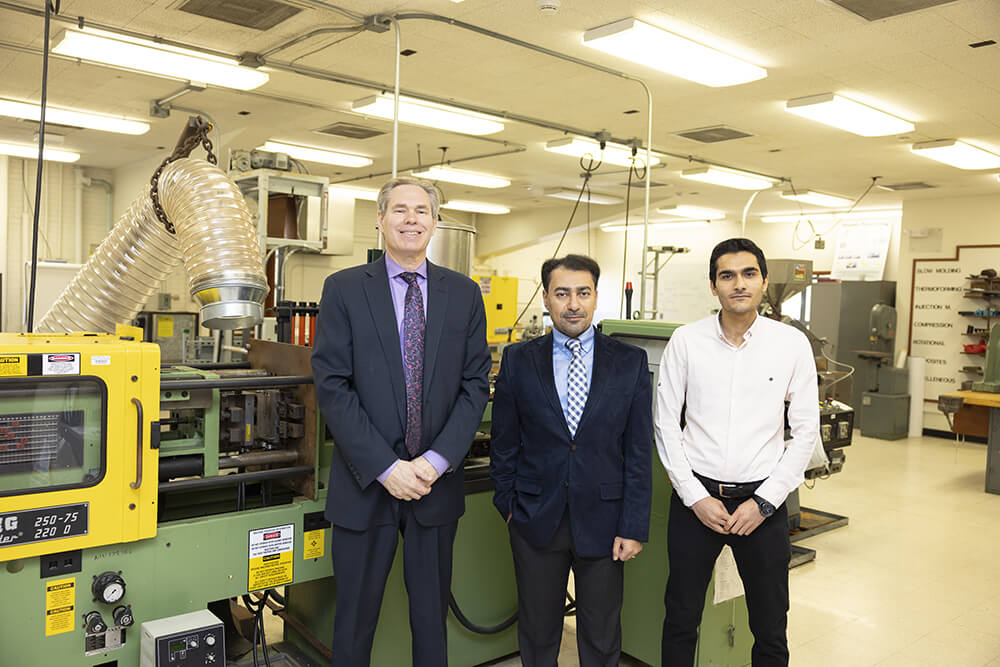
Engineering Technology Professors Robert Tatara (left to right) and Mahdi Vaez and research assistant Mohammad Faghani are working to find a more environmentally friendly way to make plastics.
With its lightweight and strong fibers, hemp has been used for thousands of years to make rope and fabric. The fast growing flowering herb also sucks up carbon quicker than most other plants—twice as fast as a forest. For that reason, some hemp proponents believe carbon credits for hemp fields could be on the horizon.
Attorney Ryan McQueeney, a former dispensary owner, founded RYMAC Industries for the purpose of exploring hemp use in plastics, using stalks of the crop. He sees lots of potential.
“The cannabis industry now is kind of like being in the oil industry in 1890 or the car industry in the early 1900s,” McQueeney said.
“If we could, let’s say for example, end up with a process that can make plastic utensils . . . we’d be creating another crop in Illinois with value, capturing carbon in natural way and creating a new industry for processing and manufacturing in the state.”
Plastics is a $600 billion annual business and the sixth largest industry in the United States, according to the Plastics Industry Association.
Using industrial hemp to create various products, even automobiles, is not a new idea. The basic building blocks of plastic are large molecules called polymers, typically manufactured from petroleum sources. But petroleum-based plastics require drilling and mining of materials, an energy-intensive process that generates pollution.
Hemp, on the other hand, is a resource that can be quickly renewed in a more environmentally friendly manner, and the plant also can be used to make biocomposites.
Research assistant Mohammad Faghani working in the plastics lab in Still Gym.
Vaezi, together with Engineering Technology Professor Robert Tatara, who oversees NIU’s plastics lab in Still Gym at NIU, first conducted a feasibility study for McQueeney, pulling in information from previous studies of hemp-based plastics. As they embark on the second phase of the project, the researchers are teaming up with Mechanical Engineering Assistant Professor Sahar Vahabzadeh and research assistant Mohammad Faghani.
The aim is to come up with the ideal recipes and processes for plastic materials made with hemp additives.
“By adding a natural component that tends to absorb water, that should improve degradation (of the plastic products) or recyclability,” Tatara said. “But those qualities also will depend somewhat on what plastics are in the mix. We’re going to be trying different types of plastic, with the intent of creating an eco-friendly and viable product. There is always a need for better composites and for composites you can ultimately recycle.”
The effort is a complex engineering undertaking. It involves determining the percentage of hemp to use in their plastics and manufacturing variables such as optimal moisture control, production temperatures and mechanical processing methods. Different materials and compounds can produce different plastic qualities, such as high strength, low density and sound absorption.
“I couldn’t speak more highly about the experience of doing this with NIU,” McQueeney said. “They’ve been spending time educating me, too, and being open minded and available.”
Once the processes are optimized, the engineering team will produce three categories of materials that can be used to build products: plastic ingots for machining applications, pellets for manufacturing purposes and filaments for 3D printing. Each raw product will likely have its own recipe, since each has different desired properties.
“If we can achieve 40 to 60% of hemp (in the plastics), it would be that much more environmentally friendly,” McQueeney said.
The researchers also will be working to find the best and most cost-efficient methods for producing their products, which will be tested for strength, durability and other properties.
“It has to be something that makes financial sense,” McQueeney added. “I told them, ‘I want you to go in there and be mad scientists.’ I want to get the smart guys in a lab, let them work and maybe we’ll get a eureka moment out of it.”
Northern Illinois University is a student-centered, nationally recognized public research university, with expertise that benefits its region and spans the globe in a wide variety of fields, including the sciences, humanities, arts, business, engineering, education, health and law. Through its main campus in DeKalb, Illinois, and education centers for students and working professionals in Chicago, Naperville, Oregon and Rockford, NIU offers more than 100 areas of study while serving a diverse and international student body.
Date posted: November 21, 2022 | Author: Tom Parisi | Comments Off on Pollution solution? Using cannabis to make plastics