DeKalb, IL – The U.S. Department of Energy has awarded NIU Physics Professor Bela Erdelyi and a colleague at Argonne National Laboratory with a $600,000 grant over three years to study a new type of particle accelerator to be used in discovery science.
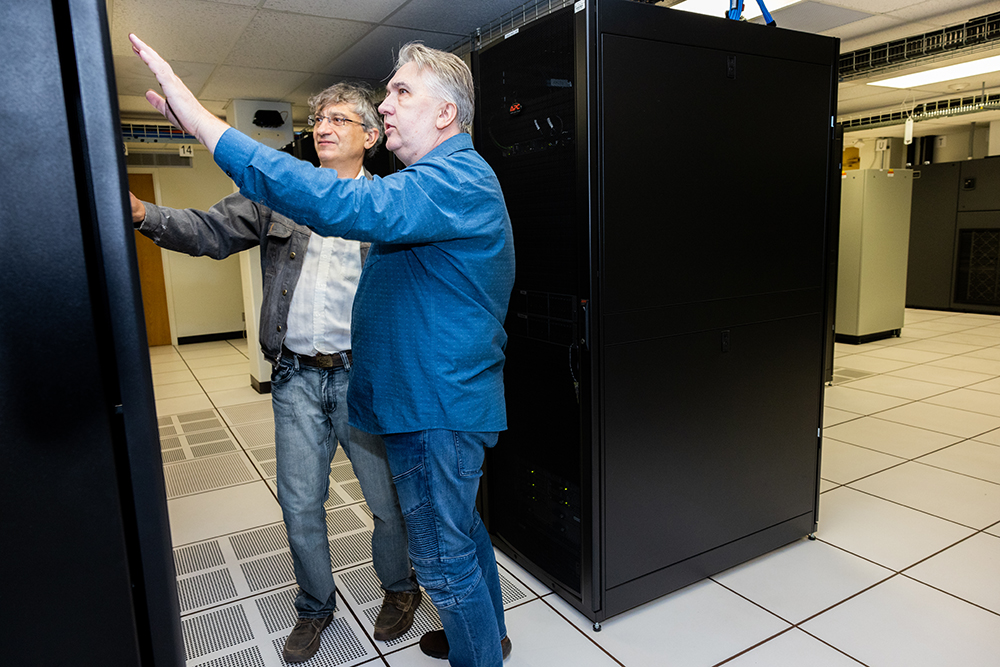
Professor Bela Erdelyi (blue shirt) and Sergey Uzunyan oversee NIU’s Center for Research Computing and Data, which will be utilized to study a new type of particle accelerator.
Particle accelerator development is an enabling technology that paves the way for applications in our everyday world. In the past, for example, development of accelerator technologies has led to ways to treat cancer, eliminate nuclear waste, scan cargo for security applications, kill food-industry viruses and make shrink wrap.
Particle accelerators also are essential tools of discovery for particle and nuclear physics and for sciences that use x-rays and neutrons, a type of neutral subatomic particle. The accelerators collide abundantly existing particles to create rare, exotic ones that shed light on how the universe works at its most fundamental level.
Erdelyi will serve as the lead investigator of a team that aims to lay the foundation for future, improved particle accelerators, with Brahim Mustapha of the U.S. Department of Energy’s Argonne National Laboratory serving as co-principal investigator.
“The probability of creating new particles worthy of study depends on the amount of initial colliding particles,” Erdelyi said. “However, those particles don’t like each other, or in other words they tend to repel each other. We came up with a new method that would tame them by bunching together more particles into smaller spaces to create more collisions. The project is about a comprehensive study of the physics underlying this method, dubbed ‘circular beam modes.’ ”
Two graduate students will be hired to assist with the study. One will come from NIU’s accelerator physics program, while the other could be a computational science student. The physics student will be stationed at Argonne, which provides a multitude of networking opportunities and state-of-the-art science facilities.
“It’s a heavily computational job, and I am looking for someone with the right skill set,” Erdelyi said. “It could be someone in the computer science field or in the mathematics field. This is a very good collaboration opportunity, with interface between physics and computational science.”
Awarded in August, Erdelyi’s grant was announced as part of $37 million in DOE funding awarded to 44 institutions across the country to build research capacity, infrastructure and expertise at institutions historically underrepresented in DOE’s Office of Science portfolio, including Minority Serving Institutions and Emerging Research Institutions like NIU.
From 2004 to 2016, Erdelyi held a joint appointment with NIU and Argonne, and he continues to have a close relationship with both Argonne and Fermilab. The university’s proximity to the two institutions is a strong asset, he said.
“The big driving force and the big challenge is to model, simulate and optimize these machines on computers with confidence that you can trust the results,” Erdelyi noted. “You cannot do prototyping. You build it once, and it should work. Otherwise you are in big trouble.”
Over the years, multiyear grant initiatives such as this have helped propel NIU students into their careers—and Erdelyi envisions that to be the case with this grant.
“Historically, NIU has been very good at giving the students a skill set that is complex enough so that they can take different career paths,” he said. “Some stay in academia as professors. Others go into the private sector, and others start their own private companies. These are opportunities to create great connections with national labs and high-performance computing facilities.”
In addition, other NIU students will benefit from the work as Erdelyi incorporates new findings into his own lectures and seminars. “The research will help educate the next generation of accelerator scientists,” Erdelyi said.
About NIU
Northern Illinois University is a student-centered, nationally recognized public research university, with expertise that benefits its region and spans the globe in a wide variety of fields, including the sciences, humanities, arts, business, engineering, education, health and law. Through its main campus in DeKalb, Illinois, and education centers for students and working professionals in Chicago, Naperville, Oregon and Rockford, NIU offers more than 100 areas of study while serving a diverse and international student body.
Date posted: October 18, 2023 | Author: Tom Parisi | Comments Off on NIU physicist lands $600k grant to investigate accelerator technology
DeKalb, IL – Two Northern Illinois University psychology professors have received an $800,000 grant to evaluate the effectiveness of a social, emotional and behavioral intervention program they have developed for young children.
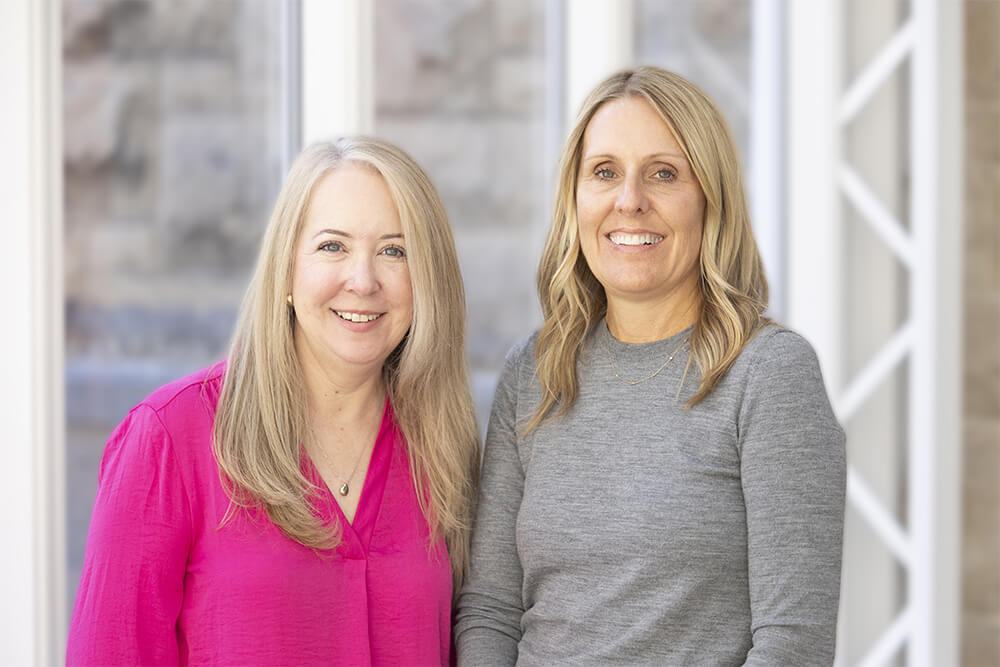
Psychology Professors Christine Malecki and Michelle Demaray
Psychology Professors Michelle Demaray and Christine Malecki are overseeing the rollout of a pilot program for fourth- and fifth-grade students in five DeKalb elementary schools. Malecki and Demaray are faculty in NIU’s School Psychology Program.
The funding covers a two-year period and is provided by the Institute of Education Sciences, an arm of the U.S. Department of Education that seeks to provide scientific evidence on which to ground education practice and policy.
Entitled “A Randomized Pilot Study of Brief Intervention Group Support (BIGS): A Tier 2 Intervention for Students with Social-Emotional and Behavioral (SEB) Concerns,” the study is expected to initiate student participation in January 2024, Malecki said.
The focus of the BIGS intervention is on helping students manage stress, connecting with their peers for social support, and increasing their positive thoughts and behaviors as they develop resilience.
The study is “rigorous and randomized,” Malecki said. It will consist of 50% of students who receive the BIGS Pilot approach to intervention, with an equal number of students in a control group that employs existing approaches to intervention. Students who are identified as having social, emotional and behavioral concerns will be invited to participate, with parental permission required to enroll in the program. Students in the control group will be offered the intervention after the study.
Steve Elliott, who advised Malecki and Demaray when both were in graduate school at the University of Wisconsin-Madison, is the program’s co-developer. He is currently the Mickelson Foundation Professor at Arizona State University’s Sanford School of Social and Family Dynamics. To avoid bias, evaluation of the new pilot program, including data from the two subgroups, will be analyzed by researchers at Penn State University.
Demaray and Malecki will be assisted by two graduate students in the School Psychology Program. They will help with intervention training, collecting data and conducting observations of the intervention to provide feedback to facilitators and to record data about the grant’s implementation.
“Undergraduate and other graduate students in our research labs will likely get exposure to the project and benefit from what we learn, too,” Malecki said.
Among other roles, Demaray will have primary responsibility for project leadership. She and Malecki will provide training on BIGS to the support staff, supervise the NIU graduate students, conduct observations of BIGS implementation, and aid the district as needed.
The program has already been deployed in a small number of school districts, including in Illinois, Ohio and Arizona. The principles undergirding it flowed out of exploring how a small group receiving social emotional skill building could be supportive of one another through that experience and “together learn healthy skills and behaviors as part of a healthy and well-functioning group,” Malecki said.
With the COVID-19 pandemic causing a move to remote learning, children experienced increased disconnection from one another and are struggling to reconnect now that they are back together, noted Demaray.
“Social support is so important in so many areas of children’s lives,” Demaray added. “The more support kids feel they have in their lives from peers and important adults, the better they do academically, the more friendships they develop, and the lower their rate of depression.”
A key element of the program is for children to reflect on their stress levels, learn ways to manage that stress and develop skills in expressing support for one another in the early stages of their meetings. The professors also emphasize that not all stress is “bad,” and BIGS group leaders will offer insight to children on ways to adjust their mindset and behaviors to turn harmful levels of stress into “healthy stress.”
“We know that when learning any skill, you have to practice it,” Malecki said. “So the instructional phases we go through in the lessons are designed around good science and what we know about good instruction.”
The NIU professors lauded DeKalb School District 428 for its participation, particularly Lisa Becker, assistant director of Student Services; Sara Oakland-Bates, social emotional learning coordinator; and Kyle Gerdes, director of Student Services.
“They’re just amazing partners,” Malecki said. “If they didn’t think this could benefit the students of DeKalb, they wouldn’t do it. They are doing all they can to serve the students of District 428.”
One of the program’s potential strengths is its ability to serve a large group of children at the same time, Malecki said. “It’s broad and can help a lot of kids with a wide range of issues. It’s geared toward helping kids build helpful foundational strategies.
“We are even using the skills and the routines that are taught as part of this intervention ourselves, for our own positive mental health,” Malecki added. “We’re excited about its potential because it is very relevant. We think most youth can benefit from this.”
About NIU
Northern Illinois University is a student-centered, nationally recognized public research university, with expertise that benefits its region and spans the globe in a wide variety of fields, including the sciences, humanities, arts, business, engineering, education, health and law. Through its main campus in DeKalb, Illinois, and education centers for students and working professionals in Chicago, Naperville, Oregon and Rockford, NIU offers more than 100 areas of study while serving a diverse and international student body.
Date posted: October 12, 2023 | Author: Tom Parisi | Comments Off on BIG(S) opportunity to serve young school children
DeKalb, IL – After combing through about a thousand studies on how insects taste the world around them, an NIU doctoral student and her professor are drawing some buzz.
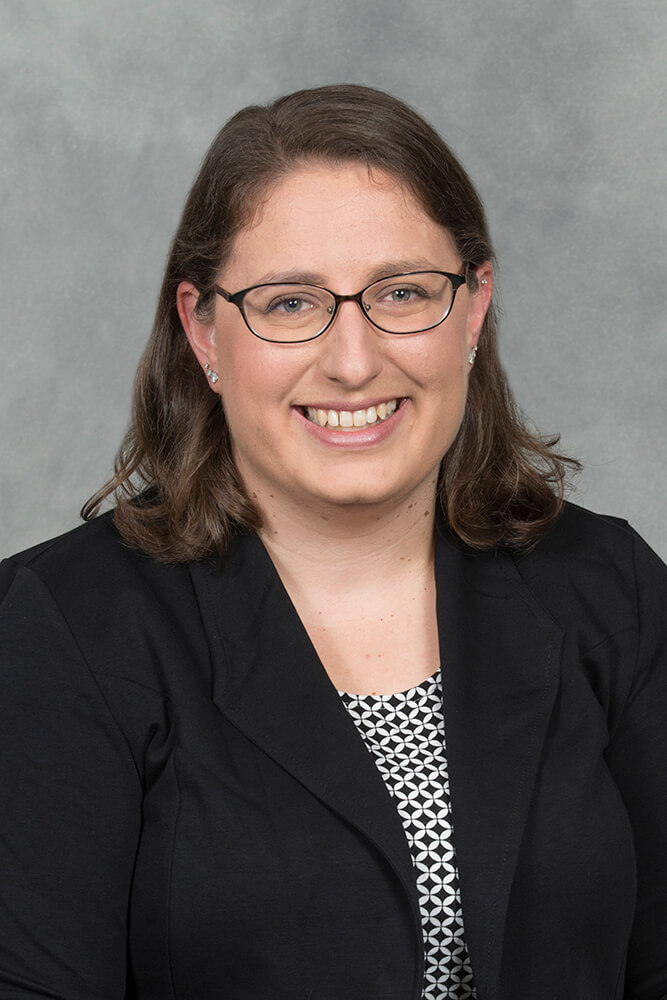
Biology Professor Bethia King and Ph.D. student Panchalie Gunathunga.
Insects use different body parts for taste—not just the mouth, but also the feet, the antennae, wings, the area between the mouth and esophagus known as the pharynx, and even ovipositors, the tube-like organ that female insects use to lay eggs.
If you were unaware of this unusual ability in insects, you can credit your newfound knowledge to the exhaustive research of Biological Sciences Professor Bethia King and Ph.D. student Panchalie Gunathunga.
The first article focuses on which body parts of insects are used for taste, while the second details the methods that entomologists and other researchers can use to test insect taste.
“We believe that these new reviews will be of use and interest to entomologists, as well as to other people who study taste,” Gunathunga wrote in a blog post at Entomology Today. “Understanding taste in insects is important, especially in controlling pest insects.”
The work began in March 2021 as a way to navigate the COVID-19 crisis as resourcefully as possible. In her first year as a doctoral student, Gunathunga could not leave her native country, Sri Lanka.
Gunathunga had previously studied moths in a lowland wet-zone forest of Sri Lanka in 2018. At that time, moth diversity had not been thoroughly studied and identification keys had not been updated in roughly a century.
As an NIU graduate student, Gunathunga wanted to continue working with insects. King’s lab studied house flies, a major pest on livestock farms, and previous lab members had studied response of the flies to different sweeteners that might be useful in fly baits. The baits sometimes also contain a bitter compound to prevent accidental poisoning of children.
That soon led Gunathunga to reviewing insect response to a variety of bitter compounds. Before she knew it, her research scope had expanded to create a compilation that distilled research spanning one hundred years and almost a thousand papers.
“We knew insects use their feet to taste, which is bizarre from a human perspective,” King said. “We wanted to know if it was just flies who use their feet or was it other insects also? Then we started realizing some insects use other body parts.”
“I was surprised to know that they taste with different body parts,” Gunathunga added. “I never imagined that. It led me to consider why they have evolved like that and how insect species differ according to the body parts they use for tasting.”
The pair’s research has helped pave the way for undergraduate students at NIU, and those in any other educational settings, to conduct experiments and put into practice various aspects of the scientific method of inquiry.
Credit: Sonika Agarwal, Upsplash
“For example, there’s ‘Fly on a Stick, ” King said. “You attach a stick to the insect’s back and move the stick to dip the insect’s feet into different substances. If the insect finds a particular substance appetitive, enjoyable, food-like, then automatically it extends its mouth down into contact with the substance.”
However, if the substance is not appetizing—perhaps even poisonous—then the feet are a safe way for the insect to test for that, she added.
With so many scientific papers continually being published, “even somebody interested in how an insect tastes has not read those hundreds of papers,” King added. “We felt there was a need for somebody to pull all that together into something readable.”
One practical outgrowth of the research is gaining a better understanding of how insects respond to certain compounds so that the efficiency of pesticides can be improved. At the same time, there are myriad other factors to consider.
For example, a toxic bait pesticide with sugary, bright qualities will attract insects—but holds the potential to appeal to children as well, King noted.
“It needs to be bitter enough that kids avoid it, but not so bitter that the pests avoid it,” King said. “You need that sweet spot.”
An NIU professor since 1989, King has studied entomology for over 30 years, investigating topics such as what factors cause female insects to decide whether to lay female or male eggs. In recent years, she has turned her attention toward the ways insects use their bodies to detect beneficial resources, like food, mates and places to lay their eggs.
With about a million species of insects in the world to study, “you can always find something interesting and bizarre that an insect does,” King said. “It’s all interesting.”
Gunathunga, who aspires to become a professor, received high praise from King. “She works hard, she thinks a lot,” King said of her student. “She welcomes feedback, and that enables her to learn even more.”
About NIU
Northern Illinois University is a student-centered, nationally recognized public research university, with expertise that benefits its region and spans the globe in a wide variety of fields, including the sciences, humanities, arts, business, engineering, education, health and law. Through its main campus in DeKalb, Illinois, and education centers for students and working professionals in Chicago, Naperville, Oregon and Rockford, NIU offers more than 100 areas of study while serving a diverse and international student body.
Date posted: October 9, 2023 | Author: Tom Parisi | Comments Off on Feet, antennae, wings—it’s all a matter of taste for insects, NIU researchers say
DeKalb, IL – NIU Chemistry Professor Tao Li is a member of a new center at the U.S. Department of Energy’s Argonne National Laboratory that is making a major research push toward the decarbonization of steelmaking.
Photo by Yasin Hemmati on Unsplash
Steel has a major impact on people’s lives and the U.S. economy. The material is crucial to cars, trucks, airplanes, buildings and more, but there is a significant issue with the steelmaking production process. Globally, it accounts for a large percentage of greenhouse gas emissions from the industrial sector.
The U.S. Department of Energy (DOE) last week announced $19 million in funding over four years for Argonne to lead a multi-institutional Center for Steel Electrification by Electrosynthesis (C-STEEL). The center’s charge is to develop an innovative and low-cost process that would replace blast furnaces in steelmaking and reduce greenhouse gas emissions by 85%.
“It’s a big target that has a high reward if successful,” said Brian Ingram, the C-STEEL director and an Argonne group leader and materials scientist.
C-STEEL is a key project of the DOE’s Industrial Heat Energy Earthshot initiative, which aims to significantly cut emissions from the energy-intensive process of industrial heating. In addition to NIU, partners in the center include Oak Ridge National Laboratory, Case Western Reserve University, Purdue University Northwest and the University of Illinois Chicago.
NIU Professor Tao Li
As a center researcher, NIU’s Li will receive $850,000 in funding to study the solvation behavior of iron electrolytes. Solvation is the interaction of a solvent with a dissolved molecule. Li will hire one postdoctoral student and one Ph.D. student to assist with the study.
Currently, the most energy-intensive step in steel production involves converting iron ore into purified iron metal or iron alloys using blast furnaces. This demands temperatures of 2500 to 2700 degrees Fahrenheit, hotter than an erupting volcano. The center’s target is to develop a process that will essentially eliminate that heat demand, achieving an 85% reduction in greenhouse gas emissions by 2035.
“C-STEEL will apply electrodeposition processes to steelmaking,” said Li, who holds a joint appointment with NIU and Argonne. “Shifting away from the traditional blast-furnace method to a low or no-heat electrodeposition process would represent a leap toward more energy-efficient and environmentally sustainable steel production.”
The electrodeposition process involves dissolving iron ore in a solution and using electricity to initiate a reaction that deposits a useable iron metal or alloy for steelmaking. The solution is a liquid electrolyte similar to those found in batteries.
“Drawing from my knowledge gained at the Joint Center for Energy Storage Research at Argonne, especially in battery electrolytes, I see an opportunity to contribute insights into tailoring the liquid electrolyte crucial for this novel steelmaking process,” Li said. “I plan to use the synchrotron X-ray scattering technique to understand the relationships between electrolyte structures and properties.”
Li is excited to be part of the project and noted that the work demonstrates the importance of cross-disciplinary collaboration.
“It highlights the potential for transformative advancements when ideas from one field are applied to another,” Li said. “I look forward to contributing to developing a more sustainable and innovative approach to steel production by exploring this exciting intersection of steelmaking, electrochemistry and X-ray characterization.”
Overall, the C-STEEL project will pursue three thrusts. Two of them will investigate different processes for electrodeposition. One process will operate at room temperature using water-based electrolytes. The other will use a salt-based electrolyte and will function at temperatures 1800 to 2000 degrees Fahrenheit below current blast furnaces. The energy for this process is low enough that it could be provided by renewables or waste heat from a nuclear reactor.
A third thrust will focus on gaining an atomic-level understanding of each process. The goal of this thrust, which NIU’s Li is involved in, is to exert precise control over both the structure and composition of the metal products so that they can be incorporated into existing downstream processes of steelmaking.
Each thrust will incorporate an artificial intelligence-based platform to ensure a unified approach to electrolyte design. To that end, C-STEEL will be drawing upon the world-class computational resources of two Leadership Computing Facilities, one at Argonne and the other at Oak Ridge. Both are DOE Office of Science user facilities.
C-STEEL will also take advantage of the materials characterization capabilities of two other DOE user facilities at Argonne, the Advanced Photon Source and the Center for Nanoscale Materials. The research is being funded by the DOE’s Office of Science, Basic Energy Sciences and Advanced Scientific Computing Research.
About NIU
Northern Illinois University is a student-centered, nationally recognized public research university, with expertise that benefits its region and spans the globe in a wide variety of fields, including the sciences, humanities, arts, business, engineering, education, health and law. Through its main campus in DeKalb, Illinois, and education centers for students and working professionals in Chicago, Naperville, Oregon and Rockford, NIU offers more than 100 areas of study while serving a diverse and international student body.
Date posted: October 5, 2023 | Author: Tom Parisi | Comments Off on Replacing the blast furnace: NIU researcher joins Argonne National Laboratory in push for decarbonization of steelmaking
DeKalb, IL – The National Science Foundation has awarded NIU Professors Megan Brown and Melissa Lenczewski with a $415,000 grant to acquire a high-tech system for detection of microplastics in the environment.
Photo by FLY:D on Unsplash
Brown and Lenczewski are faculty members and researchers in the Department of the Earth, Atmosphere and Environment (EAE). They also are both associates of NIU’s planned $23 million Northern Illinois Center for Community Sustainability (NICCS), a world-class research facility that will be built on the university’s west campus. NICCS will focus its research on water resources, environmental change and food systems, while also promoting science-based policies and practices for communities.
The microplastics-detection system will be purchased in coming months and housed initially in Davis Hall, but it eventually could be moved to NICCS once the center is completed, Brown said. The instrument, which can fit on a tabletop, has an impressive name: an Agilent 8700 Laser Direct Infrared (LDIR) Chemical Imaging System.
Professor Megan Brown
“The LDIR is a cutting-edge technology that provides a new method that advances our ability to detect microplastic particles, determine their size and acquire detailed information about each particle type detected,” Brown says. “The instrument will measure impacts of microplastics in different media, such as air, water or sediment, and lead the way in determining the impact of this contaminant of emerging concern.”
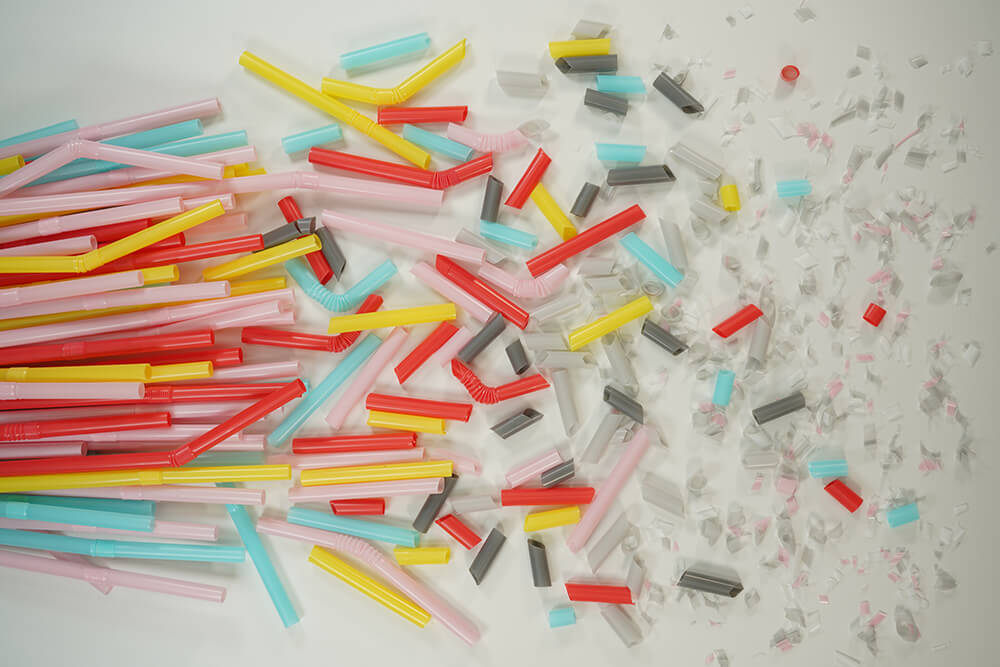
Plastic is the most prevalent type of marine debris found in our oceans and Great Lakes, according to the National Ocean Service. Plastic debris can come in all shapes and sizes, but those that are less than five millimeters in length (or about the size of a sesame seed) are called “microplastics.”
As an emerging field of study, not a lot is known about microplastics and their impacts yet. But the widespread and rapidly accumulating presence of microplastics in waterways and the air poses a concern for potential risks to living creatures. Microplastics are unknowingly ingested by a wide range of animals, including people.
NIU will use its new system for research projects related to agriculture, groundwater, surface water, public health, bioaccumulation in humans, biodegradation of microplastics and more. Researchers will study how microplastics are transported into the environment and into food webs, as well as methods of environmental remediation.
The LDIR also will provide an excellent resource for training students on use of the instrumentation and research. It’s expected that graduate students will use the instrument for master’s and Ph.D. projects across multiple departments and colleges at NIU.
Professor Melissa Lenczewski
“The instrument will be used directly by both undergraduate and graduate students to work on a variety of microplastic projects,” Lenczewski said. “We will also work with collaborators at the Illinois Mathematics and Science Academy and Centro de Investigacion Cientifica de Yucatan in Merida and Cancun, Mexico.”
LDIR provides a new method for spectral analysis and chemical imaging. Utilizing the unique properties of the light source, a rapidly tunable Quantum Cascade Laser, the LDIR first scans the area of interest in the sample to determine the presence or absence and records the location of particles in the sample analysis area. It then examines each individual particle and obtains a spectrum, compares it to the spectral library for classification, and updates the results.
“The multi-media and multi-scale nature of potential research projects using the LDIR will make this a unique laboratory,” Brown said. “Access to the LDIR will enable NIU researchers to form collaborations with regional, national and international teams working toward a better understanding of the fate and transport of microplastics.”
Yvonne Harris, vice president of NIU’s Division of Research and Innovation Partnerships, said the microplastics detection system is an excellent addition to several other new instruments the university has acquired for research and training.
“For example, our new Molecular Analysis Core is a premier research resource for analytical and instructional expertise in mass spectrometry, and our NIU Center for Research Computing and Data (CRCD) has recently commissioned a new $1.2 million, high-performance computing facility,” Harris said. “These types of equipment are helping us train the next generation of scientists and scientific leaders.”
Northern Illinois University is a student-centered, nationally recognized public research university, with expertise that benefits its region and spans the globe in a wide variety of fields, including the sciences, humanities, arts, business, engineering, education, health and law. Through its main campus in DeKalb, Illinois, and education centers for students and working professionals in Chicago, Naperville, Oregon and Rockford, NIU offers more than 100 areas of study while serving a diverse and international student body.
Date posted: October 2, 2023 | Author: Tom Parisi | Comments Off on NIU to acquire $415K system for detecting microplastics in environment
DeKalb, IL – The fall 2023 freshman class at Northern Illinois University continues to demonstrate that high-achieving students from a variety of backgrounds have found NIU to be their university of choice. The incoming class is highly diverse and includes an increased number of new transfer students this fall over last. Huskies are again re-enrolling from year to year at pre-pandemic levels, and more students are choosing to live on campus. These are just a few of the facts that make this year’s class yet another reason to see a steady and promising future ahead.
The new Huskies are academically accomplished. According to the official 10-day count, total freshman enrollment is 2,202. These newly arrived scholars and leaders come to NIU having earned an average high school GPA of 3.42, the second consecutive year that the incoming freshman class has set this record. Under the university’s test-free admission and merit scholarship processes, NIU awarded more than $7.2 million in merit scholarships to new freshmen who arrive with cumulative high school GPAs of 3.0 or higher. Nearly 20% of incoming freshmen had 4.0 high school GPAs, while 36% of new freshmen had high school GPAs of 3.7 or higher. In 2023, the Honors Program added 282 new freshmen, and now has a total enrollment of 1,073 honors students, an increase of 14% over last fall.
The demographics of the incoming students remain reflective of NIU’s public mission. They are an economically, socially and racially diverse group of learners, with 57% first-generation college students and 70% students of color. NIU’s AIM HIGH Huskie Pledge program, funded by the State of Illinois, continues to ensure that qualifying Illinois students from lower-income households can attend college with no tuition or general fees for their first year, and potentially beyond. This fall, 866 incoming students were eligible and will not have to pay out-of-pocket expenses for tuition and general fees. Further, NIU experienced an enrollment increase in new transfer students this fall of 6% over a year ago—to 1,325 students.
For the first time in NIU’s history, Latinx students represent 25% of the total undergraduate population. This significant achievement places the institution on a trajectory to be fully designated as a Hispanic-Serving Institution (HSI). Recruitment and retention of international students has been another area of success. NIU’s total fall enrollment of students from outside the United States surpassed the 1,000 mark for the first time since 2016. In all, international students represent 73 different countries. NIU has continued to place great significance on the value and importance of a diverse university community, and this year’s class demonstrates that this message resonates with students.
“This fall, we’re seeing very positive data as new transfer-student enrollment increased, continuing undergraduates are re-enrolling at significantly higher rates, and more students want to live on campus. Most importantly, we’ve worked diligently to remove barriers to a high-quality education and are attracting talented students, including many from populations that are often underserved or overlooked,” NIU President Dr. Lisa C. Freeman said.
While enrollment of new students is essential to the academic mission, NIU has not taken for granted the importance of student retention. In combination, recruitment and retention efforts have been critical to maintaining the overall enrollment of its students. The total student enrollment remained relatively flat this year at 15,504, compared to 15,649 last fall, a difference of less than 1%.
“NIU redoubled its retention efforts and saw re-enrollment rates increase substantially this fall, near pre-pandemic levels,” said Interim Executive Vice President and Provost Laurie Elish-Piper. “Our successes included substantial increases in the rate of re-enrollment among new freshmen from 2022 and extended to underserved groups such as first-generation college students, where retention can be more challenging for universities nationwide. As a campus, we’ve really embraced retention as a shared responsibility, and we’re seeing the benefits. We’re going to continue growing our retention efforts by being even more collaborative, intentional and data-informed.”
Not to be overlooked, the total number of students now living on campus exceeds 4,100 and is the highest occupancy figure since the fall of 2015. Many of these residential students seek experiences in NIU’s 10 living-learning communities to help round out their collegiate careers. This added level of engagement contributes to their academic success and personal and professional development.
“We’re seeing a lot of positive trends this fall that speak to the academic quality and success of our students,” said Sol Jensen, NIU vice president for Enrollment Management, Marketing and Communications. “Our latest Strategic Enrollment Management planning efforts were essential, helping us to be resilient and successful in times of rapid change.”
Northern Illinois University is a student-centered, nationally recognized public research university, with expertise that benefits its region and spans the globe in a wide variety of fields, including the sciences, humanities, arts, business, engineering, education, health and law. Through its main campus in DeKalb, Illinois, and education centers for students and working professionals in Chicago, Naperville, Oregon and Rockford, NIU offers more than 100 areas of study while serving a diverse and international student body.
Date posted: September 14, 2023 | Author: Tom Parisi | Comments Off on Fall enrollment: An academically resilient new freshman class, transfer students find a new home, re-enrollment surges
DeKalb, IL – Technology developed by NIU Electrical Engineering Professor Lichuan Liu and designed to prevent hearing loss in the most vulnerable of newborns could soon find its way into hospital neonatal intensive care units, or NICUs.
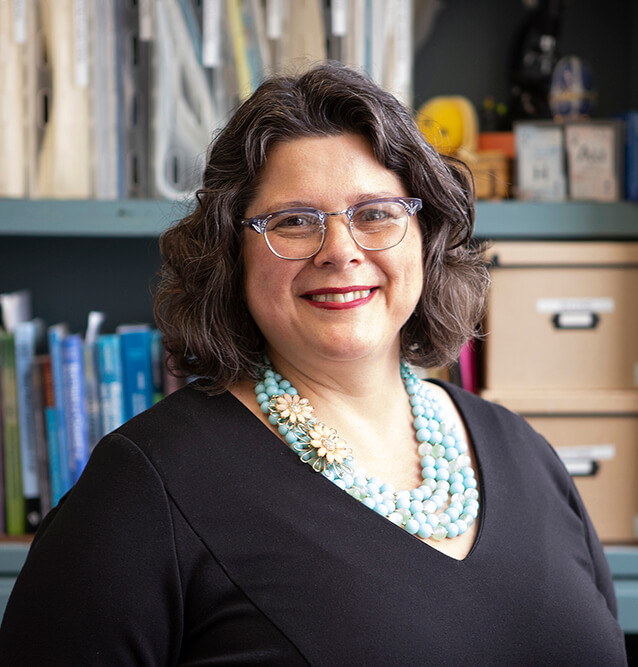
NIU Electrical Engineering Professor Lichuan Liu
NICUs can be noisy. The care units are louder than most home or office environments and have sound levels that often exceed the maximum levels recommended by the American Academy of Pediatrics. Hearing impairment is diagnosed in 2% to 10% of preterm infants, versus 0.1% of the general pediatric population.
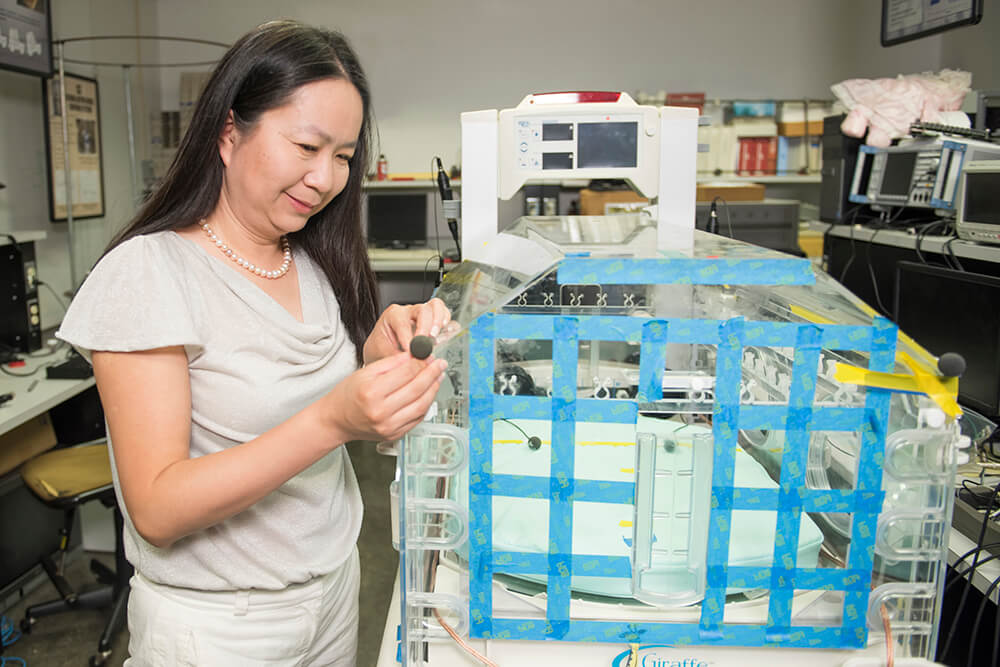
Aiming to put her electrical engineering expertise to use to benefit others, Professor Liu invented an apparatus, system and method to significantly reduce harmful noises while maintaining communication between the newborns and their parents or caregivers.
In 2014, NIU began a partnership with Invictus Medical, a Texas-based medical device company, to commercialize the technology. NIU licensed its related patents to Invictus, while the company has continued to refine the incubator-based active noise control (ANC) device, now known as the Neoasis®.
In July, Invictus announced that the company had received a U.S. Food and Drug Administration (FDA) clearance-for-use declaration for the device.
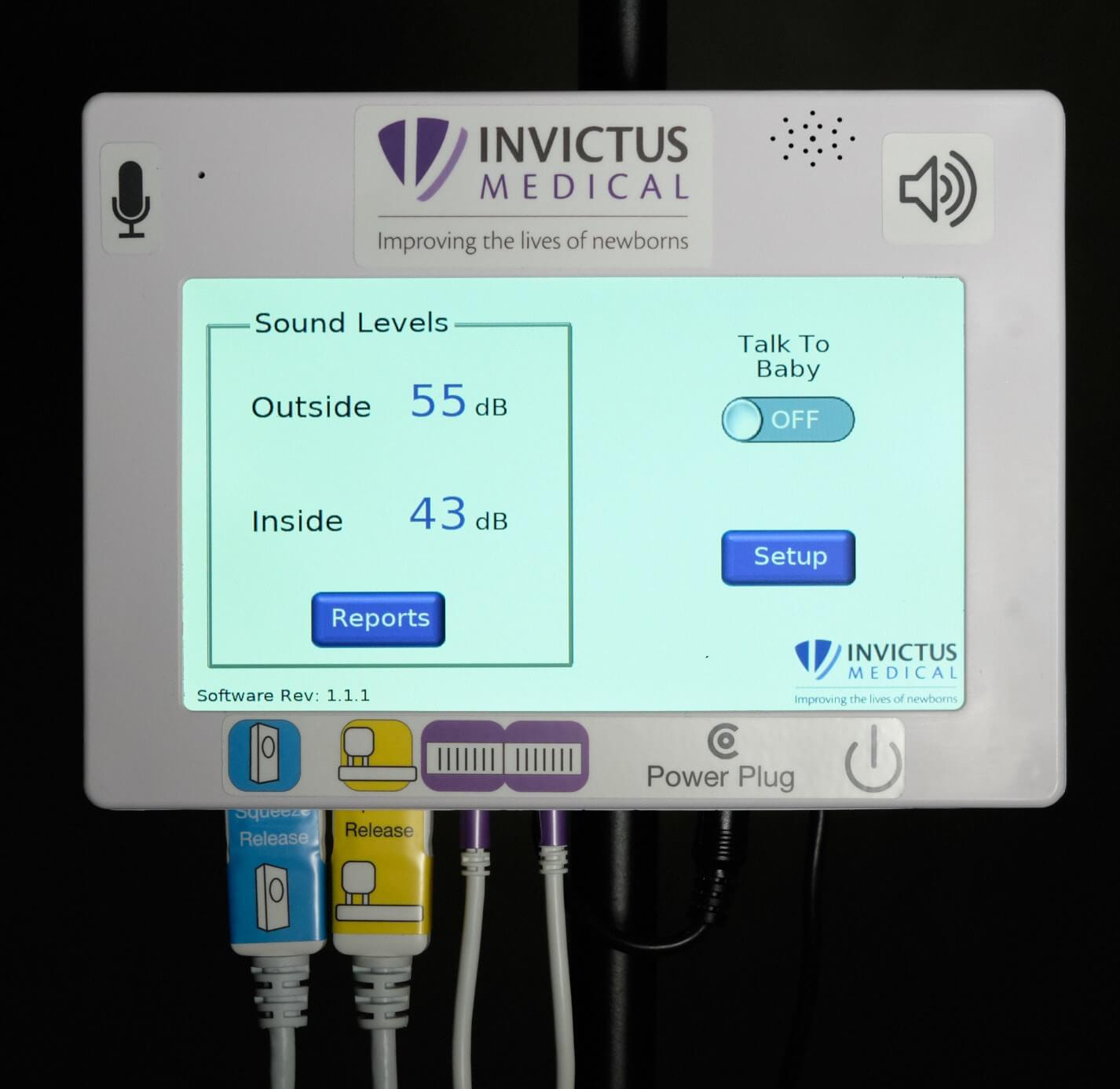
The control unit front face and home screen on the Invictus Medical Neoasis® incubator-based active noise control (ANC) device. Photo courtesy of Invictus Medical
“With this clearance for use, Invictus has made a huge step towards deploying the Neoasis® ANC device in neonatal intensive care units,” said George Hutchinson, Ph.D., Invictus Medical’s chief executive officer. “It is well documented that a quieter environment has a positive impact, including improved sleep hygiene and weight gain in infants where both are critical for development.
“The NIU team has been a pleasure to work with,” Dr. Hutchinson added. “The Office of Innovation has been a great teammate throughout the entire process.”
The Neoasis® ANC device utilizes a proprietary, innovative active noise control (ANC) system to attenuate noise with canceling sound wave technology. At the same time, it allows a parent’s voice to be directed to the infant, which can also be beneficial for cognitive development. Invictus is currently exploring relationships with strategic partners to get the Neoasis® ANC device into NICUs—now possible with the FDA clearance.
While universities and researchers can realize typically modest financial benefits from technology transfer, the primary intent is to broaden the potential impact of research through the creation of innovative products and services for public benefit, said Karinne Bredberg, director of NIU’s Office of Innovation. The office has guided Liu through the partnership, patent processes and licensing.
“This is a big deal for Dr. Liu and for NIU,” Bredberg said.
“NIU research has produced other patents and licenses, but we believe this is the first NIU-licensed technology to be incorporated into a device that has an FDA clearance-for-use declaration,” Bredberg said.
Mark Hankins, NIU’s assistant director for technology transfer, credited the ingenuity of Professor Liu, as well as a great working relationship with Invictus Medical.
“Dr. Hutchinson in particular was very diligent in trying to move this technology forward and persevered through a number of roadblocks,” Hankins said.
Professor Liu said it was about a decade ago when President Lisa C. Freeman, then serving as NIU’s vice president for Research and Innovation Partnerships, brought Liu together with Invictus Medical. While Liu developed an initial prototype, the company refined the device, making the it more commercially accommodating for NICU environments.
“It’s a little different working with industry, as opposed to academia,” Professor Liu said. “It was a learning curve for me, but Invictus Medial has been very professional and easy to work with.”
NIU Professor Lichuan Liu is now conducting research on an artificial-intelligence algorithm that can detect the meaning behind babies’ cries.
“I think this is fantastic,” Liu said. “I kept working on this project and thought someday there would be payback.
“I have a passion or motivation to work to benefit others,” Liu added. “As a mom, I think this device is really something important. As an engineer, I’m happy to make an impact.”
Liu said her current research includes other ways to use noise cancellation. She is working on a pillow that would cancel out the racket of snoring, and she and NIU Nursing Professor Jie Chen are working on a system for adult intensive care units.
Additionally, Liu is working on an artificial intelligence algorithm that can listen to infant cries and determine whether they are normal or abnormal to potentially indicate a severe or chronic illness. Invictus might incorporate the technology into future versions of its Neoasis® ANC device.
About NIU
Northern Illinois University is a student-centered, nationally recognized public research university, with expertise that benefits its region and spans the globe in a wide variety of fields, including the sciences, humanities, arts, business, engineering, education, health and law. Through its main campus in DeKalb, Illinois, and education centers for students and working professionals in Chicago, Naperville, Oregon and Rockford, NIU offers more than 100 areas of study while serving a diverse and international student body.
Date posted: August 28, 2023 | Author: Tom Parisi | Comments Off on NIU researcher’s innovation helps lead to device to prevent hearing loss in NICU infants
By combining NREL’s and NIU’s recent breakthroughs with Verde’s cutting-edge manufacturing techniques, the collaboration aims to unlock the potential of efficient, safe, low-cost perovskite solar panels at an unprecedented scale.
“Many of the pieces of the puzzle needed for the commercialization of perovskite solar cells are likely already out there,” says NREL’s Senior Scientist Kai Zhu. “It is now largely a matter of figuring out how to put the pieces together, with some tunings, in a stable, low-cost, scalable form factor.”
At the core of the partnership lies a fully exclusive agreement for rights to a portfolio of NREL’s breakthrough perovskite solar technologies, spearheaded by Zhu and NIU Chemistry Professor Tao Xu. Under an agreement with NIU, NREL is taking the lead on commercializing these technologies co-owned by both institutions. NREL and NIU will share any income or royalties generated by the technologies.
One of the innovations, which plays a vital role in Verde’s perovskite solar modules, is a lead-sequestration layer that eliminates concerns of hazardous lead leakage while preserving the structural integrity and power output of the solar cells. With a focus on environmental friendliness and efficient recycling, this technology empowers Verde to create sustainable, affordable and safe solutions for the solar industry.
“This set of technology will help to stabilize the photovoltaic performance of perovskite solar cells manufactured at Verde Technologies and minimize any potential leakage of toxic lead content from perovskite solar cells,” Xu says. “I am excited to see that Verde is taking NREL/NIU’s technologies toward commercialization in the emerging perovskite PV market.”
Furthermore, the partnership introduces NREL’s innovative active encapsulation technique, which is unlike traditional laminate encapsulation. By applying this novel treatment to the entire solar cell, it forms a comprehensive seal that enhances stability and performance by reducing moisture sensitivity. This breakthrough in encapsulation technology strengthens the durability and longevity of solar panels, making them highly resilient even in challenging environments. Verde Technologies incorporates this innovation into its manufacturing process, further enhancing the reliability of its solar modules.
“Our team could not be more excited to have signed this exclusive deal with NREL and to be collaborating with some of the top minds in solar, Dr. Kai Zhu and Dr. Tao Xu,” Verde CEO Skylar Bagdon says. “This agreement perfectly exemplifies Verde’s commitment to collaborating with the community and taking a holistic view of module design that addresses all the key factors of stability, manufacturability, safety and low cost.”
About NIU
Northern Illinois University is a student-centered, nationally recognized public research university, with expertise that benefits its region and spans the globe in a wide variety of fields, including the sciences, humanities, arts, business, engineering, education, health and law. Through its main campus in DeKalb, Illinois, and education centers for students and working professionals in Chicago, Naperville, Oregon and Rockford, NIU offers more than 100 areas of study while serving a diverse and international student body.
About Verde Technologies Inc.:
Verde Technologies Inc., headquartered in Burlington, Vermont, is a pioneering thin-film solar panel company focused on harnessing the potential of perovskite solar panels. By prioritizing affordability, scalability, safety, and durability, Verde Technologies aims to revolutionize the renewable energy landscape. With a strong emphasis on low temperature, domestic manufacturing, Verde Technologies strives to create groundbreaking solutions that maximize solar energy utilization while minimizing environmental impact.
DeKalb, Ill. — A thin layer of gold or silver helps improve the efficiency of perovskite solar cells, but researchers have found a less expensive material that could enable commercialization of the technology without exorbitant cost.
“Our team has identified a potentially disruptive technology that could help reduce the infrastructure investment for use of highly promising perovskite solar cells in solar panels,” NIU Chemistry Professor Tao Xu said.
“A layer of gold in a solar panel or even a layer of silver is probably too expensive,” Zhu said. “It would make the solar panel not affordable for most people.”
Instead of a precious metal, Xu and Zhu used a nickel-doped graphite layer coupled with a bismuth-indium alloy layer. The two layers can be easily integrated into the perovskite device through painting them on, offering a low-cost fabrication method.
NIU Professor Tao Xu
“Our approach replaces costly gold, commonly used to make the back-metal electrode in these solar cells through an expensive high-temperature vacuum-chamber process,” Xu said. “Instead of gold, we use inexpensive materials that can be readily laminated to thin films at atmospheric pressure and mild temperatures. We think this will be an appealing low-cost solution that could help speed commercialization of perovskite solar cells.”
The research team included four of Xu’s NIU Ph.D. students: Mengyuan Li, Jianxin Wang, Owen S. Wostoupal and Xudong Xiao. Other members of the team were from NREL, Northwestern University and Argonne National Laboratory.
Zhu said the perovskite solar cell made with the new materials yielded a laboratory efficiency of 21%. Further research should boost the efficiency higher and closer to that of perovskites made with precious metals, which hold a record efficiency of 26%. Metal is better than carbon at conducting electricity.
Xu and Zhu have previously collaborated on ways to sequester lead should a perovskite solar cell become damaged, as the cells contain a minute amount of the element.
Perovskite solar cells are made by depositing chemicals onto a substrate. Individual layers all serve a purpose, with the perovskite layer serving as the semiconductor. The photons from sunlight trigger electrons to move in one direction, creating a vacancy—or “hole”—that then moves in the opposite direction. The right energy level is needed to spark this movement, in the process creating an electric current. The graphite material and gold both possess the right energy level.
By eliminating a layer of precious metals, the cost to manufacturer perovskites will be significantly cheaper, the researchers calculated. An analysis suggests that for a perovskite-based solar plant with a gigawatt of power output, using the graphite/alloy bilayer will slash costs of the contact electrodes by a factor of between 4 and 1,000 depending on the other types of materials used for back materials.
“That’s the selling point for this approach,” Zhu said.
The research was funded in part by the Department of Energy’s Solar Energy Technologies Office and by the National Science Foundation. The work is also highlighted by Chemical and Engineering News, a weekly news magazine of the American Chemical Society.
Northern Illinois University is a student-centered, nationally recognized public research university, with expertise that benefits its region and spans the globe in a wide variety of fields, including the sciences, humanities, arts, business, engineering, education, health and law. Through its main campus in DeKalb, Illinois, and education centers for students and working professionals in Chicago, Naperville, Oregon and Rockford, NIU offers more than 100 areas of study while serving a diverse and international student body.
Date posted: July 12, 2023 | Author: Tom Parisi | Comments Off on Substitute for gold layer in perovskite clears way for cheaper commercialization of solar cells
DeKalb, IL – Despite being ranked the happiest country in the world for the sixth year in a row, there is still homelessness and crime in Finland. However, unlike the United States, Finland has made remarkable progress in reducing homelessness over the last two decades.
NIU Sociology Professor Fred Markowitz
As a 2023-2024 American-Scandinavian Foundation Fellow, NIU Sociology Professor Fred Markowitz will travel to Finland this fall to investigate the relationships between mental health problems, homelessness and crime.
Markowitz says there are many lessons to be learned from the Scandinavian country’s success and remaining challenges. In particular, he is interested in how homelessness is related to crime at both the individual and community levels.
Markowitz, who was previously a Fulbright Scholar, will build on his prior work on mental illness, treatment services and crime in both the United States and Finland. He is returning to Finland to conduct the research at the invitation of the University of Helsinki’s Institute of Criminology and Legal Policy, one of the world’s leading universities.
“Because of its universal healthcare system and national registry data, Finland provides unique opportunities to examine social problems in ways that are simply not possible in the U.S.,” Markowitz says.
“For example, in Finland there are consistent indicators of how many persons in each municipality use various mental health services. In the U.S., mental health services are highly fragmented, and delivered by an array of private, public, for-profit and nonprofit organizations with funding from a variety of private insurers and federal, state and county governments. As a result, standardized data that allows for comparisons across communities is not available.”
Markowitz points out that, although Finland does not have the high levels of urban disorder and crime that exist in the United States, there is still substantial overlap between mental health problems and crime in Finland. He hopes to better understand where to target resources and intervention strategies to reduce the number of persons with mental illnesses who end up homeless and in prison, and to facilitate their recovery.
While most persons with a mental illness are not dangerous, studies have shown the risk of violence and criminal behavior is elevated among persons with certain mental illnesses. They are also more likely to be the victims of crime.
While in Finland, Markowitz will work with colleagues at the University of Helsinki to access data that, due to strict EU security regulations, can only be examined there. At the same time, he will be able to meet with mental health and housing service providers and criminal justice authorities to gain ground-level insight into how systems operate.
Markowitz will also deliver guest lectures and continue his participation in the Doctoral Seminar for Criminology at the University of Helsinki. In 2021, he was a keynote speaker at the Finnish Criminological Association.
“This is an extraordinary opportunity to not only build international collaborative ties between NIU and Finland, but to also take valuable substantive lessons back to NIU in order to provide a more global perspective to my courses in criminology and mental illness,” Markowitz says.
The American-Scandinavian Foundation was founded in 1910 and is dedicated to promoting international understanding through educational and cultural exchange between the United States and Denmark, Finland, Iceland, Norway, and Sweden.
Northern Illinois University is a student-centered, nationally recognized public research university, with expertise that benefits its region and spans the globe in a wide variety of fields, including the sciences, humanities, arts, business, engineering, education, health and law. Through its main campus in DeKalb, Illinois, and education centers for students and working professionals in Chicago, Naperville, Oregon and Rockford, NIU offers more than 100 areas of study while serving a diverse and international student body.
Date posted: June 15, 2023 | Author: Tom Parisi | Comments Off on Fred Markowitz receives American-Scandinavian Foundation Fellowship for research in Finland