
DeKalb, IL – After combing through about a thousand studies on how insects taste the world around them, an NIU doctoral student and her professor are drawing some buzz.

Biology Professor Bethia King and Ph.D. student Panchalie Gunathunga.
Insects use different body parts for taste—not just the mouth, but also the feet, the antennae, wings, the area between the mouth and esophagus known as the pharynx, and even ovipositors, the tube-like organ that female insects use to lay eggs.
If you were unaware of this unusual ability in insects, you can credit your newfound knowledge to the exhaustive research of Biological Sciences Professor Bethia King and Ph.D. student Panchalie Gunathunga.
This year, they have published two reviews, the first in February entitled “Gustation Across the Class Insecta: Body Locations,” which appeared in a special, highly selective review edition of the Annals of the Entomological Society of America. Then in March they published an article in the Journal of Insect Science, “Gustation in insects: taste qualities and types of evidence used to show taste function of specific body parts.”
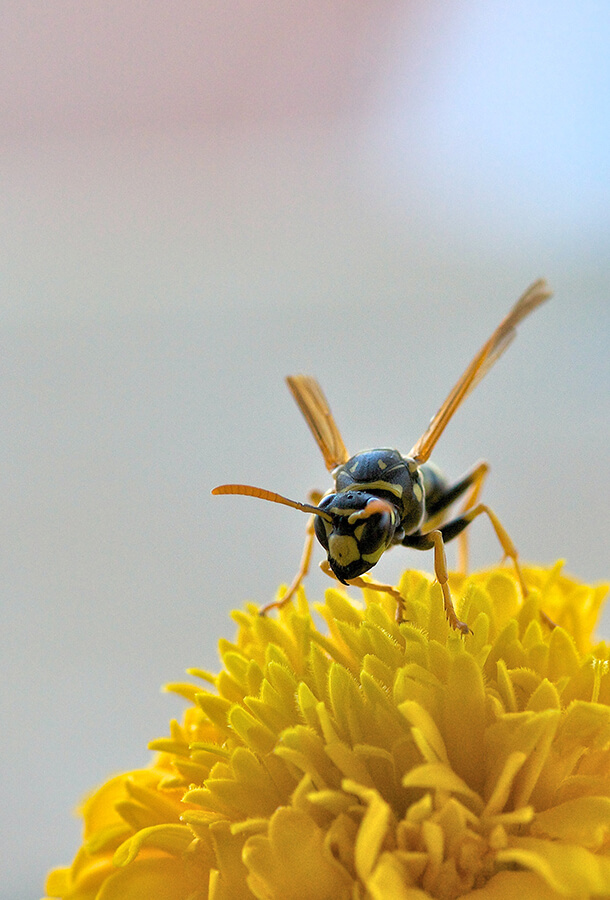
Credit: Wolfgang Hasselmann, Upsplash
The first article focuses on which body parts of insects are used for taste, while the second details the methods that entomologists and other researchers can use to test insect taste.
“We believe that these new reviews will be of use and interest to entomologists, as well as to other people who study taste,” Gunathunga wrote in a blog post at Entomology Today. “Understanding taste in insects is important, especially in controlling pest insects.”
The work began in March 2021 as a way to navigate the COVID-19 crisis as resourcefully as possible. In her first year as a doctoral student, Gunathunga could not leave her native country, Sri Lanka.
Gunathunga had previously studied moths in a lowland wet-zone forest of Sri Lanka in 2018. At that time, moth diversity had not been thoroughly studied and identification keys had not been updated in roughly a century.
As an NIU graduate student, Gunathunga wanted to continue working with insects. King’s lab studied house flies, a major pest on livestock farms, and previous lab members had studied response of the flies to different sweeteners that might be useful in fly baits. The baits sometimes also contain a bitter compound to prevent accidental poisoning of children.
That soon led Gunathunga to reviewing insect response to a variety of bitter compounds. Before she knew it, her research scope had expanded to create a compilation that distilled research spanning one hundred years and almost a thousand papers.
“We knew insects use their feet to taste, which is bizarre from a human perspective,” King said. “We wanted to know if it was just flies who use their feet or was it other insects also? Then we started realizing some insects use other body parts.”
“I was surprised to know that they taste with different body parts,” Gunathunga added. “I never imagined that. It led me to consider why they have evolved like that and how insect species differ according to the body parts they use for tasting.”
The pair’s research has helped pave the way for undergraduate students at NIU, and those in any other educational settings, to conduct experiments and put into practice various aspects of the scientific method of inquiry.
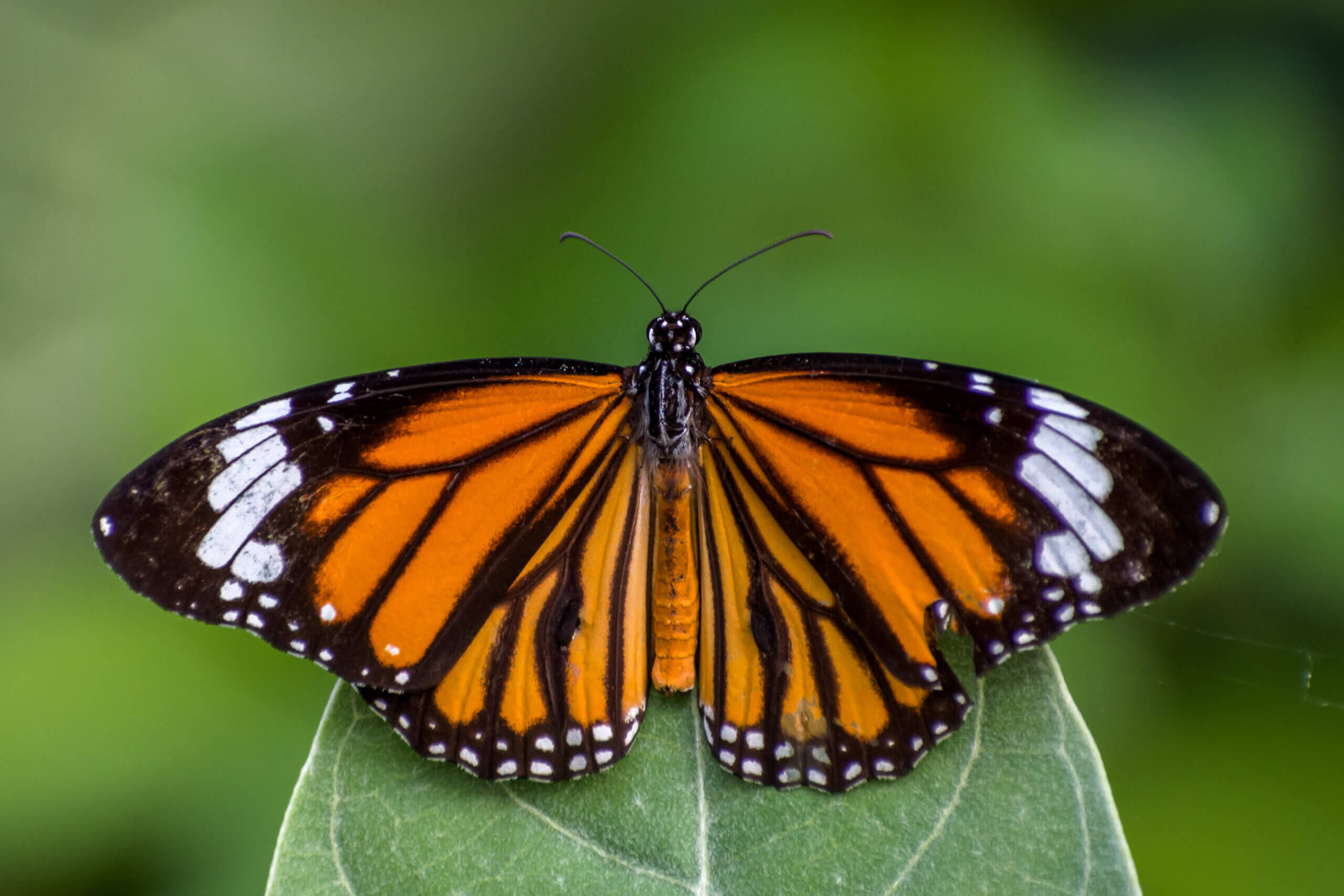
Credit: Sonika Agarwal, Upsplash
“For example, there’s ‘Fly on a Stick, ” King said. “You attach a stick to the insect’s back and move the stick to dip the insect’s feet into different substances. If the insect finds a particular substance appetitive, enjoyable, food-like, then automatically it extends its mouth down into contact with the substance.”
However, if the substance is not appetizing—perhaps even poisonous—then the feet are a safe way for the insect to test for that, she added.
With so many scientific papers continually being published, “even somebody interested in how an insect tastes has not read those hundreds of papers,” King added. “We felt there was a need for somebody to pull all that together into something readable.”
One practical outgrowth of the research is gaining a better understanding of how insects respond to certain compounds so that the efficiency of pesticides can be improved. At the same time, there are myriad other factors to consider.
For example, a toxic bait pesticide with sugary, bright qualities will attract insects—but holds the potential to appeal to children as well, King noted.
“It needs to be bitter enough that kids avoid it, but not so bitter that the pests avoid it,” King said. “You need that sweet spot.”
An NIU professor since 1989, King has studied entomology for over 30 years, investigating topics such as what factors cause female insects to decide whether to lay female or male eggs. In recent years, she has turned her attention toward the ways insects use their bodies to detect beneficial resources, like food, mates and places to lay their eggs.
With about a million species of insects in the world to study, “you can always find something interesting and bizarre that an insect does,” King said. “It’s all interesting.”
Gunathunga, who aspires to become a professor, received high praise from King. “She works hard, she thinks a lot,” King said of her student. “She welcomes feedback, and that enables her to learn even more.”
About NIU
Northern Illinois University is a student-centered, nationally recognized public research university, with expertise that benefits its region and spans the globe in a wide variety of fields, including the sciences, humanities, arts, business, engineering, education, health and law. Through its main campus in DeKalb, Illinois, and education centers for students and working professionals in Chicago, Naperville, Oregon and Rockford, NIU offers more than 100 areas of study while serving a diverse and international student body.
