DeKalb, IL – If you’ve encountered golf ball-size hail in recent years, well, you might have glimpsed the future.
Under current human-driven climate-warming trajectories, hailstorms will more frequently produce larger hailstones by mid-to-late century—as in the kind of ice orbs that can damage aircraft, shatter windshields, leave divots in your roof shingles and pose serious safety risks.
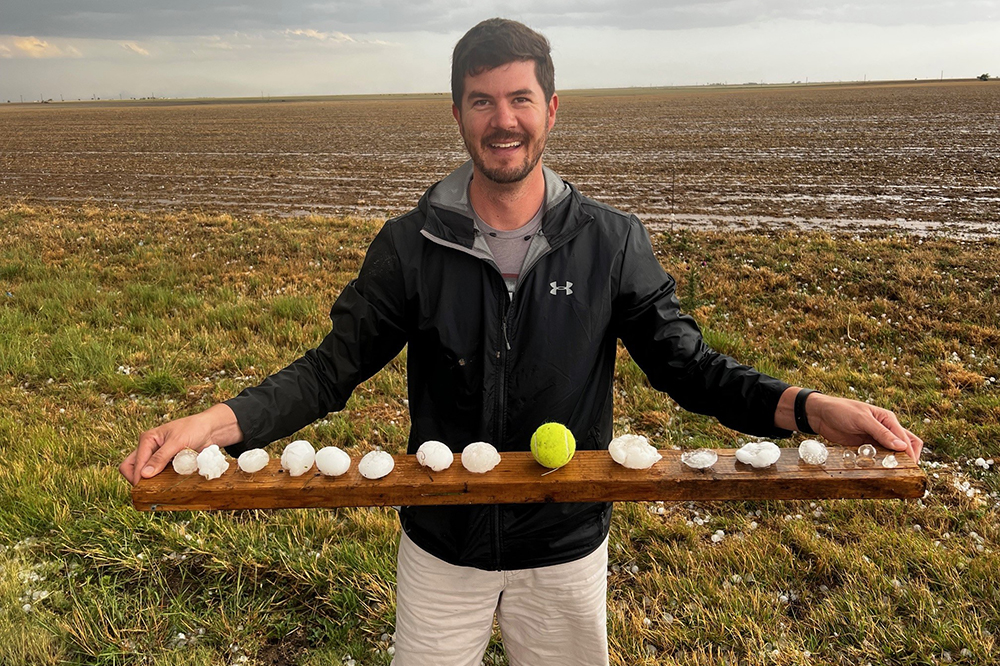
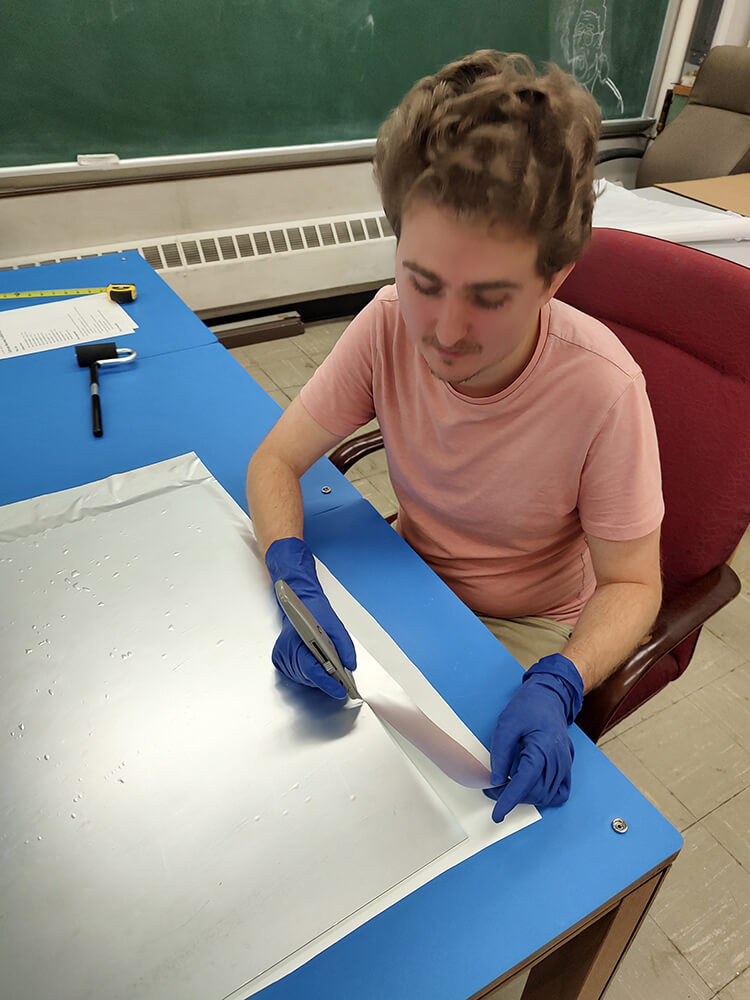
Victor Gensini holds a flight of severe hailstones in a field near Tulia, TX on May 31, 2022. Photo courtesy of Walker Ashley, NIU
The NIU scientists tracked future hail-producing storms using supercomputer-powered simulations of climate under two greenhouse gas concentration trajectories, one considered “intermediate” and the other “pessimistic.” They compared simulated late-20th-century hailstorm populations (similar to actual populations) with mid- to late-21st-century counterparts.
“Our study suggests golf ball-size hail or larger will become more common because of more atmospheric instability, which leads to stronger thunderstorm updrafts,” said NIU Atmospheric Science Professor Victor Gensini, lead author of the study.
“Strong updrafts are a key ingredient for the formation of larger hailstones,” he added. “In our study, the largest hailstones are found to increase by 15% to 75%, dependent on greenhouse gas emissions.”
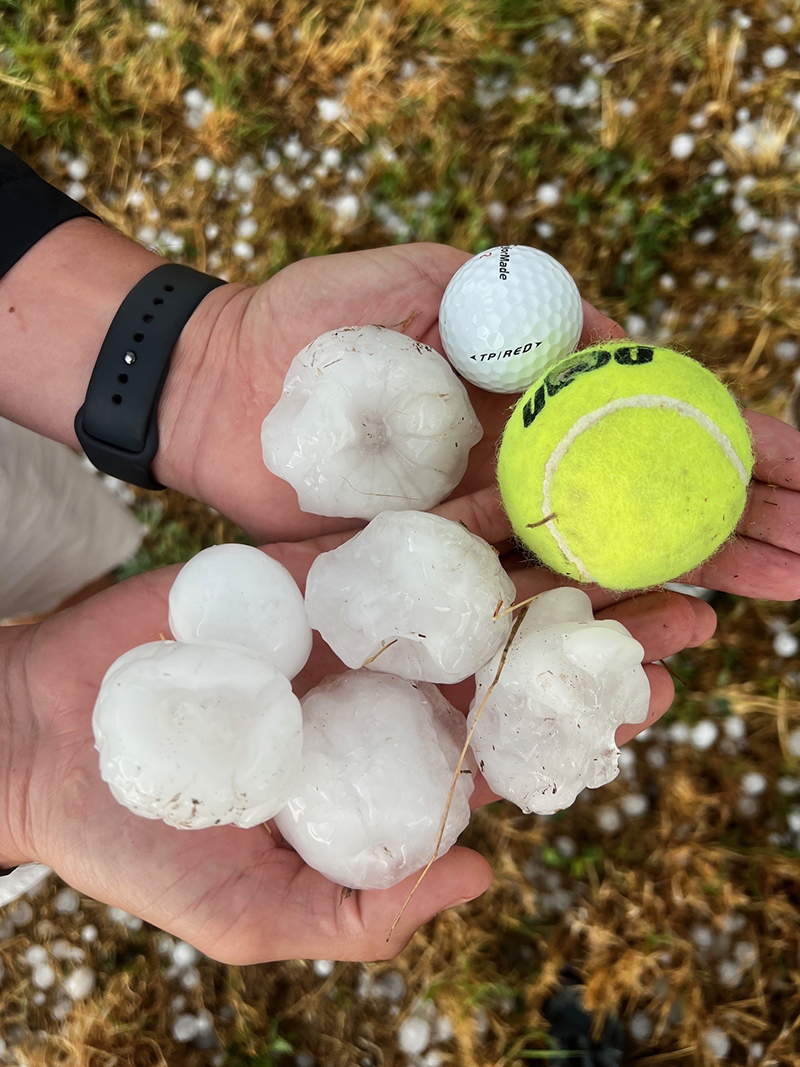
According to scientist Victor Gensini, a warmer climate leads to increased water vapor, which serves as energy for thunderstorms and creates stronger updrafts on average—and more large hailstones aloft. Photo courtesy of Laura Hedien
Hailstones form when small soft ice pellets known as graupel (think Dippin’ Dots) are carried upward by thunderstorm updrafts. When they reach extremely cold atmospheric layers, supercooled water (below 32 degrees Fahrenheit) freezes onto the graupel, forming hailstones. Hailstones fall when the thunderstorm’s updraft can no longer support their weight.
A warmer climate leads to increased water vapor, which serves as energy for thunderstorms and creates stronger updrafts on average—and more large hailstones aloft. As hailstones begin their downward trajectory, they encounter a melting level height that is expected to increase in the future due to warming. These processes ultimately result in fewer small hailstones (less than golf ball-size) reaching the surface, with a favored distribution toward larger hail sizes, the study suggests.
“Warming temperatures near the surface will promote more melting of smaller hailstones as they fall,” Gensini said. “Melting has a disproportionate impact on smaller hailstones due to their mass and fall speed.”
By mid- and late-century periods, the number of days with severe hailstorms producing large hailstones in the atmosphere is projected to robustly increase in most locations outside of the southern Plains, a distribution that closely mimics previous projections of thunderstorm days, according to the study.
The simulations found the most significant increases in large aloft hail during future storms in the Midwest, Ohio Valley and Northeast. The changes are most pronounced under the pessimistic greenhouse gas concentration trajectories.
In addition to Gensini, study authors include NIU Atmospheric Scientists Walker Ashley, Allison Michaelis and Alex Haberlie, along with former NIU graduate student Jillian Goodin and former NIU postdoctoral fellow Brendan Wallace.
Hail is an important topic for study. Nationally, damaging hail occurs 158 days per year on average, which translates to roughly $10 billion of insured losses annually before accounting for agricultural losses. Losses due to hail and other severe convective storms have quintupled nationally since 2008, raising questions from scientists, industry and members of the public about the roles of a warming climate and changing socioeconomic exposure.
“Tornadoes are fascinating, but when you talk about impact on society, hail does more damage by an order of magnitude,” Gensini said.
Co-author Ashley adds that urban sprawl also plays an outsize role in projecting future impacts from hail.
“While the risk and character of hail may change in the future, the primary driver of losses will remain the increasing assets in the path of these storms,” Ashley said. “This expanding bull’s-eye effect reveals that impacts from perils such as hail are enlarging as populations grow and spread across the landscape. With increasing risk and societal exposure, the potential for hail disasters will continue to increase in the future.”
Funding for the study was provided by the National Science Foundation and National Oceanic and Atmospheric Administration.
Climate simulations were conducted at the NCAR-Wyoming Supercomputing Center. The intermediate greenhouse gas concentration trajectory (Representative Concentration Pathway 4.5) used end-of-the century global-climate-warming projections of 2 degrees to 5 degrees Fahrenheit, while the more pessimistic trajectory (RCP 8.5) factored in a warming of 5 degrees to 9 degrees Fahrenheit.
Northern Illinois University is a student-centered, nationally recognized public research university, with expertise that benefits its region and spans the globe in a wide variety of fields, including the sciences, humanities, arts, business, engineering, education, health and law. Through its main campus in DeKalb, Illinois, and education centers for students and working professionals in Chicago, Naperville, Oregon and Rockford, NIU offers more than 100 areas of study while serving a diverse and international student body.
Date posted: August 21, 2024 | Author: Tom Parisi | Comments Off on Scientists say large hail will become more common in warming climate
Mercado, 29, of Buena Park, California, was selected for the highly competitive DOE Office of Science Graduate Student Research (SCGSR) program. She is among 86 recent student awardees from across the country who will conduct research in DOE national laboratories under the program.
“The Graduate Student Research program is a unique opportunity for graduate students to complete their Ph.D. training with teams of world-class experts aiming to answer some of the most challenging problems in fundamental science,” said Harriet Kung, acting director of the DOE Office of Science. “Gaining access to cutting-edge tools for scientific discovery at DOE national laboratories will be instrumental in preparing the next generation of scientific leaders.”
Research at Argonne National Laboratory
The extended residencies at national laboratories provide training and access to high-tech facilities. SCGSR prepares graduate students to enter jobs of critical importance to the DOE mission and secures the nation’s position at the forefront of discovery and innovation.
The award stipend to Mercado will cover travel expenses and $3,000 per month in general living expenses for a one-year period. Mercado is working on her dissertation at the DOE’s Argonne National Laboratory in nearby Lemont.
“I chose to study physics at NIU because of its small-town location in the Midwest, and its proximity to eminent national labs,” Mercado said. “This fellowship is a really special opportunity to work closely with experts in the machine-learning and physics-analysis fields. I also believe that it will be an invaluable and exciting experience to work at a distinguished national laboratory.”
Search for charged Higgs particle
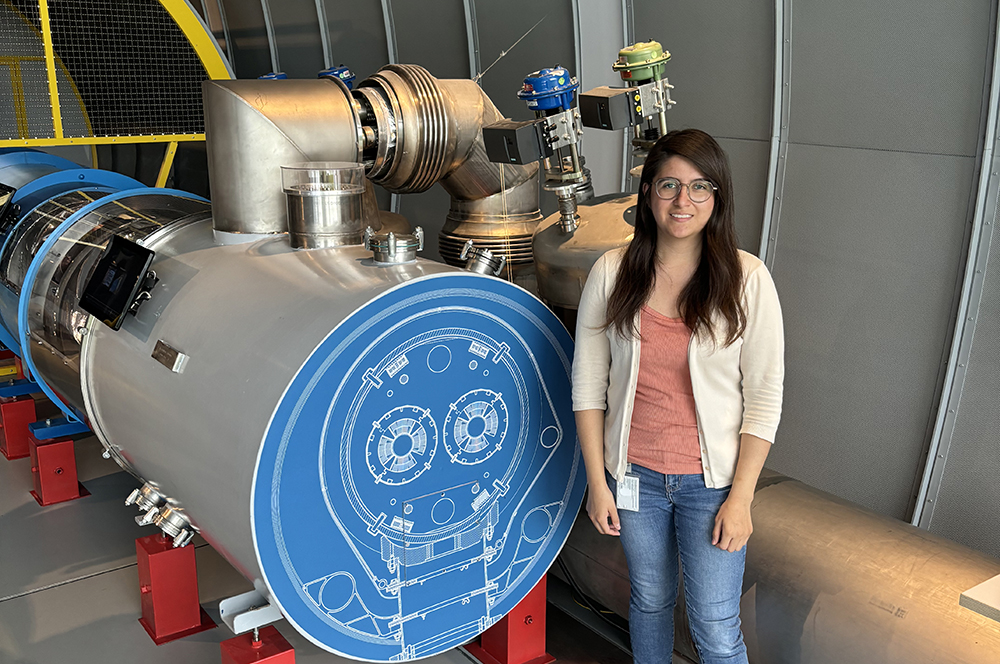
Mercado’s research involves the search for a yet-to-be-discovered charged Higgs particle resulting from experiments at the Large Hadron Collider (LHC) on the sprawling campus of the CERN laboratory near Geneva, Switzerland, where Mercado recently conducted research. Discovered in 2012 by the ATLAS and CMS collaborations at CERN, the Higgs boson has no electric charge and zero spin, but it could be the first of a larger Higgs family that might include charged Higgs bosons.
“In order to search for a charged Higgs boson in particle collision data, we must be able to distinguish its decay process from all other processes present,” Mercado said. “For the SCGSR award, I will work at Argonne with machine-learning techniques to do just that.”
Working closely with Prof. Adelman
Mercado is advised at NIU by Physics Professor Jahred Adelman, who also conducts research on the Higgs boson at CERN.
“Working with Jahred has been a good experience,” Mercado said. “He runs our research group with lightness and humor, which allows us to be ourselves, all the while with a sense of camaraderie among us. On top of that, he is always encouraging, supportive and readily available to help.”
In turn, Adelman has much confidence in Mercado.
“Gretel is a great student to work with because she really aims to understand the things in front her,” he said. “Some students aim to make as many plots as possible and to code as quickly as possible. Gretel first enjoys stepping back and thinking about what she is doing before forging ahead. I think this will serve her quite well in her time working on complicated machine-learning topics for her dissertation.”
Mercado is the eighth NIU student since 2016 to win the prestigious DOE award.
Northern Illinois University is a student-centered, nationally recognized public research university, with expertise that benefits its region and spans the globe in a wide variety of fields, including the sciences, humanities, arts, business, engineering, education, health and law. Through its main campus in DeKalb, Illinois, and education centers for students and working professionals in Chicago, Naperville, Oregon and Rockford, NIU offers more than 100 areas of study while serving a diverse and international student body.
Date posted: July 15, 2024 | Author: Tom Parisi | Comments Off on Physics Ph.D. student earns prestigious DOE award
DeKalb, IL – Electric vehicles (EVs) are quiet, clean and generally pretty awesome. But any EV owner who has taken a long trip and waited 30 minutes or more to charge the battery knows there’s room for improvement.
Photo by Markus Spiske on Unsplash.
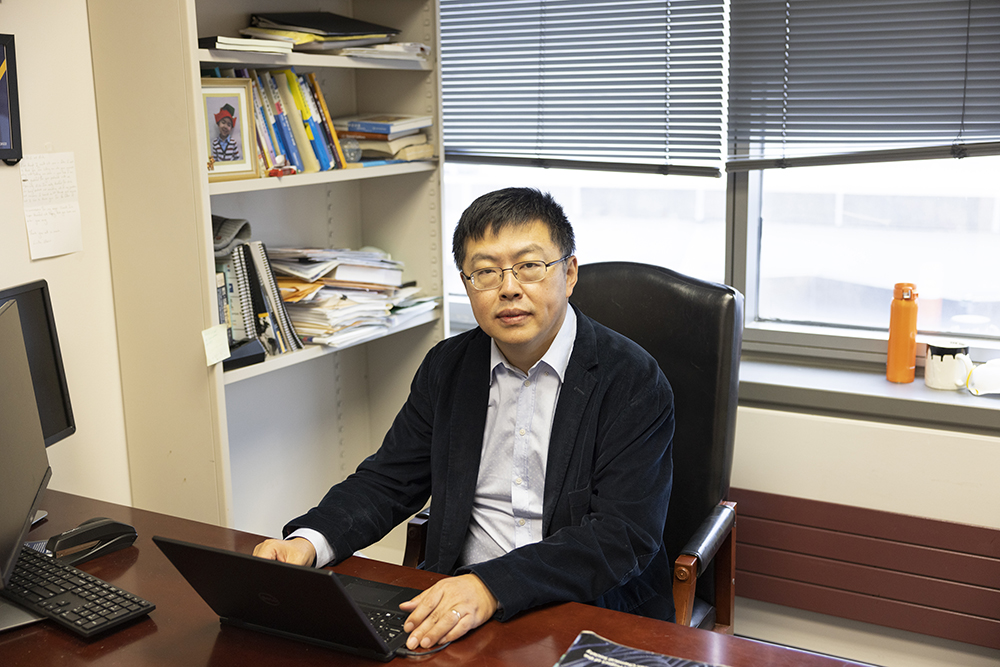
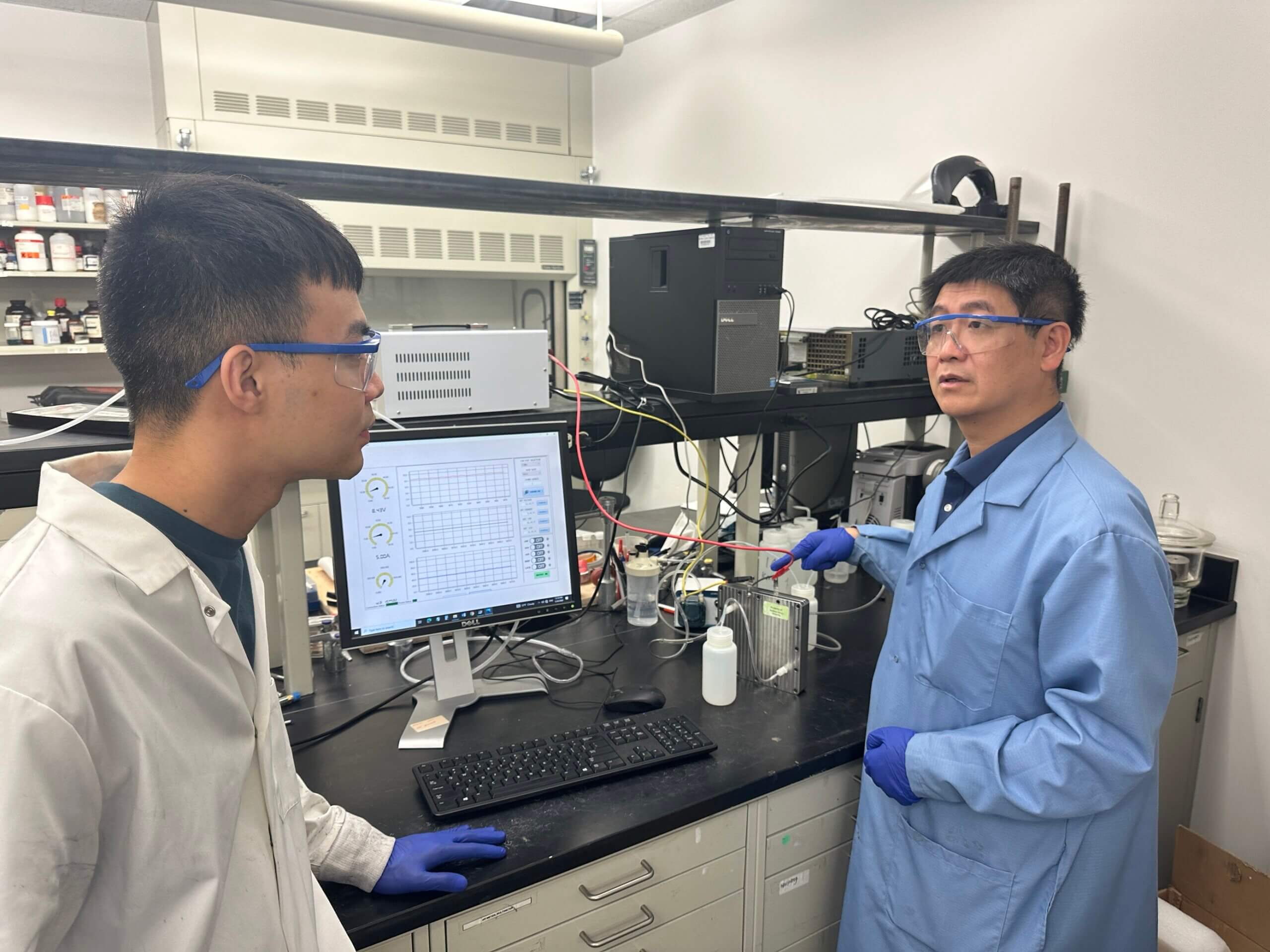
NIU Chemistry Professor Tao Li has been working to reduce that charging time and improve charge longevity by gaining a better understanding of how EV batteries work at the molecular level. Now his work is getting another major boost from the National Science Foundation.
NSF’s Chemical, Bioengineering, Environmental and Transport Systems Division, which supports innovative research and education, has awarded Li with a grant of $424,000 over three years to further his research.
“In simple terms, this research aims to understand how the liquid electrolytes inside high-energy batteries, like those used in electric cars, behave and how they affect the performance of these batteries,” Li said.
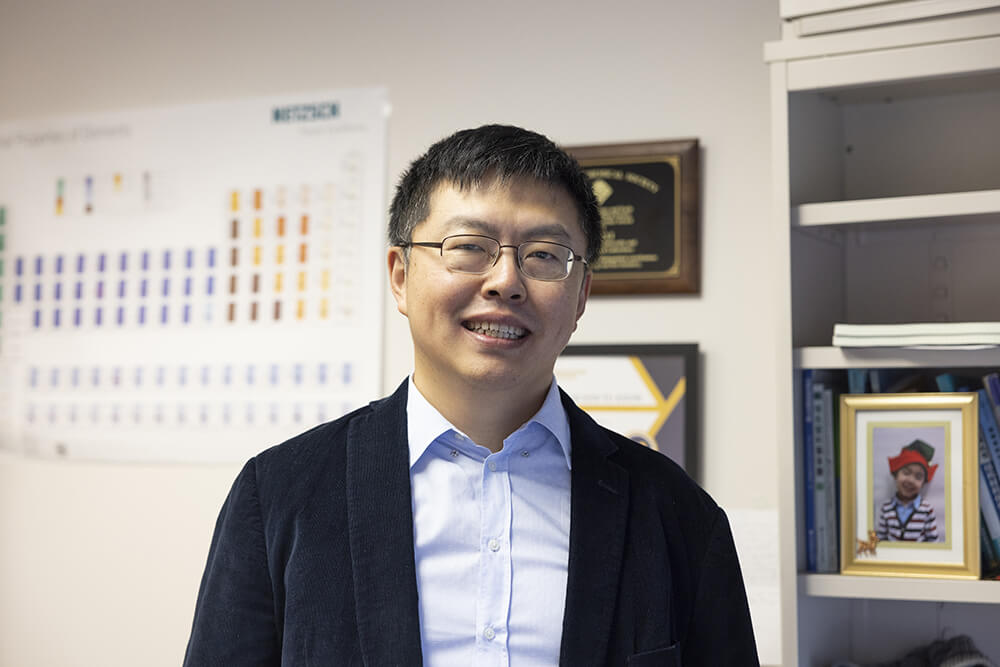
NIU Chemistry Professor Tao Li.
“We’re especially interested in the details of how these liquids move and interact at both the bulk and interfaces of the battery. By figuring this out, we can make better batteries that last longer and work more efficiently.”
Li’s new research, much of which will be conducted at the U.S. Department of Energy’s Argonne National Laboratory, will study rechargeable high-voltage alkali-metal batteries.
“Alkali-metal batteries are an area of intense research due to higher energy density and lower cost,” Li said. “High-energy-density batteries can store a large amount of energy per unit of weight or volume. In EVs, higher energy density means longer driving ranges on a single charge and enables the use of lighter, smaller batteries.”
Li said two NIU Ph.D. students will be hired to help with the research. Additionally, the grant contains funding for an innovative education outreach effort to high school students and educators in the region. Seminars on using batteries for energy storage will be held in 2026 and 2027.
“Because we are close to Argonne National Laboratory, which is one of the top U.S. laboratories for battery research, I plan to take advantage of this great resource and bring in battery experts from the laboratory for this workshop,” Li said.
The new grant marks the ninth NSF award to Li since his arrival at NIU in 2018, including $270,000 in funding announced this past spring to study nanoparticle formation.
Northern Illinois University is a student-centered, nationally recognized public research university, with expertise that benefits its region and spans the globe in a wide variety of fields, including the sciences, humanities, arts, business, engineering, education, health and law. Through its main campus in DeKalb, Illinois, and education centers for students and working professionals in Chicago, Naperville, Oregon and Rockford, NIU offers more than 100 areas of study while serving a diverse and international student body.
Date posted: July 10, 2024 | Author: Tom Parisi | Comments Off on Chemistry Professor Tao Li’s battery research wins $424,000 in NSF funding
DeKalb, IL – Many American workers hide their disabilities, even though disclosure can benefit both the employee and employer. Now a new study identifies a simple way to make revealing a disability more likely—by subtly tweaking the language used in the response options on disclosure forms.
“For many employees, the term ‘disability’ does not reflect how they define their health, function and ability differences,” NIU Psychology Professor Alecia Santuzzi says.
The study, led by Northern Illinois University Psychology Professor Alecia Santuzzi, found significantly more disclosures when reporting a “qualifying condition” as compared to reporting a “disability.”
“The manipulation of a single term on the disclosure form can increase reporting of disabilities,” Santuzzi said. “This effect was particularly pronounced for employees with psychological and invisible limitations, although disclosures were generally greater for a ‘qualifying condition’ across types of disability.”
Santuzzi, along with her former NIU Ph.D. students Robert Keating and Jesus Martinez, published their findings recently in the journal Group & Organization Management.
Organizations collect disability-related information from employees to meet legislative requirements, foster inclusion and respond to employee needs. Disclosure can lead to the development of a more supportive work environment, which facilitates better job performance and improved employee well-being.
But for a variety of reasons—including the stigma associated with disability—there are likely many more employees with disabilities than those who disclose at work.
A 2016 survey among white-collar U.S. workers, for example, showed that about 30% had health conditions that could qualify for protection under the Americans with Disabilities Act, yet less than 4% of employees disclosed to human resources. The uncertainty about the prevalence of disability makes it difficult for employers, researchers and policy developers to be aware of employee disabilities and take appropriate actions to support them.
Building off past qualitative research in their lab, Santuzzi and colleagues surmised that an employee would be more likely to disclose a limitation if a replacement term for “disability” was used on the disclosure form.
To test the hypothesis, nearly 1,600 employed adults from an online panel were randomly asked to complete one of four versions of the Voluntary Self-identification of Disability (VSID), a disclosure form frequently used by U.S. employers and required for use by federal contractors. All versions of the form provided the same background information, including the definition of disability as described in the Americans with Disabilities Act (1990, as amended in 2008).
On the original form, three self-disclosure options were provided:
Yes, I have a disability.
No, I don’t have a disability.
I do not wish to answer.
On that form, 20% of all respondents self-disclosed a disability. But when the word “disability” was replaced with “qualifying condition,” the disclosure rate jumped to 29%. (Two other response options with terms replacing “disability” also elicited higher rates of disclosure, though they were not statistically significant.)
Importantly, adjusted response options had the greatest impact on employees who had reported psychological as compared to physical or cognitive limitations on a separate health screening. Only 41% of employees with psychological limitations disclosed them when the VSID form response options used “disability.” This increased to 59% when the term was replaced with “qualifying condition.”
“Terms such as ‘qualifying condition’ may cue respondents to think more broadly about limitations that might affect work performance and then perhaps disclose these limitations even if they do not adopt the label ‘disability,’ ” Santuzzi said. “Even if employees greatly value their disability as part of their identity, many employees use different terms to express that part of themselves in the workplace.”
The researchers believe that providing alternative response options might reduce the impact of uncertainty about disability definitions, eliminate the need for individuals to adopt disability as a social identity, and remove some concerns about disability stigma that interfere with disclosure.
“Disclosure is an opportunity for employees to present a more authentic version of themselves at work, which may bring psychological benefits in supportive work environments,” Santuzzi said. “Authenticity cannot be experienced if employees are not given the opportunity to report in a way that aligns with how they define themselves. For many employees, the term ‘disability’ does not reflect how they define their health, function and ability differences.”
Northern Illinois University is a student-centered, nationally recognized public research university, with expertise that benefits its region and spans the globe in a wide variety of fields, including the sciences, humanities, arts, business, engineering, education, health and law. Through its main campus in DeKalb, Illinois, and education centers for students and working professionals in Chicago, Naperville, Oregon and Rockford, NIU offers more than 100 areas of study while serving a diverse and international student body.
Date posted: June 24, 2024 | Author: Tom Parisi | Comments Off on Study finds a subtle way to increase employee disability disclosures
DeKalb, IL – The Rockford Promise at NIU program—launched in 2021 to create opportunities for hundreds of students from Rockford to earn degrees without paying tuition or fees—is gaining national attention for innovation.
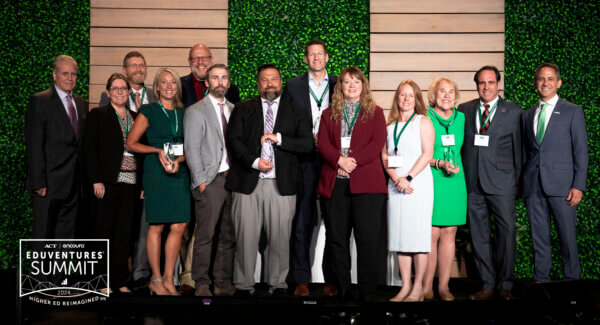
Encoura, a well-known educational data science and research organization, named NIU’s Rockford Promise among the four winners of its annual Innovation Awards Program at the Eduventures Summit 2024, held in Chicago last week.
Now in its eighth year, the Innovation Awards Program was created to recognize and showcase the achievements of individuals and organizations that share Encoura’s vision for innovating to improve outcomes in higher education. The award winners were selected from a record number of entries by a jury of higher education leaders and advisors.
Other awardees honored included Indiana University Online, Harvard Division of Continuing Education and the University of Texas at San Antonio.
“After successive years of challenges for higher education, it is important to recognize institutions who are still looking beyond their own operations to transform lives and communities,” said Cara Quackenbush, Encoura’s executive vice president of research. “We are delighted to honor colleges and universities who are creating important, innovative programs that promote student success, equity and a stronger future for education.”
The Rockford Promise at NIU was selected for its success in championing access. The program involves university partnerships with the City of Rockford, Rockford Promise organization, and Rockford Public Schools. For eligible students who live in Rockford and graduate from one of its public schools with a minimum cumulative high school GPA of 3.0, the program guarantees that tuition and general fee costs will be met by gift aid such as grants and scholarships for up to four years at NIU.
“Our program really showcases the power of collaboration, and it benefits the Rockford region by nurturing the future workforce,” said Sol Jensen, NIU vice president for Enrollment Management, Marketing and Communications, who accepted the award on behalf of the university.
Recipients, including NIU’s Vice President of Enrollment Management, Marketing and Communications Sol Jensen (sixth from right) and Executive Director of Rockford Promise Kaylene Groh (fifth from right), at the annual Innovation Awards Program at the Eduventures Summit 2024, held in Chicago last week.
Despite launching the program during a difficult stretch in higher education brought on by the worldwide pandemic, the Rockford Promise at NIU has flourished. Since its inception, freshmen enrollment from Rockford Public Schools has surged, increasing more than sixfold compared to the three years prior to the program’s launch. Notably, Rockford Promise scholars exhibit better reenrollment rates than the university average and higher GPAs.
“The NIU’s Rockford Promise Program aligns perfectly with the mission, vision and values of our community,” Jensen said. “It contributes to inclusive excellence, with a substantial proportion of Rockford Promise scholars being first-generation students, Pell Grant recipients, and individuals of color.”
Participants have praised the initiative (see accompanying video) for its financial assistance and comprehensive student support services, including mentorship programs and academic advising. And Rockford leaders view the program as a strategic investment in the community’s future, recognizing the program’s role in fostering educational attainment, economic prosperity and driving regional development. Rockford Mayor Tom McNamara recently touted the program in the Chicago Sun-Times.
“The innovative Rockford Promise at NIU continues to grow,” Jensen added, “and most importantly, these students are thriving.”
Encoura, LLC, the organization giving out the innovation award, is a wholly owned subsidiary of ACT®. The educational data science and research organization serves over 2,000 member institutions comprising public and private colleges and universities across the nation.
Northern Illinois University is a student-centered, nationally recognized public research university, with expertise that benefits its region and spans the globe in a wide variety of fields, including the sciences, humanities, arts, business, engineering, education, health and law. Through its main campus in DeKalb, Illinois, and education centers for students and working professionals in Chicago, Naperville, Oregon and Rockford, NIU offers more than 100 areas of study while serving a diverse and international student body.
Date posted: June 18, 2024 | Author: Tom Parisi | Comments Off on Rockford Promise at NIU recognized nationally for innovation, championing access
DeKalb, IL – NIU Chemistry Professor Tao Xu has a vision for a cooler, cleaner world: Give industry a financial incentive to capture its carbon dioxide (CO2) emissions by making the process profitable.
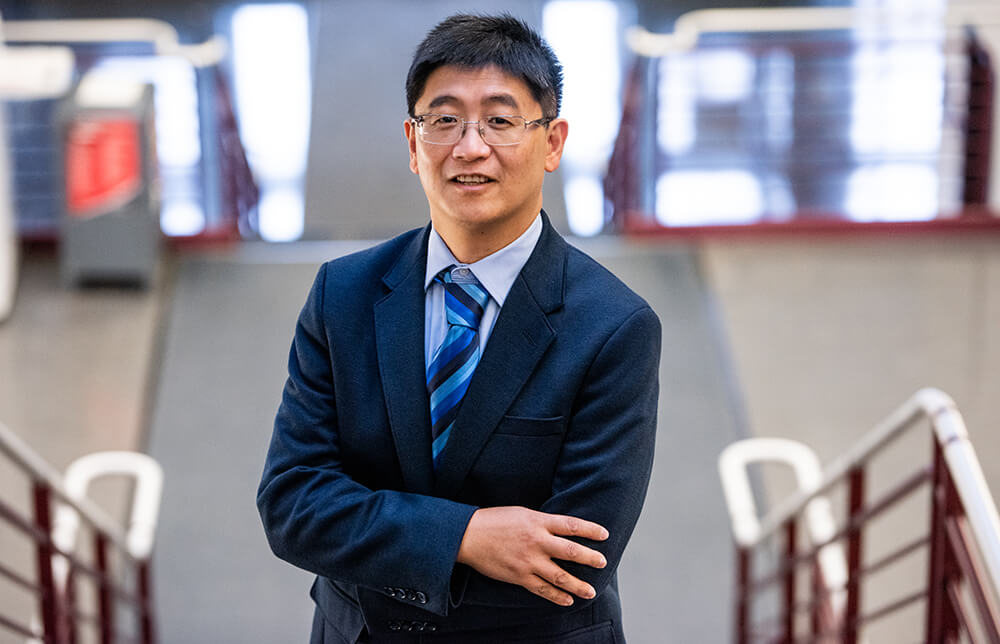
NIU Chemistry Professor Tao Xu.
Xu and his collaborators, including scientists at the U.S. Department of Energy’s (DOE) Argonne National Laboratory, aim to accomplish this by further developing a process that can turn carbon dioxide emissions into valuable products. When producing goods, the manufacturing sector emits carbon dioxide and other greenhouse gases that contribute to global warming, both by burning fossil fuels and through certain industrial processes, according to the Congressional Budget Office.
In 2020, Xu co-led a team of scientists that announced the discovery of a new electrocatalyst that converts CO2 and water into ethanol. Now the scientists have identified a family of tin-based catalysts that efficiently converts CO2 into ethanol, acetic acid or formic acid—commonly produced chemicals that are found in many commercial products. For example, ethanol is an additive to nearly all U.S. gasoline. Acetic acid is used in household cleaning products. Formic acid is used in the leather, rubber, textile and other industries.
“Through years of hard work, the NIU and Argonne team has revealed an astonishing atomic-level mechanism that selectively guides the electrocatalytic conversion of CO2 to different value-added organics, including ethanol, acetate or formate,” said Xu, who is leading a current DOE project to expand further upon the research.
Jianxin Wang and Tao Xu working in the lab at NIU.
“I’m hopeful that industrial decarbonization could be stimulated if the implementation can be a profitable process to the relevant manufacturing sectors,” he added. “The cost of creating this process would be covered by the profit from the newly created products.”
In addition to Xu, the research team on the new study included equal first authors Haiping Xu and Jianxin Wang, who both earned their Ph.D.s at NIU under Xu’s advisory. Haiping Xu was a postdoctoral researcher at Argonne, and Wang served at the laboratory as a guest graduate student. NIU Chemistry Professor Tao Li also was a member of the research team, along with additional scientists from Argonne and Valparaiso University.
Electrocatalytic conversion method
The method used by the team is called electrocatalytic conversion, meaning that CO2 conversion over a catalyst is driven by electricity. By varying the size of tin used from single atoms to ultrasmall clusters and also to larger nano-crystallites, the team could control the CO2 conversion to acetic acid, ethanol and formic acid, respectively. Selectivity for each of these chemicals was 90% or higher.
“Our finding of a changing reaction path by the catalyst size is unprecedented,” said co-author Di-Jia Liu, a senior chemist at Argonne and a senior scientist in the Pritzker School of Molecular Engineering at the University of Chicago.
Computational and experimental studies revealed several insights into the reaction mechanisms forming the three organic chemicals. One important insight was that the reaction path completely changes when the ordinary water used in the conversion is switched to deuterated water (deuterium is an isotope of hydrogen). This phenomenon is known as the kinetic isotope effect. It has never been previously observed in CO2 conversion.
“Using the hard X-ray beams available at the APS, we captured the chemical and electronic structures of the tin-based catalysts with different tin loadings,” said co-author Chengjun Sun, an Argonne physicist. In addition, the high spatial resolution possible with a transmission electron microscope at CNM directly imaged the arrangement of tin atoms, from single atoms to small clusters, with the different catalyst loadings.
The scientists’ goal is to use locally generated electricity from wind and solar to produce desired chemicals. This would require integrating the newly discovered catalysts into a low-temperature electrolyzer to carry out the CO2 conversion with electricity supplied by renewable energy. Low-temperature electrolyzers can operate at near ambient temperature and pressure. This allows rapid start and stop to accommodate the intermittent supply of renewable energy. It is an ideal technology to serve this purpose.
“This scientific discovery and its further applications could lead to profitable industrial decarbonization or even carbon negative manufacturing,” Xu said.
Support for the research came from DOE’s Office of Energy Efficiency and Renewable Energy under the Advanced Manufacturing Office, Industrial Efficiency & Decarbonization Office. Additional support was provided by Argonne’s Laboratory Directed Research and Development fund.
Northern Illinois University is a student-centered, nationally recognized public research university, with expertise that benefits its region and spans the globe in a wide variety of fields, including the sciences, humanities, arts, business, engineering, education, health and law. Through its main campus in DeKalb, Illinois, and education centers for students and working professionals in Chicago, Naperville, Oregon and Rockford, NIU offers more than 100 areas of study while serving a diverse and international student body.
Date posted: June 11, 2024 | Author: Tom Parisi | Comments Off on Scientists identify ‘astonishing atomic-level mechanism’ for turning CO2 into valuable products
DeKalb, IL – The National Science Foundation (NSF) has awarded a grant of $270,000 over three years to Northern Illinois University Chemistry Professor Tao Li for exploration into production and growth of nanoparticles, shedding light on their intricate development processes.
NIU Chemistry Professor Tao Li.
Nanoparticles have been a focal point of scientific inquiry because of their unique properties, which hold promise across diverse fields such as electronics, biology and material science. Li is investigating one promising method of producing nanoparticles, known as molten-salt synthesis (MSS).
In very simple terms, MSS is kind of like preparing soup, only you’re making nanoparticles instead of dumplings. Scientists mix certain chemicals together and heat them up until they melt into a hot lava-like liquid. Then, they add in other chemicals that they want to turn into nanoparticles. These chemicals dissolve into the hot liquid, reacting with each other to form tiny particles. As the liquid cools down, these particles start to stick together and grow, eventually forming the desired nanoparticles.
MSS is prized for its ability to produce high-quality nanoparticles with controlled properties. It is a desirable technique because the process is environmentally friendly, cost-effective, simple to operate and easy to scale, but there is a drawback. The technique sometimes relies on trial and error, leading to time inefficiencies.
“One problem is we don’t fully understand how these particles form and grow during MSS, so it’s hard to control their size and shape,” Li said. “To solve this, we want to use special X-ray techniques to watch how metal oxide nanoparticles (MONPs) form and grow. By doing this, we hope to figure out how to control their properties better, which could lead to new and better technologies.”
The primary objectives of the research project are threefold:
Observation and Analysis: Employ cutting-edge X-ray techniques at the U.S. Department of Energy’s Argonne National Laboratory to monitor the formation and growth of MONPs, unraveling the underlying mechanisms dictating their evolution.
Optimization: Identify optimal synthesis strategies through comprehensive study of MONP growth dynamics, aiming to streamline production processes and enhance nanoparticle properties.
Knowledge dissemination: Share insights and findings with the scientific community to catalyze further advancements in nanoparticle research.
As part of the project, Li said one NIU graduate student will be recruited to contribute to the research efforts. This marks the eighth NSF grant secured by Professor Li since his tenure at Northern Illinois University began in 2018, underscoring his successful ongoing commitment to pushing the boundaries of scientific inquiry.
Northern Illinois University is a student-centered, nationally recognized public research university, with expertise that benefits its region and spans the globe in a wide variety of fields, including the sciences, humanities, arts, business, engineering, education, health and law. Through its main campus in DeKalb, Illinois, and education centers for students and working professionals in Chicago, Naperville, Oregon and Rockford, NIU offers more than 100 areas of study while serving a diverse and international student body.
Date posted: May 20, 2024 | Author: Tom Parisi | Comments Off on NSF awards Chemistry Prof. Tao Li with $270K grant to study nanoparticle formation
DeKalb, IL – It sounds like it could be the set-up to a joke: What is the most abundant particle in the universe, is something that hardly anyone outside the scientific community has heard about, and really, really needs to be studied?
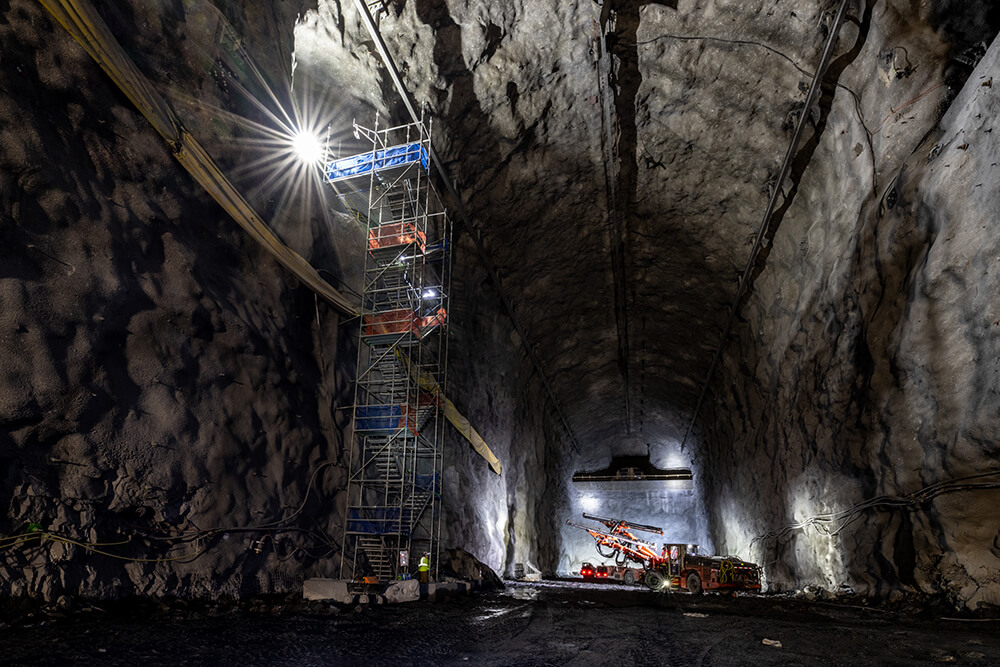
Construction workers in South Dakota created two colossal caverns, each more than 500 feet long and about seven stories tall, for the gigantic particle detector modules of the Deep Underground Neutrino Experiment, hosted by Fermilab. A third cavern will house utilities for the operation of the detector. Photo: Matthew Kapust, Sanford Underground Research Facility
The answer is neutrinos. And at NIU, they are a serious, if elusive, matter.
Trillions of neutrinos—infinitesimally small particles—are traveling through your body at this very moment. Learning more about them could shed light on some deep mysteries: Why is our universe composed of matter? How does an exploding star create a black hole? Are neutrinos connected to dark matter or other undiscovered particles?
Those questions are fueling work being conducted by a select group of students, staff and professors at NIU who are part of a mammoth effort known as the Deep Underground Neutrino Experiment (DUNE), encompassing over 1,400 scientists and engineers at 150 institutions across the globe.
NIU’s connection to the work stems from its strong association with the U.S. Department of Energy’s Fermi National Accelerator Laboratory—and, in turn, Fermilab’s pivotal role in DUNE. The experiment will send a beam of neutrinos produced at Fermilab straight through earth and rock—no tunnel is necessary—about 800 miles west to four large neutrino detectors inside a cavern built in South Dakota. The detectors there will enable scientists to search for new subatomic phenomena and potentially transform understanding of neutrinos.
Earlier this year, excavation workers finished carving out the future home of the gigantic particle detectors. Located a mile below the earth’s surface, the three colossal caverns are at the core of a new research facility that spans an underground area about the size of eight soccer fields. The goal is to have the first detector operational before the end of 2028.
‘They really need to be studied’
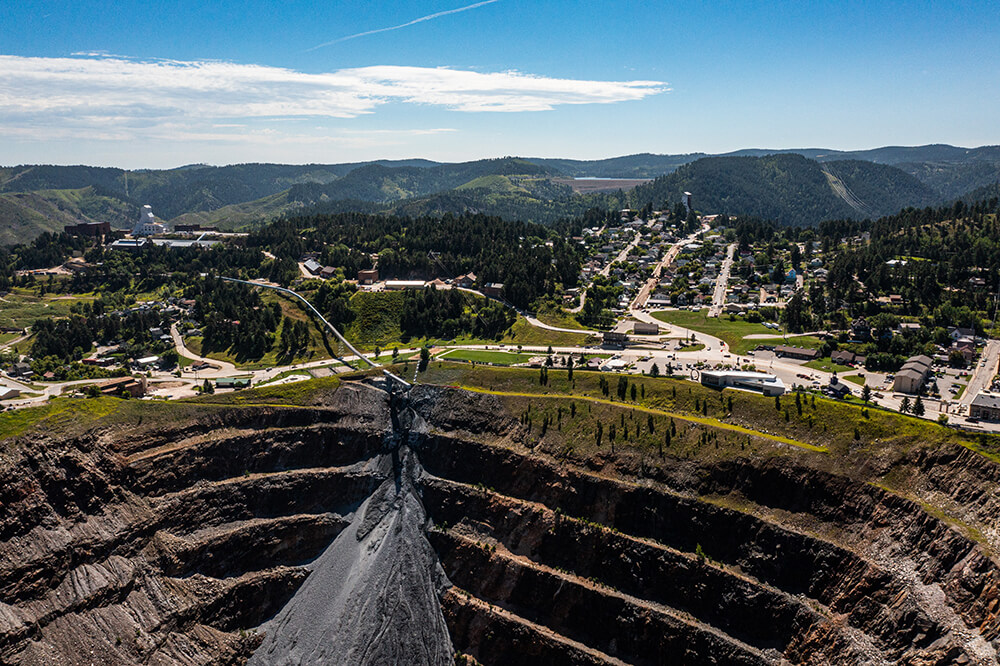
Neutrinos are infinitesimally small, but learning more about them requires massive efforts. To create DUNE’s colossal caverns, close to 800,000 tons of rock were excavated and transported from underground into an expansive former mining area above ground known as the Open Cut. Photo: Stephen Kenny, Sanford Underground Research Facility
For Kurt Francis, a staff scientist at NIU’s Northern Illinois Center for Accelerator and Detector Development (NICADD), his first exposure to neutrinos came as an 11-year-old when they were referenced in a 1977 BBC documentary, “The Key to the Universe.”
After earning a bachelor’s degree in engineering at the University of Illinois, he embarked on a career in industry that included computer engineering.
As part of his deepening passion for the sciences, Francis dug into neutrinos as he earned his master’s and doctorate degrees from NIU. He joined NICADD in 2013.
For the past six years, with his tasks being almost exclusively devoted to DUNE, he’s come full circle from that time he was captivated by neutrinos nearly a half-century ago.
“They make up more than half of the universe,” Francis said. “They really need to be studied.
“When you look at the universe all around us, all you see is matter particles,” Francis added. “What happened? If the same rules apply when the universe was created, you should have as many anti-matter particles as there are matter particles. Currently there’s no explanation why there’s this imbalance . . . neutrinos could be part of the answer.”
Potential for discovery
NIU’s Tyler LaBree, who’s pursuing his doctorate in physics, believes DUNE has tremendous capacity for expanding scientific knowledge around mysterious neutrinos.
Arriving at answers holds enormous implications for unlocking the door to other scientific discoveries, technological advances and as-yet unknown possibilities that could lead to the betterment of all mankind.
That lofty potential is part of what attracted Tyler LaBree to DUNE.
LaBree was considering whether to enroll at NIU for his doctorate in physics when he reviewed the research biographies of NIU physics professors. They included Professor Michael Eads and Professor Vishnu Zutshi, and LaBree noticed they both were working on DUNE.
“Neutrinos have in my opinion one of the highest likelihoods to provide lots of learning in the very near future,” LaBree said. “Relative to other particles, we know fairly little about neutrinos. A flagship experiment like DUNE has a huge capacity for expanding our knowledge.”
Solid matter is composed of protons, electrons and neutrons, so those subatomic particles command much more attention—at least among the general populace—than do neutrinos.
“You can’t build a house out of neutrinos,” LaBree explained, “so you don’t learn about them in chemistry class.”
Approaching his third anniversary of working on DUNE, LaBree’s primary duties consist of analyzing data and fine-tuning equipment.
From mid-January to early February, he traveled to Switzerland where he was at CERN, the European Organization for Nuclear Research. There he shadowed other scientists and helped conduct preliminary tests on “light trap” detectors that will go inside DUNE. He also assisted on tasks such as altering the brightness of light emitting diodes (LEDs) that were beamed into a detector in a “cold box” cube that is roughly 10 feet tall.
But perhaps the CERN trip’s biggest impact was “the social aspect of this collaboration,” LaBree said.
Most of the DUNE work occurs on computers, so “it’s really great to go physically where people are talking and collaborating and working with their hands,” he added. “I’ve learned how to collaborate and not just do my work in a bubble.”
Being part of a big collaboration
Now a fourth-year Ph.D. graduate student, Will Emark was on a Zoom call in his apartment, finishing up his undergraduate work at Northern Kentucky University, when he first learned of the DUNE project from NIU Physics Professor Jahred Adelman.
“He was explaining research projects and said, `We’re shooting these neutrinos through the earth’s crust. Hopefully we’ll detect neutrinos from supernova, light years and light years away from us.’”
Emark had heard about neutrinos before, but the remark prompted him to dig deeper, and the prospect of being able to work on DUNE was a significant factor in his desire to enroll as a Huskie. He’s been working on various facets of DUNE since 2021 and began having access to DUNE collaboration servers and Fermilab two years ago.
“I’ve learned about being part of a giant collaborative project and have enjoyed making connections with people at Fermilab,” Emark said. “Sometimes, it’s a little overwhelming, but I read as much as I can, and there are many different people I can ask for help, including Dr. Eads and Dr. Zutshi and other students.”
When friends ask what role he’s playing, Emark boils it down as “I am helping detect neutrinos from supernovas. . . my role is to learn what happens to a star when it dies and becomes a supernova.”
Working closely with professors
Meeting roughly twice a week, the students provide their professors and research scientists with updates on their work, ask questions, and seek guidance on what aspects will make a significant contribution toward their Ph.D. work.
In his fourth year as a Ph.D. student, LaBree plans to focus on the identification of rare particles known as tau neutrinos. To this point, only 14 tau neutrinos have been identified, but the DUNE project holds the promise of identifying at least 100 tau neutrinos.
Professor Eads is his adviser, though LaBree receives mentorship from other professors as well.
“They’re all incredibly helpful, and they encourage questions,” LaBree said. “The goal of Ph.D. research is to help you become a professional research scientist—someone who’s self-motivated, knows what needs to be done, and knows how to do and communicate science effectively.”
Beyond his Ph.D., Emark hopes to continue working on DUNE, either through a post-doctorate or research position at Fermilab, or in some other capacity. “Regardless, working on DUNE puts me in a place to rotate to a high energy physics project where the same type of tools, coding software and simulation are used,” Emark said.
Building DUNE modules
Mostly under the supervision of Francis, Emark’s work includes building parts of the DUNE detector, which are sent to CERN to be tested.
“It’s been great to be part of this big research group, where we all help each other and learn from each other’s perspectives,” Emark said. “They’re very clear that my objective here is to learn.”
In the next year or so, the NIU team will be responsible for making 300 to 400 of the photon detection modules that will be part of the much larger web of thousands of such modules (think “light traps”) at the underground Long-Baseline Neutrino Facility in South Dakota.
But first, Francis with help from the likes of Emark and LaBree has overseen the construction of about 20 prototypes of photon detection modules. Those prototypes were tested in liquid argon and produced data that confirmed the design integrity.
“To me, it was a great feeling to know that we had successfully built these—that what we put together worked just fine,” Francis said. “We can use that information to proceed to the next step.”
About NIU
Northern Illinois University is a student-centered, nationally recognized public research university, with expertise that benefits its region and spans the globe in a wide variety of fields, including the sciences, humanities, arts, business, engineering, education, health and law. Through its main campus in DeKalb, Illinois, and education centers for students and working professionals in Chicago, Naperville, Oregon and Rockford, NIU offers more than 100 areas of study while serving a diverse and international student body.
Date posted: May 2, 2024 | Author: Tom Parisi | Comments Off on NIU students, staff, faculty play roles in Fermilab’s DUNE experiment
DeKalb, IL – In 2023, NIU’s Edible Campus program broke ground on more than 100 raised beds throughout campus as well as the 5,000-square-foot Anderson Market Garden. One year later, the campus – and many hearts and minds – have been transformed.
“During the pandemic we learned how fragile our global food system is. Making our food systems more resilient is one of the core challenges of our time, and NIU is uniquely positioned to make a difference,” says Bryan Flower, assistant director of food systems innovation.
“Edible Campus is a collection of gardens that provides fresh food for food insecure students, who can access food by picking it as they walk along or in the dining halls or the Huskie Food Pantry. It’s also a living laboratory of food systems research that will help to transform our region and inspire our students to create a more sustainable future.”
“Edible Campus is impactful and inspiring,” says Rena Cotsones, Ph.D., NIU vice president of Outreach, Engagement and Regional Development and chief engagement officer. “We can see the short-term impact right away in the production of healthy food that nourishes our community. Long term, we know that people are thinking more deeply about food justice, the sources of healthy foods, sustainable practices and how to improve our regional food systems.”
In its first year, Edible Campus provided fresh ingredients for over 9,000 meals through Campus Dining Services and the Huskie Food Pantry. NIU students and community members harvested 500 pounds of produce from the 100+ free-to-pick beds. Staff and volunteers harvested over 3,000 pounds of produce from the Market Garden. And the meal prep program provided free food and instruction to help NIU students prepare over 750 meals in the fall 2023 semester alone.
This year, the gardens are expanding and beginning to provide valuable research data as well as fresh local food.
Hydropod Container Growing Unit
In December, NIU received a 40-foot-by-8-foot container gardening system provided by ComEd and the Electric Power Research Institute (EPRI). Several NIU faculty and staff members have completed training on the Hydropod, and the first seedlings are now growing. (First up: kale! The hydroponic container gardening system is great for growing leafy greens.)
NIU’s Hydropod is part of a nationwide project to collect data on growing conditions, energy use and produce yields that will help to improve container gardening systems so communities can fight food insecurity. NIU is one of four Chicago area organizations participating in the project.
“We’re excited to be in conversations with the other Chicago area organizations managing their own hydropod systems,” Flower says. “Organizations such as Grow Greater Englewood, the Emerald South Economic Development Collaborative and the Young Men’s Educational Network of Lawndale are working to fight food deserts in their neighborhoods. We’re excited to continue growing our connections to nonprofits in the region who share our mission to make nutritious, sustainably grown food accessible to all residents.”
Huskies United Fundraiser and Composting Program
The Edible Campus program just completed a successful fundraiser as part of Huskies United.
The original goal of $5,000 was exceeded, and $6,505 is now available to fund the construction of a three-bay composter. The composter – to be located in our Anderson Market Garden – will transform yard waste and food scraps into nutrient-rich soil that will feed plants and the community for years to come.
“Composting creates a virtuous cycle – turning yard waste and food scraps into next year’s nutritious food,” says Flower. “This composter will contribute to NIU’s goal of sustainability, and we’re thrilled to be part of the campus’s larger sustainability and climate action plan.”
Future Plans
As Edible Campus expands, the program is pursuing funding to build a mobile refrigerated wash-and-pack unit. This unit will help volunteers and student workers more efficiently harvest, wash and pack vegetables for distribution. The team also plans to share the unit with beginning and underrepresented farmers in our region, helping to lower barriers to farming and strengthen local food systems.
“Illinois has an abundance of farms, yet most of the food consumed in the state is not locally produced. We hope to lower the many costs for beginning farmers to support a more diverse local farming economy,” says Flower.
Flower says a vegan/vegetarian food truck is also in the works – as both a revenue source to support Edible Campus and a training ground for students interested in food professions.
“We’ll be filling a consumer niche by offering healthy, plant-based food options, as well as making Edible Campus financially sustainable,” says Flower. “I’m excited to share my experience as a farmer and a chef with students so they can become familiar with every step of growing, preparing and distributing food.”
Get Involved
Planting is underway for this growing season, and there are many ways to get involved. Check out the Edible Campus website for opportunities to volunteer and make a difference.
Northern Illinois University is a student-centered, nationally recognized public research university, with expertise that benefits its region and spans the globe in a wide variety of fields, including the sciences, humanities, arts, business, engineering, education, health and law. Through its main campus in DeKalb, Illinois, and education centers for students and working professionals in Chicago, Naperville, Oregon and Rockford, NIU offers more than 100 areas of study while serving a diverse and international student body.
Date posted: April 17, 2024 | Author: Tom Parisi | Comments Off on NIU’s Edible Campus growing strong
DeKalb, IL – Scientists are using new tools that provide a window into the ancient past to better understand how the Grand Canyon’s oldest rocks formed, creating the foundation for one of the seven natural wonders of the world.
Feature photo: The Colorado River meanders along a bend in the depths of the Grand Canyon. Photo credit: Dr. Laura Crossey, University of New Mexico.
The findings from a new examination of the 1.7-billion-year-old rocks, published recently in the journal Geology, revise what was previously known about the formation of the Grand Canyon Precambrian basement.
“Our work produced new high-resolution data that gave insights into how the rocks at the base of the Grand Canyon formed,” said Suzanne Autrey-Mulligan, an assistant professor of geology at Northern Illinois University and lead author on the paper.
“We were able to reconstruct the burial and uplift paths that these rocks took through the earth’s crust while they were forming,” she said. “The new understanding of the depths at which these rocks formed has led to a reevaluation of the tectonic history of the Grand Canyon Precambrian basement rock.”
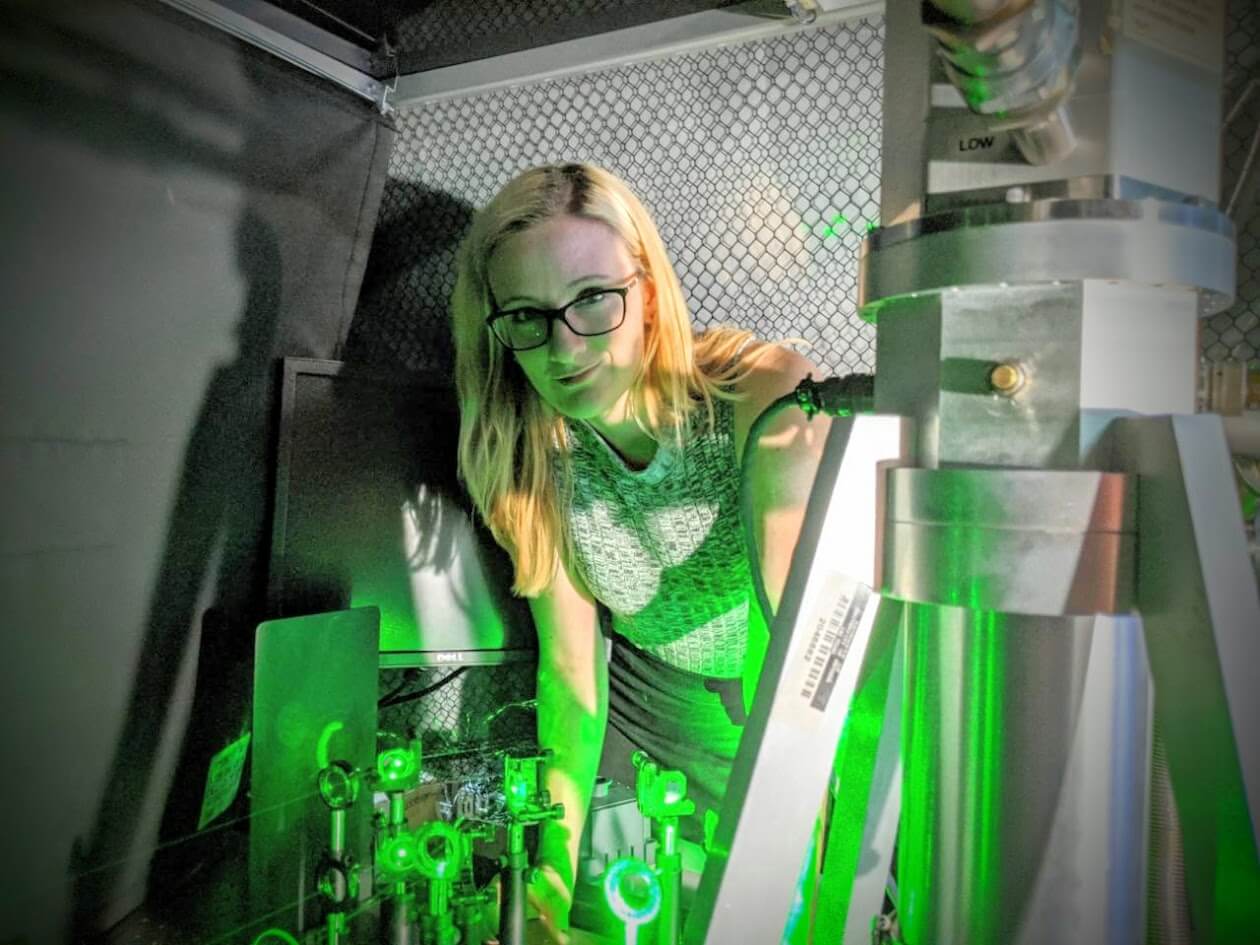
NIU Geology Professor Suzanne Autrey-Mulligan in a Raman spectroscopy laboratory. Photo credit: Suzanne Autrey-Mulligan, NIU.
The types of rocks studied by Autrey-Mulligan and her research team are 1.7-billion-year-old metamorphic schists and gneisses. Making up part of what is called the “crystalline basement” of the Grand Canyon and the greater Mojave region, the rocks in this study comprise the deepest section of the Grand Canyon along the Colorado River in the Upper Granite Gorge of Grand Canyon National Park.
“Previously, it was thought that the 43-mile exposed basement section in the Upper Granite Gorge was a block of the middle crust that was buried and exhumed together as one package,” Autrey-Mulligan said.
“Our work suggests that we need to rethink this. We now know that the blocks reached different depths within the earth and had to be later placed together, potentially by folding and faulting of the rocks or vertical shuffling during collapse of over-thickened crust. Ongoing work is needed to decipher the mechanism that resulted in the juxtaposition of these blocks of rock from different crustal depths.”
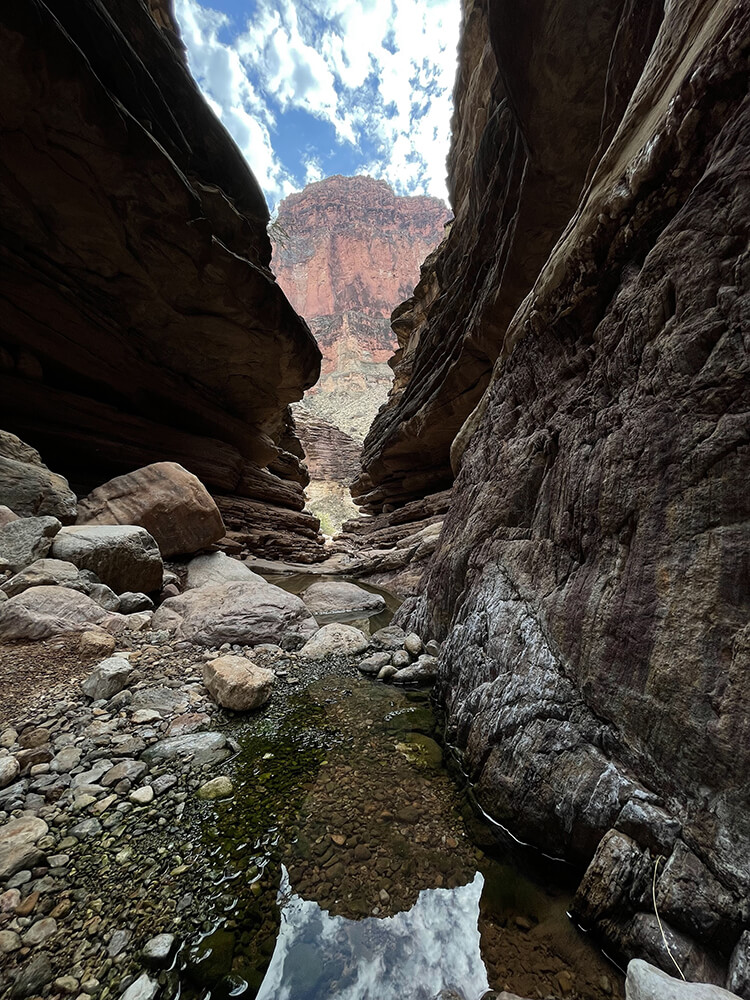
In this view down Blacktail Canyon toward the Colorado River, near-vertical foliation of 1.7-billion-year-old metamorphic Brahma Schist is visible in the right lower half of the image. Photo credit: Dr. Laura Crossey, University of New Mexico.
The research team also included Chloe Bonamici of the University of Wisconsin-Madison; Michael L. Williams of the University of Massachusetts Amherst; Karl Karlstrom of the University of New Mexico; and Cailey B. Condit of the University of Washington.
In the Upper Granite Gorge, it is clear to any petrologist that the different blocks of rocks were metamorphosed (or altered by pressure, temperature and deformation) to different degrees when they were in the middle crust. The high-grade or high-temperature blocks have minerals and textures that indicate they were cooked at higher temperatures and/or greater depths. Other “cold blocks” have minerals and textures that indicate that they never reached as high of temperatures or were never buried as deeply during their geologic history.
The scientists used a Raman spectrometer that focuses a laser beam onto tiny mineral grains entrapped within garnet crystals and extracts information about stress and strain recorded within them. That information was fed into an elastic modeling program, which can determine the pressures or depths when the minerals were formed.
“Earlier studies were not able to obtain pressure or depth constraints because the tools they had available could not access this information with the required resolution,” Autrey-Mulligan said. “This affected the interpretations. Without a technique capable of resolving these depth differences, the earlier interpretations relied primarily on temperature changes to explain the differences that we see in the rocks in the Upper Granite Gorge.”
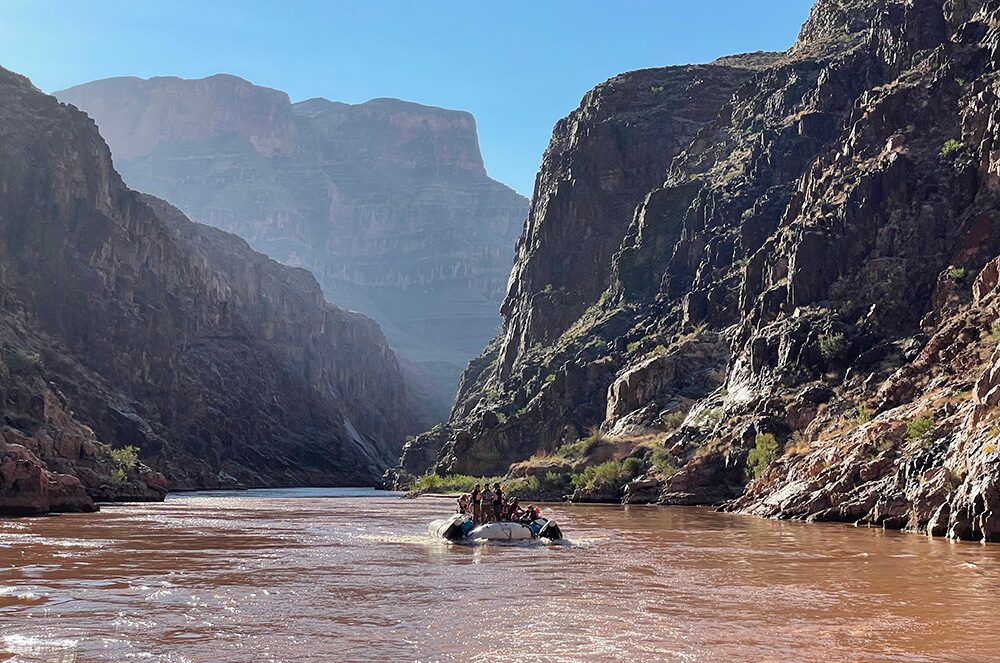
The scientists took two multi-week raft trips down the Colorado River to collect rock samples in the Upper Granite Gorge and other field sites. Photo credit: Dr. Laura Crossey, University of New Mexico.
Autrey-Mulligan sees the Grand Canyon and other natural wonders as ancient history books waiting to be decoded.
“Just like we have museums for understanding human history, I like to think of the national parks as our best public access to Earth’s history—especially somewhere like the Grand Canyon, where millions of visitors and nature enthusiasts love to come and visit each year,” Autrey-Mulligan said. “This is where visitors become exposed to geology and science, and it’s critical that we understand these rocks so that we can share that information with the public—and hopefully plant the seed for some future scientists.”
Autrey-Mulligan plans to continue working in rocks from the middle-crust of the earth, and her current project is in the desert Southwest. Next month she and at least one NIU graduate student will travel to Death Valley National Park to study ancient mid-crustal rocks exposed in metamorphic core complexes in the Funeral Mountains and Panamint Mountains.
Northern Illinois University is a student-centered, nationally recognized public research university, with expertise that benefits its region and spans the globe in a wide variety of fields, including the sciences, humanities, arts, business, engineering, education, health and law. Through its main campus in DeKalb, Illinois, and education centers for students and working professionals in Chicago, Naperville, Oregon and Rockford, NIU offers more than 100 areas of study while serving a diverse and international student body.
Date posted: March 12, 2024 | Author: Tom Parisi | Comments Off on Scientists make grand discovery in basement of Grand Canyon