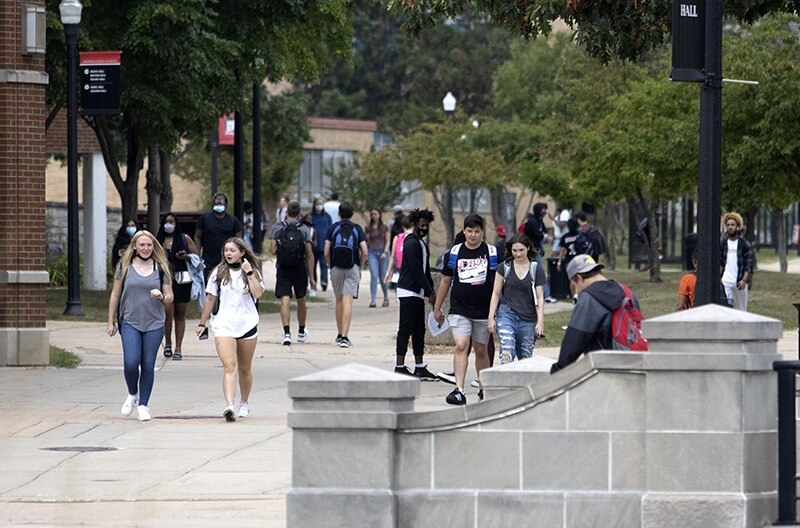
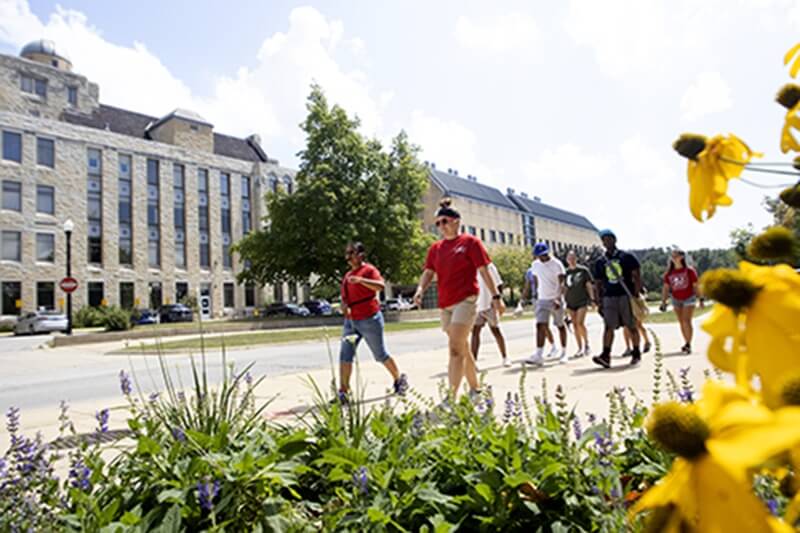
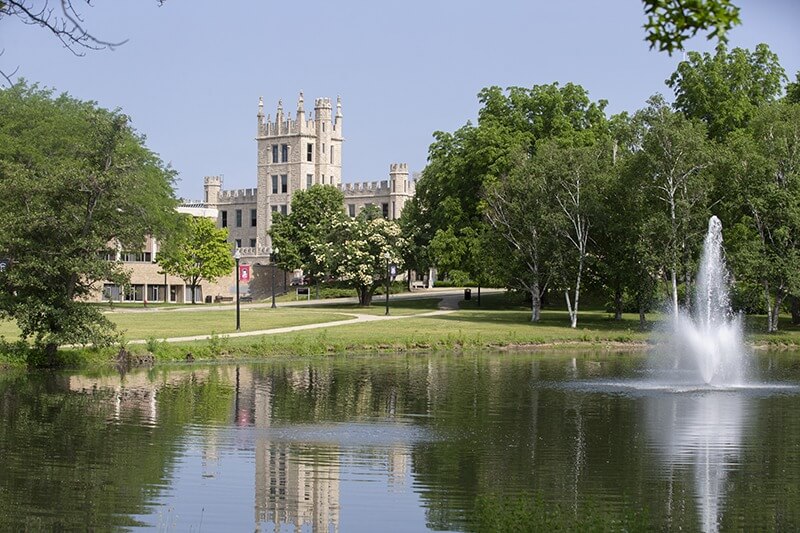
DeKalb, Ill. – Northern Illinois University saw its new freshman enrollment climb this fall by nearly 12% over the same time last year—the largest year-over-year percentage increase in the freshman class in more than two decades.
According to the official census on the 10th day of attendance, total freshman enrollment for fall 2021 increased to 2,285, up 238 students over last fall. With this year’s jump, NIU far surpassed the 2021 freshman enrollment goal in its multi-year Strategic Management Enrollment Plan, while recording the fifth straight year of growth among incoming freshmen.
Additionally, the freshman class arrives at NIU with an average high school GPA of 3.34, the second highest in 10 years. Looking at other characteristics of the incoming class, 57% of the new freshmen are first-generation college students. NIU also continued to have success recruiting students of color. The new freshman class is the most diverse in university history.
“Guided by our multi-year planning efforts, we’re leading the way in Illinois and nationally in our efforts to remove barriers to a high-quality college education,” NIU President Lisa Freeman said. “It’s been an incredibly challenging year, but we’re seeing very positive trends in key areas, from our freshman enrollment growth to our 10-year external-funding high for faculty and staff research, education and service projects, which provide meaningful opportunities for student engagement.”
The number of new master’s-level and professional-degree students increased by 38%, while new doctoral students increased by 22%. The NIU College of Law grew for the third straight year. Despite significant declines in the region’s community college population, NIU’s enrollment of new transfer students generally held steady.
Total NIU enrollment for fall 2021 is 16,234, a modest decrease of 3% from 2020 that is largely attributed to disruptions caused by the global pandemic and its impact felt by college students nationwide. The percentage reflects overall decreases in both undergraduate enrollment and enrollment in graduate and professional programs.
“Knowing that the past year was difficult for students, we’ve worked extremely hard to return to a more traditional, in-person experience this fall,” Provost Beth Ingram said. “We also have continued to make considerable investments of time and resources to support our students by expanding and enhancing tutoring, academic advising and student financial advising. We’re here to help them succeed.”
At the undergraduate level, the university instituted a combination of new admissions policies that are credited with driving the freshman enrollment increase. Recognizing that students’ hard work in high school is reflected in their grades, NIU became one of the nation’s first public universities to announce test-free admissions and merit scholarship processes.
Students are now automatically considered for merit scholarships when they apply to NIU based solely on the GPA from their high school transcripts. Eliminating the use of standardized tests in determining eligibility for merit scholarships served to make the process more equitable and diversify NIU’s pool of scholarship applicants and recipients. Of 1,614 freshman merit scholarship recipients this fall, 64% are students of color, compared to 54% in 2020.
“Test-free merit scholarships correct the misperception that access to higher education is created only through the admissions process—it’s just as impactful to create access through the financial aid/scholarship process,” said Sol Jensen, NIU vice president for Enrollment Management, Marketing and Communications.
“We also believe that our new test-free merit scholarships will help with future student retention by providing consistent funding that students can count on over four years, as long as they continue to meet scholarship program requirements.”
The university’s Huskie Pledge program, funded by the State of Illinois’ AIM HIGH Program, continues to ensure that qualifying Illinois students from lower-income households can attend college with no tuition or general fees for their first year and potentially beyond. In the fall of 2021, 877 students (39% of the incoming freshman class) received NIU’s Huskie Pledge and paid no out-of-pocket expenses for tuition and general fees.
For the first time in recent years, NIU enrollment of U.S. students from outside of Illinois exceeded 1,000. Beginning in the fall of 2018, NIU implemented a new domestic rate structure for tuition that set out-of-state tuition for domestic students at the equivalent of the in-state tuition rate, effectively making NIU more affordable to U.S. students from outside the Land of Lincoln. From 2017 to 2021, the number of out-of-state domestic students has increased by more than 50%. NIU’s student population now represents all 50 U.S. states.
“We’re pleased to see that NIU is attracting students from Illinois and well beyond,” Jensen said. “During this unusual year, our freshman numbers and other trends point to a strategic enrollment plan that continues to serve as a foundation for our future.”
NIU also eliminated undergraduate application fees and joined the Common App in August 2020 to reduce barriers for students in their pursuit of higher education. The Common App gives students a way to apply to NIU and multiple other colleges with one online application. The university saw a 30% increase in the total number of applicants over 2020.
While interest in NIU is growing, more students also are choosing to live in on-campus housing, as occupancy (3,694 students) is at a five-year high.
“Our efforts represent a major university commitment to our vision of being an engine for innovation to advance upward social mobility, promote intellectual growth and transform the world,” Provost Ingram said. “Our positive enrollment trends speak to the success of those efforts, as well as to the high quality of our faculty and academic programs.”
Northern Illinois University is a student-centered, nationally recognized public research university, with expertise that benefits its region and spans the globe in a wide variety of fields, including the sciences, humanities, arts, business, engineering, education, health and law. Through its main campus in DeKalb, Illinois, and education centers for students and working professionals, NIU offers more than 100 areas of study while serving a diverse and international student body.
Date posted: September 9, 2021 | Author: Tom Parisi | Comments Off on NIU sees 12% jump in enrollment of new freshmen
DeKalb, Ill. – The U.S. Department of Energy’s (DOE) Argonne National Laboratory is joining lead organization Northern Illinois University in a $2 million project over three years to develop a prototype low-cost system for capturing carbon dioxide (CO2) waste from manufacturing emissions and cleanly converting it into ethanol.
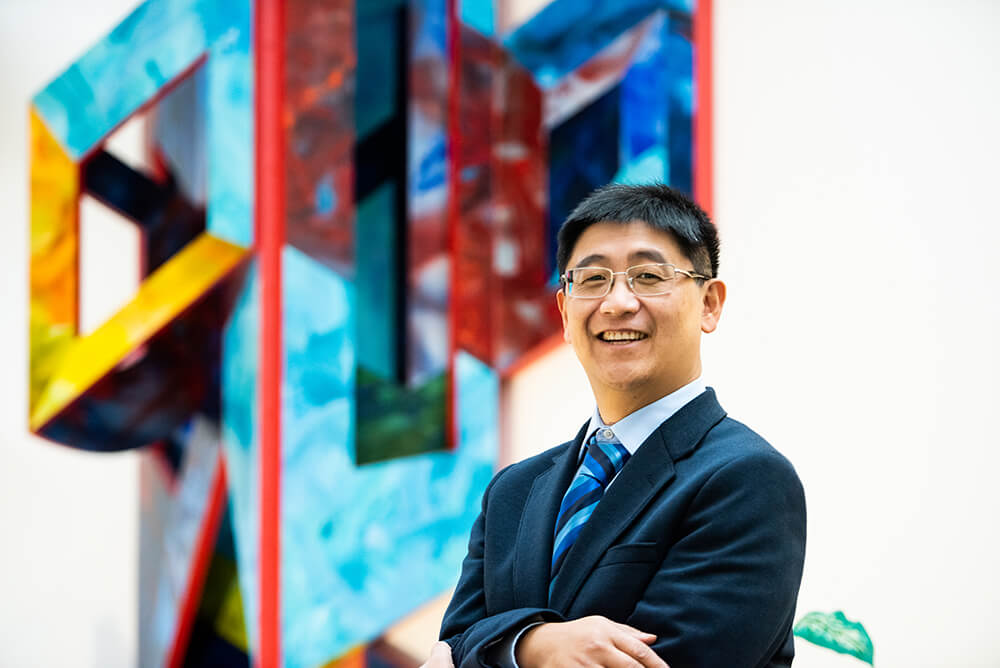
Professor Tao Xu
Also joining the project are the University of North Texas and Angstrom Advanced Inc. DOE’s Office of Energy Efficiency and Renewable Energy is funding this project for a three-year period.
“Our long-term vision is for a cleaner and sustainable planet,” said Tao Xu, the project lead and a Chemistry Professor at Northern Illinois University. “If we develop a successful prototype, it will be a step toward a more sustainable future.”
This newly funded project is a natural outgrowth of the discovery of a new electrocatalyst that converts carbon dioxide (CO2) and water into ethanol with very high energy efficiency, high selectivity for the desired final product and low cost. A report on the discovery was published in the July 27, 2020 issue of Nature Energy.
The team’s electrocatalyst consists of atomically dispersed copper on a carbon-powder support. By an electrochemical reaction, this catalyst breaks down CO2 and water molecules and selectively reassembles the broken pieces into ethanol under an external electric field. The electrocatalytic selectivity, or “Faradaic efficiency,” of the process is over 90%, much higher than any other reported process. What is more, the catalyst operates stably over extended operation at low voltage.
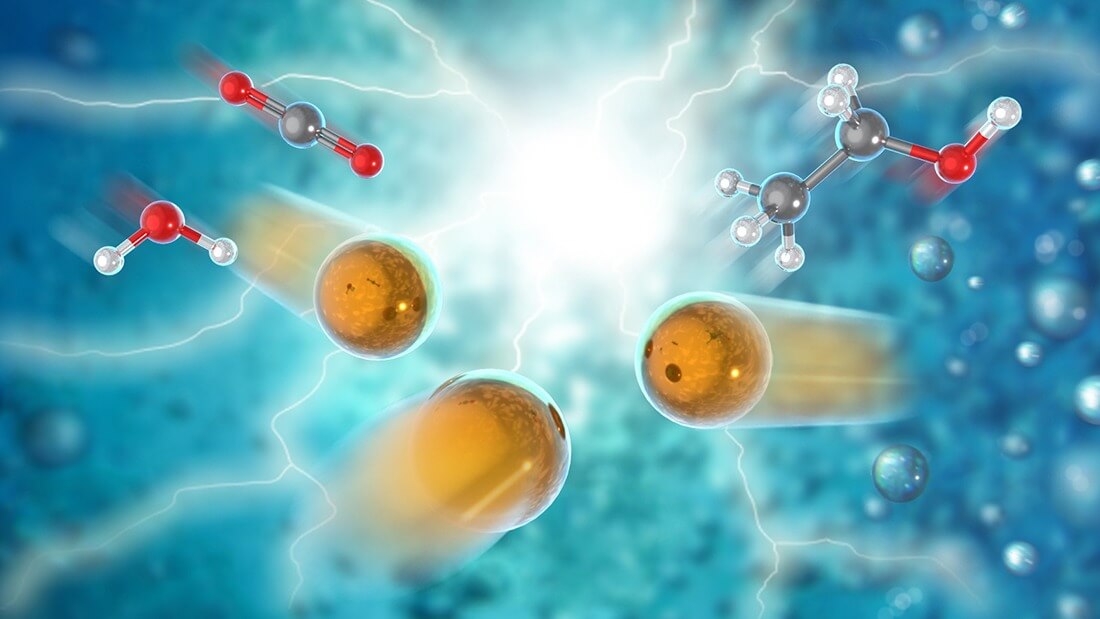
Artistic rendering of electrocatalytic process for conversion of carbon dioxide and water into ethanol. (Image by Argonne National Laboratory.)
“The process resulting from our catalyst would contribute to the circular carbon economy, which entails the reuse of carbon dioxide,” said Di-Jia Liu, a senior chemist in Argonne’s Chemical Sciences and Engineering division and a UChicago CASE senior scientist in the Pritzker School of Molecular Engineering, University of Chicago. This process would do so by electrochemically treating the CO2 generated from industrial processes.
“To avoid emission into the atmosphere, the generated CO2 will be trapped by our direct-air capture module containing a metal-organic framework adsorbent and will then be supplied to an integrated CO2 low-temperature electrolyzer for conversion to ethanol,” said Shengqian Ma, a Professor and the Welch Chair in Chemistry at the University of North Texas and a former Director’s Postdoctoral Fellow at Argonne.
Greenhouse gases from industrial and other human activities are the most significant driver of observed climate change since the mid-20th century, according to the U.S. Environmental Protection Agency. Carbon dioxide makes up 81 percent of U.S. greenhouse gas emissions.
For the prototype, the University of North Texas will spearhead the development of an industrial direct-air CO2 capture module, while Northern Illinois University, Argonne and Angstrom Advanced will develop the electrolyzer system. The goal is to integrate the CO2 capture and conversion components to create a prototype that could be scaled up and used to achieve carbon-neutral, or even carbon-negative, manufacturing. The technology will be designed to be adaptable to various manufacturing settings, such as ethanol manufacturers, thermal power plants, and steel and cement producers.
“The intent of our prototype will be to intercept CO2 before it’s emitted into the atmosphere and convert it back to fuel,” Xu said. “It’s possible we might even be able to capture more CO2 from the environment than has been emitted through manufacturing processes. Ideally, we would use renewable solar and wind energy to then convert carbon dioxide into ethanol.”
Ethanol is a particularly desirable commodity because it is an ingredient in nearly all U.S. gasoline and is widely used as an intermediate product in the chemical, pharmaceutical and cosmetics industries.
The team of researchers expect to have a prototype developed in three years.
Northern Illinois University is a student-centered, nationally recognized public research university, with expertise that benefits its region and spans the globe in a wide variety of fields, including the sciences, humanities, arts, business, engineering, education, health and law. Through its main campus in DeKalb, Illinois, and education centers for students and working professionals in Chicago, Hoffman Estates, Naperville, Oregon and Rockford, NIU offers more than 100 areas of study while serving a diverse and international student body.
Date posted: June 14, 2021 | Author: Tom Parisi | Comments Off on Project aims to create prototype that converts CO2 to ethanol
DeKalb, Ill. – A new study confirms that there are two separate species of threatened pygmy marmosets but finds they can’t be distinguished by fur coloring, as was previously thought. The study also broadens the distribution range for both species to include Ecuador and Peru.
A “northwestern” pygmy marmoset from Ecuador. Photo Credit: P. Yépez
Found in the Amazon region of South America, pygmy marmosets are the smallest monkeys in the world. Adults weigh about four ounces, with the length of the head and the body together stretching just six inches.
Two species had been proposed to exist, based on fur coloring and more recently on genetic analyses. However, fur color seemed highly variable and not exclusive to a particular region.
“Our study showed the two species are not distinguishable by their fur color, but they are distinguishable by differences in their mitochondrial DNA and skull structure,” says NIU biological anthropologist Leila Porter, who led the research, published in the American Journal of Physical Anthropology.
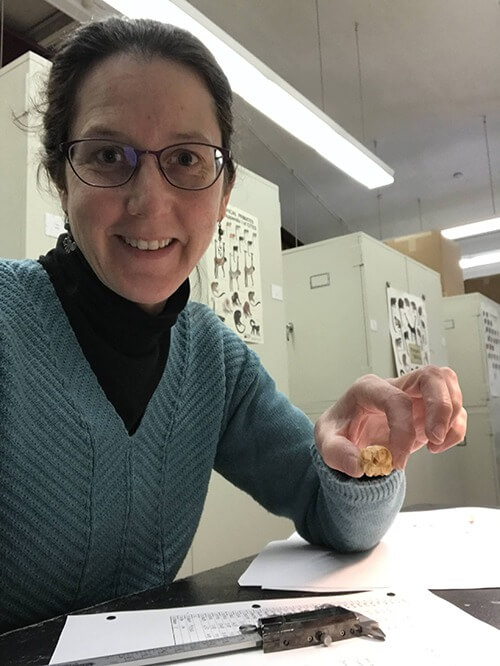
Leila Porter measuring the skull of a pygmy marmoset in the collection of the American Museum of Natural History. Photo Credit: Leila Porter
Three other primatologists collaborated on the work: Stella de la Torre from the University of San Francisco de Quito, Ecuador; Liliana Cortés-Ortiz from the University of Michigan-Ann Arbor; and Pedro Pérez-Peña from the Peruvian Amazon Research Institute. The study was funded in part by the Chicago Board of Trade Fund for Endangered Species.
The new research builds on past findings. In 2018, a group of scientists using genetic analyses confirmed two separate species of pygmy marmoset living in Brazil. Porter’s research team extends the range of both species to Ecuador and Peru. In Ecuador, the species appear to be separated by the Napo River, a tributary to the Amazon River.
Pygmy marmosets live in family groups made up of an adult male and female and their offspring of various ages. The monkeys are cooperative breeders; the female usually gives birth to twins who are cared for mainly by their father and older siblings. They are also unusual in that they regularly gouge trees to feed on the gum that the trees produce to seal their wounds.
In 2017, Porter, an NIU Presidential Engagement Professor, examined pygmy marmosets in the collections of the Field Museum in Chicago and the American Museum of Natural History in New York. The specimens had been collected in Ecuador and Peru in the 1920s. She took cranial measurements of the specimens to determine if there were identifiable differences in the sizes and shapes of skulls from across the region. She also photographed all the pelts of the monkeys in the collection and took small pieces of material from each specimen for her colleague Cortes-Ortiz.
Cortes-Ortiz was able to extract mitochondrial DNA from the museum material and from new fecal samples collected by de la Torre and Perez-Pena at field sites. Cortes-Ortiz was then able to compare genetic similarities among the specimens.
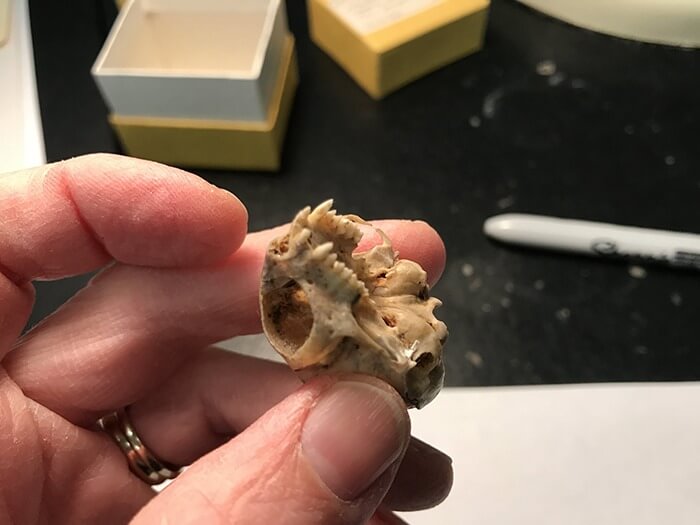
The skull and upper jaw of a pygmy marmoset from the Field Museum’s collection, Chicago. Photo Credit Leila Porter
The testing revealed two distinct genetic groups with slightly different skull shapes. The results, based on cranial and molecular differences, are enough to officially recognize two distinct species, but not based on fur coloration.
In the past, the monkeys were commonly known as “eastern” and “western” pygmy marmosets. Porter’s research team is recommending those be reclassified as “northwestern” and “southern” to accurately reflect where the species live.
The research team is working with colleagues in Brazil and Europe to officially name the second species. According to Porter, the results open the door for additional research on the two species.
“Comparisons of their skull structure suggest they could have slightly different adaptations for foraging,” Porter says. “For example, they might gouge on different kinds of tree species with different kinds of bark. In addition, there could be other behavioral and ecological differences between the species that have not been documented.”
The International Union for Conservation of Nature’s Red List considers pygmy marmosets to be vulnerable to extinction due to habitat loss and the pet trade.
“It is important to further study each species to better develop management plans for their protection,” Porter says.
Northern Illinois University is a student-centered, nationally recognized public research university, with expertise that benefits its region and spans the globe in a wide variety of fields, including the sciences, humanities, arts, business, engineering, education, health and law. Through its main campus in DeKalb, Illinois, and education centers for students and working professionals in Chicago, Hoffman Estates, Naperville, Oregon and Rockford, NIU offers more than 100 areas of study while serving a diverse and international student body.
Date posted: May 27, 2021 | Author: Tom Parisi | Comments Off on You can’t judge a pygmy marmoset by its fur
DeKalb, Ill. – NIU can take more than a little pride in its contributions to the latest landmark finding at the U.S. Department of Energy’s Fermi National Accelerator Laboratory in nearby Batavia.
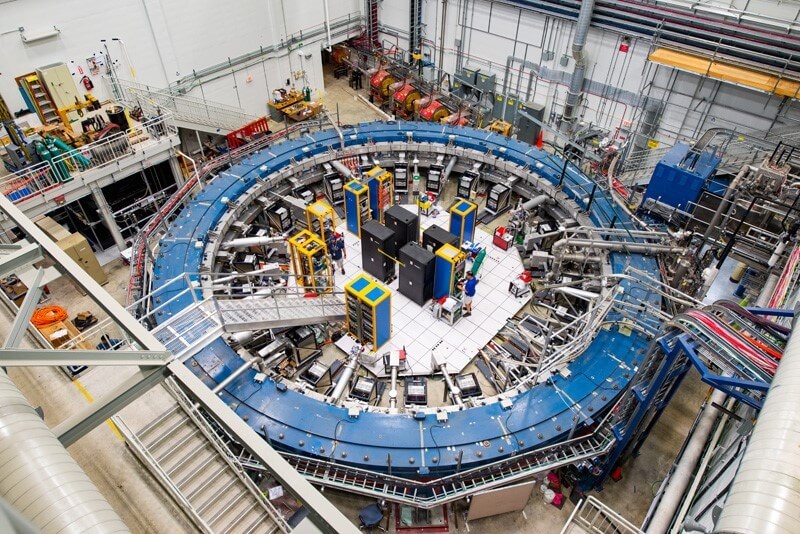
The Muon g-2 ring sits in its detector hall amidst electronics racks, the muon beamline, and other equipment. This impressive experiment operates at negative 450 degrees Fahrenheit and studies the precession (or wobble) of muons as they travel through the magnetic field. Photo courtesy of Fermilab
Over the years, nearly 50 NIU faculty and student researchers contributed to Fermilab’s “Muon g-2 experiment.” It uses powerful accelerators to explore the properties and interactions of muons—tiny subatomic particles that are abundant in nature but exist for only 2.2 millionths of a second. The first results from the Muon g-2 experiment made headlines early this month in news outlets worldwide, from the New York Times to the BBC.
So what’s all the fuss about?
For the past five decades, the Standard Model of particle physics, the top scientific theory explaining the nature of matter, has been amazingly accurate in predicting the behavior of the subatomic building blocks of our universe. But Fermilab’s long-awaited first results from its “Muon g-2 experiment” show muons behave in a way that is not predicted by the theory.
The strong evidence that muons deviate from the Standard Model hints at exciting new physics. Many scientists suspect muons must be interacting with an undiscovered particle or hidden force of nature.
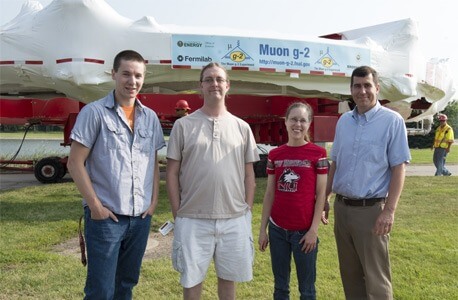
NIU Physics Professor Mike Eads (far right) and NIU students in 2014 during the move of the superconducting electromagnet across Fermilab’s campus to a newly constructed experimental building.
“The Standard Model does an incredible job of predicting the forces and interactions of nature, and it explains everything from how our universe formed to nuclear fusion at the sun’s core,” NIU physicist Michael Eads says. “However, the g-2 results provide the best evidence to date that there is something else going on that is unexplained by the Standard Model. The results tell us there are likely additional unknown particles or forces or both at play.”
The Muon g-2 experiment, located on the Fermilab Muon Campus, involves an international collaboration among Fermilab, Brookhaven National Laboratory in New York, and dozens of labs and universities in seven countries.
Most of NIU’s involvement was in preparation for the experiment, with the university’s contingent led by Eads, Physics Professor Michael Syphers and Mechanical Engineering Professor Nicholas Pohlman. Over the past nine years, 44 NIU students also have contributed to the experiment, as well as now retired Physics Professors David Hedin and Michael Fortner.
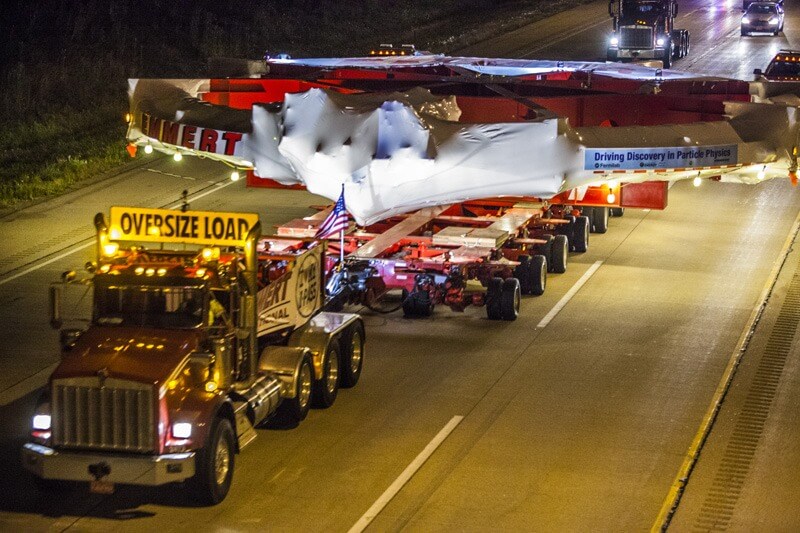
In 2013, the Muon g-2 ring was transported to Fermilab from Brookhaven National Laboratory in New York. The trip, over land and sea, included a ride along the Illinois toll roads. Photo courtesy of Fermilab
Syphers, who has a joint appointment between NIU and Fermilab, was part of a small group of original proponents who advocated more than a decade ago to bring the Muon g-2 experiment to Fermilab, which is about a 40-minute drive east from NIU. They foresaw that the scheduled 2011 shutdown of the main Fermilab accelerator, the Tevatron, created an opportunity to reconfigure the laboratory complex to perform lower-energy but higher-intensity particle beam experiments like g-2.
The predecessor experiment of g-2 at DOE’s Brookhaven National Laboratory had concluded in 2001 and offered hints that the muon’s behavior disagreed with the Standard Model. In the summer of 2013, that experiment’s massive 700-ton electromagnet was transported over land and sea from Brookhaven to Fermilab. In the ensuing years, the experiment has been retooled, upgraded and rebooted.
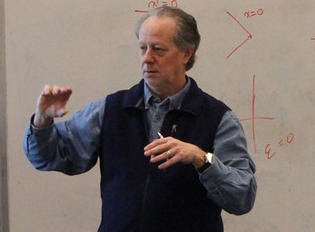
NIU Physics Professor Michael Syphers
Syphers helped develop the muon beam delivery process from the Fermilab accelerator system and more recently was involved in error analysis. Two of his graduate students and one post-doc have worked on the experiment as well.
“Beam physicists and students at NIU have been involved with the experiment for several years and made valuable contributions to the production, confirmations and understanding of the muon particle beam produced for this experiment,” Syphers says. “We have also contributed to computational studies and measurements that have fed directly into the initial results revealed in this recent announcement.
“Many NIU physics students, even those not involved directly with this experiment, have had access to Fermilab and have participated in discussions and talks regarding this experiment,” he adds. “They have benefitted from direct contact with g-2 scientists and engineers and their experiences and expertise.”
Professors Eads and Pohlman contributed to the design, construction and quality control of the tracker system, which detects particles known as positrons that result from the decay of muons. They also worked with their students on the design, installation and calibration of the experiment’s “slow controls” system, which measures and records various parameters in the experimental hall, such as temperatures, humidity, air pressure, voltages and currents.
Eads notes that five of his past graduate students focused their master’s theses on the g-2 experiment. Additionally, he arranged for five undergraduates, one high school teacher and two high school students to collaborate on the project.
NIU Mechanical Engineering Professor Nicholas Pohlman
Meanwhile, Pohlman led extraordinary involvement from NIU engineering. Three graduate students and 28 undergrads, many of them working in Senior Design teams, contributed to development of the tracker system.
“Seeing the tracker system, from starting concept through fabrication and operations, was a great opportunity for students to get a feel for how complex challenges can be solved while working in large collaborations,” Pohlman says.
“Physicists do a great job of drawing up conceptual ideas, and engineers turn those sketches into real-world devices,” he adds. “For our students, this has been a great real-world experience.”
Syphers also felt the collaborative nature of the experiment was amazing.
“We all knew it was important and what was possibly at stake, so everyone has been very professional and serious about the work,” he says. “But at the same time, it has just been a great group of humans to be around all this time. My hope is that future NIU students will somehow be able to get a taste of the excitement of doing science and learning about their universe first-hand through efforts like this one.”
NIU is also involved in the Mu2e experiment on Fermilab’s Muon campus. That experiment searches for rare decays of the muon – another hint for new physics. More exciting results are expected from both g-2 and Mu2e in the future.
Northern Illinois University is a student-centered, nationally recognized public research university, with expertise that benefits its region and spans the globe in a wide variety of fields, including the sciences, humanities, arts, business, engineering, education, health and law. Through its main campus in DeKalb, Illinois, and education centers for students and working professionals in Chicago, Hoffman Estates, Naperville, Oregon and Rockford, NIU offers more than 100 areas of study while serving a diverse and international student body.
Date posted: April 22, 2021 | Author: Tom Parisi | Comments Off on NIU celebrates Fermilab’s latest landmark finding
NIU Assistant Professor, Mohammad Moghimi, received a grant from the National Institute on Deafness and Other Communication Disorders (NIDCD) to develop a novel pediatric hearing aid.
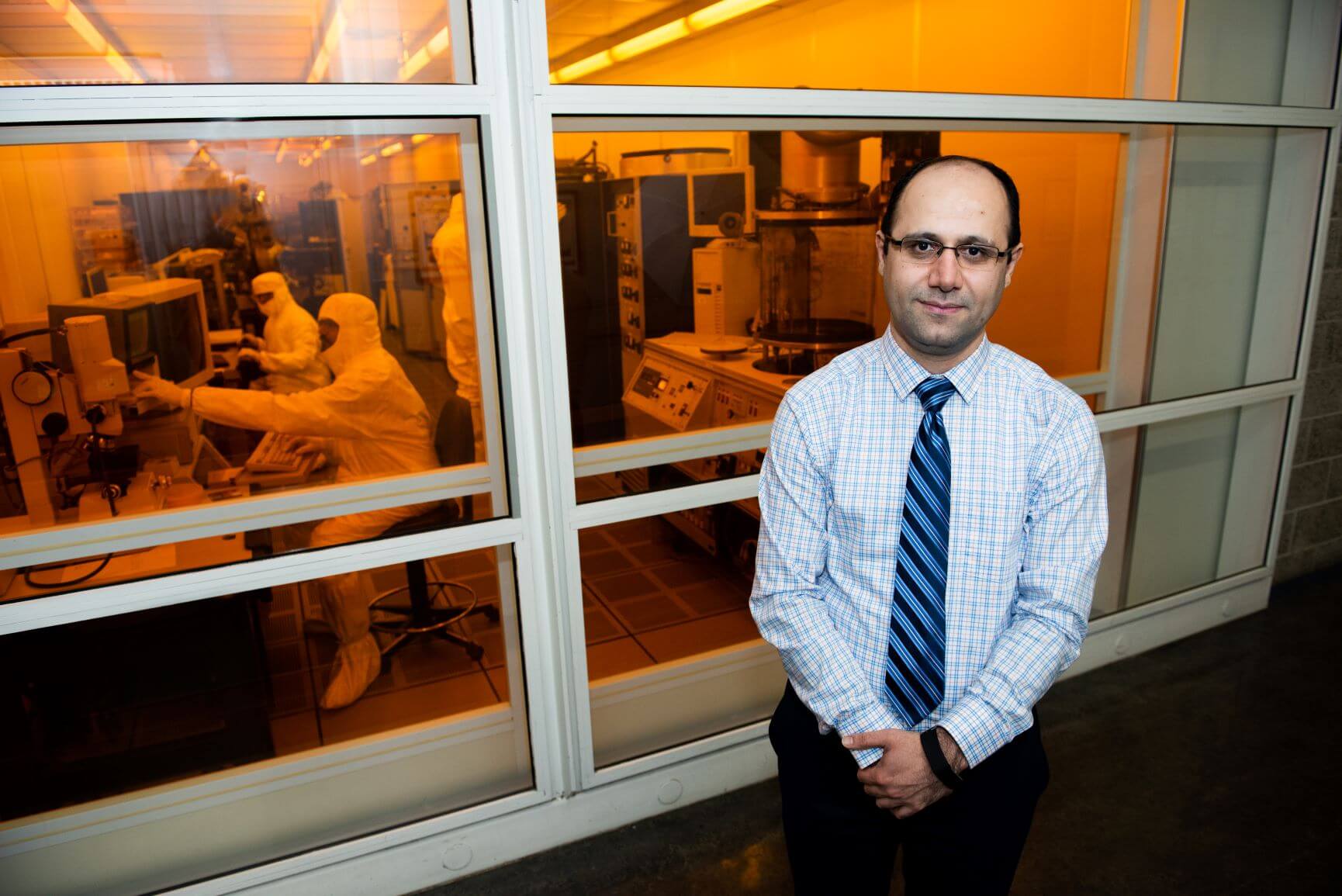
DeKALB, Ill. — NIU Assistant Professor, Mohammad Moghimi, received the Early Career Research (ECR) Award from the National Institute on Deafness and Other Communication Disorders (NIDCD) to develop a novel pediatric hearing aid. Moghimi, an assistant professor of Electrical Engineering in the College of Engineering and Engineering Technology (CEET), designed a non-invasive, band-aid-like hearing aid that can be secured behind an infant’s ear to conduct sound through the child’s bone. His project “Evaluation of micro-epidermal actuators on flexible substrates for non-invasive, pediatric-friendly conductive hearing aid” will receive $430k over three years from NIDCD, part of the National Institutes of Health (NIH).
The highly prestigious Early Career Research (ECR) Award is given to scientists who are conducting pilot research in one or more of the areas within the biomedical and behavioral scientific mission of the NIDCD including hearing, balance, taste, smell, voice, speech, or language. Moghimi will lead a research team that includes undergraduate and graduate students of NIU’s CEET.
As many as three out of every 1,000 infants are born with some degree of hearing loss, according to the NIDCD. Hearing impairment in the early stage of life can delay speech and language development, and lead to learning problems, and issues with social skills and self-esteem, according to the American Speech-Language-Hearing Association. To make matters worse, current hearing-aid products are highly invasive, cumbersome, and inconsistently effective, particularly for infants.
“I realized that infants with hearing loss face challenges in their lives,” Moghimi said. “One of my research goals was to tackle these problems for infants and pediatric patients. I wanted to address hearing loss as early as possible to avoid life-long consequences.”
The most common type of pediatric hearing loss is conductive, in which the auditory canal is obstructed or damaged by infection, trauma, tumors, external objects, and congenital defects in the outer and middle ear. This prevents sounds from properly transmitting to the cochlea and results in conductive hearing loss. Surgical procedures and implantable hearing aids are highly invasive and are not suitable for infants with fragile organs. Non-invasive aids including headbands are cumbersome and unstable as the child moves, rendering the device ineffective.
“Bone-conduction hearing aids can be implanted in the patient’s skull, but this method is highly invasive and risky for the newborns and infants,” Moghimi said. To avoid the risk, the surgeries are delayed until children are older, and during that time the children suffer from the effects of hearing loss.
Moghimi’s Band-Aid-like hearing device conducts sound through the surface of the skin to the temporal bone and finally to the cochlea, bypassing the ear canal. The device will be waterproof and made of bio-compatible materials. It will be able to be worn for days and will charge wirelessly while the child sleeps via a charging device under the child’s bedding.
The hearing aid project will provide opportunities for NIU undergraduate and graduate engineering students to be involved in the research. It will be conducted in CEET’s Microelectronic Research and Development Laboratory (MRDL).
“We are proud of Dr. Moghimi’s innovation and accomplishments,” CEET Dean Donald Peterson, Ph.D. said. “It’s exciting that students will have an opportunity to participate in this important research that contributes to the betterment of society.”
Once the development of the prototype is complete, clinical human trials will begin on infants in collaboration with Dr. Miriam Redleaf, M.D., Professor of otolaryngology (ear, nose, throat) at the University of New Mexico.
About CEET
CEET is housed in three facilities totaling nearly 150,000 square feet and boasts more than 35 state-of-the-art laboratories that offer hands-on learning experiences to students from freshmen year through graduate school. CEET was established in 1985 and offers degree programs accredited by the Accreditation Board for Engineering and Technology (ABET) and the Association of Technology, Management and Applied Engineering (ATMAE) in electrical engineering, engineering technology, industrial and systems engineering, and mechanical engineering. In 2018, CEET introduced bachelor’s degree programs in biomedical and mechatronics engineering and in 2019 introduced doctoral degree programs in mechanical, electrical and industrial and systems engineering.
Northern Illinois University is a student-centered, nationally recognized public research university, with expertise that benefits its region and spans the globe in a wide variety of fields, including the sciences, humanities, arts, business, engineering, education, health and law. Through its main campus in DeKalb, Illinois, and education centers for students and working professionals in Chicago, Naperville, Oregon and Rockford, NIU offers more than 100 courses of study while serving a diverse and international student body.
Date posted: April 1, 2021 | Author: Tom Parisi | Comments Off on NIU faculty received NIH Early Career Research Award for $430K to develop pediatric hearing aid
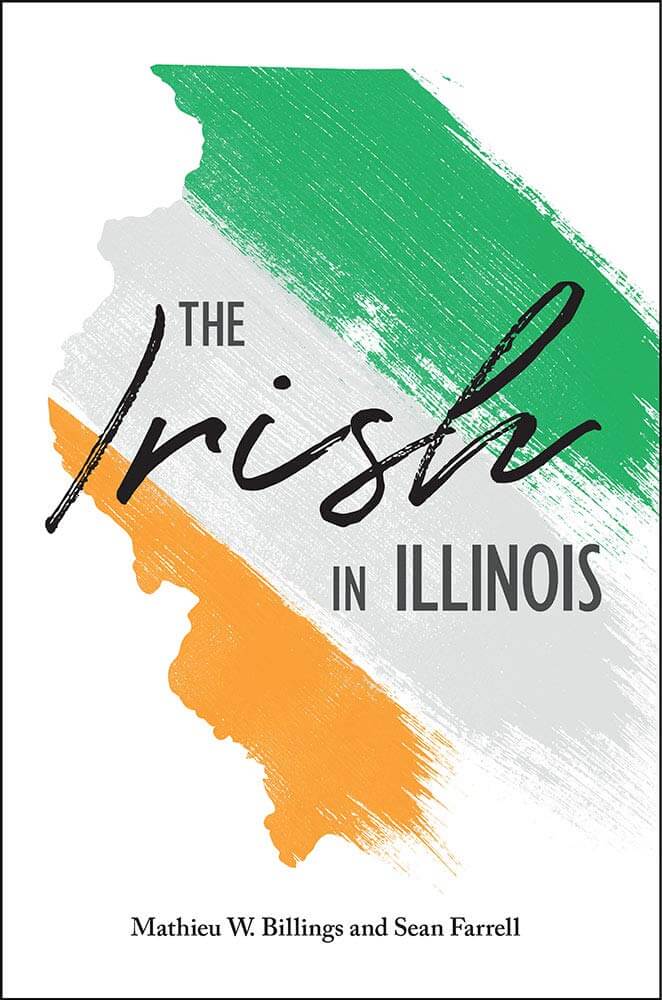
DeKalb, Ill. — Just in time for St. Patrick’s Day, NIU History Professor Sean Farrell and his former doctoral student Mathieu Billings, now a faculty associate in history and political science at the University of Indianapolis, have a new book out titled, “The Irish in Illinois.”
How did the Irish help shape the Prairie State? Who have been some of the most unheralded Irish in state history? Where does Illinois rank in terms of its St. Paddy’s Day celebrations? Farrell and Billings have the answers.
The NIU Newsroom recently caught up with the authors, who not surprisingly have the gift of gab.
Why did you write this book? Mat: Southern Illinois University Press was initially putting together a popular series of short books on immigration to the Prairie State. In working on our first draft, we both realized the potential for a more thorough and scholarly appraisal of the subject—one that not only took stock of the towering roles that Irish Americans played in the development of Chicago, but downstate as well. What resulted is the first statewide history of the Irish in Illinois.
How did the two of you come to collaborate on the book? Sean: One day Mat came to my office to tell me that he had been contacted about doing a book on the Irish in Illinois. I reached out to the series editor, who suggested that we would have a much better chance of getting a book contract if I got on board. I am really glad I did. Mat was a terrific research and writing partner for the project, and I have learned so much about the Irish in Illinois and broader issues in American immigration history. I do think it’s the type of collaborative project that speaks to what we can do at a place like NIU, a research university where graduate students can work closely with faculty.
How many people of Irish descent are in Illinois? Mat: According to the latest federal census, over 1 million people claim Irish ancestry in Illinois. A 2019 survey shows Cook County, Illinois as the county with the largest Irish population (438,350) in the United States.
Where does Illinois rate in terms of concentrations of people of Irish ancestry in the United States? Mat: The most recent estimate from the U.S Census Bureau ranks Illinois 20th, representing roughly 11 percent of the state’s population.
In what areas of society have the Irish made the biggest impacts in Illinois?Mat: It is difficult to overstate the political impact that the Irish had upon the Prairie State. During the 18th century, Irish soldiers and administrators aided the French and British empires in their conquest of the territory. During the American Revolution, rank-and-file Irishmen under George Rogers Clark seized the Illinois Country for the United States. Irish Catholics and Protestants served on the state’s first constitutional convention in 1818. Nine of the state’s governors (nearly a quarter) traced their ancestry back to Ireland, as have seven of Chicago’s mayors, including Ed Kelly and Richard J. and Richard M. Daley. Economically, they built the state’s canals and railroads. Irish farmers tilled the state’s fertile fields. Others became police officers, teachers, firefighters, domestic servants, meatpackers, and business owners. Some of the state’s most prominent labor activists, such as Mother Jones, Margaret Haley and John Fitzpatrick were Irish. And while initially not as upwardly mobile as other immigrant groups, the Irish today are better educated and better paid than average Illinoisans. They are perhaps best known, however, for their enduring cultural impact. Not only does Chicago famously dye its river green on St. Patrick’s Day, but Irish festivals, musical performances, dance recitals and local pubs are popular in Illinois throughout the year.
Does your book talk about the history of celebrating St. Patrick’s Day in Chicago?Sean: More people participate in St. Patrick’s Day celebrations than any other Irish-American cultural event. There are certainly St. Patrick’s Day events and parades from the earliest days of the Irish experience in Illinois, but modern-day parades are really a post-World War II phenomenon. Chicago stands particularly tall here, of course, with two of the largest St. Patrick’s Day parades in the world. The city’s official parade was initiated by Mayor Richard J. Daley in 1956 while the South Side Irish Parade dates back to 1953, although it has been reinvented several times since then. Chicago is not alone, of course. There are notable St. Patrick’s Day parades across the state, including substantial celebrations in Bloomington-Normal, Naperville, Peoria, Rockford, and the Quad Cities. The coronavirus pandemic has presented real challenges for these types of public gatherings, but I just saw that Manhattan, a small town in Will County, hosted a virtual St. Patrick’s Day event that featured Irish traditional music from Mary Hatfield, an NIU History alum and fiddler extraordinaire.
What brought the Irish to Illinois?Mat: The Irish first came to the Illinois Territory during the late 18th and early 19th centuries in search of land, liberty and opportunity. In 1816, prominent Irish Americans in eastern cities petitioned Congress to create a federal colony for Irish immigrants. Congress rejected the idea, but by the time Illinois obtained statehood in 1818, word had gotten out: The Prairie State would make a good home for the Irish. Like other white settler colonists, they settled the southern reaches of the state first and moved northward along the Mississippi. They helped wrest control of the land from indigenous tribes. They mined lead in Galena. But it was the construction of the Illinois and Michigan Canal during the 1830s that beckoned the first major wave of Catholic immigrants from Ireland. Many canallers eventually became farmers. Most, however, settled in the state’s northern cities, notably Chicago. Industrial growth, economic opportunities, and family connections brought further waves of Irish men and women to all of the state’s major cities. That pattern continued well into the 20th century.
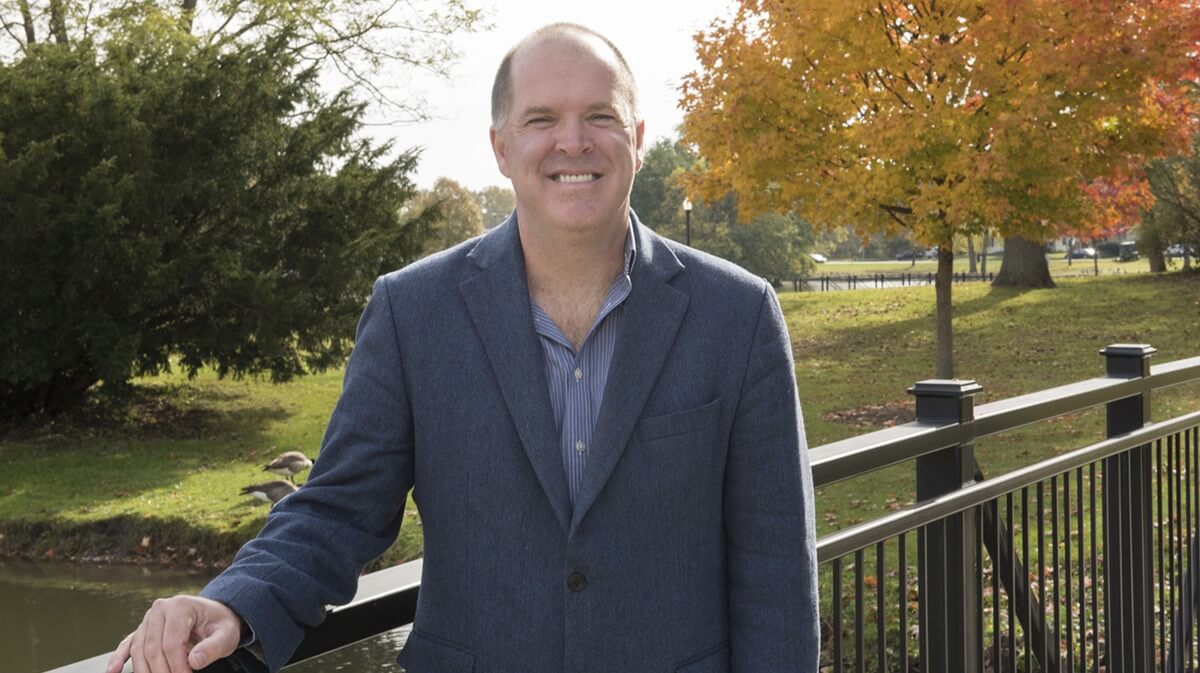
Sean Farrell
How were the Irish alike and different from other populations of immigrants that came to Illinois?Sean: Like all immigrant populations, the Irish left a place where they felt they had limited opportunities (or fled for their lives during the Irish Famine) in an effort to find a place where they could better support themselves. Irish Catholic immigrants faced discrimination and hardship in mid- to late 19th-century America—although not as much in Illinois as they did on the East Coast—but several factors gave them advantages over other migrant populations. Above all, they were considered white, which meant that they had access to legal and voting rights as American citizens denied to most African American contemporaries. Irish emigrants typically spoke English and had political experience, attributes that help explain their quick rise to leadership positions in the Catholic Church and their significance in American politics.
What surprising information do you uncover about the Irish in Illinois?Mat: There are so many points to make. To begin with, most popular depictions of Irish America tend to characterize Irish immigration as predominantly, or even exclusively, Catholic. This is often with good reason, particularly after the Famine (1845-51) when the vast majority of immigration took place. Yet the first waves of Irish settlements were largely Protestant. And while scholars have long recognized this trend, what makes Illinois interesting is the apparent lack of conflict between Irish Protestants and Catholics during the state’s early development. While religious divisions sparked violence between Irishmen in states such as New York and Pennsylvania during the 1820s and 1830s, they did not seem to do so in Illinois. On the contrary, being Irish in Illinois seemed to supersede being Protestant or Catholic. Naturally, more research needs to be done to explore this question more thoroughly.
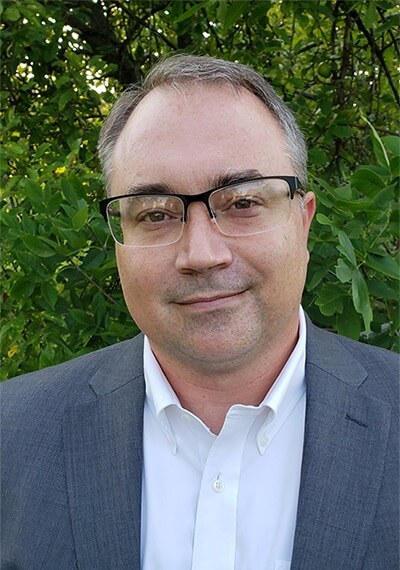
Mathieu Billings
Mat: Another perhaps surprising fact to readers will be the relatively large number of Irish farmers in the Prairie State. Most Irish Catholics in the 19th and early 20th centuries settled in American cities. The same was true in Illinois. Until recently, however, many historians have overemphasized their supposed aversion to farming. To paraphrase one Irish American historian: The land had turned its back on the Irish during the Famine, so they turned their back on the land. Despite this common perception, Irish farmers actually increased as a percentage of first and second-generation immigrants during the 19th century. Many had been former canallers who were paid in land scrip rather than cash. LaSalle County, for instance, boasted one of the largest Irish farming communities in the entire Midwest.
Mat: Many readers will be eager to learn how politically savvy the Irish were. To be sure, the Irish were well known then as now for their politicking. But Irish politicians showcased their skills long before the campaigns of John F. Kennedy, Richard J. Daley or even Edward J. Kelly. From the earliest settlements to the arrival of predominantly Catholic laborers in the 1830s, Irish immigrants ran for local and statewide offices—and they won. During the late 1830s, when anti-immigrant fever or “nativism” began sweeping the eastern seaboard, it was not uncommon to read nativist newspapers rail against the successes of Irish politicians in Illinois. Yet part of the genius of Irish politics in Illinois lay also in their ability to build coalitions. Recognizing that they would rarely be able to make up a majority of voters, Irish politicians as early as the 1840s began reaching across ethnic lines. This was made evident during the Lager Beer Riot of 1855, when Irish and German voters joined forces to defeat the nativist Chicago Mayor Levi Boone. Coalition-building became only more common following the Civil War, and it later served as a template for the city’s era of machine politics.
What stories of Irish Illinoisans should be better known?Mat: One of the most remarkable Irish Illinoisans in this book is Jennie Hodgers, a.k.a. Albert Cashier. Born in Ireland sometime during the first half of the 19th century, Hodgers immigrated to Belvidere, Illinois. When civil war broke out, Hodgers changed her name to Albert Cashier and enlisted in the 95th Illinois Infantry Regiment. Cashier served throughout the war, notably during the Vicksburg Campaign under General Ulysses Grant. When the war ended, Cashier returned to Illinois and continued to live as a man—even voting and later collecting a pension. An automobile accident in 1911 abruptly unmasked Cashier’s secret identity. In 2017, the cities of Chicago and Los Angeles ran a folk-country musical entitled, “The Civility of Albert Cashier.”
Sean: John Looney is another interesting figure, perhaps a bit better known. Born in Ottawa in 1865, he became a successful attorney in Rock Island before shifting his attention to journalism and business. Based in a town later known as the “Citadel of Sin,” Looney created a criminal empire that included a regional bootlegging operation, protection rackets and a national stolen-car syndicate. Repeatedly threatened with federal prosecution, he was finally convicted in 1925. After spending eight years in prison, he moved to south Texas, where he died in 1942. Looney was the basis for John Rooney, a character portrayed by Paul Newman in the award-winning film “Road to Perdition.”
Sean: A number of Irish Illinoisans played significant roles in 20th-century struggles for civil rights. One of the most noteworthy is Sister Mary William Sullivan. Born in St. Louis in 1925, Sullivan had a remarkable 73-year career of service as a Daughter of Charity, working in a variety of educational, philanthropic and social-outreach settings in Milwaukee, Chicago, San Francisco, Amarillo, Austin and St. Louis. She is best known for her civil rights work in Chicago, where she was director of the Extension Program in Public House (1959-64) and administrator of Marillac House (1964-68). She worked closely with Martin Luther King, Jr. and local leaders on the Catholic Interracial Council of Chicago. A fierce advocate for community, educational, racial and social justice, Sullivan described herself as a “large, loud Irish nun sitting on the corner of Jackson and California.” She died in July 2017.
Northern Illinois University is a student-centered, nationally recognized public research university, with expertise that benefits its region and spans the globe in a wide variety of fields, including the sciences, humanities, arts, business, engineering, education, health and law. Through its main campus in DeKalb, Illinois, and education centers for students and working professionals in Chicago, Hoffman Estates, Naperville, Oregon and Rockford, NIU offers more than 100 areas of study while serving a diverse and international student body.
Date posted: March 9, 2021 | Author: Tom Parisi | Comments Off on Perfect for St. Pat’s Day—a history of the Irish in Illinois
DeKalb, Ill. — The National Science Foundation is awarding a $475,000 grant over three years to NIU Meteorology Professor Victor Gensini to extend his research into development of long-range forecasts for hail- and tornado-producing weather.
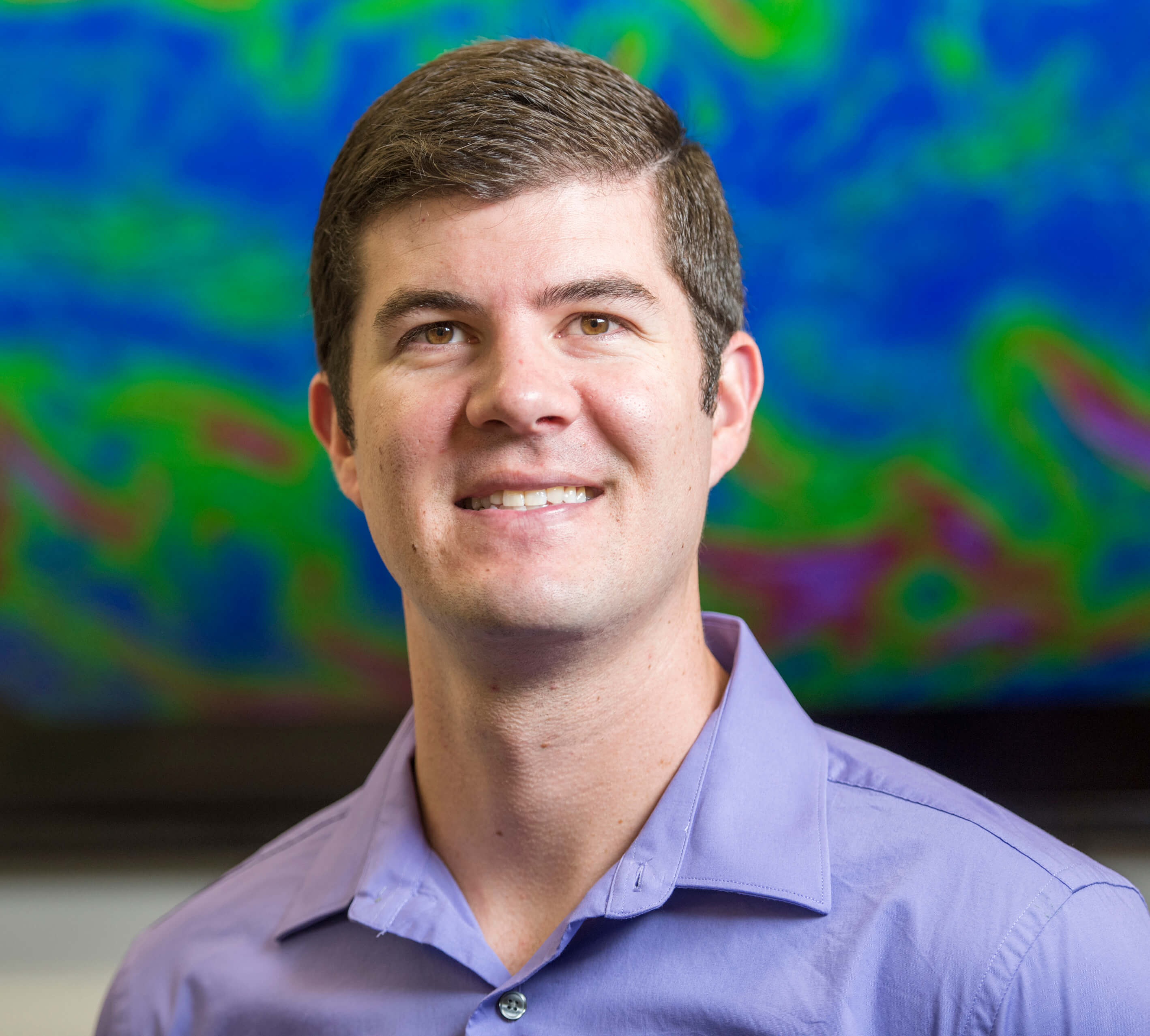
NIU Professor Victor Gensini
Gensini has been a pioneer in this “new frontier of forecasting.” It aims to identify atmospheric conditions that heighten the probability of severe U.S. weather events two weeks to two months before they occur. Tornadoes are life-threatening events, while hail is easily the most economically destructive hazard posed by severe thunderstorms, producing over $10 billion in U.S. losses each year.
“At the end of the day, we’re trying to push the envelope of what’s possible for severe weather predictions,” Gensini said.
“The atmosphere is extremely chaotic, so we’re looking for signal amongst vast amounts of noise,” he added. “In this chaotic system, it’s essentially a search for the most important factors that will help us identify if a severe weather season will be active or quiet. It’s a matter of shifting probabilities.”
The project will involve study of statistical associations between intra-seasonal atmospheric modes that can lead to severe weather and creation of conceptual models to explain the physical mechanisms. Artificial intelligence and machine learning will be used to help recognize these statistical relationships. Gensini, who was recently named deputy director of NIU’s Center for Research Computing and Data, said the center will be a key resource.
In 2018, Gensini led a study identifying a method for predicting the likelihood of damaging hailstorms in the United States—up to three weeks in advance. A year later, he and colleagues reported in the journal, Geophysical Research Letters, on an accurate long-range prediction of the nation’s extensive tornado outbreak in late May of 2019. The forecast for severe weather was made nearly four weeks before it began.
“This new NSF research was funded to increase our skill at extended-range predictions,” Gensini said. “We want to better understand the patterns that set up across the globe and that favor or mitigate severe weather frequency.”
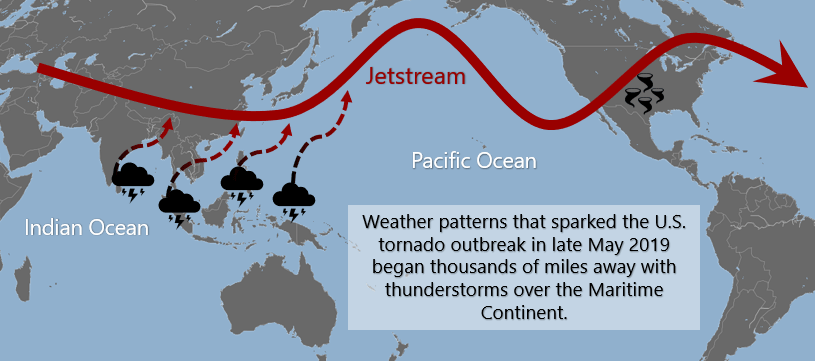
Weather patterns that sparked the late May 2019 tornado outbreak in the U.S. began thousands of miles away with thunderstorms over the Maritime Continent. The forecast that predicted the outbreak looked for signals in two atmospheric indices—the Madden-Julian Oscillation, an eastward moving disturbance of winds, rain and pressure, and the Global Wind Oscillation, a collection of climate and weather information that measures atmospheric angular momentum, or the degree of waviness in the jet stream.
Recurring modes within both oscillations occasionally provide enhanced predictability of future potential for severe weather frequency—something Gensini refers to as “forecasts of opportunity.” Such opportunities do not always exist because often there is no recognizable pattern.
“We want to catalogue weather patterns that present these forecasts of opportunity,” Gensini said. “I’m also delighted because this grant will support students who will be dedicated to working on this problem.”
The grant provides funding for two graduate research assistants in atmospheric science or computer science who will be dedicated to the project over the next three years. A post-doctoral researcher and as many as five undergraduates will be involved as well.
Ultimately, Gensini hopes the team’s work will better inform severe-weather mitigation efforts by providing additional lead time to emergency response teams, insurance companies and other industry sectors. The work also has the potential to increase understanding of other types of extreme weather, such as flooding and drought.
Northern Illinois University is a student-centered, nationally recognized public research university, with expertise that benefits its region and spans the globe in a wide variety of fields, including the sciences, humanities, arts, business, engineering, education, health and law. Through its main campus in DeKalb, Illinois, and education centers for students and working professionals in Chicago, Hoffman Estates, Naperville, Oregon and Rockford, NIU offers more than 100 areas of study while serving a diverse and international student body.
Date posted: March 3, 2021 | Author: Tom Parisi | Comments Off on NSF award will advance long-range weather forecasts
DeKalb, Ill. — You can’t any longer call Jeremy Knoll a Research Rookie.
NIU junior Jeremy Knoll will have his research on Illinois Civil War monuments published over the summer.
The junior from Springfield, who chose NIU in part because of its Research Rookies Program, is already getting the type of attention more typically reserved for Ph.D. students and university professors.
During his sophomore year, Knoll conceptualized and carried out an analysis of Illinois Civil War monuments for Research Rookies. Last fall, he presented his findings at a conference attended by graduate students and state historians. And this summer, the research, with Knoll listed as sole author, is expected to be published in the Journal of the Illinois State Historical Society, the leading historical journal for Illinois history.
“It’s a very good, very professional article,” said David Joens, the director of the Illinois State Archives and guest editor of the journal issue featuring Knoll. Joens, who also happens to be an NIU alumnus (class of ’83), says it’s “very rare” for an undergraduate to publish in the journal.
“He’s taken a thesis and made it his own, which is what you do as a historian,” Joens adds. “I’m thrilled that he’s not only an undergraduate, but an NIU undergraduate, a Huskie. It speaks well of the history department at Northern as well as the student himself.”
Grand Army of the Republic Hall in Aurora, dedicated in 1878. The memorial building was intended to serve as a public library. Source: Aurora Area Convention & Visitors Bureau
Knoll’s study examines Civil War monument building in Illinois from 1865 to 1929, when the Great Depression brought construction of such memorials to an end. Through analysis of period newspaper stories and speeches from monument dedications, he shows changes in who was behind the monuments, funding sources, rhetoric around dedications and ultimately the motivations of the memorial builders themselves. Themes changed to fit the context of their times.
Perhaps most notably, he found the cause of ending slavery, important to early monument builders in the decade after the Civil War, faded almost completely from monument dedications in the 20th century. Instead, these ceremonies focused on reconciliation between the North and South—a finding relevant in today’s conversations over race, representations of the past and calls in other states for removal of Confederate monuments.
It was Knoll’s roots in Springfield, where Abraham Lincoln practiced law and rose to prominence, that brought him to the topic.
“I was growing up in Springfield just about the same time as the building of the Abraham Lincoln Presidential Library and Museum,” he says, adding that his family nurtured his passion for history by visiting Civil War battlefields.
A top student at his high school, Knoll had multiple full-ride scholarship offers for college and conducted a number of campus visits. “NIU was the only university where I thought I had a good shot of not only conducting undergraduate research but also getting paid for it,” he says.
NIU’s Research Rookies Program encourages undergrads to conduct faculty-guided research and rewards students who complete their projects with a $500 stipend. He enrolled at NIU, double majoring in history and economics, with a minor in German language and culture studies. During his freshman year, he completed his first Research Rookies project on Civil War prisoners of war, with Professor Brian Sandberg serving as his mentor.
Then prior to his sophomore year, while Knoll was interning at the Lincoln Presidential Library, his family visited Indianapolis. It was there that he was struck by the towering grandeur of the Indiana State Soldiers and Sailors Monument, an iconic symbol dedicated in 1902 to honor Civil War and other war veterans.
“For me, it sparked questions: Why did past Americans place such an emphasis on creating these monuments?” he says. “A lot of communities in Illinois and across the country have these types of monuments in their town squares or by their courthouses.”
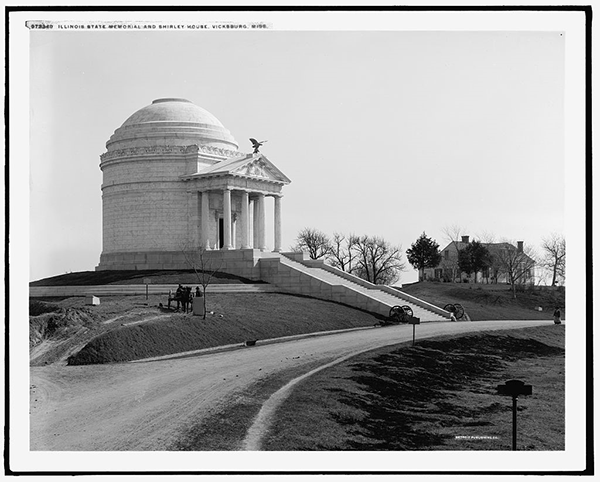
The Illinois Memorial in Vicksburg, Miss., pictured here in the early 20th century. The State of Illinois spent more than 20% of its annual budget on the memorial. Source: Detroit Publishing Company Photograph Collection, Library of Congress
Knoll brought his idea for a study of Illinois monuments to Aaron Fogleman, a distinguished research professor who served as a sounding board throughout the project.
“By the end of his sophomore year, Jeremy was producing work compatible with that of advanced graduate students,” Fogleman says. “He has made important discoveries regarding Civil War monuments in Illinois that help us better understand how changing historical circumstances in subsequent generations affected memory of the war and its purpose.”
Knoll, a University Honors student whose work is also supported by NIU’s McKearn Fellows program, found the reasons for building local monuments had been little researched. But there was a treasure trove of source material.
“Local newspapers covered events leading up to and including the dedication, and they almost always reprinted dedicatory addresses, which became the foundation of my research,” Knoll says. “When you compare dedications from different places in Illinois, they share common themes.”
Scouring newspaper archives, Knoll analyzed the history surrounding more than 40 of roughly 100 Civil War monuments throughout Illinois—as well as some erected outside state boundaries.
In the article set for publication, he introduces his topic with a striking account of the Pantheon-inspired Illinois State Memorial—located in Vicksburg, Miss. The State of Illinois spent more than 20% of its annual budget on the memorial. At its 1906 dedication, schoolchildren sang “Dixie” and “America,” while Mississippi Gov. James Vardaman delivered an address that alternately praised the Illinois delegation while asserting his belief in white supremacy.
Knoll goes on to tease out broad motivations behind three periods of monument building that he identifies. While all monuments were dedicated to the Civil War, each was a product of its distinct time.
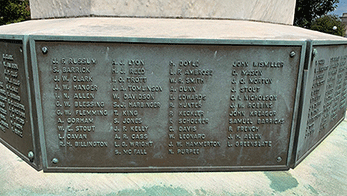
Plaques affixed to the soldier’s monument in Lincoln list the names of those who served in the war. “Many of these monuments list the names of the soldiers, in part to provide them with a grave if they had none,” Knoll says. Source: Jeremy Knoll
The first period spans the Reconstruction era, from 1865 to 1877, when commemoration was focused on memorializing the “unknown dead,” consoling grieving families and expressing anger at the Confederacy. Dedications were local affairs, and typically locally funded. For those who had lost friends and relatives, treason and slavery had caused these painful deaths, and the two were appropriately vilified.
“The Civil War was the first conflict in American history where there were so many missing or killed who were never returned home for burial,” Knoll says. “Many of these monuments list the names of the soldiers, in part to provide them with a grave if they had none.”
The next period ran to nearly the end of the 19th century. Local chapters of national veterans’ or women’s organizations such as the Grand Army of the Republic often organized fundraising. Dedicatory speakers were more receptive to reunion between North and South, but they continued to condemn both the Confederate cause and slavery.
In his paper, Knoll writes: “The 1880s and 1890s ultimately represented emancipation’s zenith as a commemorative theme, as it largely disappeared from the popular consciousness with the beginning of the twentieth century.”
During the Spanish-American War in 1898, Northerners and Southerners fought side by side. By no coincidence, this signaled the start of the final period of Civil War monument building. It was characterized by a willingness to embrace Southerners as both fellow Americans and brave adversaries, leading to an abandonment of emancipation as a commemorative theme.
“By the 20th century, abolition increasingly got pushed aside to look at the war in a more favorable light,” says Knoll, who thinks his findings are relevant to today’s audiences.
“It speaks to how the context of our own time influences how we remember and commemorate historical events,” Knoll says. “There’s plenty to be learned from Union monuments.”
Northern Illinois University is a student-centered, nationally recognized public research university, with expertise that benefits its region and spans the globe in a wide variety of fields, including the sciences, humanities, arts, business, engineering, education, health and law. Through its main campus in DeKalb, Illinois, and education centers for students and working professionals in Chicago, Hoffman Estates, Naperville, Oregon and Rockford, NIU offers more than 100 areas of study while serving a diverse and international student body.
Date posted: February 15, 2021 | Author: Tom Parisi | Comments Off on NIU junior to publish remarkable history research
Tyler Burch, a particle physicist, is sporting a Boston Red Sox cap these days. He took an unusual path to the MLB.
DeKalb, Ill. — The career trajectory of NIU graduate Tyler Burch has taken an unusual turn, to say the least.
Just last spring, Burch earned his Ph.D. in particle physics from NIU. Now he’s going from studying the properties of an enigmatic subatomic particle known as the Higgs boson to analyzing the mysteries of fastballs, sliders, hits and homeruns for the Boston Red Sox.
On Jan. 19, Burch started his new job as a data analyst for the team’s Baseball Research and Development unit.
“I’m really excited,” says Burch, a 27-year-old Aurora resident who grew up a Cardinals fan in downstate Belleville. He says he wasn’t much of a ballplayer as a youngster, turned to other interests as a teen and then reconnected with baseball in college, when the Cards won the 2011 World Series.
“Baseball has been something I’ve been passionate about for the bulk of the last 10 years,” says Burch, who’s sporting a Red Sox cap these days. “Because of that, I got excited about baseball analysis. It was something I did for fun.”
The story leading up to Burch’s new career might best be likened to a Pedro Martinez changeup—not what you’d expect from a talented physicist investigating the building blocks of nature.
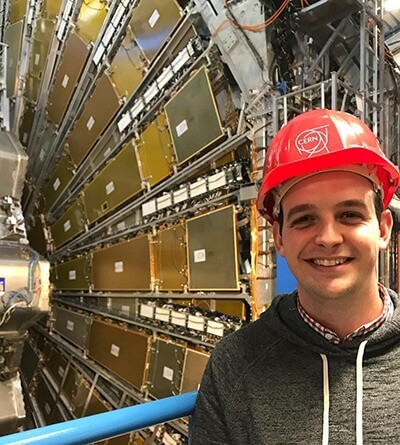
As part of his graduate assistantship with Professor Jahred Adelman, Burch spent more than a year working on the ATLAS experiment at the world’s most powerful particle accelerator, the Large Hadron Collider, in Europe.
Burch chose NIU for his graduate work because of its collaborations with some of the world’s top particle physics research centers. As part of his graduate assistantship with Professor Jahred Adelman, Burch spent more than a year working on the ATLAS experiment at the world’s most powerful particle accelerator, the Large Hadron Collider (LHC) on the sprawling campus of the CERN laboratory near Geneva, Switzerland.
Then two years ago, while still living at CERN, Burch snagged a prestigious graduate student research award from the U.S. Department of Energy Office of Science. The award provided funding for his dissertation research, which used high-performance computing and machine-learning tools at Argonne National Laboratory in Lemont for investigations into the unusual properties of the Higgs boson, a particle discovered at CERN in 2012.
It was a metaphorical homerun for a student who arrived at NIU knowing little about computer programming or data science.
NIU Physics Professor Jahred Adelman
“When he came to NIU, Tyler really had to learn a lot, and he dove right in,” says Adelman, Burch’s adviser. “He became an expert in things like data programing, machine learning and analytics.”
Burch and Adelman bonded over physics—and baseball, which they often discussed. Adelman, a big Mets fan, often uses examples from baseball to introduce high school students to the beauty of physics.
“Physics is a subject deemed to be frightening by a large portion of the public,” Adelman says. “I use baseball to show that science is cool. There are many things you can see on the baseball field that demonstrate laws of physics but don’t require any scary math.”
Data analysis, however, does involve lots of complicated mathematics. It didn’t take Burch long to realize he could apply the advanced skills he was learning to answer complex questions about his favorite hobby. Burch published some of his baseball research on a fan site and on his own blog, with titles such as “Evaluating (pitcher) Lance Lynn’s Unexpected 2019” and “Classifying MLB Hit Outcomes.”
“Even until very recently, Tyler was doing these sorts of baseball studies and pinging ideas off me, asking me what I thought,” Adelman says. “He’s an insane sports buff, particularly about baseball.”
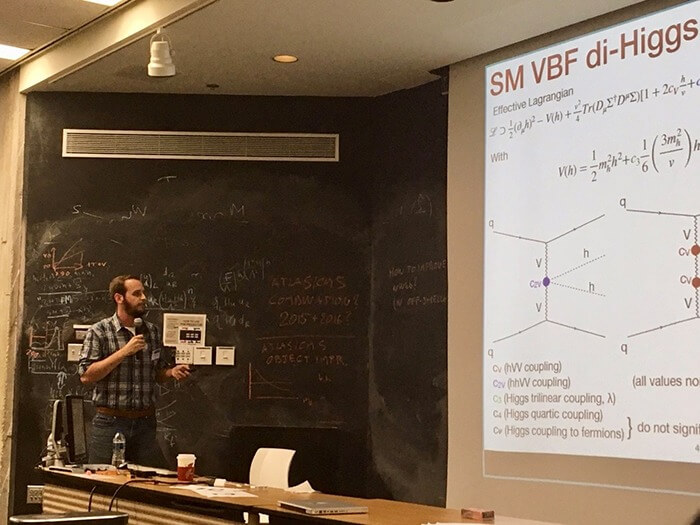
Burch delivers a presentation during the 2018 Double Higgs Production at Colliders Workshop at Fermilab.
The movie “Moneyball” famously depicted the use of data analysis for baseball player selection in the early 2000s, but the field has come a long way since then, Burch says. Data analyses and models are used to guide position shifts on the field, help pitchers generate more velocity or ball spin, and help batters get more hits. Meanwhile, new technologies are being developed that contribute to the science.
As Burch tied up and prepared to defend his dissertation, he applied for a couple baseball jobs, scoring two interviews but nothing more. His resume was lacking, and it didn’t include much hardball lingo. His dissertation title alone must have dropped some jaws among baseball executives: “A Search for Resonant and Non-Resonant Di-Higgs Production in the γγbb Channel using the ATLAS Detector.”
About the time the pandemic hit, Burch completed his Ph.D. and took a job as a postdoctoral researcher with Argonne National Laboratory. It was a plum job unto itself, working to develop simulation and machine learning for particle physics on the upcoming Aurora supercomputer.
In his free time, with not much else to do, he increased his baseball studies and blog output. In mid-November, after Burch applied for a post with the Red Sox, the organization asked him to complete a homework assignment. A month later, the Red Sox asked Burch to walk their analysts through the statistical model he had created.
Burch earned his Ph.D. in particle physics from NIU during the spring of 2020.
“It was an hour-and-a-half of going through code and plots,” Burch recalls. “I was using machine learning, so the model learns from the data.”
By the following day, Burch says, he found himself meeting virtually with the director of baseball analytics, an assistant general manager and scouting directors. Then, late in the evening two days before Christmas, the Red Sox called again.
“I’d just finished dinner with my fiancée, Natalie, so she was first to know,” Burch says. “She watched my face and heard my end of the conversation. When it sounded like an offer, she gave me a thumbs-up with a questioning look, to which I responded with a big thumbs-up and nod.
“The combination of this being my dream job, mixed with all the work I put into it, made the fact that it was turning into a reality feel entirely surreal. When I woke up the next morning, I had to go through my phone just to reassure myself that it did, in fact, happen.”
Adelman is thrilled over his student’s new career path.
“I’m happy for him,” Adelman says. “We’re using these tools for physics, but they’re applicable to a lot of things. Baseball is one of them.”
Northern Illinois University is a student-centered, nationally recognized public research university, with expertise that benefits its region and spans the globe in a wide variety of fields, including the sciences, humanities, arts, business, engineering, education, health and law. Through its main campus in DeKalb, Illinois, and education centers for students and working professionals in Chicago, Hoffman Estates, Naperville, Oregon and Rockford, NIU offers more than 100 areas of study while serving a diverse and international student body.
Date posted: January 26, 2021 | Author: Tom Parisi | Comments Off on From bosons to BoSox
DeKalb, Ill. — If you build it, they might not come. That’s the key finding of a new study on habitat restoration practices that challenges a commonly accepted principle in ecology.
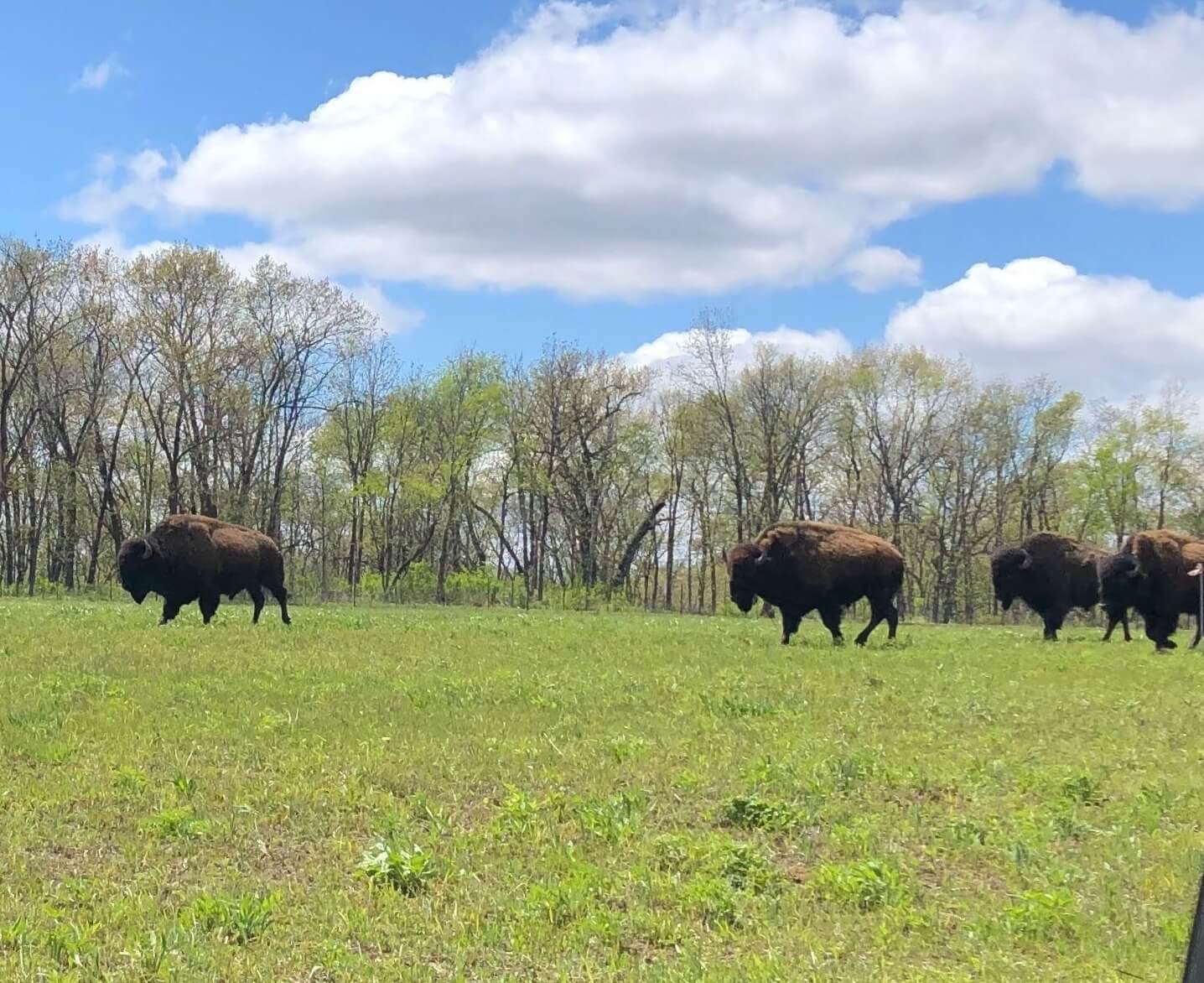
The new study found that, when restoring habitat, the effects of management strategies on animal communities were six times stronger on average than the effects of plant biodiversity. One such management strategy in prairie restoration is the reintroduction of bison, seen here at Nachusa Grasslands. Credit: Holly Jones
The study tested the “Field of Dreams” hypothesis, which predicts that restoring plant biodiversity will lead to recovery of animal biodiversity. The prediction, which often guides restoration practices, is infrequently tested because restoration studies typically measure plant or animal biodiversity, but rarely both, said lead author Pete Guiden, a post-doctoral researcher at Northern Illinois University.
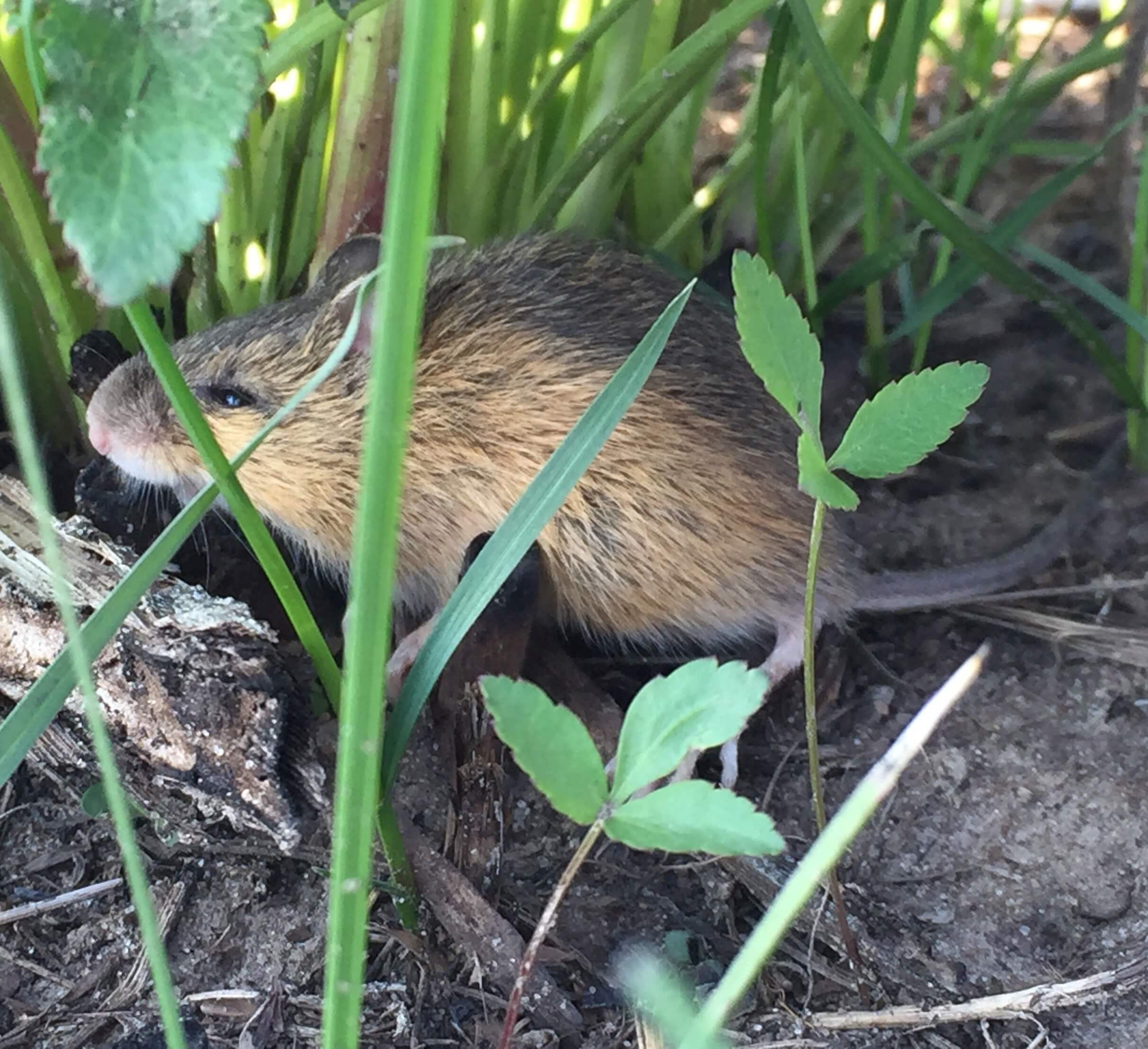
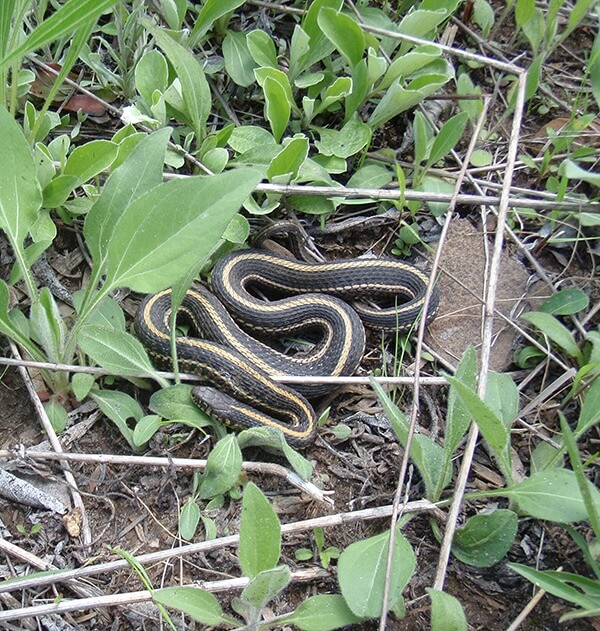
Guiden and NIU colleagues studied 17 research plots of restored tallgrass prairie, measuring biodiversity in four animal communities—snakes, small mammals and ground and dung beetles. “We wanted to know if the most diverse animal communities were found in the most diverse plant communities, or if something else is responsible for patterns of animal biodiversity,” he said.
While the scientists did find some positive connections between plant and animal biodiversity, the gains weren’t nearly as strong as benefits derived from implementation of restoration management strategies.
NIU postdoctoral researcher Pete Guiden.
“We found that the effects of management strategies like controlled burns and bison reintroduction on animal communities were six times stronger on average than the effects of plant biodiversity,” Guiden said.
“The most important effects of restoration on animal biodiversity had little to do with plant community biodiversity,” he added. “So management practices focused on restoring plants might be insufficient to also restore animals.”
Co-authors include NIU professors Holly Jones (biology, environmental studies) and Richard King (biology); NIU post-doctoral fellow John Vanek; NIU graduate student Erin Rowland; former NIU students Ryan Blackburn, Anna Farrell, Jessica Fliginger, Sheryl C. Hosler, Melissa Nelson and Kirstie Savage; and former NIU professor Nicholas Barber of San Diego State University.
The research was carried out by Professor Holly Jones’ Evidence-based Restoration Laboratory. Jones holds a joint appointment at NIU in biological sciences and environmental studies. Credit: Northern Illinois University
“This is an important study,” said Jones, whose Evidence-based Restoration Laboratory at NIU carried out the research. “With Earth’s biodiversity rapidly disappearing, ecological restoration has emerged as an important strategy to slow or reverse biodiversity losses. Critical tests of the Field of Dreams and other hypotheses are needed to improve restoration science and ensure we get the most bang for our buck.”
The study results were a surprise to the authors, who had predicted that plant biodiversity would have stronger effects on animal biodiversity than management strategies.
“We expected plant biodiversity to be important because having more plant species allows animals to split up food resources or habitat,” Guiden said. “However, the strong effects of land management on animal biodiversity highlight the important role of people in shaping the quantity or quality of habitat, especially through disturbance regimes used in restoration.”
The new study measured biodiversity in four animal communities at Nachusa Grasslands—snakes, small mammals such as this prairie vole and ground and dung beetles. Credit: Holly Jones
The scientists’ work was conducted at Nachusa Grasslands, a 3,800-acre nature preserve in Franklin Grove, Illinois, managed by The Nature Conservancy. Since 1986, Nachusa crew members and volunteers have been reconnecting remnant prairie, woodlands and wetlands through habitat restoration to create one of the largest and most biologically diverse grasslands in Illinois. Tallgrass prairie is one of the most globally imperiled ecosystems.
“While Illinois is known as the Prairie State, 99.9 percent of its prairie has been lost to agriculture and development,” Jones said. “Nachusa Grasslands is an incredible success story. What The Nature Conservancy has done is show us we can restore ecosystems. What was once rows of corn is now a really high-functioning prairie that also serves as a living laboratory for restoration scientists.”
Snakes were among the animal communities monitored in the study on biodiversity. Credit: Richard King
The 17 research sites studied measured 60-by-60 meters and had restoration ages spanning three to 32 years. Each site experienced a unique controlled-burn history, and bison had been reintroduced to eight of the sites between 2014 and 2015. For Nachusa Grasslands, fire and bison-grazing are key management practices that are components of healthy prairies and together can increase plant and animal biodiversity.
By simultaneously measuring plant and animal responses to restoration disturbances, the scientists were able to tease out and compare management-driven and plant-driven effects.
Guiden said each animal community studied differed considerably in its specific responses to restoration. In fact, the study found that restoration can simultaneously have positive and negative effects on biodiversity through different pathways, which may help reconcile why there can be variation in restoration outcomes.
For example, in older restorations, high diversity among plants resulted in a decrease in a specific diversity measure for dung beetles, likely because key resources became more difficult to find. On the other hand, older restorations also had soil conditions that provided high quality habitat for a wide range of other species.
Guiden also noted that the animals studied in this research project are decomposers (dung beetles), omnivores (small mammals) or carnivores (snakes, ground beetles). “Animal communities composed of herbivores, particularly species highly specialized on specific prairie plants, may show stronger relationships to plant diversity,” he said.
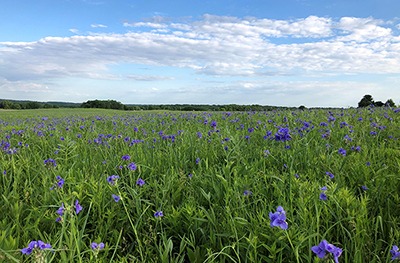
A field of Ohio spiderwort rivals the skyscape at Nachusa grasslands. Credit: Pete Guiden
Ecosystems are difficult to restore because they represent such highly intricate webs of species’ interactions with each other and their environments, Jones said.
“Our study shows that it’s critical to define restoration goals before projects get off the ground and to measure progress,” she said. “This will help ensure the restoration is eliciting the desired responses.
“Perhaps more importantly, our study shows these active restoration techniques of introducing megaherbivores like bison, which were near extinction last century, and fire regimes that Indigenous people used to set to prairies, are absolutely critical components to recreating those complex webs of species and interactions. Seeding alone gets us started, but extra management super charges the animal communities that are critical to maintaining healthy prairies.”
Northern Illinois University is a student-centered, nationally recognized public research university, with expertise that benefits its region and spans the globe in a wide variety of fields, including the sciences, humanities, arts, business, engineering, education, health and law. Through its main campus in DeKalb, Illinois, and education centers for students and working professionals in Chicago, Hoffman Estates, Naperville, Oregon and Rockford, NIU offers more than 100 areas of study while serving a diverse and international student body.
Date posted: January 25, 2021 | Author: Tom Parisi | Comments Off on Study challenges ecology’s ‘Field of Dreams’ hypothesis