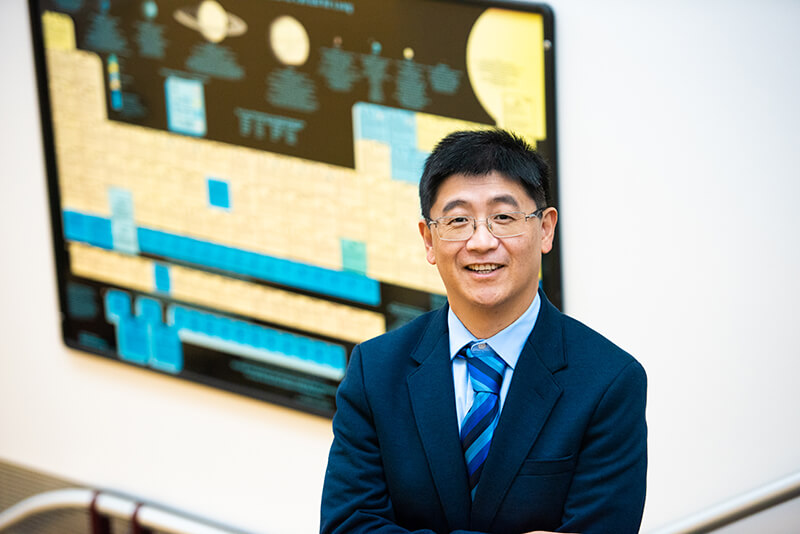
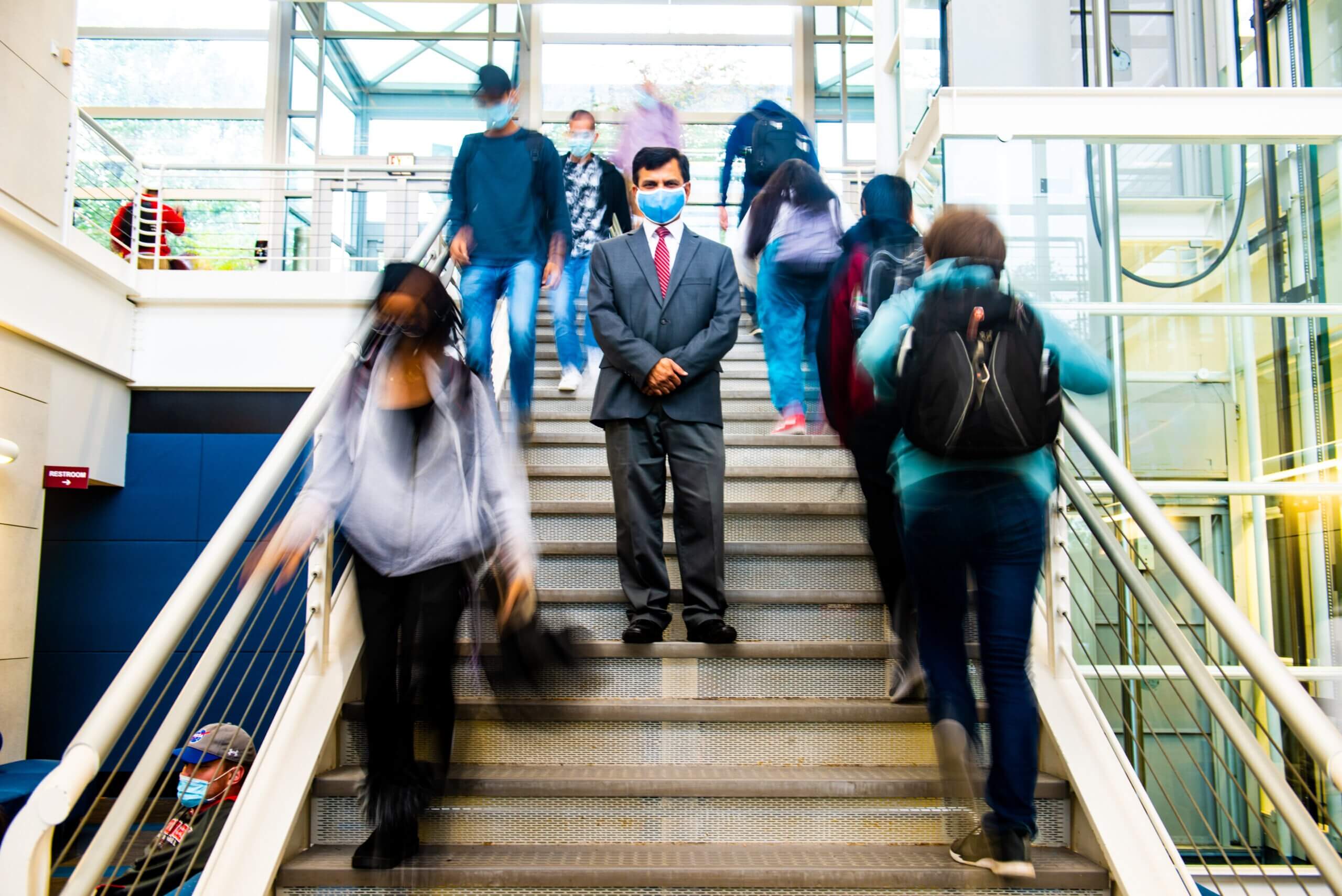
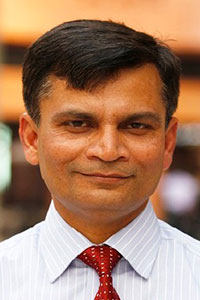
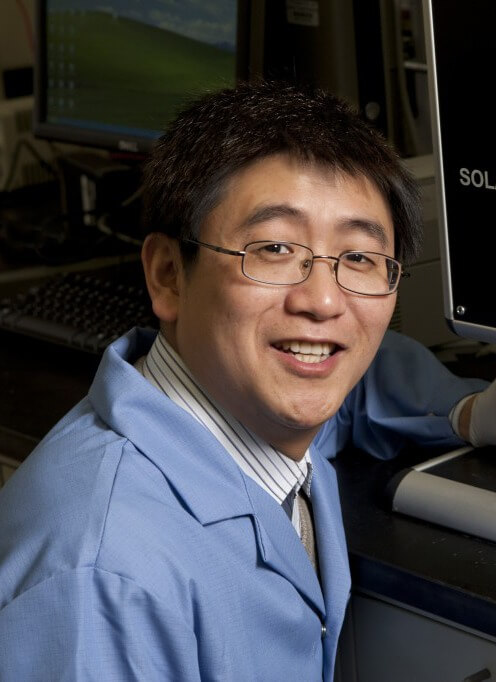
DeKalb, Ill. — Chemistry Professor Tao Xu has been recognized with a rare National Science Foundation Special Creativity award, believed to be the first ever for an NIU researcher.
NIU Professor Tao Xu
The special award of NSF’s Division for Materials Research is designed to recognize its most creative investigators who are attacking research problems at the forefront of their fields.
As a recipient of the award, Dr. Xu will receive an automatic two-year extension on his 2018 NSF grant of $311,000, with an additional $238,000 in funding support. The funding award cites his excellent research, productivity and impact in developing hybrid organic-inorganic perovskite materials for solar cells, as well as the broader impacts emanating from the project.
Special Creativity extensions give researchers an extended opportunity to attack adventurous, high-risk opportunities in the same general research area, but not necessarily covered by the original award.
Typically initiated by program officers, the extensions are extremely rare. NSF awards about 12,000 grants per year; in FY19, the federal agency awarded just 15 Special Creativity extensions.
“This is a much-deserved recognition of Dr. Xu’s innovative work on next-generation solar cells,” said Jerry Blazey, NIU’s Vice President for Research and Innovation Partnerships. “His research in this and other areas could have lasting impact by increasing the renewable energy supply and reducing greenhouse gas emissions.”
Xu and his students and colleagues are working to solve challenges with perovskite materials—considered rising stars in the field of solar energy. Perovskite solar cells convert light into electricity. They’re potentially cheaper and simpler to produce than traditional silicon-based solar cells and, on a small scale in laboratory settings, have demonstrated comparable efficiency levels.
However, key challenges remain before perovskite solar cells can become a competitive commercial technology. One major challenge has been the use of lead. Most top-performing hybrid perovskite solar cells contain water-dissolvable lead, raising concerns over potential leakage from damaged cells.
Just last year, Xu and colleagues reported in the journal Nature on a potential breakthrough in this area. The team developed a technique to sequester the lead in perovskite solar cells and minimize potential toxic leakage by applying lead-absorbing films to the front and back of the solar cell. His team also has made other important advances with perovskites, including solving stability issues.
Xu said the Special Creativity extension for work on the project came as a complete surprise.
“I’m very excited because this award recognizes not only our research efforts but also my work with underrepresented graduate students, many of whom have gone on to impressive careers of their own,” Xu said.
Six alumni of his research group are women, including a current assistant professor at the University of Wisconsin, Madison; a research scientist for a Fortune 130 company; a chemist at Argonne National Laboratory; and two post-doctoral students at Argonne.
“I have prepared and mentored students toward their careers and continue to mentor them after graduation,” Xu says. “I’m hopeful this recognition will encourage our future students as well.”
Northern Illinois University is a student-centered, nationally recognized public research university, with expertise that benefits its region and spans the globe in a wide variety of fields, including the sciences, humanities, arts, business, engineering, education, health and law. Through its main campus in DeKalb, Illinois, and education centers for students and working professionals in Chicago, Naperville, Oregon and Rockford, NIU offers more than 100 areas of study while serving a diverse and international student body.
Date posted: April 27, 2022 | Author: Tom Parisi | Comments Off on Chemistry’s Tao Xu recognized with rare NSF award for Special Creativity
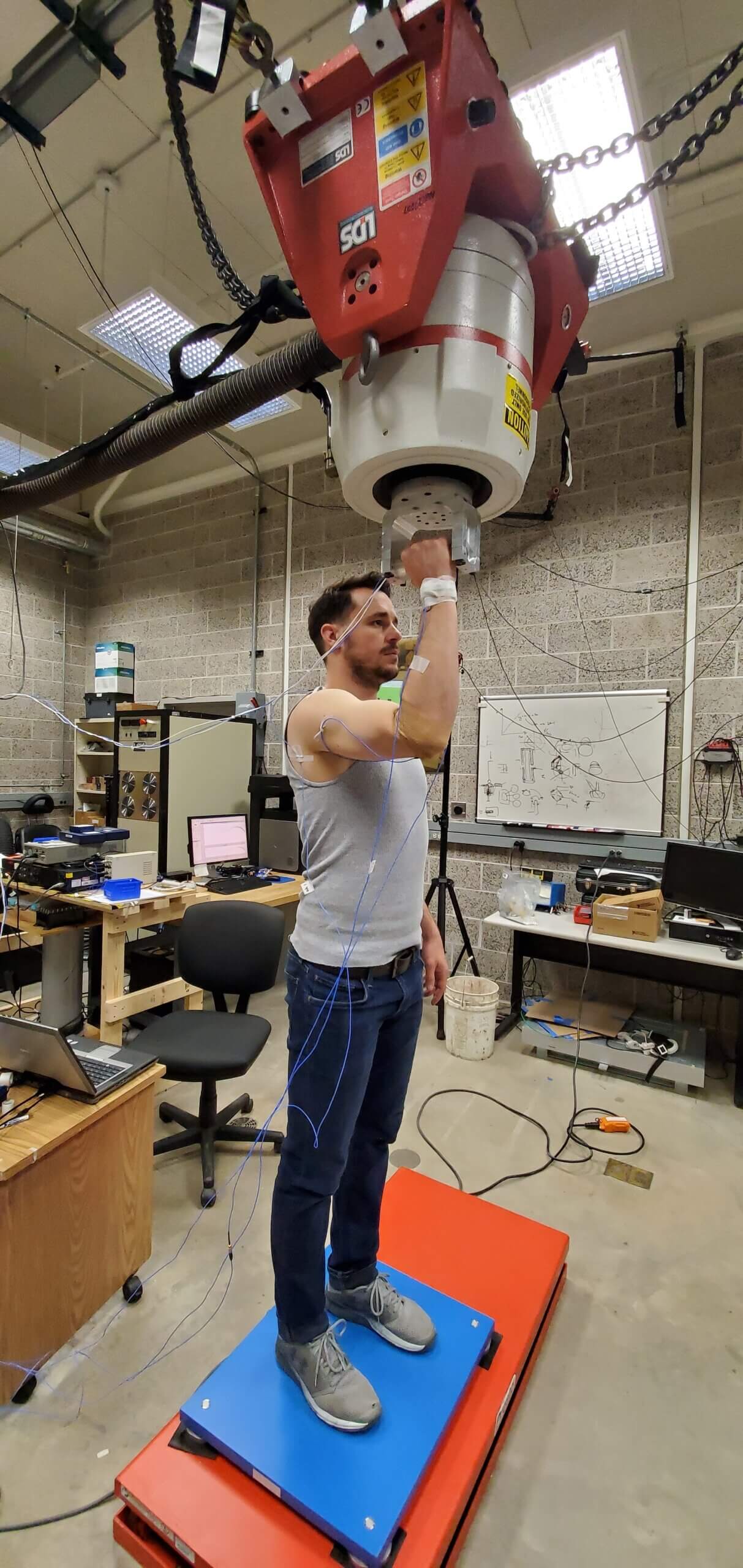
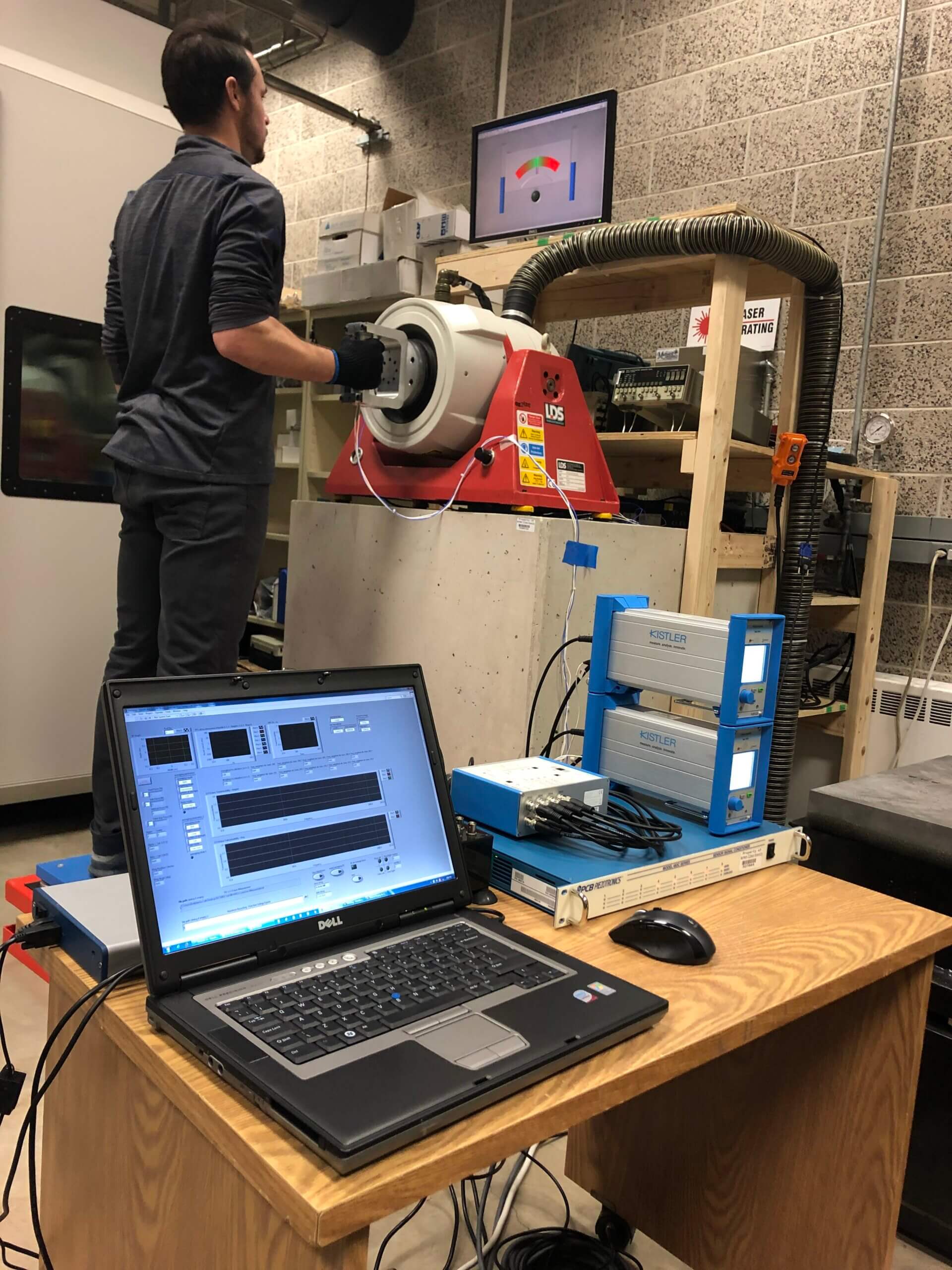
Simon Kudernatsch, Ph.D. conducts vibration testing in the NIU Biodynamics Lab.
DeKALB, Ill. – Students and faculty in the NIU College of Engineering and Engineering Technology (CEET) are finding ways to protect workers from the damaging body-jarring effects of vibratory tools.
Every day, farmers, construction workers, miners, factory workers and forestry workers spend hours using jackhammers, chain saws, nut runners, grinders, drills, rivet guns and other vibrating tools which can potentially cause irreversible damage to nerves, blood vessels, bones and soft tissues in the human body. As a result, they can develop a condition known as Hand-Arm Vibration Syndrome (HAVS).
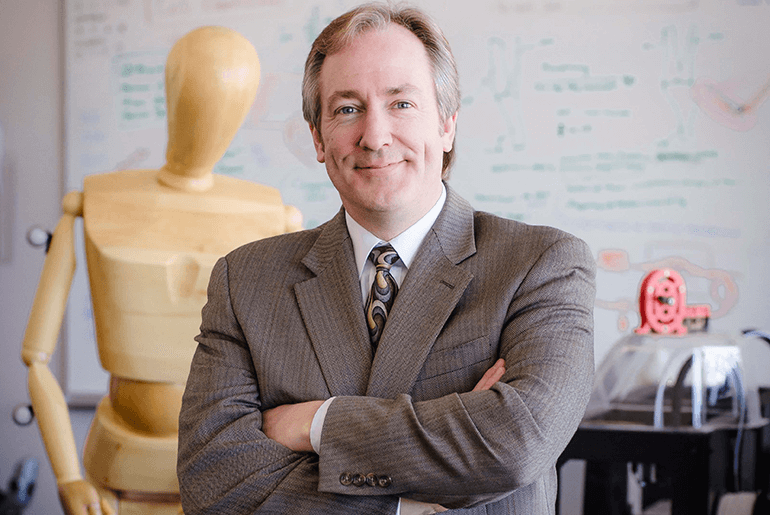
“HAVS sufferers may suffer pain, numbness, tingling, loss of sensory perception in the fingertips, and potentially the loss of dexterity and function in the arms, hands, wrists, fingers, and/or thumbs,” explains Donald Peterson, Ph.D., dean of the college and an expert in biomechanics. Peterson serves as a U.S. delegate on the International Standards Organization (ISO) Technical Committee on Human Exposure to Mechanical Vibration and Shock.
VIbration testing in the NIU Biodynamics Lab.
The average homeowner may get an inkling of what the condition is like when operating a backyard weed trimmer, says Simon Kudernatsch, Ph.D., a post-doctoral fellow who is part of the work at CEET.
“If you use a weed trimmer for a while and then let it go, you will likely feel numbness and weakness in hands and fingers from holding this vibrating tool,” he said. “If you experience this once a week, then symptoms likely go away in a matter of minutes. However, if you use vibrating equipment all-day-every-day these symptoms may become permanent. The condition is irreversible and is a very costly hazard among workers.”
To help battle HAVS, and the associated condition of Vibration White Finger (VWF), Peterson and Kudernatsch are testing gloves that dampen vibrations, with much of their work focusing on evaluating the performance of how effectively existing vibration-reducing gloves function when used in different body postures.
That work is conducted in CEET’s Biodynamics Lab, one of only a handful of labs in the US that focuses on hand-arm vibration research. The lab includes what the team believes is a one-of-a-kind shaker suspended from the ceiling to more accurately simulate the vibrations a worker may experience while in typical work postures.
The team is also examining the use of exoskeletons (external frames that some workers use to support themselves) while using vibratory tools. They are striving to learn if the use of such devices lessens or worsens the effects of vibration. In fact, Peterson is also the chair of ASTM International’s Exoskeletons and Exosuits committee (F48). The committee’s task is to develop industry standards in the growing field of exoskeletons and exosuits.
Donald Peterson, Ph.D.
“Exoskeleton devices can alter human performance, and this change in performance can in turn change the levels of vibration exposures along the upper extremity. It is extremely important that we understand these processes to better protect workers,” said Kudernatsch.
In addition to his work in the lab, Peterson has been active on Capitol Hill, helping legislators understand the technology and the need for standards to ensure worker safety.
“Exposure to vibration is such a common health risk to so many workers in a wide number of industries, yet it’s one that can be reasonably controlled,” said Peterson. “We hope the testing in our lab lends insight on new and improved ways to prevent exposure to vibration.”
CEET offers bachelor’s degrees in biomedical engineering. For more information, visit niu.edu/ceet.
DeKalb, Ill. – Over the next five years, Northern Illinois University will award more than $1 million in scholarship and stipend support to students who dream of careers as high school science teachers.
The financial support comes through a new National Science Foundation grant to NIU’s Secondary Science Educator Licensure Program, which plans to provide as much as $40,000 in scholarships to each of roughly 20 select students.
In all, the science licensure program is receiving $1.45 million in funding to partner with Waubonsee Community College (WCC) and West Aurora High School in creating the NIU Noyce Scholarship Program. The program addresses critical teacher-shortages in Illinois, particularly among secondary science teachers.
The NIU Noyce Scholarship Program will create financial security for select prospective science teachers, provide them with mentoring and culturally relevant teaching skills, and promote continuity within the profession. Over the course of their careers, the future teachers will potentially impact the education of tens of thousands of students.
Nicole LaDue
“Working to secure this grant has been a passion project, not a job,” said program lead Nicole LaDue, an NIU associate professor of Geoscience Education. “The program leaders at NIU are all former high school science teachers. Now we work in teacher preparation because of our commitment to students. This effort is a great way to pay it forward.”
In addition to LaDue, the program is being coordinated by Paul Fix, NIU director of Secondary Science Educator Licensure; Physics Professor Mike Eads; Educational Psychology Professor Daryl Dugas; and WCC Assistant Dean for Mathematics and Sciences Lorrie Stahl.
Potentially $40K-plus per student
In each of the next four years, the NIU Noyce Scholarship Program will award $20,000 scholarships to a new cohort of at least five NIU juniors and seniors (including transfer students). The students must be majoring in biology, chemistry, earth and space science, environmental science or physics and pursuing secondary science educator licensure.
Recruitment has already begun, with the first cohort of NIU Noyce Scholars to be selected this spring and start program courses this coming fall. Juniors who continue to meet program requirements can potentially earn the scholarship for two consecutive years, for a total of $40,000 in individual financial support, plus substantial stipends that can be earned at WCC prior to coming to NIU.
The partnership with WCC will provide paid eight-week summer internships for community college students to serve as NIU STEAM summer camp instructors and paid peer tutors at the college. The goal is to provide those students with early teaching experiences to ignite their career interests and with financial support prior to enrollment at NIU.
Paul Fix
“For me personally, this is what I love about the NIU Noyce Scholarship Program—it’s all about giving back to the students,” Fix said. “A huge percentage of the funding goes right to the students to reduce financial barriers to becoming a science teacher.”
While any qualifying student can apply for the scholarship, priority will be given to students who attend WCC and participate in NIU Noyce Scholarship Program internships or tutoring. After graduation, scholarship recipients will be required to teach in high-need school districts for at least two years per year of scholarship received.
Addressing critical need
The critical teacher shortage has been well documented in studies and the news media. Nationally, nearly 50% of new teachers leave the profession within their first five years, and fewer students are pursuing careers in the field.
From 2010 to 2018, teacher-preparation program enrollment declined by an estimated 35% nationwide, with Illinois having the fifth highest decline in the country. Beginning in 2017, the state saw teacher shortages in all science areas. The pandemic has likely intensified the need, as more teachers report considering earlier retirement.
“Often people don’t know they want to be teachers until they teach,” Fix said. For the past several years, Fix has been cultivating a close relationship with WCC, a Hispanic-Serving Institution, and one of its feeder schools, West Aurora High School, which has a diverse ethnic and socio-economic student population.
“By providing internships and money for students at Waubonsee to be summer camp instructors and peer tutors, we’ll expose more students to the world of teaching even before they reach NIU,” Fix said.
NIU alumni to serve as mentors
The NIU Noyce Scholarship Program promises to deliver teaching and learning grounded in the Next Generation Science Standards. NIU Noyce Scholars will observe, help plan lessons and take an active part in science classes at West Aurora High School, learning to incorporate culturally relevant instruction into their own clinical teaching experiences.
NIU also is adding new courses in its science educator program that focus on creating a sense of community in the classroom and connecting lessons to students’ real lives.
NIU Noyce Scholars will receive support from their professors outside of class to discuss and reflect upon their clinical experiences. They also will be mentored by one of three participating NIU alumni who are science teachers of color currently working in high-need school districts. Once students graduate and enter their careers, they’ll receive additional assistance from NIU’s Dugas, who will lead peer support groups during their service commitments.
“One of the big reasons new teachers leave the profession is because of a lack of support during their first few years, which are typically the hardest,” Fix said. “We want to change that by providing a built-in support system after they graduate.”
It’s not too late for interested students from NIU or any community college to apply for consideration for the first round of scholarships. While priority consideration will be given to those who meet the March 1, 2022 application deadline, applications will be accepted as late as April 15, 2022. Students applying for the scholarships will need to meet licensure program requirements.
Application information is available on the NIU Noyce Scholarship Program website. Interested students with more questions, particularly transfer students, should contact Paul Fix at pfix@niu.edu.
Northern Illinois University is a student-centered, nationally recognized public research university, with expertise that benefits its region and spans the globe in a wide variety of fields, including the sciences, humanities, arts, business, engineering, education, health and law. Through its main campus in DeKalb, Illinois, and education centers for students and working professionals in Chicago, Naperville, Oregon and Rockford, NIU offers more than 100 areas of study while serving a diverse and international student body.
Date posted: February 17, 2022 | Author: Tom Parisi | Comments Off on $1.45 million NSF grant to fund scholarships for future science teachers
DeKalb, Ill. – As a kindergartner, Justin Dodd went to “career day” as a geologist. As a teenager, Finlay McElmeel fell in love with astronomy. Those passions will converge late this year in an unlikely location: the windiest, driest and coldest continent on the planet.
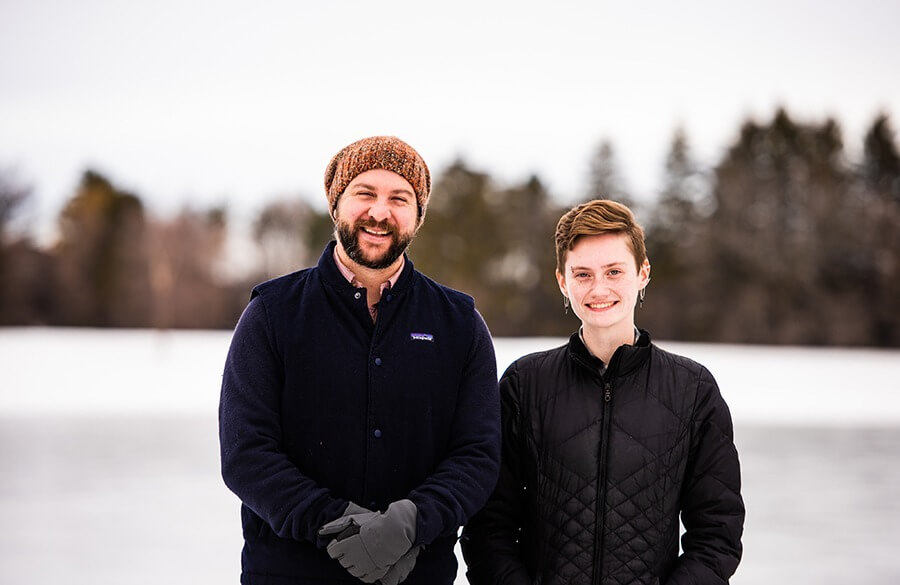
Professor Justin Dodd (left) and his student Finlay McElmeel will travel to the Antarctic later this year as part of a large scientific research team.
Dodd, today an NIU geology professor, and his student McElmeel, who graduated in December with an NIU bachelor’s degree in geology and is now in the master’s program, will travel to Antarctica in December as part of a large scientific research team investigating climate change impacts on sea level.
“Just being involved, and the adventure of it all, is very exciting to me,” says McElmeel, who hopes to one day investigate the geoscience of other planets.
Adds Dodd, who previously has conducted research in the Ross Sea near the Antarctic and is well aware of McElmeel’s love for astronomy, “The Antarctic is as close as you can get to not being on Earth while still being on Earth.”
Adventure aside, the work of the NIU researchers and their colleagues could have serious implications for predicting future impacts of climate change.
The ‘tipping point’
As the United Nations’ Conference of the Parties (COP26) focuses on science and national investment to combat climate change, the research team is preparing to drill into sediment beneath Antarctica’s Ross Ice Shelf to discover if worldwide efforts to cut greenhouse gas emissions could avoid catastrophic melting of the frozen continent.
Courtesy of NIU Professor Reed Scherer
The research project, dubbed SWAIS 2C, will investigate the sensitivity of the West Antarctic Ice Sheet to global warming of 2 degrees Celsius (3.6 degrees Fahrenheit). Scientists will drill through the ice to discover evidence locked in ocean-floor sediments showing how the ice behaved when global temperatures were as warm as those expected in the coming decades.
Those geological records could reveal if there is a tipping point in the climate system beyond which large amounts of land-based ice melts, causing oceans to rise.
“The West Antarctic Ice Sheet holds enough ice to raise sea levels by about 13 feet,” Dodd says.
If even a fraction of that melting is realized in the decades and centuries to come, it could have catastrophic effects on coastal communities worldwide.
Drilling through time
To experts such as Dodd and other expedition scientists, retrieving the sediment cores is like time travel.
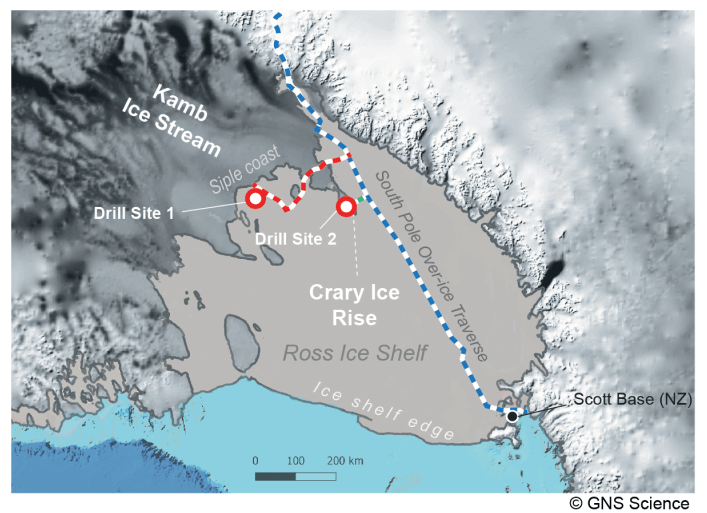
SWAIS 2C drill sites on Antarctica’s Ross Ice Shelf.
Different microbes, tiny fossils and chemical signatures from the sediments all provide clues to how the ice sheets behaved throughout geologic history. The scientists are particularly interested in gathering sediment core samples that date from the Pliocene (5.4 to 2.4 million years ago) and the Miocene (23 to 5 million years ago).
“The relationship between carbon dioxide (in the atmosphere) and temperature is well established—as one increases so does the other,” Dodd says. “We think the CO2 levels of the Pliocene provide a good analog for where we’ll go if things continue at the current rate with planned reduced emissions. If we don’t reduce CO2, however, the analog will be more like the Miocene, when temperatures were significantly higher than now.”
The SWAIS 2C team includes some of the world’s top Antarctic scientists and is led by Richard Levy of New Zealand’s GNS Science, Te Herenga Waka of Victoria University of Wellington, and Molly Patterson of New York’s Binghamton University. In all, researchers from seven U.S. universities will participate, with field campaigns planned in three consecutive years.
No one has ever drilled into the Antarctic seabed at a location so far from a major base, nor so close to the center of the West Antarctic Ice Sheet.
Engineers at Victoria University of Wellington’s Antarctic Research Centre have spent four years developing technology capable of hot-water drilling through an estimated 800 meters of ice before taking sediment samples from up to 200 meters beneath the ice sheet.
NIU has an Antarctic history
NIU has had geologists working on the continent, often alongside students, since the 1970s. It’s an incredible opportunity for any student—to rub shoulders with top scientists, learn how to collaborate on large scientific teams and see how the information gathered helps scientists in many different disciplines.
Dodd and McElmeel had worked together previously, analyzing marine sedimentary samples collected from the International Ocean Discovery Program to reconstruct the impact of past climates on the Antarctic ice sheet. On the new project, they’ll serve as geochemists—dating sediments and using chemical signatures and stable isotopes in geologic materials to understand past environments.
“Fin has a strong background in chemistry and is one of the sharpest students I have worked with,” Dodd says.
Courtesy of NIU Professor Reed Scherer
“It’s an easy pivot,” McElmeel adds. “When Dr. Dodd joined the project, he extended the offer to me, if I was willing to stay at NIU and pursue my master’s. It was hard to say no.”
Where the sun never sets
McElmeel, however, is not a big fan of cold weather. Fortunately, field seasons only run during the Antarctic summer. While the NIU pair are working there, the sun won’t set on the austere and endless-white landscape. And the cold should be tolerable—with temperatures occasionally reaching 30 degrees Fahrenheit or even slightly above.
Still, it’s an environment not for the faint of heart. When at drilling sites in the “deep field,” scientists sleep in tents atop ice nearly a half mile thick, like camping on, well, another planet.
“I’ll be doing things that I can apply to planetary science,” says McElmeel, who plans to pursue a Ph.D. in the field. “That’s still my end goal—studying the geoscience of other planets. For now, though, I’m quite content where I’m at.”
Northern Illinois University is a student-centered, nationally recognized public research university, with expertise that benefits its region and spans the globe in a wide variety of fields, including the sciences, humanities, arts, business, engineering, education, health and law. Through its main campus in DeKalb, Illinois, and education centers for students and working professionals in Chicago, Naperville, Oregon and Rockford, NIU offers more than 100 areas of study while serving a diverse and international student body.
Date posted: January 31, 2022 | Author: Tom Parisi | Comments Off on In search of future climate clues beneath Antarctic ice
DeKalb, Ill. – The National Science Foundation (NSF) and U.S. Department of Energy (DOE) are giving a charge to the research of NIU Chemistry Professor Tao Li, whose work could lay the foundation for improvements to ubiquitous rechargeable batteries used in electronic devices, electric vehicles and grid energy storage.
NSF awarded Li with a grant of $271,000 over three years to characterize the transport property and microstructure of battery electrolytes. Crucial to battery performance, electrolytes are chemicals that allow an electrical charge to pass between two terminals.
NIU Professor Tao Li
Li also is a co-principal investigator on a $3 million DOE grant to Argonne National Laboratory for the study of solid-state electrolytes in lithium batteries. Li’s research aims to help pave the way for the development of next-generation batteries.
“There is intense interest in the development of improved batteries as the world seeks to reduce its carbon footprint, including by transitioning from gasoline- to electric-powered vehicles,” Li said.
“The NSF grant will help us gain a better understanding of liquid electrolytes with the hope of improving batteries of the future. But liquid electrolytes are flammable, and the DOE grant aims to develop solid-state electrolytes for improved safety and storage,” he said.
It’s the second NSF award to Li in three years. In 2019, he received a $200,000 grant to investigate novel ways of converting greenhouse gases into useful fuels.
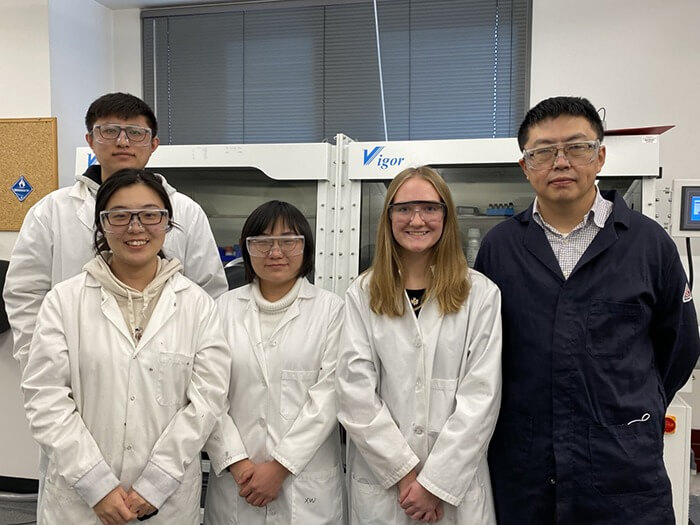
Professor Tao Li (far right) with NIU Ph.D. students (left to right) Bowen An, Xinyi Liu, Wei Xu and Research Rookie Emma Whitlock.
Li, who holds a joint appointment between NIU and Argonne National Laboratory, will incorporate the battery research into teaching curricula for undergraduate and graduate students, encourage students from underrepresented groups in STEM to participate in the research, and broaden the impact of the research through outreach activities such as workshops with local school teachers on K-12 science education.
His research group currently has one post-doctoral staff member, six graduate students, two former Research Rookies and three current Research Rookies. Erik Sarnello, one of Li’s students, will graduate with his Ph.D. this semester and start a post-doctoral position at Argonne.
Li’s research has been recognized internationally as well.
Earlier this year, he received the Scientist Medal from the International Association of Advanced Materials (IAAM), a Sweden-based, international nonprofit organization. The award is given to researchers at all stages of their careers, aiming to honor and further encourage groundbreaking research, according to the IAAM website. As a recipient of the Scientist Medal, he delivered a lecture via a webinar in middle September as part of IAAM’s Advanced Materials Lecture Series.
Li also was invited to apply for the Eni Award 2022, a prestigious prize addressed to worldwide scientists and researchers with a focus on issues related to energy and sustainability.
Northern Illinois University is a student-centered, nationally recognized public research university, with expertise that benefits its region and spans the globe in a wide variety of fields, including the sciences, humanities, arts, business, engineering, education, health and law. Through its main campus in DeKalb, Illinois, and education centers for students and working professionals in Chicago, Naperville, Oregon and Rockford, NIU offers more than 100 areas of study while serving a diverse and international student body.
Date posted: November 29, 2021 | Author: Tom Parisi | Comments Off on NSF, DOE boost chemistry professor’s battery research
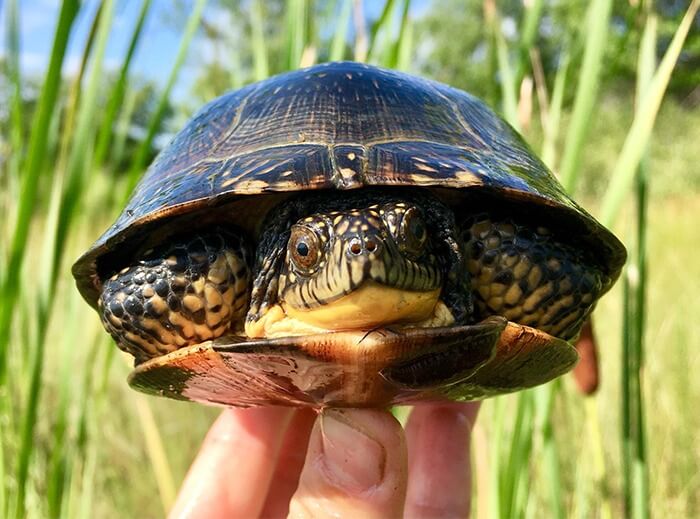
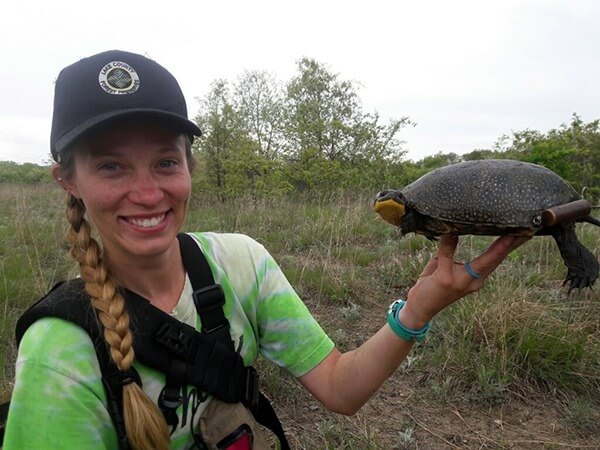
A young Blanding’s turtle. Photo Credit: Callie Klatt Golba, NIU
DeKalb, Ill. – It’s a creature with a perpetual smile, even in the face of adversity.
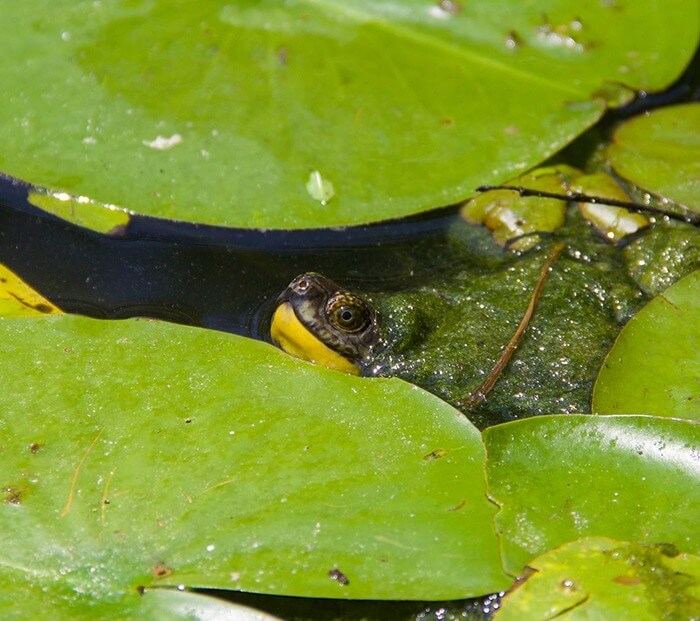
Found in northern Illinois and other Great Lakes regions, the Blanding’s turtle can live to be 80 years old but has faced growing challenges of survival. Considered an endangered species in Illinois, the turtle grows to be about the size of a football, with a bright yellow throat, a dome-shaped shell and a beak that is curved upwards at the corners of the mouth.
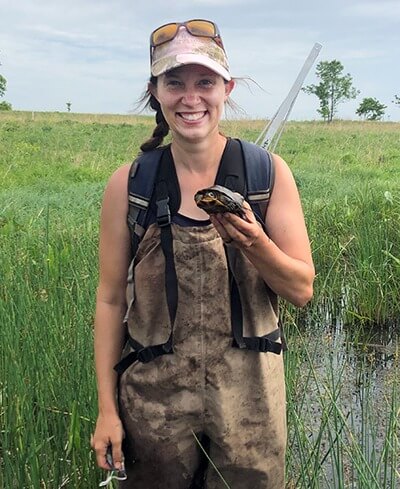
Callie Klatt Golba with a juvenile Blanding’s turtle. Photo Credit: Ian Klatt, NIU
NIU Biological Sciences Professor Richard King and his Ph.D. student Callie Klatt Golba want to make sure we don’t lose that smile. King has been investigating the reptile’s whereabouts in Lake County for the past decade, and this year the work received a major boost.
The Illinois Department of Natural Resources (IDNR) awarded King with a grant of nearly $260,000 over three years to provide a framework for effective management and recovery of the Blanding’s turtle. The grant allows King and Golba, who’s doing her dissertation on conservation strategies for the turtles, to expand their research to sites in DuPage, Lee and Winnebago counties.
“The Blanding’s turtles are pretty charismatic, with that nice smiling face and bright yellow chin,” says Golba, an Elmhurst native who grew up traipsing through natural areas where the turtles make their nests. Golba came to NIU to pursue her doctorate in part because of the university’s work with local ecosystems and King’s reputation for conservation of reptiles and amphibians.
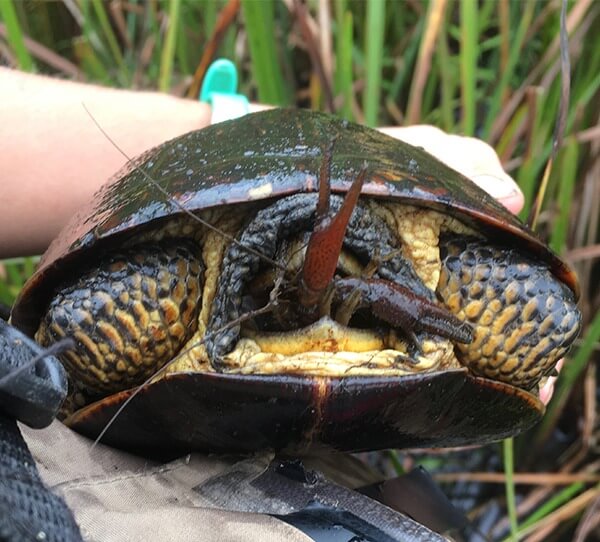
A female Blanding’s turtle dining on a crayfish. Photo Credit: Callie Klatt Golba, NIU
“Blanding’s turtles are good representatives of Midwestern ecosystems,” Golba says. “They use prairies, wetlands and forest areas native to the region. They’re also what we call an umbrella species—by conserving them, we can preserve a suite of other species.”
While NIU’s work is focused on Illinois, Blanding’s turtles are recognized as being in need of conservation or listed as threatened or endangered in each U.S. state, King says. They are being assessed to determine if federal Endangered Species Act listing might be warranted.
Under the grant work, the scientists will revise proposed criteria for the turtle’s recovery in Illinois; develop tailored management actions; conduct research to evaluate existing management strategies; and assess less well-known populations of the turtle.
King and Golba also recently received a $119,000 “start-from-scratch” grant from the Lake County Forest Preserve District to reintroduce the Blanding turtle to a restored county wetland site.
It’s important work for the turtles—and for people. A loss of a species can disrupt natural ecosystems that keep our air and water clean.
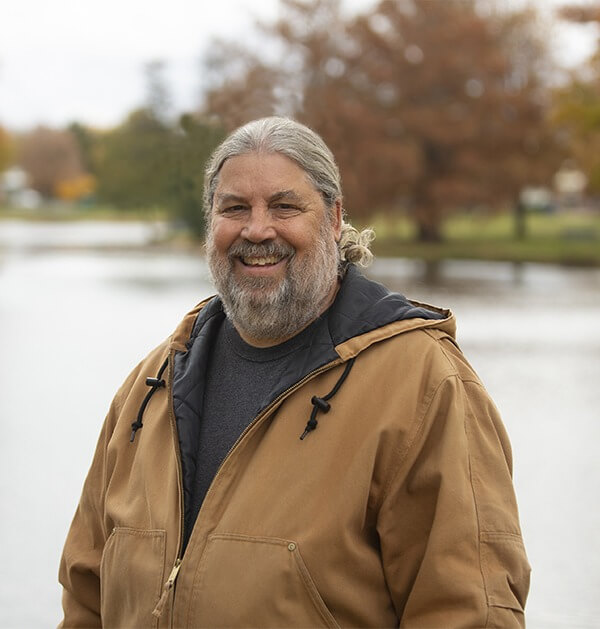
NIU Biological Sciences Professor Richard King. Photo Credit: NIU
“Once we lose a species, it’s gone. We don’t have a way of bringing it back,” King says. “So finding ways of sustaining these turtle populations becomes especially important.”
The backstory of the Blanding’s turtle is a familiar one, the NIU biology professor says. The reptile lost much of its natural habitat through conversion of land to agriculture or urbanization. Despite their leisurely pace, the turtles can travel a considerable distance from wetlands to surrounding upland habitats, where they nest. Crossing fields and roads puts them at risk of becoming a predator’s dinner, or a vehicle’s bump in the road.
“From a conservation point of view, another challenge is that it takes these turtles 14 to 15 years to reach reproductive maturity,” King says. “So very young turtles have to survive for a long time before they can reproduce.”
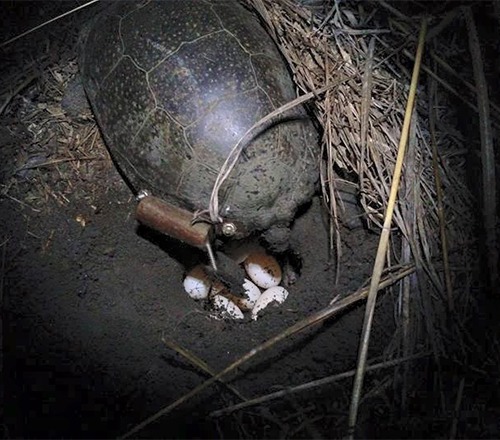
An adult female tracked with a radio transmitter covers her eggs with dirt at night. Photo Credit: Callie Klatt Golba, NIU
Data collected by King and Golba will help the IDNR shape its management strategies, establish goals and measure the success of species’ recovery. “The data will help us predict whether these turtle populations will persist or are at risk of vanishing over the next 50 or 100 years,” King says.
He and Golba also are working to better understand whether management strategies at one site can be adapted to others. Turtle eggs and small hatchlings are especially vulnerable to predators such as raccoons. To counter that, King said, Lake and DuPage counties have established head-start programs, whereby turtle hatchlings are reared in captivity for a year before being released into the wild. Lake County also has had success through removal of raccoons from nesting areas.
King and Golba conducted a pilot study in 2020 using head-start monitoring via radio telemetry at five Illinois sites. Tiny transmitters are placed on the turtles’ shells to help the scientists keep track of them in the wild. The study revealed vastly different survival rates.
Callie Klatt Golba with an adult Blanding’s turtle, posing for the camera and equipped with a radio transmitter. Photo Credit: Ian Klatt, NIU
“At some sites, survival was nearly 100 percent, while other sites had only three or four survivors out of 20,” King says. “We often found their remains—a chewed up turtle shell and a transmitter with tooth marks—so some kind of predator is eating them. That’s important information. If we just took results from a site where survival rates are the highest, it would be misleading. Effective management strategies will require additional interventions at other sites.”
King and his students are no stranger to rescue work on endangered species.
A young turtle peeks out amid lily pads, showing off its distinctive yellow chin. Photo Credit: Callie Klatt Golba, NIU
Before turning to turtles, King was long known as the godfather of the Lake Erie Water Snake, a bad-tempered, foul-smelling serpent. The 31-year veteran biology professor first identified the snake’s population declines in the 1980s, and his work eventually led to the reptile being listed as a “threatened species.”
He and his students then helped develop and implement a recovery plan. The effort was so successful that the U.S. Fish and Wildlife Service honored King and his Ph.D. student, Kristin Stanford, with the 2009 Recovery Champion Award. The water snake was removed from of the list of federally endangered and threatened species on Aug. 16, 2011.
Golba hopes to see similar success with the long-lived turtles.
“They come back to the same nesting locations year after year,” she says. “It’s cool to think these turtles will continue their routines even long after I have moved on.”
Northern Illinois University is a student-centered, nationally recognized public research university, with expertise that benefits its region and spans the globe in a wide variety of fields, including the sciences, humanities, arts, business, engineering, education, health and law. Through its main campus in DeKalb, Illinois, and education centers for students and working professionals in Chicago, Naperville, Oregon and Rockford, NIU offers more than 100 areas of study while serving a diverse and international student body.
Date posted: November 17, 2021 | Author: Tom Parisi | Comments Off on NIU biologists plan to keep smile on this turtle’s face
DeKalb, Ill. – If you’ve enjoyed the beauty this fall of NIU’s East Lagoon and Montgomery Woods, the latter of which is home to a pair of great horned owls, you can thank our community of environmentally minded students, faculty, staff and alumni.
A portion of the western shoreline of NIU’s iconic East Lagoon, the creek that feeds into it, the gardens at Montgomery Hall and its adjacent forested areas have all had a facelift this past year.
Shoreline stabilization, native plantings, removal of invasive species such as buckthorn. It’s get-your-hands-dirty-and-your-feet-wet work that will pay dividends for generations of Huskies—and you’re likely to see more to come in the near future.
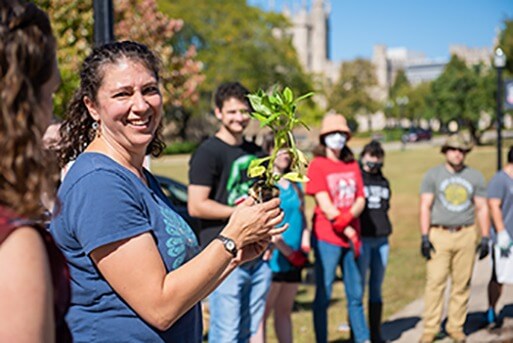
The latest largescale effort kicked off this semester with a class of students taught by Professor Holly Jones, who holds a joint appointment in environmental studies and biological sciences.
Jones launched a new course called Restoration Ecology (BIOS 407 and 507) for both undergraduates and graduate students, whereby they apply what they learn in her class to campus environmental improvements. She hoped to enroll about 30 students, but interest was so high she topped out at 54.
The students this semester spent one day a week working in the field. They cleaned up the forested areas surrounding Montgomery Hall, weeded and replanted gardens surrounding the auditorium, and installed prairie and wetland plants along a 150-foot stretch of NIU’s East Lagoon. They’re also continually taking measurements, monitoring restoration progress, and writing about their experiences.
It’s hands on learning at its best.
“For me, as someone who is interested in working in the field of restoration, it’s really important to get formal education while working in the field,” said Antonio Del Valle, a third-year biology master’s student from Wisconsin. Del Valle came to NIU to study with Jones and hopes to work in restoration or wildlife management after he earns his master’s degree next summer. “This class gives us a background in restoration and shows us how it works in the real world.”
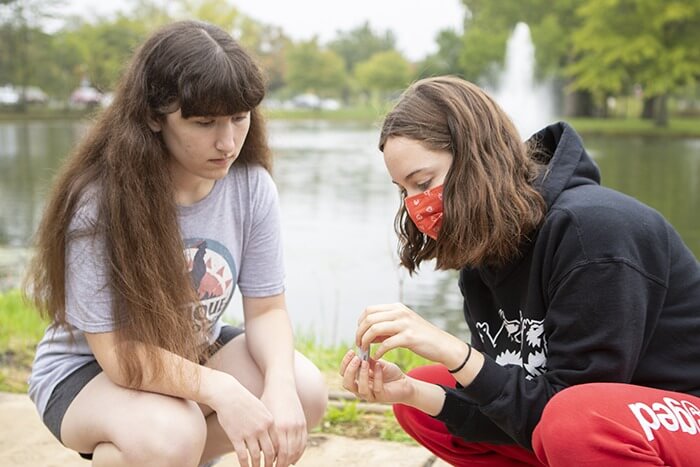
Rebecca Brnot (left) and Grace Lunaburg test for water clarity. Brnot says the recent environmental work will benefit wildlife and people, too.
Rebecca Brnot, a junior from Antioch double majoring in biology and environmental studies, said the work will benefit wildlife and people, too, by reducing the potential for flooding and improving campus aesthetics.
“It’s good to promote restoration ideas around the campus for other students and the community to see,” Brnot said. “I also liked getting an introduction to the kinds of work you’d be doing if you go into restoration as a career path.”
Jones said a large contingent of students in the course are studying biology and/or environmental studies, which offers a biodiversity and environmental restoration emphasis.
“These are students who want to go on and be restoration ecologists or managers, and I don’t want them to get their degree without getting in the field and seeing what it entails,” Jones said. “The theoretical portion of the class is really important, but it’s also important to understand what restoration looks like on the ground.”
The project along the west side of the East Lagoon included plantings of prairie and wetland grasses and wildflowers that brought out volunteer students, faculty and alumni during Homecoming Week. Bob Brinkmann, dean of the College of Liberal Arts and Sciences and himself an expert on sustainability, was among those who got their hands dirty, along with members of the Homecoming Committee, which contributed funds to the project.
“Sustainability is a key part of NIU’s vision moving forward, and I was so happy to join students, faculty, staff and alumni in helping to restore a piece of our campus,” Brinkmann said. “It is clear from President Lisa Freeman’s vision around the Northern Illinois Center for Community Sustainability that this type of project is just the beginning of a long-term commitment to making our campus more sustainable for generations to come.”
Jones’ students continue to gather data and monitor their projects. The professor plans to offer the class every other fall, so future students can measure the success of past projects or pick up where other students left off to start new restorations.
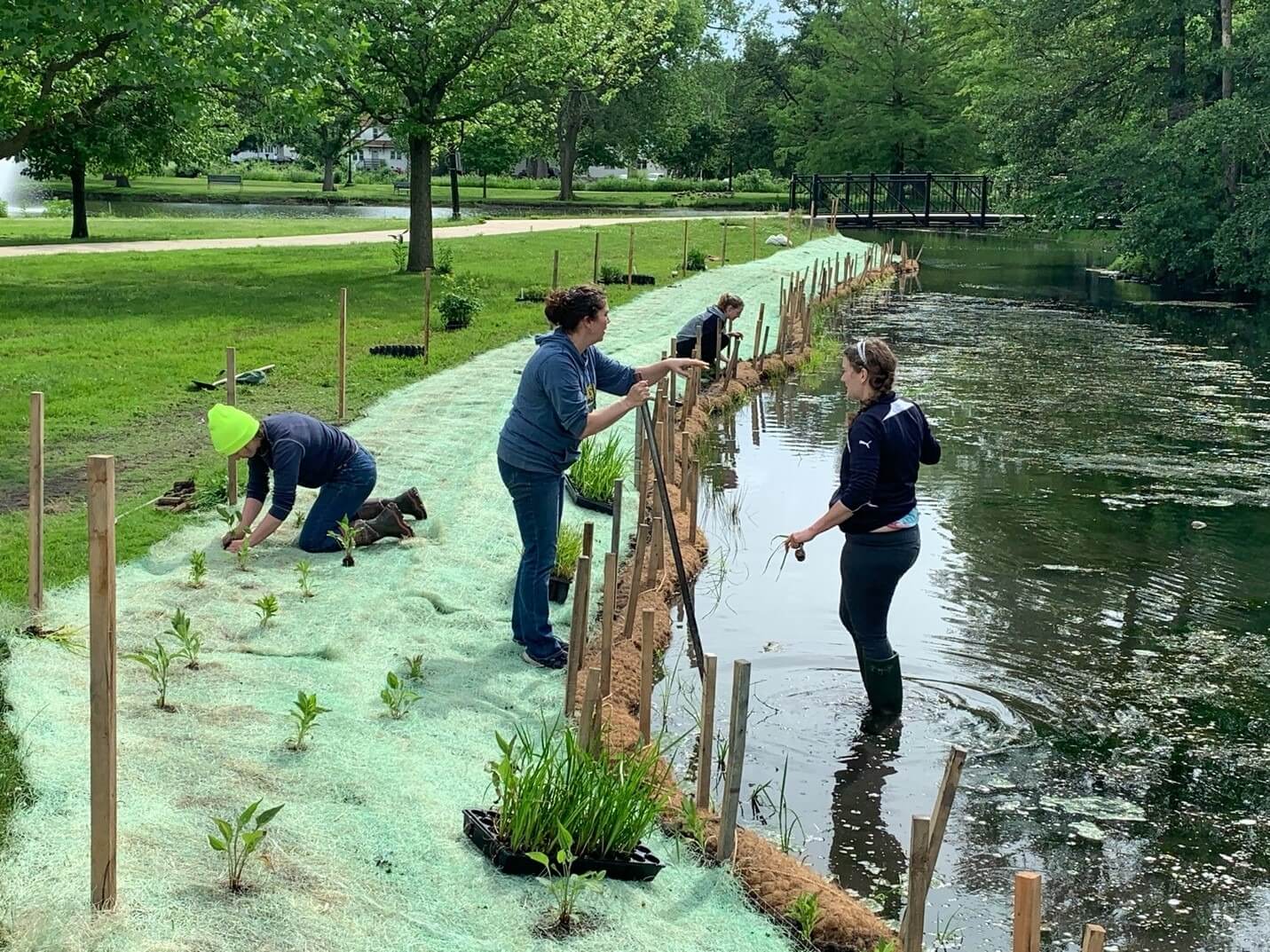
Samantha DeDina (bright green hat), Courtney Gallaher and Melissa Burlingame work along the creek in May.
Gallaher’s Environmental Management class (Geog 453) regularly provides students with hands-on training on campus. And Burlingame suggested a shoreline stabilization project along the creek that intersects Castle Drive and feeds into the East Lagoon.
While students planned the project back in 2019, the actual fieldwork was postponed due to the pandemic. It was picked up with help from the Student Association and biology and environmental studies alumna Samantha DeDina, ecological restoration superintendent for ENCAP, Inc., a DeKalb-based environmental consulting and planning firm.
Along with Gallaher, Burlingame and several volunteers, DeDina provided her time and energy, while ENCAP supplied a mini-excavator for the work. The creek shoreline was graded, stabilized and replanted with native species in May.
“Projects like this really allow the campus to become a living classroom for the types of applications the students are studying,” DeDina said. The 2012 NIU graduate also contributed her time and expertise to this fall’s lagoon work and is a guest speaker in Jones’ class this semester.
Professor Courtney Gallaher is the university’s new sustainability coordinator.
“Although classwork lays a valuable foundation regarding restoration ecology and similar ventures, field experience is critical to gather what post-graduation opportunities may look like,” DeDina said.
Meanwhile, in addition to her teaching, Gallaher has stepped into a new role this semester as NIU sustainability coordinator. In that role, she will be involved in collaboratively outlining NIU sustainability goals across campus. The picturesque East Lagoon has room for more shoreline improvement, so it’s likely to figure into those plans.
“Working together on restoring the shoreline gets people invested in our campus, and makes it feel like the lagoon belongs to everyone,” Gallaher said.
Northern Illinois University is a student-centered, nationally recognized public research university, with expertise that benefits its region and spans the globe in a wide variety of fields, including the sciences, humanities, arts, business, engineering, education, health and law. Through its main campus in DeKalb, Illinois, and education centers for students and working professionals in Chicago, Naperville, Oregon and Rockford, NIU offers more than 100 areas of study while serving a diverse and international student body.
Date posted: November 10, 2021 | Author: Tom Parisi | Comments Off on Living classroom
DeKalb, Ill. — Researchers at Northern Illinois University and the U.S. Department of Energy’s (DOE) National Renewable Energy Laboratory (NREL) in Golden, Colorado, are reporting a potential breakthrough that could help speed commercialization of highly promising perovskite solar cells (PSCs) for use in solar panels.
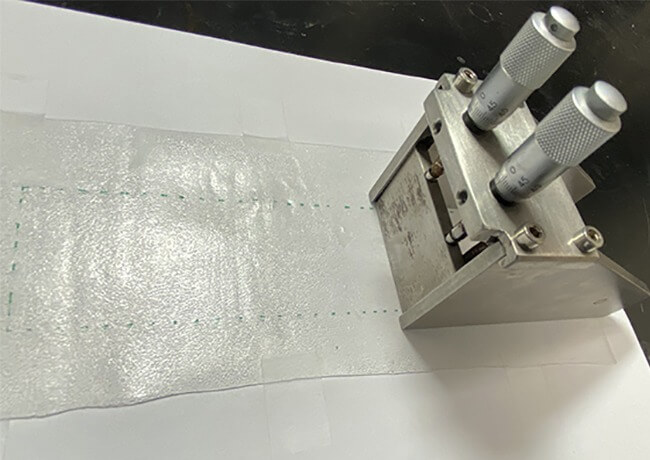
A layer of lead-absorbent material is bladed onto standard solar ethylene vinyl acetate (EVA) film. Photo credit: Xun Li, Northern Illinois University
In an Oct. 28 brief communication to the journal Nature Sustainability, the scientists describe development of a cost-effective Scotch-tape-like film that can be applied to PSCs and capture 99.9% of leaked lead in the event of solar cell damage.
The industry-ready film would help alleviate health and safety concerns without compromising perovskite solar-cell performance or operation, according to the research team. Testing of the lead-absorbing film included submerging damaged cells in water.
“Our practical approach mitigates the potential lead-leakage to a level safer than the standard for drinking water,” said NIU Chemistry Professor Tao Xu, who co-led the research with Kai Zhu of NREL’s National Renewable Energy Laboratory.
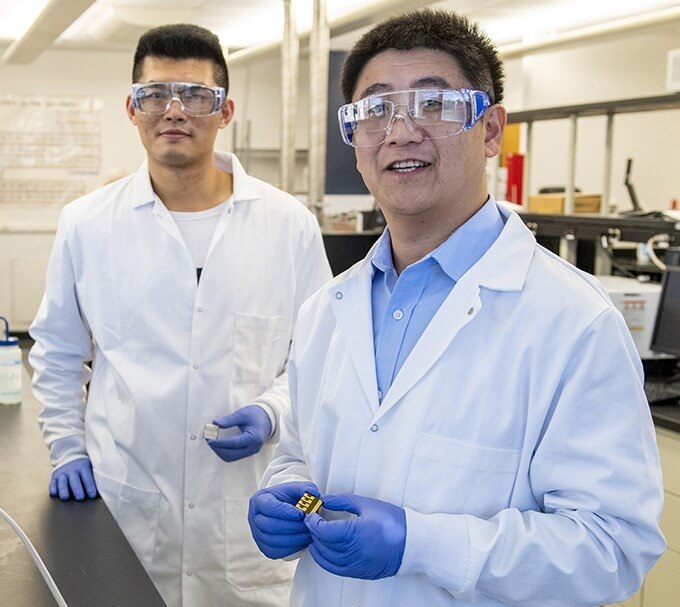
Northern Illinois University professor Tao Xu and student Xun Li. Photo Credit: Northern Illinois University
“We can easily apply our lead-absorbing materials to off-the-shelf films currently used to encapsulate silicon-based solar cells at the end of their production, so existing fabrication processes for PSCs would not be disrupted,” Xu added. “At the end of PSC production, the films would be laminated to the solar cell.”
An emerging class of solar cells, PSCs are considered rising stars in the field of solar energy because of their high-power conversion efficiency (exceeding 25.5%) and low manufacturing costs. But PSCs are not yet commercially available on a widescale basis because key challenges remain, including potential lead-toxicity issues.
Small amounts of water-soluble lead continue to be essential components to the light-absorbing layer of high efficiency PSCs, which must be able to withstand severe weather for commercial viability. Significant lead leakage from damaged cells would cause health and safety concerns.
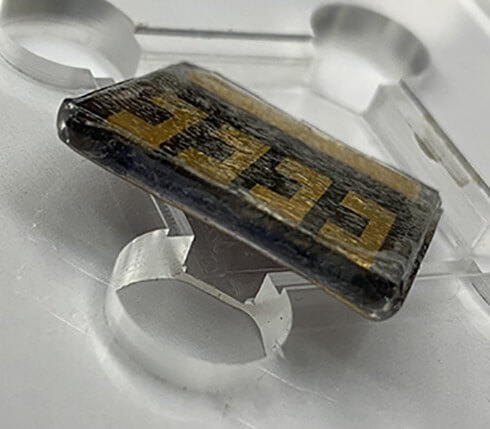
To counter those concerns, the transparent tapes use lead absorbents made with a standard solar ethylene vinyl acetate (EVA) film and a pre-laminated layer of lead-absorbing material. The tape can be attached to both sides of fabricated PSCs, as in the standard encapsulation process used in silicon-based solar cells.
A perovskite solar cell encapsulated with a transparent lead-absorbent film. Photo credit: Xun Li, Northern Illinois University
Among the tests used to assess the durability of the new technology, the scientists exposed the film-encapsulated PSCs to outdoor, rooftop conditions for three months. Razor blades and hammers were used to then damage the solar cells before they were submerged in water for seven days. The lead-absorbing tapes exhibited a lead-sequestration efficiency of over 99.9%.
“Perovskite solar cells hold great hope for a more sustainable future,” Xu said. “This work offers a convenient and industry-ready method to diminish the potential lead leakage from lead-containing PSCs, facilitating future commercialization of perovskite-based photovoltaic technology.”
The research was supported by the DOE’s Office of Energy Efficiency and Renewable Energy under the Solar Energy Technology Office. In addition to Xu and Zhu, authors on the communication to Nature Sustainability are NIU Ph.D. students Xun Li and Jianxin Wang and postdoctoral researchers Fei Zhang and Jinhui Tong of NREL’s Chemistry and Nanoscience Center.
NREL is leading the commercialization of this new lead-absorbing technology, but interested companies can also contact NIU Innovation Director Luke Sebby and Assistant Director for Technology Transfer Mark Hankins.
Northern Illinois University is a student-centered, nationally recognized public research university, with expertise that benefits its region and spans the globe in a wide variety of fields, including the sciences, humanities, arts, business, engineering, education, health and law. Through its main campus in DeKalb, Illinois, and education centers for students and working professionals in Chicago, Naperville and Rockford, NIU offers more than 100 areas of study while serving a diverse and international student body.
Date posted: November 2, 2021 | Author: Tom Parisi | Comments Off on Scientists develop lead-absorbing tape to boost viability of rising star in solar power industry
DeKalb, Ill. — Six feet of social distancing might not be far enough to prevent the spread of COVID-19, but wearing a mask does reduce significantly the spread of airborne particles.
The study found that without the aid of a mask, 70% of the airborne particles expelled by a person’s cough will travel beyond 6 feet indoors. Fewer than 1% of the airborne particles traveled as far when the person was wearing a mask.
Researchers also looked at other variables that could affect how the particles travel through the air. They found that age and gender also had an impact with women contaminating the air at slightly lower rates than males of the same age. In addition, they found the particles coughed by individuals who were seated traveled farther than those who were standing.
Northern Illinois University Professor Tariq Shamim, Ph.d., chair of the Mechanical Engineering Department
“I hope that scientific evidence presented by our study will assist in getting wider acceptance of the effectiveness of mask-wearing in controlling the spread of COVID-19 and other contagious diseases,” Professor Shamim said.
Professor Shamim was part of a multi-institutional team that developed the mathematical and computational models to investigate the spread of airborne particles in different indoor settings. In addition to Professors Shamim and Muthusamy, the team included researchers from McGill University of Montreal, Canada, and the University of Sherbrooke, Canada.
About the College of Engineering and Engineering Technology
Ranked in the top undergraduate engineering programs without a doctorate by U.S. World and News Report, the college is housed in three facilities totaling nearly 150,000 square feet including 35 state-of-the-art laboratories that offer hands-on learning experiences to students from freshmen year through graduate school. CEET was established in 1985 and offers bachelor’s degree programs accredited by the Accreditation Board for Engineering and Technology (ABET) and the Association of Technology, Management and Applied Engineering (ATMAE) in electrical engineering, engineering technology, industrial and systems engineering, and mechanical engineering. In addition, the college offers bachelor’s degrees in biomedical engineering and mechatronics engineering, plus master’s degrees and doctoral degrees in electrical engineering, engineering technology, industrial and systems engineering, and mechanical engineering.
About NIU
Northern Illinois University is a student-centered, nationally recognized public research university, with expertise that benefits its region and spans the globe in a wide variety of fields, including the sciences, humanities, arts, business, engineering, education, health and law. Through its main campus in DeKalb, Illinois, and education centers for students and working professionals in Chicago, Naperville, Oregon and Rockford, NIU offers more than 100 courses of study while serving a diverse and international student body.
Date posted: November 1, 2021 | Author: Tom Parisi | Comments Off on Study reveals efficacy of masks, social distancing in COVID-19 prevention
DeKalb, Ill. – Despite the pandemic, the university’s research, service and engagement enterprises are firing on all cylinders. External funding awarded to faculty and staff hit a 10-year high in Fiscal Year 2021.
According to the latest Annual Report from NIU’s Sponsored Programs Administration, 127 faculty and staff members won 343 awards for research, instruction, outreach, public service and other activities, totaling $80 million. Federal COVID-19 funds accounted for a significant share of that dollar amount, but even in their absence, sponsored funding is at its highest level in a decade, having increased by nearly 50% over the last five years.
“This is a tremendous accomplishment for faculty and staff, especially considering the many challenges of the past year,” said Dara Little, assistant vice president for research and sponsored programs within NIU’s Division of Research and Innovation Partnerships (RIPS).
Funding specifically for NIU research reached $14.3 million, also a 10-year-high. Among the NIU research projects:
Building a system to convert carbon dioxide waste into fuel.
Creating a novel pediatric hearing aid.
Advancing long-range severe weather forecasts.
Developing a Spanish-language mobile app to treat depression and anxiety.
Assisting in the recovery of an endangered turtle species.
Studying the combined use of robots and virtual reality in children’s learning.
Federal agencies provided more than 80 percent of NIU’s research funding, supporting work across a wide array of disciplines. The top federal funders of NIU research were the National Science Foundation and U.S. Department of Energy (DOE), respectively.
“From the perspective of an experimental scientist like me, external funding enables us to design, conduct and realize novel and impactful experiments using cutting-edge facilities such as Argonne, where we aren’t limited by the availability to instruments and equipment,” Xu said. “External funding also supports talented students so they can focus their time on the forefront of research without having to worry about their financial support.”
NIU Professor Tao Xu.
Xu said he’s grateful for the work of Sponsored Programs Administration (SPA), which supports faculty and staff engaged in external funding efforts.
“NIU SPA staff members always provide professional service to make sure each part of our proposals, particularly the budget, is in compliance with the funding agencies’ requirements so that the proposals will be reviewed,” Xu said.
Most NIU colleges saw increases in their total research award amounts in FY21.
“Part of the reason we’re seeing the increases is an intentional effort at the college and university levels to enhance support for externally funded programs,” said Gerald Blazey, NIU’s vice president for Research and Innovation Partnerships.
One example is the College of Engineering and Engineering Technology (CEET), where external funding nearly doubled over the previous year, to $2 million. CEET Dean Donald Peterson said the college sought to strategically expand its research enterprise to support its doctoral students. In 2019, CEET launched doctoral degree programs in mechanical, electrical, and industrial and systems engineering.
“When the Ph.D. programs came on board, we started thinking about how to secure more research funding to support our talented Ph.D. students,” Peterson said. “We wanted to identify the pathways that would be the most successful.”
In collaboration with RIPS, the college contracted with Hanover Research, a company that provides targeted guidance to bolster the quality, volume and success rates of grant applications. Eight faculty members participated in a grant-writing cohort led by Hanover (with another round of eight this academic year). At the same time, Peterson said, deans and associate deans enhanced mentorship of faculty seeking support for their research.
“The Ph.D. programs gave us the ability to go after these grants,” said Peterson, who added that the research projects benefit undergraduates, too. “We get all of our undergrads involved in research from day one.”
Beginning this semester, RIPS also is providing research development support across campus through a pilot grantsmanship program that aims to help NIU faculty focus their research enterprises, foster interdisciplinary collaborations and sharpen their grant-writing skills. The STARS Faculty Academy (which is still accepting participants) was inspired by a doctoral-level course taught by Melani Duffrin, a professor of Interdisciplinary Health Professions who has an impressive track record in the external-funding arena.
“We want to help our faculty develop research, service, and outreach programs to meet real-world challenges head-on with interdisciplinary, forward-thinking research and artistry projects,” Blazey said. “Importantly, their work creates opportunities for our students to be involved in projects on the leading edge of their disciplines. In this way, we’re encouraging the next generation of innovators.”
Competitive research and instruction are among the key components of NIU’s total external funding portfolio, but public service awards also were a significant factor in FY21.
Public service projects bring various resources and capabilities of NIU to the community in response to local needs. These projects attracted 39 awards totaling more than $17 million in external funding this past year. Read more about these and other projects in the Sponsored Programs Administration annual report.
Northern Illinois University is a student-centered, nationally recognized public research university, with expertise that benefits its region and spans the globe in a wide variety of fields, including the sciences, humanities, arts, business, engineering, education, health and law. Through its main campus in DeKalb, Illinois, and education centers for students and working professionals in Chicago, Naperville, Oregon and Rockford, NIU offers more than 100 areas of study while serving a diverse and international student body.
Date posted: September 24, 2021 | Author: Tom Parisi | Comments Off on NIU research firing on all cylinders