
DEKALB, IL — In the wide-open prairies of Montana, a remote-controlled badger on wheels helped uncover a new layer of communication in nature — one that could have a significant impact on bird conservation efforts.
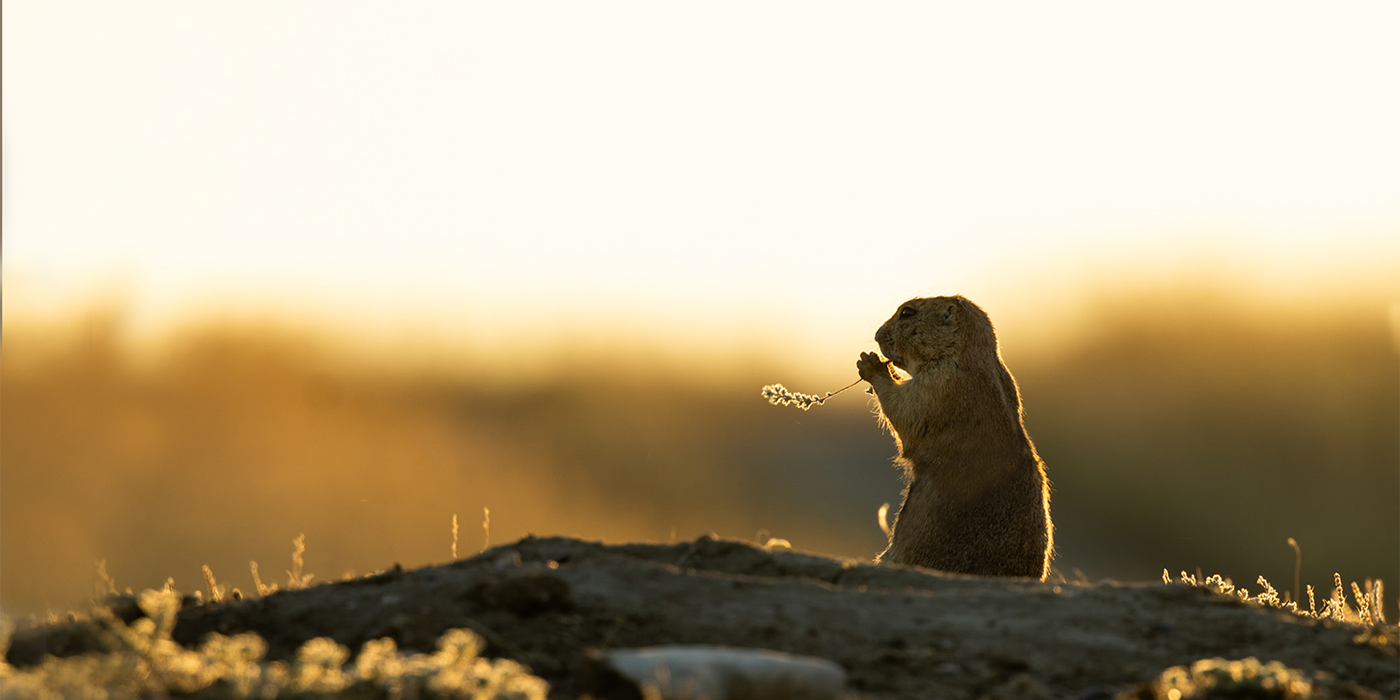
Wild black-tailed prairie dogs use alarm calls to warn one another of predators—and some grassland birds are listening in. Photo credit: Roshan Patel, Smithsonian’s National Zoo and Conservation Biology Institute
The discovery? Long-billed curlews, a declining species of grassland shorebird, eavesdrop on the alarm calls of black-tailed prairie dogs to avoid predators and protect their nests.
And at the center of it all is NIU Ph.D. candidate Andrew Dreelin, who led the study as part of his doctoral research in NIU’s Biological Sciences program. Dreelin successfully defended his Ph.D. dissertation in May and has served as a doctoral fellow with the Migratory Bird Center and Great Plains Science Program in the Smithsonian’s National Zoo and Conservation Biology Institute (NZCBI).
“This study really captures the kind of work I came to NIU to do — science that’s rigorous but also deeply connected to real-world conservation challenges,” Dreelin said. “I wanted to study the keystone effects of prairie dogs on birds, and NIU gave me the space and support to do that.”
Published this month in the prestigious journal Animal Behaviour, Dreelin’s research — conducted in partnership with the NZCBI — offers rare insight into the subtle survival strategies of grassland birds.
Using a remote-controlled taxidermy badger (nicknamed the “Badger-inator”), Dreelin and his team simulated predator threats near curlew nests. They found that female curlews responded to recorded prairie dog alarm calls by flattening into the grass to avoid detection, earlier and more effectively than when the calls weren’t played.
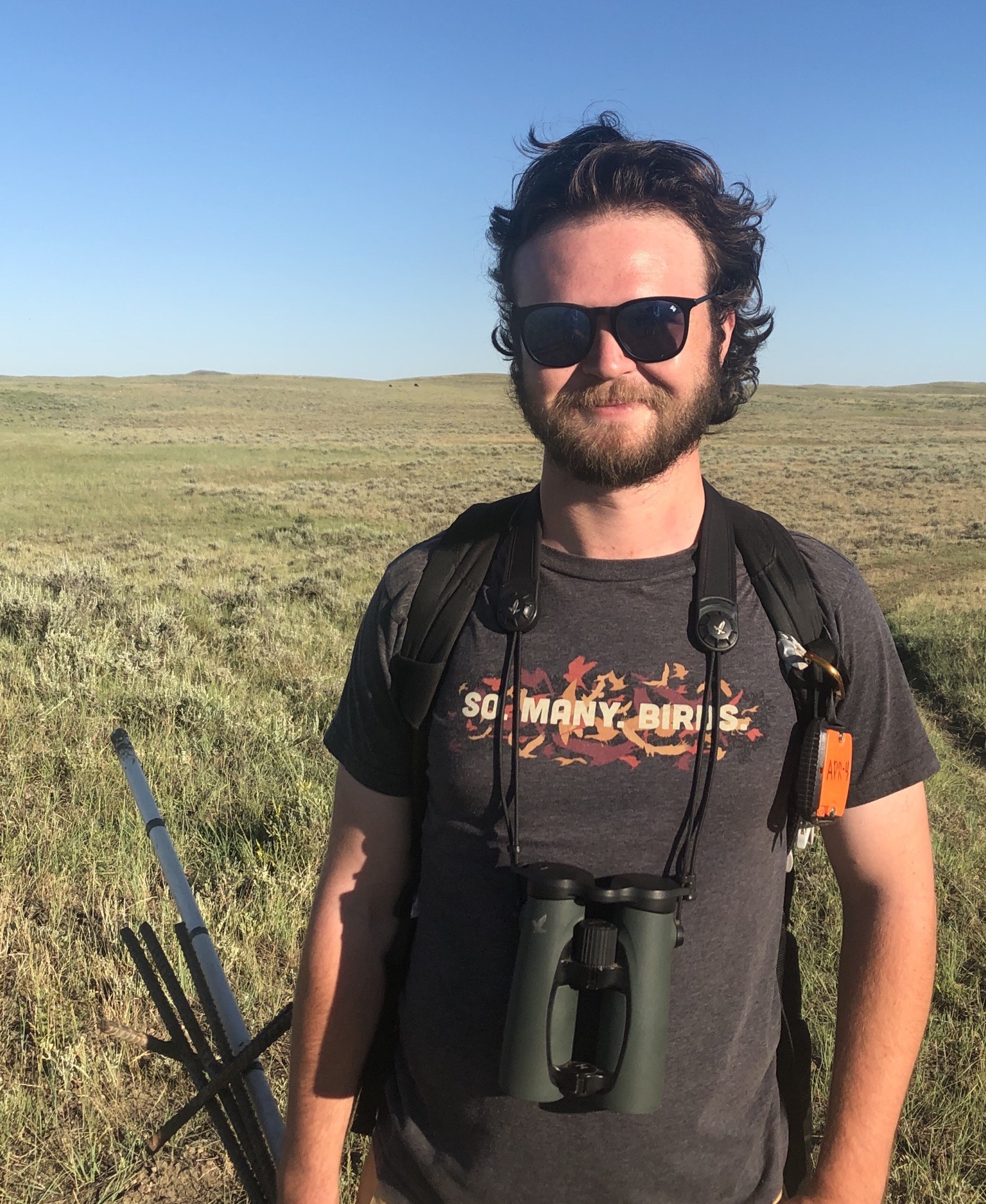
“This study really captures the kind of work I came to NIU to do — science that’s rigorous but also deeply connected to real-world conservation challenges,” said Dreelin, who led the study as part of his doctoral research in NIU’s Biological Sciences program.
“What was surprising in the results was not that we saw a response from the curlews to the calls, but the details of their response,” Dreelin said. “This kind of early warning system could be the difference between life and death for these birds.”
Originally from Georgia, Dreelin fell in love with birds in high school and went on to study ecology and evolutionary biology at Cornell University. He came to NIU in 2020 to work with Professor Holly Jones in her Evidence-based Restoration Lab.
Dreelin was drawn to NIU’s strong conservation ecology program and relished the chance to collaborate closely with both Jones and NZCBI ecologist Andy Boyce, senior author of the study.
“I knew from the beginning I wanted to research bird–prairie dog relationships, and NIU’s program made that possible,” Dreelin said. “The other reason I picked Dr. Jones and the lab is because she puts such a huge emphasis on mentorship and supporting grad students and advocating for good work life balance and positive mental health. That kind of environment meant everything—especially starting in the middle of the pandemic.”
Though Illinois doesn’t have prairie dogs, Dreelin emphasizes NIU’s key role in shaping the research and helping him navigate a doctoral journey that merged ecology, evolution, conservation and behavior.
Over the past four summers, Dreelin led a field research team in Montana, gathering data while managing interns and technicians for the Smithsonian’s Great Plains Science Program.
“I hope this research helps people see prairie dogs in a more positive light,” Dreelin said.
“While the scientific community is aware of a variety of habitat-based advantages, such as maintaining grasslands by removing woody shrubs, with this study, we are getting to see an underappreciated behavioral benefit. This brings us one step closer to understanding the complex relationship between prairie dogs and grassland birds.”
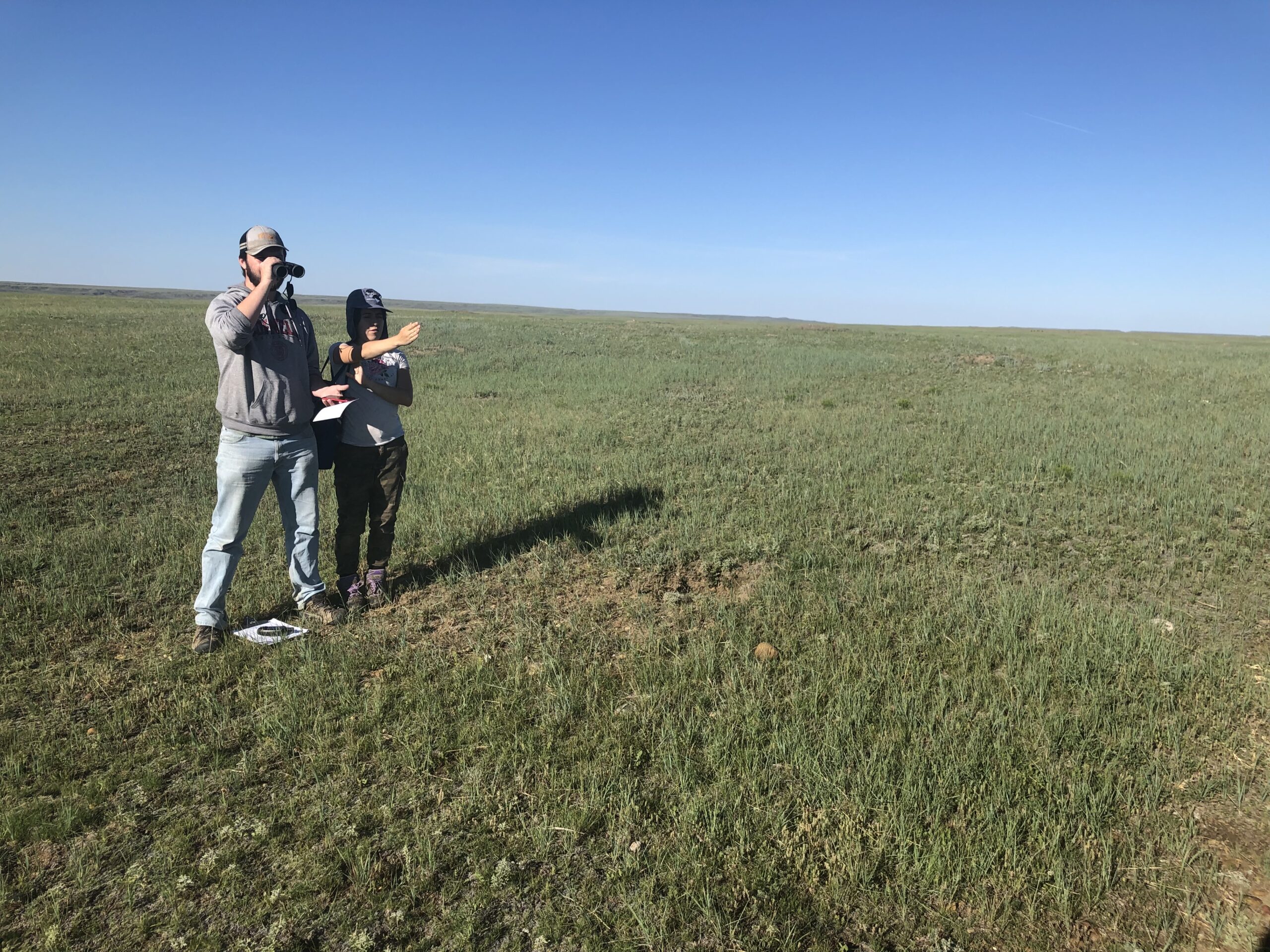
Over the past four summers, Andrew Dreelin led a field research team in Montana, gathering data while managing interns and technicians for the Smithsonian’s Great Plains Science Program.
Dreelin points out that while researchers have long known prairie dogs use distinct alarm calls to communicate predator threats, this is only the second study to show other birds—like burrowing owls and now curlews—actually listen in.
“I was surprised this relationship hadn’t been studied more,” he said.
There is still much to learn about inter-species communication, including whether eavesdropping on prairie dog calls is common among all grassland birds, and whether this eavesdropping actually improves survival rates of nests and adult birds.
But researchers say these findings serve as evidence of prairie dogs being keystone information producers, as well as ecosystem engineers.
“As we look to protect grassland birds, like the long-billed curlew, it’s critical to understand everything that impacts their survival,” Boyce said in a NZCBI press release. “This study demonstrates that prairie dogs may directly influence the reproductive success of grassland birds and should be considered important parts of any conservation plans.”
Now back in DeKalb, Dreelin is looking ahead to a career in conservation. He hopes to continue working with grassland birds, ideally with a non-governmental organization somewhere out West, doing hands-on conservation or applied ecological research.
“I don’t plan to stay in academia,” Dreelin said. “I want to make sure healthy bird populations and ecosystems are there for people to enjoy.”
Dreelin’s dissertation work has helped build a richer story about ecosystem engineers, NIU Professor Jones said.
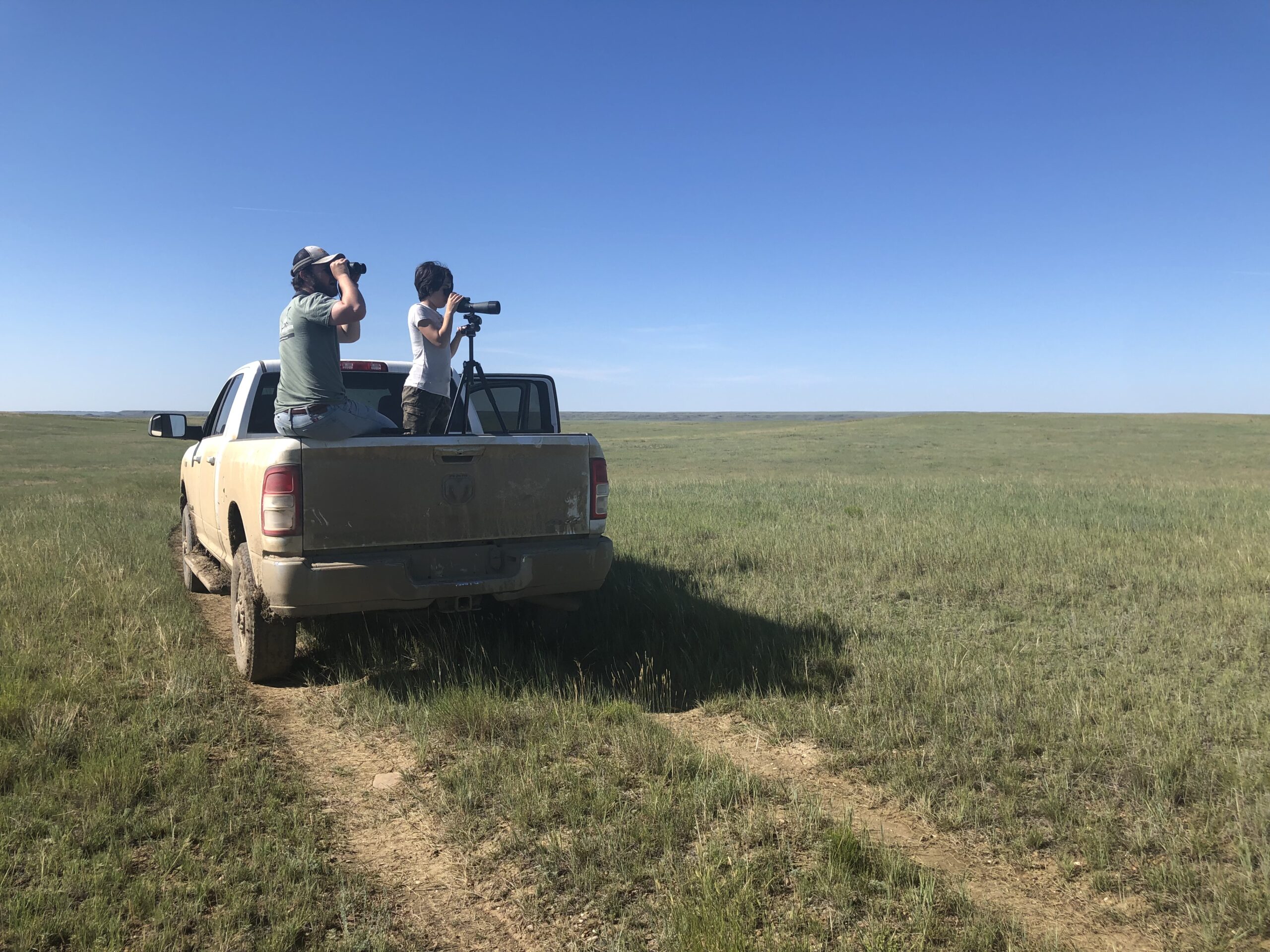
Using a remote-controlled taxidermy badger (nicknamed the “Badger-inator”), Dreelin and his team simulated predator threats near curlew nests.
“It shows prairie dogs do so much more for grassland birds than just provide suitable habitat—they also help birds avoid the predators that are attracted to prairie dog towns,” she said.
“Not only does Andrew study how prairie dog towns are welcoming to birds, he’s also been a positive force for students here on campus, having founded the Inclusive Birding Club, where students get to go learn about our local avifauna in a welcoming environment.”
As for the long-billed curlews and the prairie dogs they live beside, there’s still more to uncover. Dreelin hopes future research can explore whether curlews nesting near prairie dog colonies have better reproductive success—data that could influence habitat management decisions and bolster conservation strategies.
“In the end, you can’t simulate prairie dogs with a lawn mower or a grazing plan,” he said. “There’s something uniquely valuable about having these animals on the landscape. I’m grateful that NIU gave me the opportunity to help show why that matters.”
Media Contact: Jami Kunzer
About NIU
Northern Illinois University is a student-centered, nationally recognized public research university, with expertise that benefits its region and spans the globe in a wide variety of fields, including the sciences, humanities, arts, business, engineering, education, health and law. The Wall Street Journal and CollegeNET recognize NIU as a leading institution for social mobility, or helping its students climb the socioeconomic ladder. Through its main campus in DeKalb, Illinois, and education centers for students and working professionals in Chicago, Naperville and Rockford, NIU offers more than 100 areas of study while serving a diverse and international student body.
