
DeKalb, IL – When it comes to when and where rodents eat, no decision is subtle.
The consequences of those decisions can ripple across food webs. That’s what makes a recently published study so important.
The study looked at how bison reintroduction at Nachusa Grasslands — a 3,800-acre nature preserve in Franklin Grove, Illinois — has impacted the way small mammals respond to moonlight.
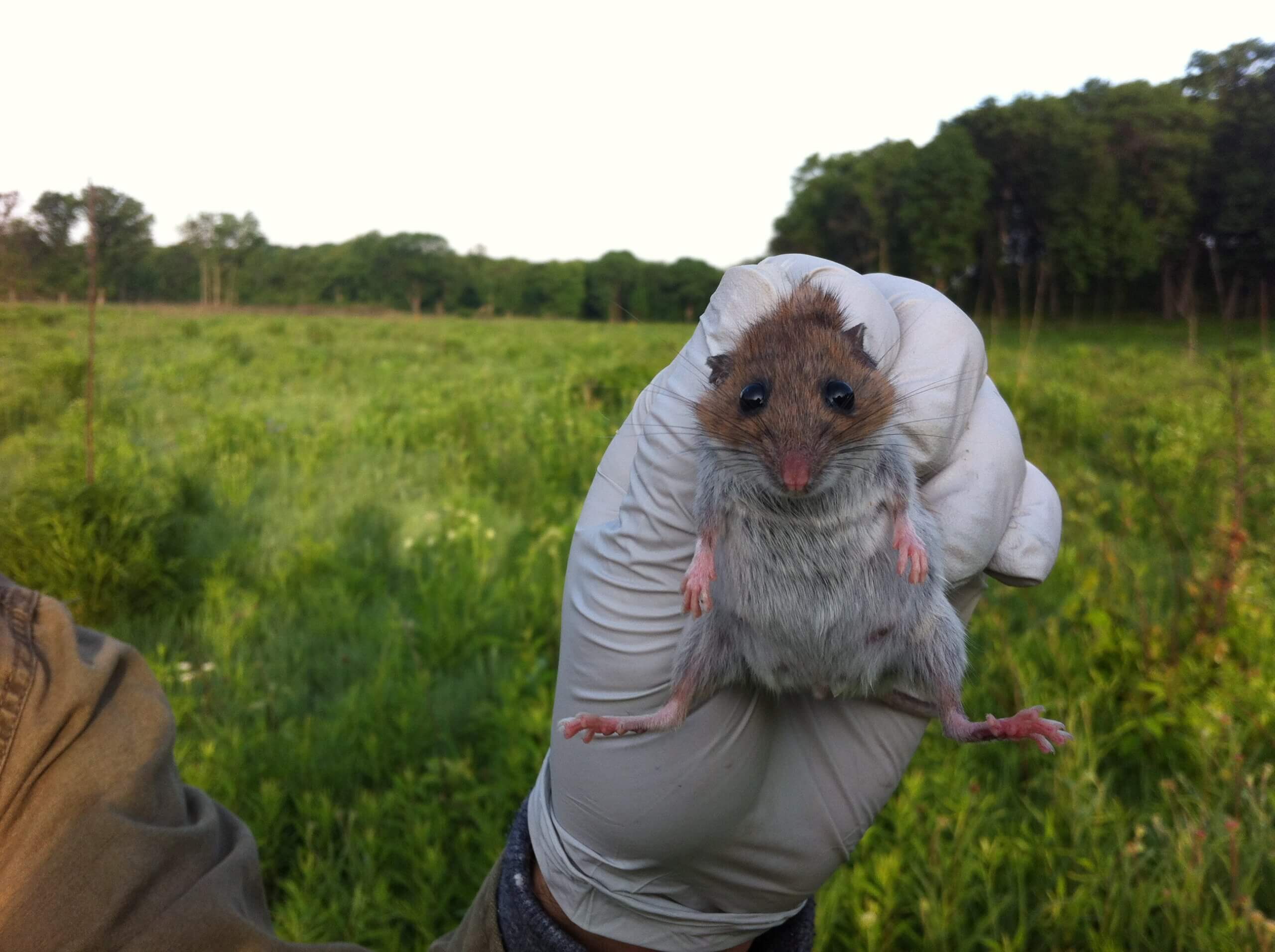
A deer mouse at Nachusa Grasslands. Photo credit: Stephanie Kong
“What happens when bison are reintroduced is they alter the ‘landscape of fear’ for small mammals,” said Professor Holly Jones, a co-author of the study carried out by her Evidence-based Restoration Lab. Jones holds a joint appointment at NIU in biological sciences and environmental studies.
What is the ‘landscape of fear’? Put simply, it means some geographic areas are scarier than others for small mammals.
While dining by moonlight might seem appealing to some, many rodents would rather avoid it. For them, high moonlight means a higher likelihood of being spotted as prey.
So what happens when a bunch of 1,000-pound bison are rolling around and eating plants? Well, the habitat becomes more open than it would be without them. Goodbye nice thick plant canopy. Hello bright moonlight.
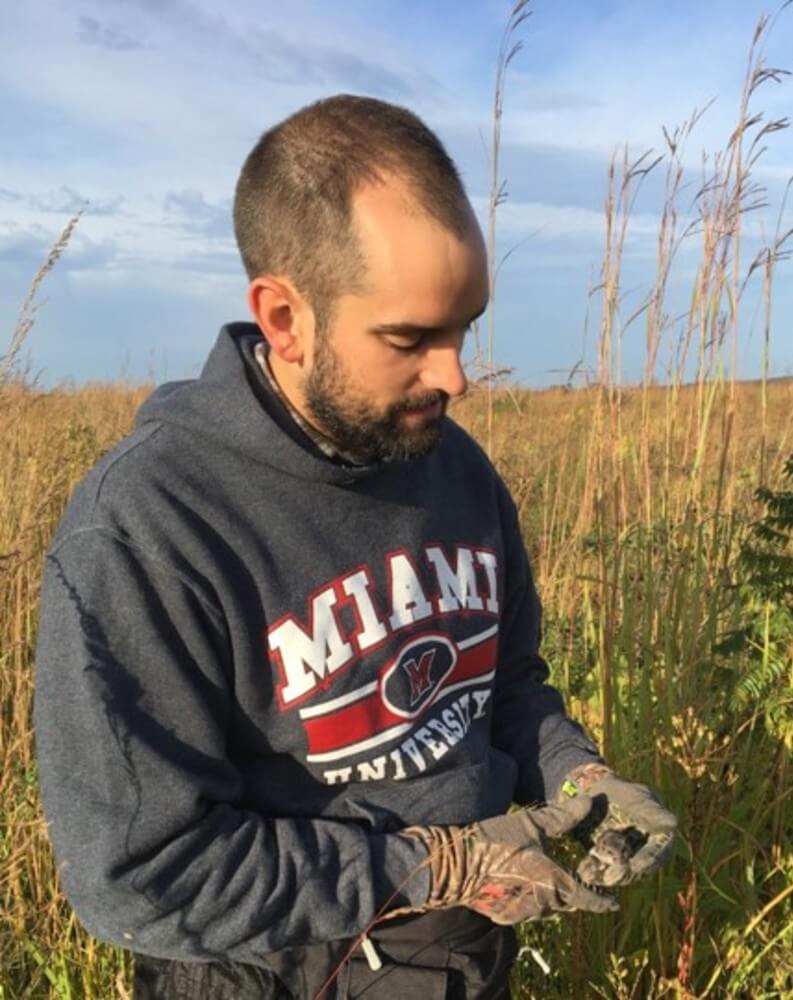
“From a mouse’s perspective your habitat looks a lot different when these big animals get reintroduced,” said Pete Guiden, lead author of the study. “So naturally, we wanted to see if there was a pattern here.”
A former researcher in Jones’ lab, Pete Guiden, then a postdoctoral fellow at NIU and now an assistant professor of biology at Hamilton College in Clinton, New York, set out to discover how the changing habitat impacted the routines of rodents like mice and voles and, in turn, the overall food chain in the grasslands.
“From a mouse’s perspective your habitat looks a lot different when these big animals get reintroduced,” Guiden said. “So naturally, we wanted to see if there was a pattern here.”
It might not seem like much to the casual observer, but any changes in behavior can provide a better understanding of how ecosystems work, say those involved.
And the science behind it can directly help people actively working to restore biodiversity, the variety of life in the world.
“Our hope is that folks pay a little bit more attention to behavioral changes the bison cause,” Jones said. “We have a good sense of, ‘Yes, they impact the plants and nutrients,’ but any change can yield significant impact to the whole ecosystem.”
‘A matter of life or death’
Virtually extinct in the late 1800s, bison populations have been reintroduced in North American grasslands in recent years. They’ve roamed 1,500 acres of rolling land at Nachusa Grasslands since 2014.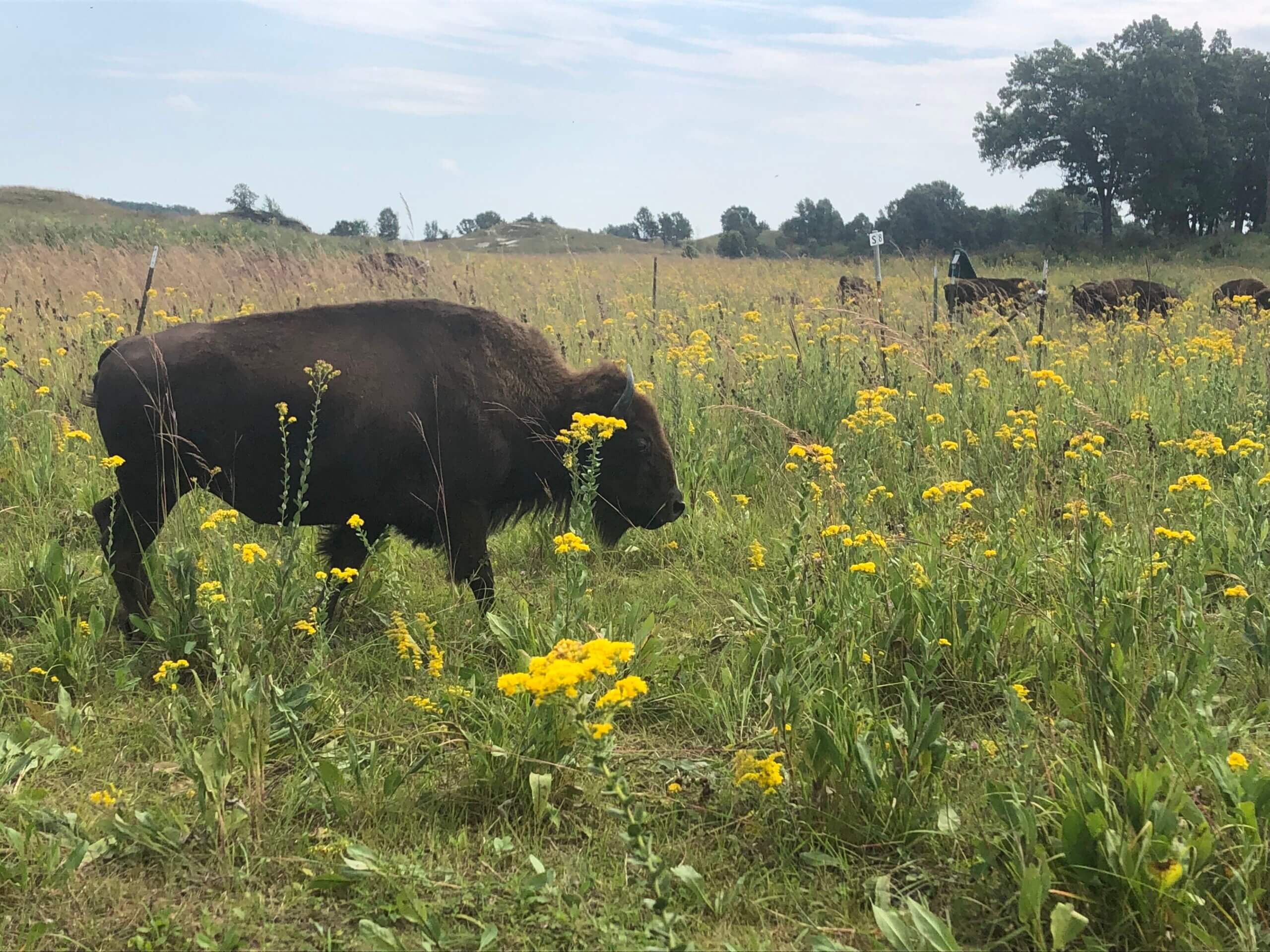
Jones’ research team has studied their impact on the abundance of small mammals but had yet to dive into any potential behavioral changes influenced by the animals and moonlight.
“Rodents like mice and voles are great subjects for this. They eat a lot of different plants and insects, but trying to eat something at the wrong place or time can be a matter of life or death if one of your predators is hanging around,” said Guiden, lead author of the study published in Ecology, an Ecological Society of America journal.
Along with Professor Jones, co-authors include Restoration Lab researcher Erin G. Rowland-Schaefer, a Ph.D. candidate; and lab alumni Angela Burke, Conservation/Volunteer Coordinator at The Nature Conservancy; Jessica Fliginger, restoration technician at NIU; and former master’s student Kirstie Savage.
As a graduate student, Guiden studied the influence of moonlight on rodents in local forests.
“We saw that mice didn’t care what the moon did under a nice thick plant canopy, but I was honestly shocked at how strong the influence of moonlight was in the more open habitat,” he said. “Ever since then, I’ve been looking for more ways to test this rodent/moonlight link, and Nachusa seemed like a great place to ask the question with some cool new twists.”
What does it all mean?
Guiden used eight years of data collected by Jones’ research teams on small mammal populations. To determine when small mammals were active, he used temperature loggers on traps. And he calculated moonlight reaching the ground, time of peak moonlight and mean moonlight.
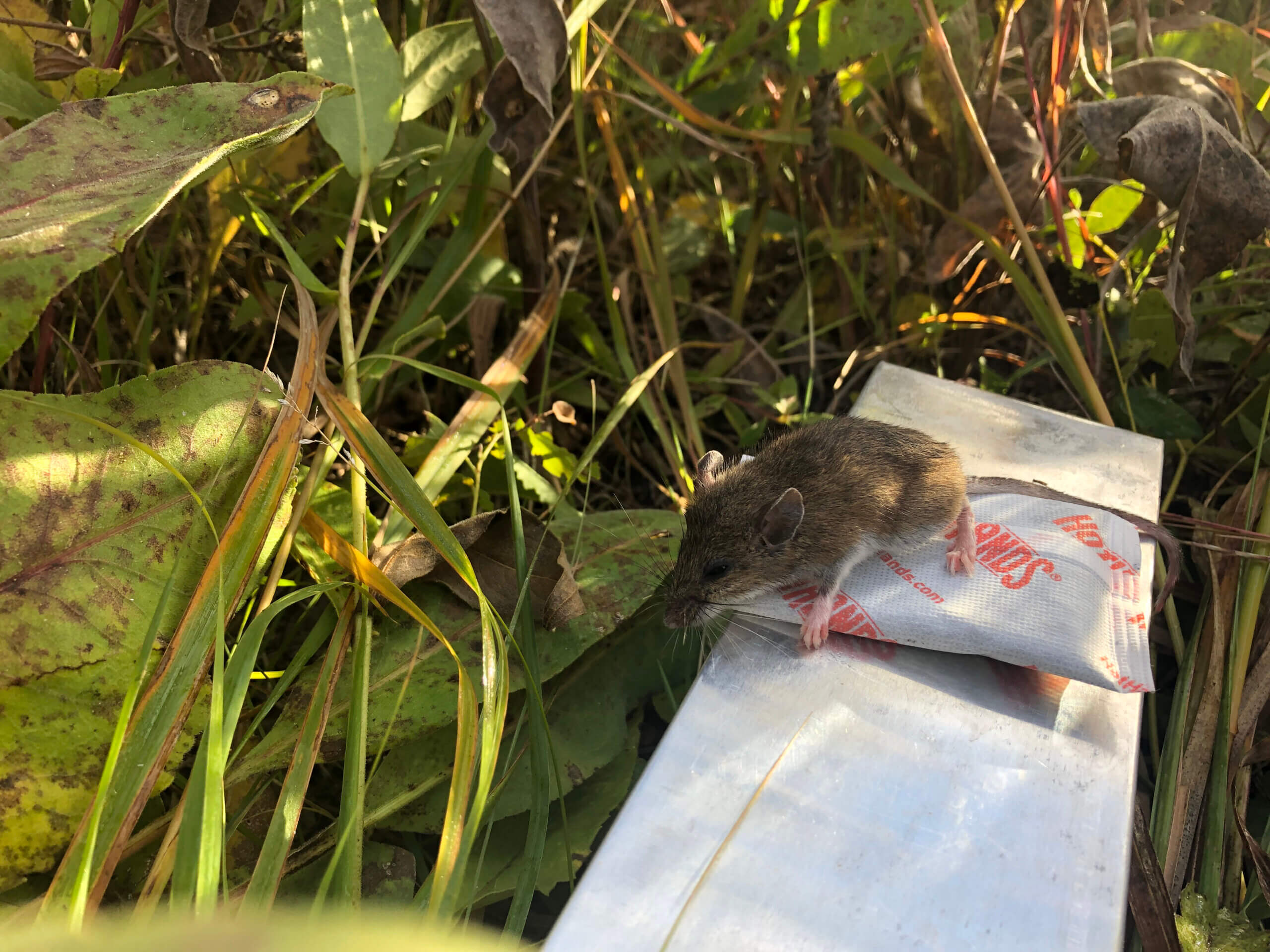
To determine when small mammals were active, Guiden used temperature loggers on traps.
The researchers found that sites with bison had 20 percent more light reaching the ground than those without.
“These megaherbivores thus create a big change from the perspective of small mammals,” Jones said.
The most common species in the traps—deer mice—were four times more active outside the bison unit (where plants are denser) during nights with peak moonlight, but they didn’t show activity differences when there was no moonlight.
Conversely, prairie voles were twice as active during full compared to new moons, but only in the bison unit. Despite being more active, most of their activity in the bison unit occurred before moonrise or after moonset. In other words, they avoided times of bright moonlight.
“So what does it all mean? Megaherbivore introductions can cause some currently under appreciated impacts to prairies through shifting the behavior patterns of other animals,” Jones said.
And this can alter the food chain, she said.
From Guiden’s perspective, the research demonstrates subtle and perhaps unexpected effects.

NIU Professor Holly Jones
“Bison were reintroduced at Nachusa in large part to increase plant biodiversity,” he said. “Those gains haven’t been realized yet since plant communities can change really slowly, but in the meantime the bison could be restoring a lot of other connections we weren’t expecting.”
He credited Professor Jones and the eight years of data provided by her research teams, as well as hundreds of volunteers who helped. Working with Professor Jones means tackling cutting-edge ecological problems and directly helping those actively working to restore biodiversity, he said.
“Beyond the science, Holly is also an unbelievable mentor who cares deeply about her students,” he said. “I’m continually thankful for the lessons I learned from her about how to run my own lab.”
Media Contact: Jami Kunzer
About NIU
Northern Illinois University is a student-centered, nationally recognized public research university, with expertise that benefits its region and spans the globe in a wide variety of fields, including the sciences, humanities, arts, business, engineering, education, health and law. Through its main campus in DeKalb, Illinois, and education centers for students and working professionals in Chicago, Naperville, Oregon and Rockford, NIU offers more than 100 areas of study while serving a diverse and international student body.
