
Restoring seabird populations could help safeguard biodiversity and climate resilience across vast scales, a new study shows.
Published this week in Nature Reviews Biodiversity, the research was led by Northern Illinois University biologist Holly Jones, with contributions from current and former NIU graduate students and a diverse team of global experts, including conservation leaders from BirdLife International, The Nature Conservancy and Island Conservation.
The team synthesized decades of research into what they call the “circular seabird economy.”
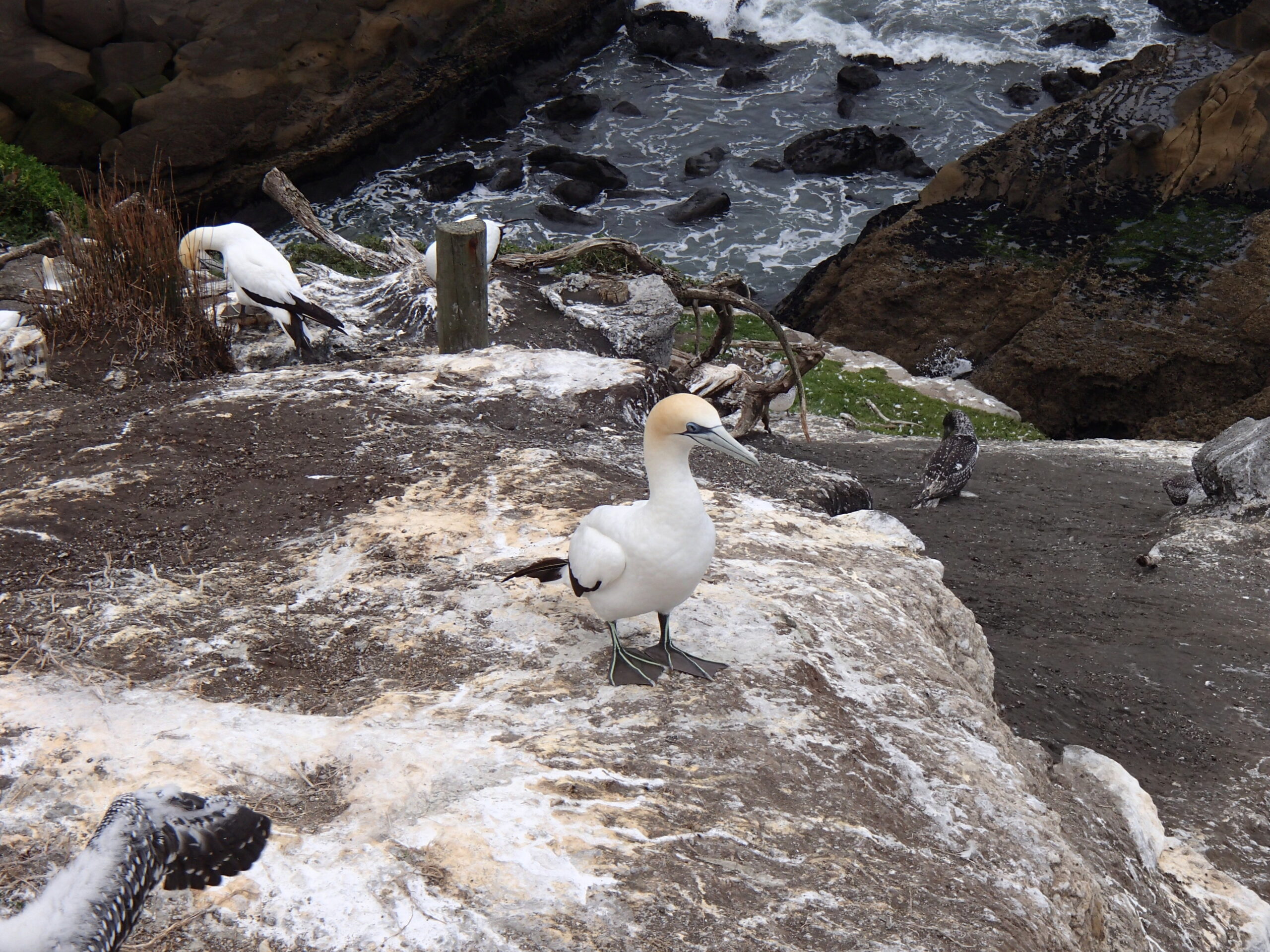
Australiasian Gannet colony. Photo credit: Stephanie Kong
“Seabirds function as biological pumps, consuming prey in the ocean and transferring large quantities of nutrients to their breeding grounds on land,” said Jones, Ph.D., presidential research professor joint appointed to the Department of Biological Sciences and Institute for the Study of the Environment, Sustainability and Energy. “Because they often nest in huge colonies, they connect the ocean and islands in ways that are both powerful and measurable.”
Before sunrise on remote islands, breeding seabirds take to the sky in search of food. Once their feeding bouts end — often within a day but sometimes over much longer time periods — the nutrients they collect return to land in the form of guano (bird poop) that quietly fuels plants, enriches soils and eventually washes back into coastal waters.
That journey, scientists now say, is far more important than once understood.
“These nutrients, when transported back into surrounding waters, support coral growth, bolster fish biomass and enhance the resilience of marine ecosystems to the effects of climate change,” explains co-author Professor Nick Graham, Lancaster University, UK. “The ecological benefits of these natural nutrient flows are really very dramatic.”
Many coastal and Indigenous communities rely on seabirds for navigation, sustenance, fertilizer, cultural identity and economic stability.
Yet, as the team points out, seabirds are also one of the most vulnerable groups of birds on Earth.
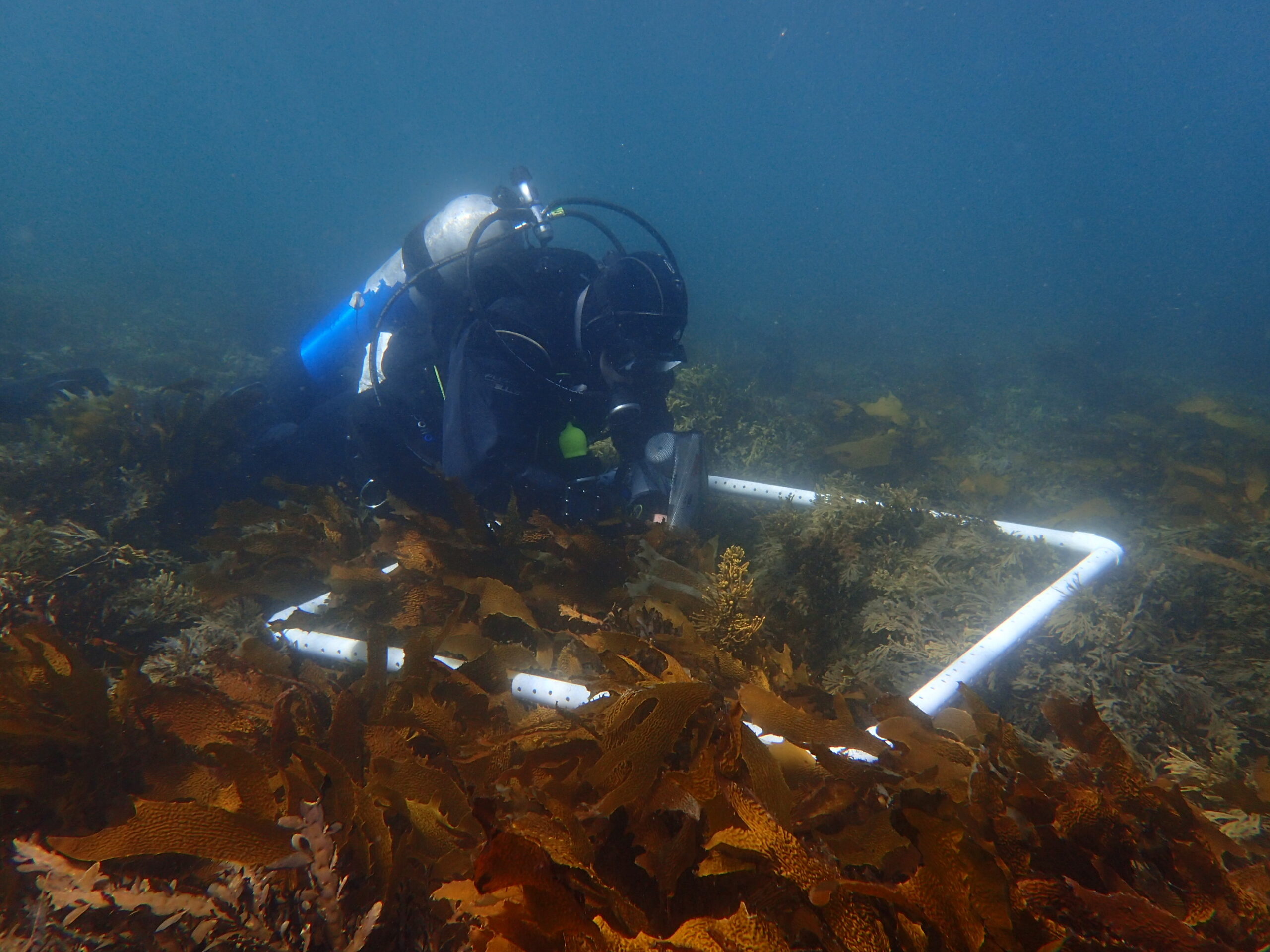
Taking data to measure seabird impacts in nearshore water. Photo credit: Evan Brown
Nearly one-third of species are listed as threatened or endangered due to invasive predators, habitat loss and the escalating pressures of climate change. Because they influence both land and sea, the authors argue that effective seabird conservation represents one of the most powerful tools for ecosystem recovery.
To understand the scale of research on this topic, Jones brought together experts and emerging scholars from around the world.
“It was a delight to pull together a diverse list of authors that range in expertise from temperate to tropical islands and from marine to terrestrial ecology,” she said. “We had a mix of established scientists and practitioners and early-career researchers participate as it is critical to hear from a variety of voices when attempting to compile the state of the knowledge on such a broad topic.”
The project illustrates NIU’s growing leadership in restoration science, as well as the university’s commitment to training the next generation of conservation leaders.
Among the co-authors was NIU doctoral student Leilani Fowlke.
“It was important to highlight all the great seabird restoration work that’s happening to try to repair the circular seabird economy because that’s what my Ph.D. dissertation focuses on,” Fowlke said.
Two NIU alumni who studied in Jones’ lab — Christy Wails, Ph.D., and Lyndsay Rankin, Ph.D. — also contributed as co-authors.
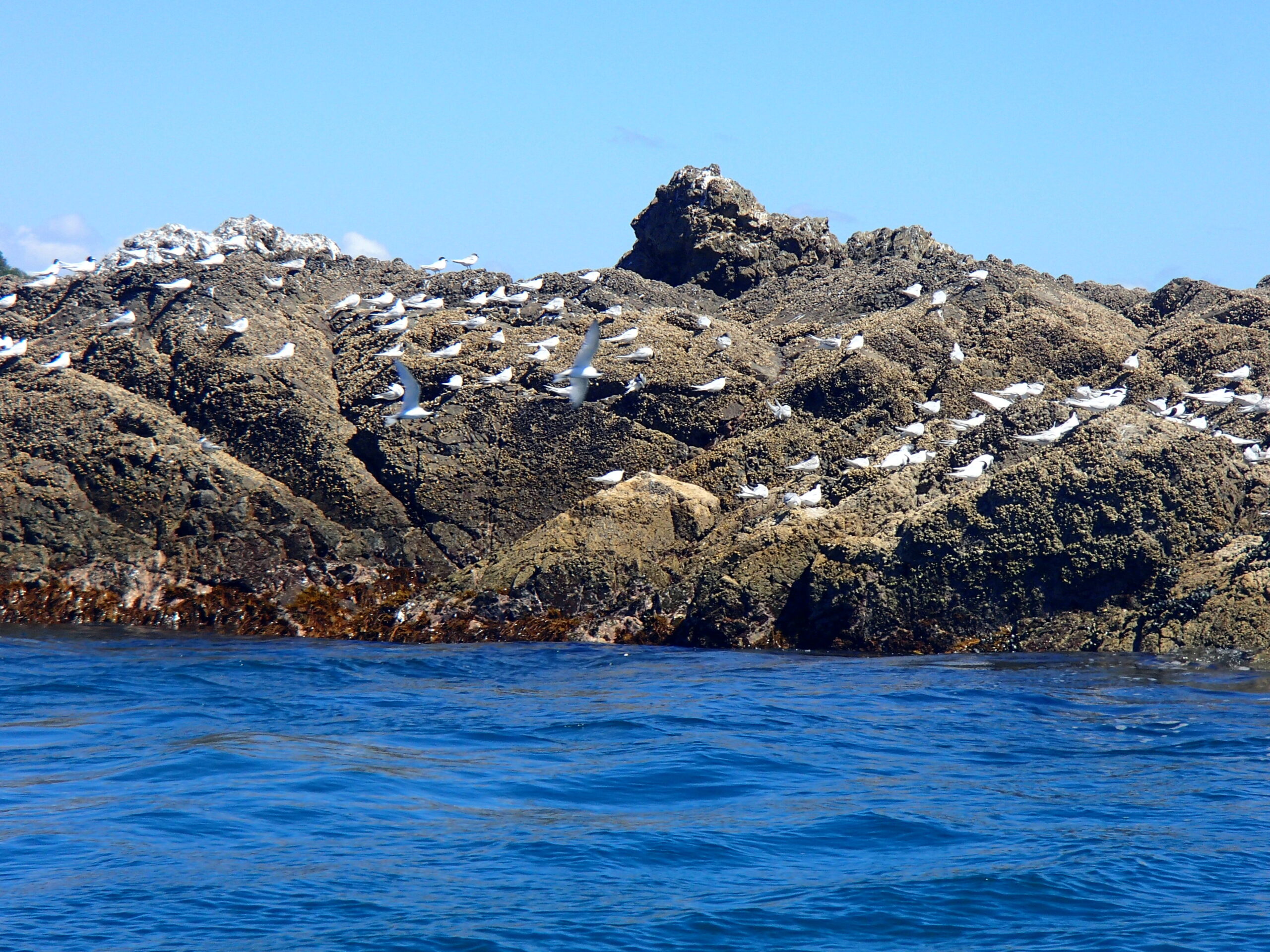
Tern colony. Photo credit: Lyndsay Rankin
The published synthesis provides a roadmap to guide researchers, policymakers and conservation practitioners as they work to protect seabirds. Restoring seabird populations through proven methods like invasive species removal, social attraction and chick translocation can re-establish critical nutrient flows, researchers say.
“We now have the science to show that seabird restoration is one of the most effective tools for ecosystem recovery. By removing invasive species and reconnecting nutrient flows, we can restore island and marine systems at scale — and deliver lasting benefits for biodiversity,” said Stephanie Borrelle, Pacific Science Director at BirdLife International.
While the research offers a path forward, it also reveals that scientists still have more to study.
“Seabirds influence ecosystems across vast spatial scales, yet many of their marine impacts remain understudied. This paper identifies key knowledge gaps and calls for more integrated research to understand how seabirds support ecosystem function from ridge to reef,” said Casey Benkwitt, Lancaster University.
For Jones, the unknowns create both urgency and opportunity.
“The most exciting part about this topic to me is how much left there is still to discover about how seabirds link oceans and islands and how we as people can ensure these connections are safeguarded into the future,” she said.
Media Contact: Jami Kunzer
About
Northern Illinois University is a student-centered, nationally recognized public research university, with expertise that benefits its region and spans the globe in a wide variety of fields, including the sciences, humanities, arts, business, engineering, education, health and law. The Wall Street Journal and CollegeNET recognize NIU as a leading institution for social mobility, or helping its students climb the socioeconomic ladder. Through its main campus in DeKalb, Illinois, and education centers for students and working professionals in Chicago, Naperville and Rockford, NIU offers more than 100 areas of study while serving a diverse and international student body.
Island Conservation’s mission is to restore islands for nature and people worldwide. We are a United States-based 501(c)(3) charitable organization with a globally distributed team—often made up of local islanders who bring deep knowledge and connection to the places where we work. Together, we collaborate with local communities, government management agencies, and conservation organizations to holistically restore islands by bringing back biodiversity, the foundation of all healthy ecosystems. We do this by removing a primary threat (introduced, damaging invasive species) and accelerating the return of native plants and animals. We utilize innovative technology and techniques to work more efficiently and showcase the many benefits of holistically restored islands for biodiversity, climate resilience, ocean health, and sustainable development across the globe.
The Nature Conservancy is a global conservation organization dedicated to conserving the lands and waters on which all life depends. Guided by science, we create innovative, on-the-ground solutions to our world’s toughest challenges so that nature and people can thrive together. We are tackling climate change, conserving lands, waters and oceans at an unprecedented scale, providing food and water sustainably and helping make cities more resilient. The Nature Conservancy is working to make a lasting difference around the world in 83 countries and territories (39 by direct conservation impact and 44 through partners) through a collaborative approach that engages local communities, governments, the private sector, and other partners. To learn more, visit nature.org or follow @nature_press on X.
