
DEKALB, IL — As a deadly sea urchin disease resurfaces in the Caribbean, an NIU researcher is at the center of the effort to understand the outbreak and prevent it from spreading again.
Assistant Professor Michael Henson of NIU’s Department of Biological Sciences is part of a multi-institutional team studying die-offs of Diadema antillarum, a long-spined sea urchin species essential to coral reef health.
In recent weeks, collaborators reported the disease spreading across multiple reef sites in St. Thomas, U.S. Virgin Islands, the location where a mass die-off in 2022 first emerged.
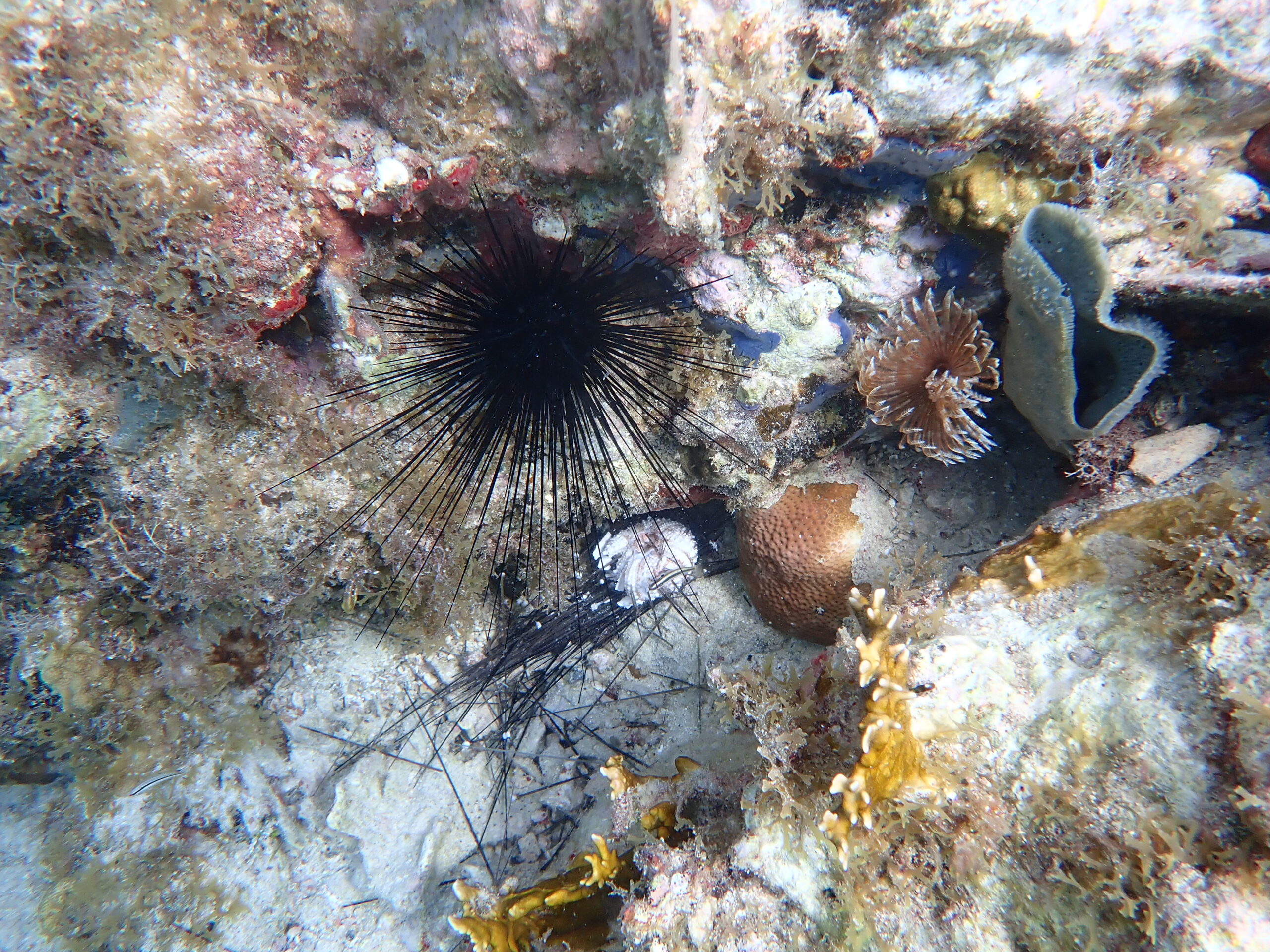
Dead and dying sea urchins were found at Flat Cay in the Caribbean, the site of the first reported outbreak in January 2026. Photo courtesy of Moriah Sevier, University of the Virgin Islands
“It puts a little more urgency and value on everything we’re doing,” Henson said. “Now we have that blip on the radar to really begin to piece all the research together more.”
Sampling conducted through the NSF project indicates the same single-celled parasite responsible for the 2022 Caribbean-wide die-off is present, with an estimated 30 to 40% mortality in affected populations.
This raises concern that the event could follow a similar trajectory.
“The concerning part is how closely this mirrors what we saw in 2022,” Henson said. “That outbreak also began in January around St. Thomas. By March and April, it had spread across the Caribbean.”
Henson’s lab recently received more than $275,000 as part of a $1.6 million National Science Foundation grant supporting graduate and undergraduate research and hands-on training at leading marine science institutions.
One of the project’s strengths is timing. The research team began monthly baseline sampling in August, months before the new outbreak appeared, giving scientists rare environmental context to compare normal reef conditions with those during an active disease event.
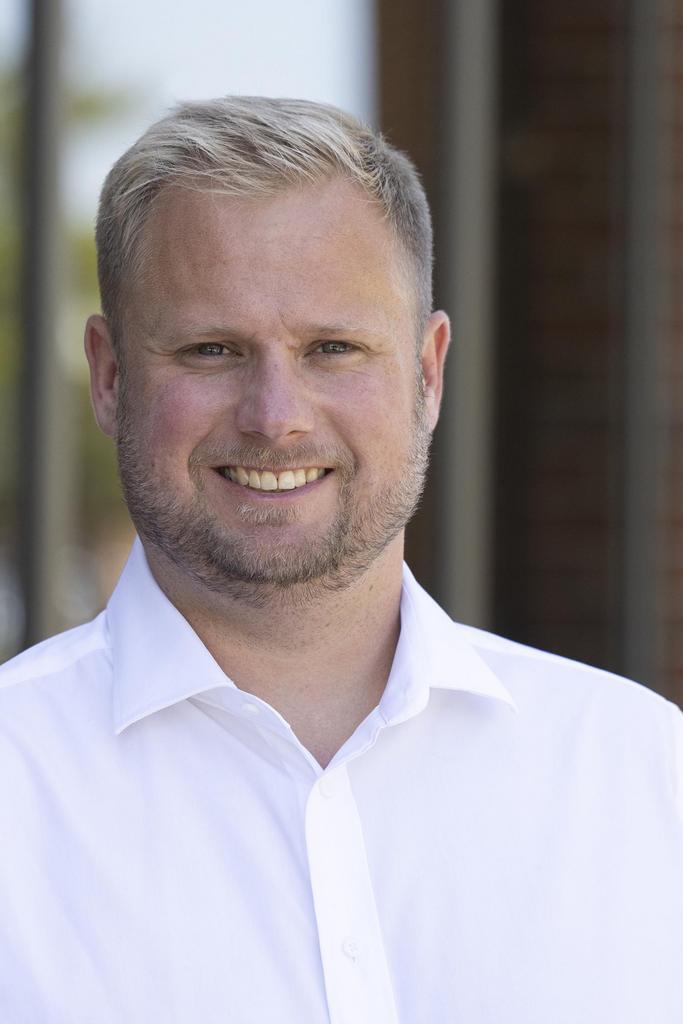
Assistant Professor Michael Henson of NIU’s Department of Biological Sciences
“When an outbreak happens, having that history is critical,” Henson said.
The disease is caused by a microscopic ciliate, Philaster apodigitiformis, part of the Diadema scuticociliatosis Philaster clade. Since 2022, the pathogen has been detected beyond the Caribbean, including in the Mediterranean, Red Sea, Arabian Gulf and Indian Ocean, raising concerns about a global marine disease threat.
“These urchins are critical grazers that keep algae in check,” Henson said. “When they disappear, reefs can rapidly decline.”
The NSF-funded collaboration includes scientists from the University of the Virgin Islands, Cornell University, the University of South Florida and the U.S. Geological Survey. The team combines field sampling, aquarium experiments and microbiome analyses.
Although Henson was unable to travel for the most recent collections, new samples and cultures are now being analyzed in his NIU lab. An undergraduate student is assisting with sample processing and early data analysis, and Henson plans to expand student involvement as the project continues.
While the current outbreak appears to have lasted one to two weeks at known sites, its long-term impact remains unclear.
“Our goal is prevention,” Henson said. “If we can identify local triggers, water quality, sewage outflow, boat traffic, we can eventually recommend management strategies to reduce future outbreaks.”
The research team plans to reconvene this spring to coordinate expanded monitoring across the Caribbean.
“It’s exciting science, and it’s also science that matters right now,” Henson said.
The video below shows a sea urchin actively losing its spines near an apparent healthy urchin at Flat Cay, the site of the first reported outbreak in January 2026.
Media Contact: Jami Kunzer
About NIU
Northern Illinois University is a student-centered, nationally recognized public research university, with expertise that benefits its region and spans the globe in a wide variety of fields, including the sciences, humanities, arts, business, engineering, education, health and law. The Wall Street Journal and CollegeNET recognize NIU as a leading institution for social mobility, or helping its students climb the socioeconomic ladder. Through its main campus in DeKalb, Illinois, and education centers for students and working professionals in Chicago, Naperville and Rockford, NIU offers more than 100 areas of study while serving a diverse and international student body.
