
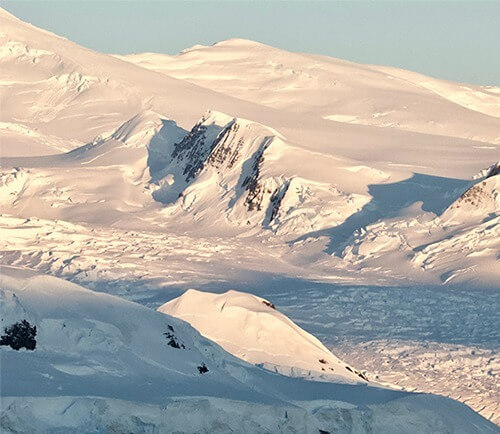
DeKalb, Ill. – As a kindergartner, Justin Dodd went to “career day” as a geologist. As a teenager, Finlay McElmeel fell in love with astronomy. Those passions will converge late this year in an unlikely location: the windiest, driest and coldest continent on the planet.
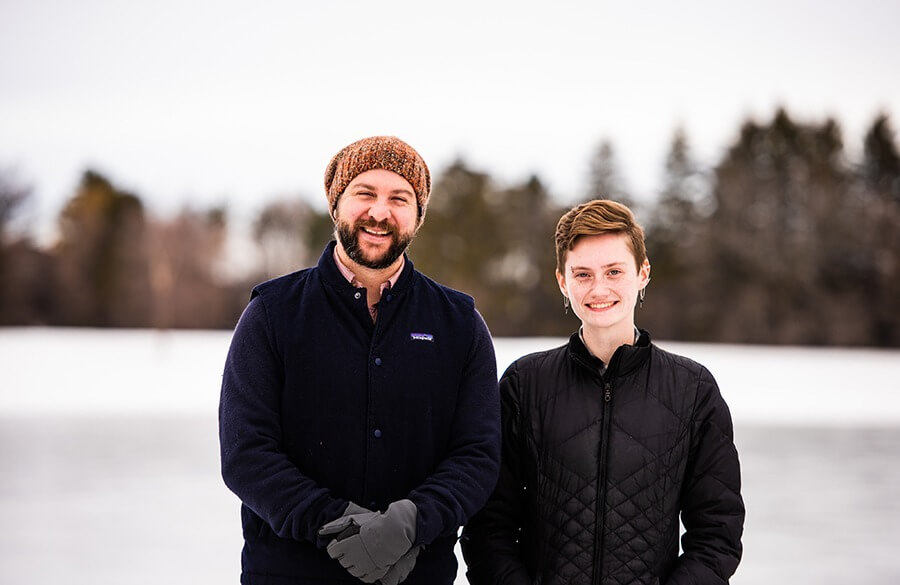
Dodd, today an NIU geology professor, and his student McElmeel, who graduated in December with an NIU bachelor’s degree in geology and is now in the master’s program, will travel to Antarctica in December as part of a large scientific research team investigating climate change impacts on sea level.
“Just being involved, and the adventure of it all, is very exciting to me,” says McElmeel, who hopes to one day investigate the geoscience of other planets.
Adds Dodd, who previously has conducted research in the Ross Sea near the Antarctic and is well aware of McElmeel’s love for astronomy, “The Antarctic is as close as you can get to not being on Earth while still being on Earth.”
Adventure aside, the work of the NIU researchers and their colleagues could have serious implications for predicting future impacts of climate change.
The ‘tipping point’
As the United Nations’ Conference of the Parties (COP26) focuses on science and national investment to combat climate change, the research team is preparing to drill into sediment beneath Antarctica’s Ross Ice Shelf to discover if worldwide efforts to cut greenhouse gas emissions could avoid catastrophic melting of the frozen continent.
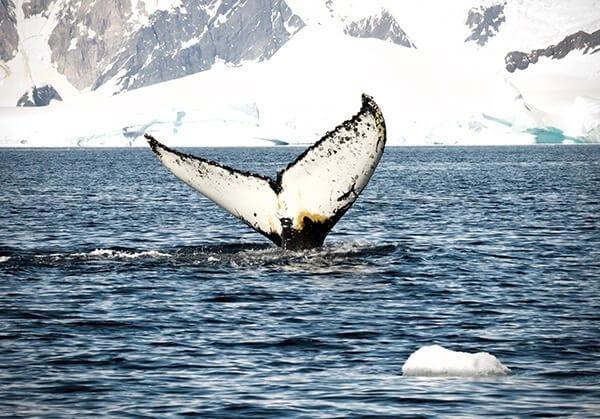
The research project, dubbed SWAIS 2C, will investigate the sensitivity of the West Antarctic Ice Sheet to global warming of 2 degrees Celsius (3.6 degrees Fahrenheit). Scientists will drill through the ice to discover evidence locked in ocean-floor sediments showing how the ice behaved when global temperatures were as warm as those expected in the coming decades.
Those geological records could reveal if there is a tipping point in the climate system beyond which large amounts of land-based ice melts, causing oceans to rise.
“The West Antarctic Ice Sheet holds enough ice to raise sea levels by about 13 feet,” Dodd says.
If even a fraction of that melting is realized in the decades and centuries to come, it could have catastrophic effects on coastal communities worldwide.
Drilling through time
To experts such as Dodd and other expedition scientists, retrieving the sediment cores is like time travel.
Different microbes, tiny fossils and chemical signatures from the sediments all provide clues to how the ice sheets behaved throughout geologic history. The scientists are particularly interested in gathering sediment core samples that date from the Pliocene (5.4 to 2.4 million years ago) and the Miocene (23 to 5 million years ago).
“The relationship between carbon dioxide (in the atmosphere) and temperature is well established—as one increases so does the other,” Dodd says. “We think the CO2 levels of the Pliocene provide a good analog for where we’ll go if things continue at the current rate with planned reduced emissions. If we don’t reduce CO2, however, the analog will be more like the Miocene, when temperatures were significantly higher than now.”
The SWAIS 2C team includes some of the world’s top Antarctic scientists and is led by Richard Levy of New Zealand’s GNS Science, Te Herenga Waka of Victoria University of Wellington, and Molly Patterson of New York’s Binghamton University. In all, researchers from seven U.S. universities will participate, with field campaigns planned in three consecutive years.
National Science Foundation support
The U.S. National Science Foundation is providing a total of $3.2 million in funding for the multi-year project, including $343,000 to NIU. More funding is coming from New Zealand, Germany, Australia, the United Kingdom and the Republic of Korea, with several other nations planning to join. The International Continental Scientific Drilling Program has also awarded the project a $1.2 million grant.
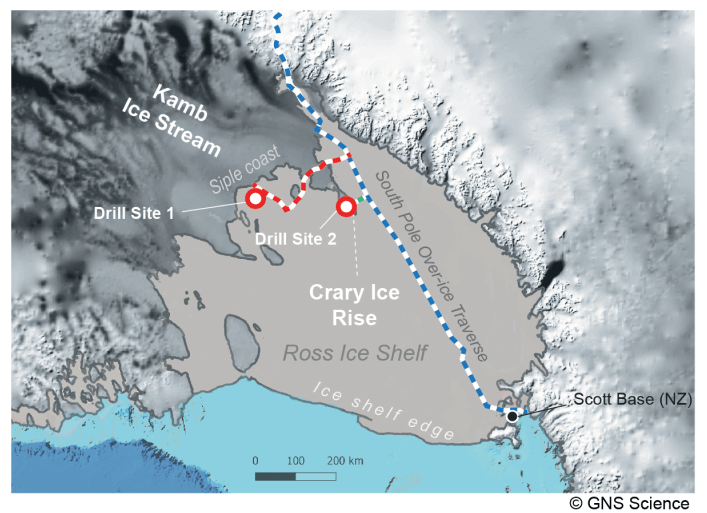
No one has ever drilled into the Antarctic seabed at a location so far from a major base, nor so close to the center of the West Antarctic Ice Sheet.
Engineers at Victoria University of Wellington’s Antarctic Research Centre have spent four years developing technology capable of hot-water drilling through an estimated 800 meters of ice before taking sediment samples from up to 200 meters beneath the ice sheet.
NIU has an Antarctic history
NIU has had geologists working on the continent, often alongside students, since the 1970s. It’s an incredible opportunity for any student—to rub shoulders with top scientists, learn how to collaborate on large scientific teams and see how the information gathered helps scientists in many different disciplines.
Dodd and McElmeel had worked together previously, analyzing marine sedimentary samples collected from the International Ocean Discovery Program to reconstruct the impact of past climates on the Antarctic ice sheet. On the new project, they’ll serve as geochemists—dating sediments and using chemical signatures and stable isotopes in geologic materials to understand past environments.
“Fin has a strong background in chemistry and is one of the sharpest students I have worked with,” Dodd says.
“It’s an easy pivot,” McElmeel adds. “When Dr. Dodd joined the project, he extended the offer to me, if I was willing to stay at NIU and pursue my master’s. It was hard to say no.”
Where the sun never sets
McElmeel, however, is not a big fan of cold weather. Fortunately, field seasons only run during the Antarctic summer. While the NIU pair are working there, the sun won’t set on the austere and endless-white landscape. And the cold should be tolerable—with temperatures occasionally reaching 30 degrees Fahrenheit or even slightly above.
Still, it’s an environment not for the faint of heart. When at drilling sites in the “deep field,” scientists sleep in tents atop ice nearly a half mile thick, like camping on, well, another planet.
“I’ll be doing things that I can apply to planetary science,” says McElmeel, who plans to pursue a Ph.D. in the field. “That’s still my end goal—studying the geoscience of other planets. For now, though, I’m quite content where I’m at.”
Media Contact: Tom Parisi
About NIU
Northern Illinois University is a student-centered, nationally recognized public research university, with expertise that benefits its region and spans the globe in a wide variety of fields, including the sciences, humanities, arts, business, engineering, education, health and law. Through its main campus in DeKalb, Illinois, and education centers for students and working professionals in Chicago, Naperville, Oregon and Rockford, NIU offers more than 100 areas of study while serving a diverse and international student body.
