
DeKalb, IL – Electric vehicles (EVs) are quiet, clean and generally pretty awesome. But any EV owner who has taken a long trip and waited 30 minutes or more to charge the battery knows there’s room for improvement.
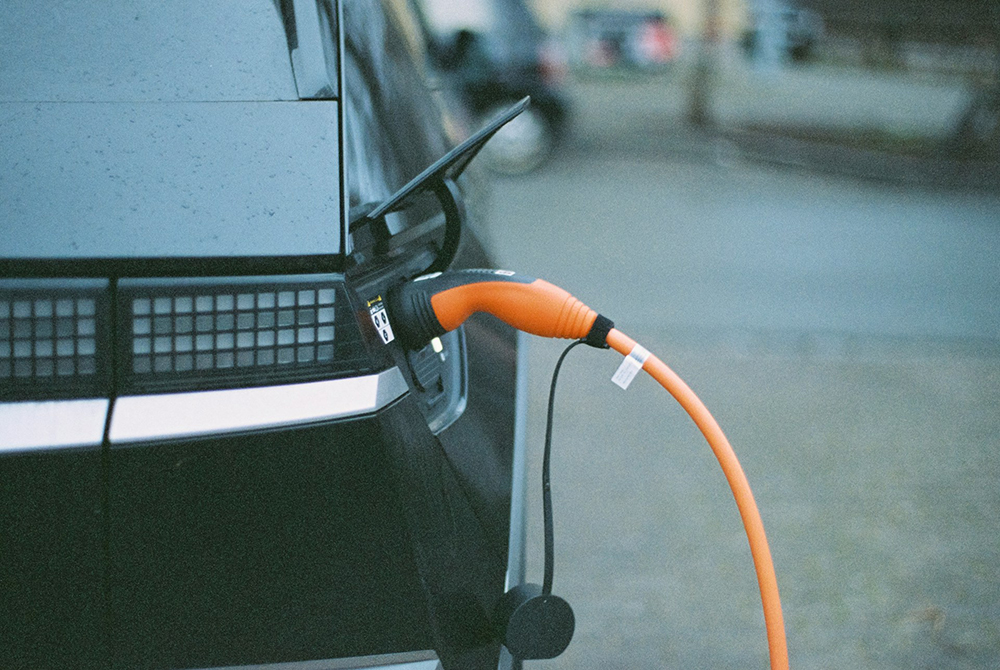
Photo by Markus Spiske on Unsplash.
NIU Chemistry Professor Tao Li has been working to reduce that charging time and improve charge longevity by gaining a better understanding of how EV batteries work at the molecular level. Now his work is getting another major boost from the National Science Foundation.
NSF’s Chemical, Bioengineering, Environmental and Transport Systems Division, which supports innovative research and education, has awarded Li with a grant of $424,000 over three years to further his research.
“In simple terms, this research aims to understand how the liquid electrolytes inside high-energy batteries, like those used in electric cars, behave and how they affect the performance of these batteries,” Li said.
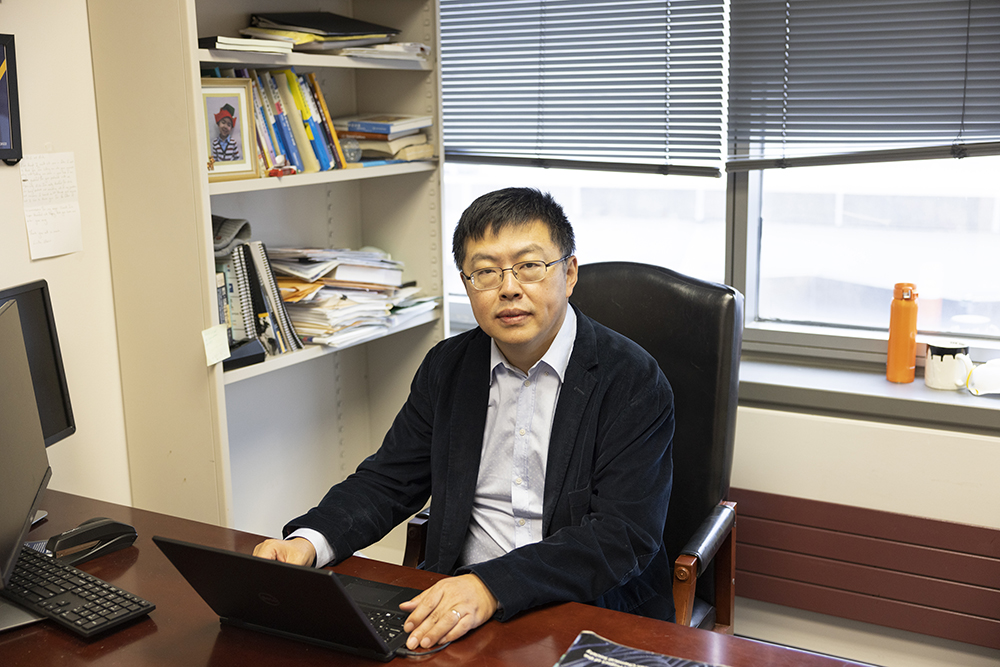
NIU Chemistry Professor Tao Li.
“We’re especially interested in the details of how these liquids move and interact at both the bulk and interfaces of the battery. By figuring this out, we can make better batteries that last longer and work more efficiently.”
Most of today’s all-electric vehicles and plug-in hybrids use lithium-ion batteries. Research and development are ongoing to reduce the relatively high cost of these batteries and extend their useful life.
Li’s new research, much of which will be conducted at the U.S. Department of Energy’s Argonne National Laboratory, will study rechargeable high-voltage alkali-metal batteries.
“Alkali-metal batteries are an area of intense research due to higher energy density and lower cost,” Li said. “High-energy-density batteries can store a large amount of energy per unit of weight or volume. In EVs, higher energy density means longer driving ranges on a single charge and enables the use of lighter, smaller batteries.”
Li said two NIU Ph.D. students will be hired to help with the research. Additionally, the grant contains funding for an innovative education outreach effort to high school students and educators in the region. Seminars on using batteries for energy storage will be held in 2026 and 2027.
“Because we are close to Argonne National Laboratory, which is one of the top U.S. laboratories for battery research, I plan to take advantage of this great resource and bring in battery experts from the laboratory for this workshop,” Li said.
The new grant marks the ninth NSF award to Li since his arrival at NIU in 2018, including $270,000 in funding announced this past spring to study nanoparticle formation.
Media Contact: Tom Parisi
About NIU
Northern Illinois University is a student-centered, nationally recognized public research university, with expertise that benefits its region and spans the globe in a wide variety of fields, including the sciences, humanities, arts, business, engineering, education, health and law. Through its main campus in DeKalb, Illinois, and education centers for students and working professionals in Chicago, Naperville, Oregon and Rockford, NIU offers more than 100 areas of study while serving a diverse and international student body.
