The first in Illinois to receive the seal of approval from the Council for Accreditation of Counseling and Related Educational Programs, a designation maintained continuously since the 1980s.
Faculty highly engaged in the profession and creative in their scholarship who are award winners in their own right.
Professors who practice what they preach, modeling that in the classroom to prepare future leaders in the field.
At the same time, she adds, “we’re innovative. We created a system where our doctoral students can come in with a graduate assistantship, which is something we weren’t able to do in the past. And because we’re able to do that, we’re able to attract wonderful doctoral students who are ready to get into the classroom as well as begin their practicum and their research.”
“We’re able to ensure that every student works directly with faculty members. They’re not working on their own,” Degges-White says.
“They’re able to get that guidance and mentorship, and all of our faculty pride themselves on their ability to mentor the doctoral students so that we don’t leave them to figure things out on their own,” she adds. “We ensure they’re on a path to becoming strong educators, strong mentors, strong supervisors – all the things that our faculty are doing. We invest that time and energy back into our students.”
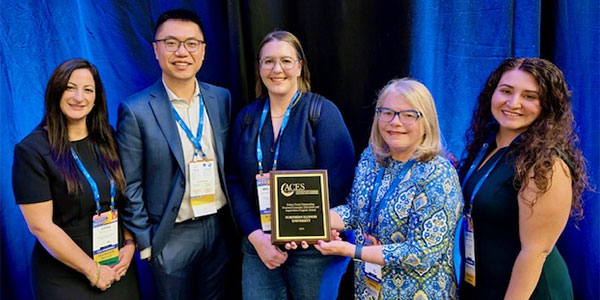
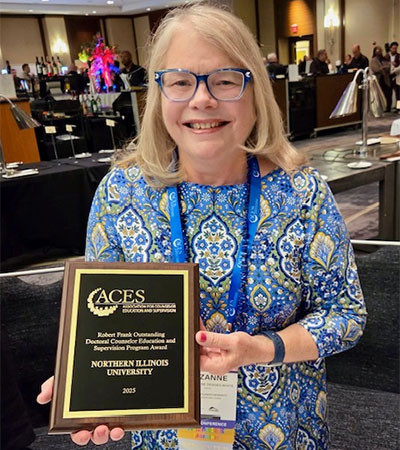
Given by the Association for Counselor Education and Supervision, the Robert Frank award honors a counselor education program that exemplifies the essence of the namesake’s career as a counselor educator – and, yes, that “essence” is standards and innovation.
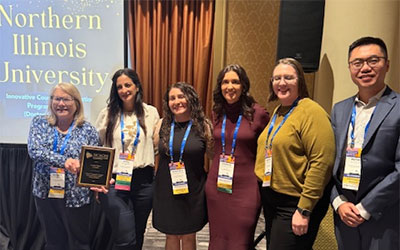
Jenna Alvarez (third from right), president of North Central ACES, congratulates Suzanne Degges-White, Dana Isawi, Yenitza Guzman, Melissa Fickling and Peitao Zhu.
Other awards presented during October’s ACES annual convention in Philadelphia included several from the North Central Association for Counselor Education and Supervision (NCACES), which honored NIU with the Innovative Counselor Education Program Award-Doctoral Program.
Peitao Zhu, associate professor and program co-coordinator, calls himself “lucky to have such a wonderful team of colleagues who are dedicated, collaborative and open to change.”
“While our Ph.D. program has always had a great foundation, I believe it has transformed significantly within the past few years,” says Zhu, who received the NCACES Deanna Hawes Outstanding Mentor Award.
“We truly embrace the spirit of continuous improvement. We have implemented numerous curricular changes and initiatives to intentionally scaffold and support out students’ scholarly and leadership development,” he says. “As a result, many of our students are now emerging leaders at the regional and national levels, receiving grants, awards and leadership opportunities.”
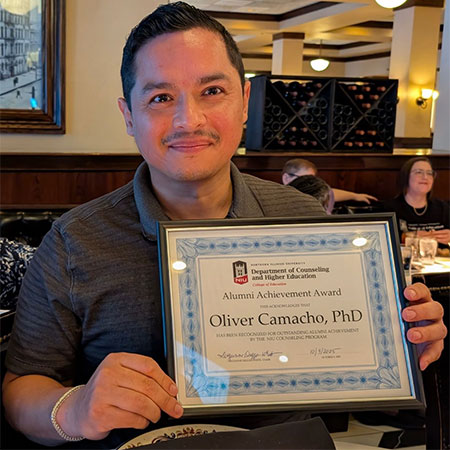
Oliver Camacho, the Department of Counseling and Higher Education’s 2025 Alum of the Year.
Yenitza Guzman, assistant professor, appreciates the source.
“Being awarded as a department is a true honor, especially because we were nominated by our own students who know the great deal of effort we put into our programs, classes and research,” Guzman says. “I’m eternally grateful and motivated to continue to live up to the standards of being an exemplary program for years to come.”
For colleague Melissa Fickling, “the recognition means that our students and our peers agree that we are doing something more than just delivering coursework. It means we are really having an impact on our students professionally and even personally.”
“Our program is one of the oldest CACREP-accredited programs in Illinois and in the country. I think this award speaks to our commitment to standards while still maintaining our identity as a distinct program that evolves with the needs of our local stakeholders,” says Fickling, an associate professor.
“Being grounded in our national standards while maintaining a distinct identity is something our prospective and current students see, and our alumni appreciate about their training with us,” she adds. “We always want to live up to the high standards and expectations of our students who invest so much of their time and resources into their professional preparation.”
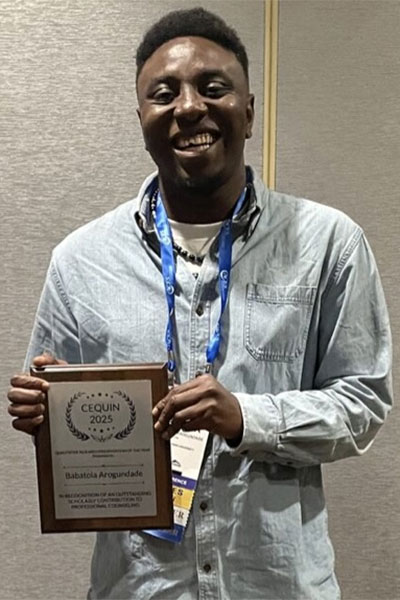
Babatola Arogundade
The faculty achieve just that, says Degges-White of the group that also includes Kimberly A. Hart, Dana Isawi, Injung Lee and TJ Schoonover.
“We have faculty who graduated from R1 institutions who choose to come here. They bring those skill sets and infuse the counseling program with that knowledge and expertise. It makes me so proud to see what they’ve done,” she says, “and also to be part of a team that wants to make the world a better place and wants their program to excel.”
Proof of NIU’s impact came during the Philadelphia convention, where two current students and one recent alumna also were honored.
Babatola Arogundade received the ACES Qualitative Interest Network Qualitative Research Presentation of the Year and the NCACES Research Grant along with recognition among the NCACES Emerging Leaders, a distinction similarly given to Huskie classmate Yanfei Mao.
Mao also received a research grant from the North Atlantic Region of the Association of Counselor Education and Supervision.
Alumna Priyanka Jha, a May 2025 graduate, received the NCACES Research Grant and the NCACES Emerging Leaders salute.
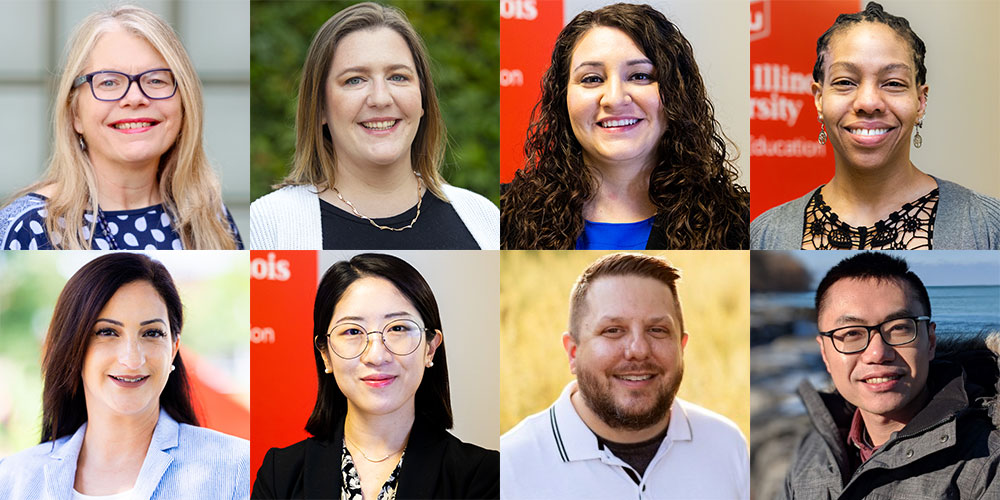
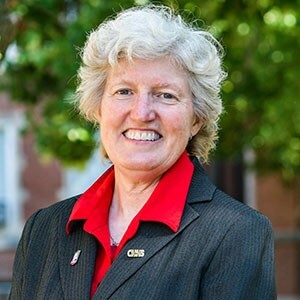
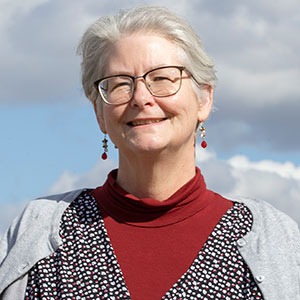
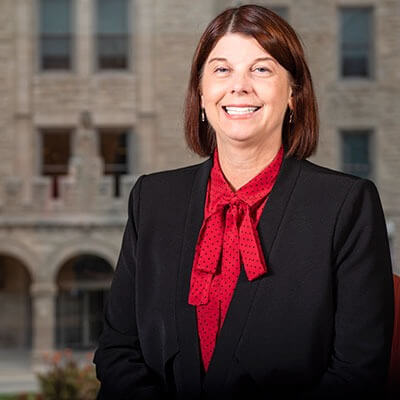
Top: Suzanne Degges-White, Melissa Fickling, Yenitz Guzman and Kimberly A. Hart. Bottom: Dana Isawi, Injung Lee, TJ Schoonover and Peitao Zhu.
Northern Illinois University is a student-centered, nationally recognized public research university, with expertise that benefits its region and spans the globe in a wide variety of fields, including the sciences, humanities, arts, business, engineering, education, health and law. The Wall Street Journal and CollegeNET recognize NIU as a leading institution for social mobility, or helping its students climb the socioeconomic ladder. Through its main campus in DeKalb, Illinois, and education centers for students and working professionals in Chicago, Naperville and Rockford, NIU offers more than 100 areas of study while serving a diverse and international student body.
Date posted: December 3, 2025 | Author: Mark McGowan | Comments Off on NIU faculty of Counseling receive national award recognizing excellence in standards, innovation
DEKALB, IL — What motivates educators to devote their lives to the process of teaching and learning?
How do they find the energy to climb out of bed each morning, fill their water bottles, pack their lunches and drive through the darkness to their schools? How would they describe their work? How do they truly come alive when students are present, not only physically but also mentally?
Collectively, the trio has more than two decades of experience, ranging from two years by the most-recent graduate to 13 by the veteran of the group.
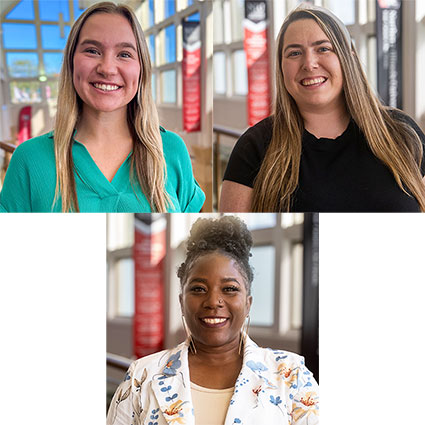
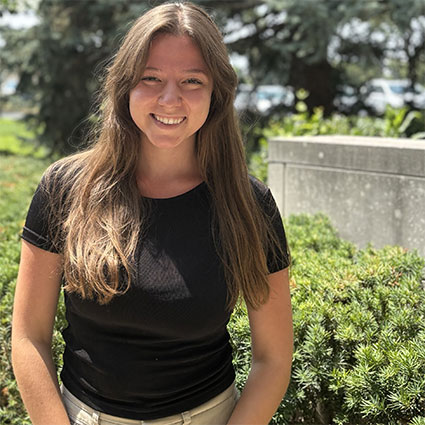
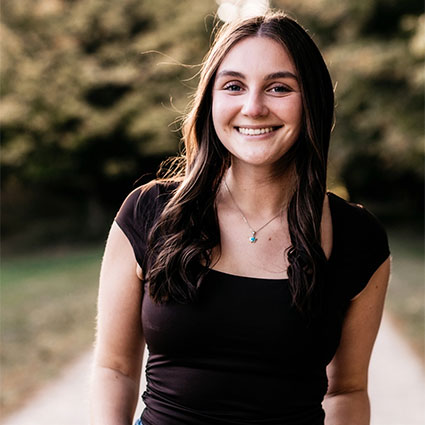
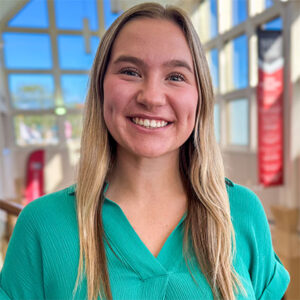
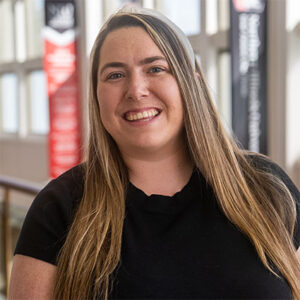
Clockwise, from top left: Grace DeSmedt, Ashley Manor and Dominique Yackley.
Grace DeSmedt, Ashley Manor and Dominique Yackley allowed university cameras to capture all of those moments as they interact with students and colleagues – and as they speak from the heart during off-camera interviews.
What’s revealed on the screen is not only their power to reach and shape the minds of their students but also the quality of their preparation in their College of Education degree programs, important information not only for parents and families but also for future teachers.
“In a time when once-respected professions are questioned, and teaching is too often misunderstood, ‘A Teacher’s Shoes’ returns the spotlight to where it rightfully belongs – to the teachers shaping the future,” says Todd Gilson, the college’s associate dean of Research, Resources and Innovation who oversees Morgridge operations. “I am privileged to be part of this story.”
Please RSVP: While registration is not required, we encourage you to please RSVP so we can plan accordingly and acknowledge those attending.
Kristen Aragon and Kimberly Teal, the NIU graduate assistants currently managing the Morgridge office, are the brains behind the project.
Angela Johansson
Taking inspiration from “Why I Teach,” a 2024 documentary released by the Nashville Public Education Foundation, Aragon and Teal knew they wanted to emulate that earlier work’s start-to-finish glimpse of a teacher’s day.
Creative guidance and production oversight came from Angela Johansson, the NIU Foundation’s director of Marketing and Communications who helped Aragon and Teal focus their vision; outline their messaging and goals; plan and carry out the project; and secure resources.
“We really wanted to highlight not just what they do in the classroom from after the bell rings at 9 o’clock to 3 o’clock,” Aragon says, “but what their whole day looks like.”
For Teal, the undertaking made her “very appreciative of teachers” and its visual demonstration that “teachers have that ‘extra’ aspect.”
“Dominque, Ashley and Grace are diverse and representative of teachers in our community, and so we’re giving them the opportunity to speak on behalf of teachers and to let the community ask the questions they might have because, in reality, teachers are given our children eight hours a day,” Teal says.
“It’s important that we just understand where they’re coming from, why they’re teaching what they are and how understanding who they are as people also goes into how they’re teaching,” she adds, “so I’m really excited to show that to the community that there’s so much that goes into that.”
Kimberly Teal
Meanwhile, she says, “the teachers wanted to show what they’re doing – and so did their students” while NIU Foundation multimedia production specialist Matthew McCanna-Molina and freelance videographer Jenna Stewart were on the scene.
“The teachers are so excited about this,” Teal says. “The videographers mentioned multiple times to us that they truly saw the students blossom while they were there, and the teacher said, ‘Wow, they’re the best-behaved they’ve ever been.’ ”
She hopes that viewers realize “that it can be harder now to be a teacher because you’re juggling so many aspects. We’re showing that they’re juggling it all, that they’re doing their best and that giving grace in every scenario is probably a good strategy.”
For the two graduate assistants, both of whom are speech-language pathology master’s students in the College of Health and Human Sciences, “A Teacher’s Shoes” was – well, a teacher itself.
“I think a lot about what we’re capable of,” Teal says.
“I like the idea that no idea is too big, and I think that Dr. Gilson has really made that the forefront of our job this year – if you are passionate about it, you can do it. That’s shown me to take that through my career,” she adds, “and that’s the most important part. If you see something that has a need, or you see someplace where a little extra effort could be put in, and you are there to do it, even the small things make a big difference.”
Kristen Aragon
Aragon, who plans to focus her career on pediatrics and school-age children, the insight from the production is invaluable – not from just the hours and hours of video footage but from the collaborative process itself.
“It’s made me think about how I can work with others,” Aragon says.
“Right now, I’m lucky enough to be able to do one of my clinical rotations in a school, and I’m knowing what the teachers around me are doing on their off-time with lesson plans and grading,” she adds. “Every day, I’ll hear a teacher say, ‘I had a dream about this student last night – and here’s something that I should do that’ll benefit them.’ They’re coming up with these ideas when they’re not on school hours.”
Gilson is pleased with these outcomes.
“As I advance in my career, one thing becomes increasingly clear: Graduate students often have the best ideas. Unbound by pressures, expectations or limitations, they see problems and act with purpose,” Gilson says.
“Kristen and Kim might never lead another video project in their lives, but they will lead. They will advocate for others, tell important stories and collaborate toward common goals,” he adds, “and ‘A Teacher’s Shoes’ is a mechanism that cultivates all these skills. I am confident that everyone involved will carry forward the lessons learned into their professional lives.”
ABOUT THE TEACHERS
Grace DeSmedt
Grace DeSmedt, who earned her B.S.Ed. in Physical Education in 2023, is on the faculty of Oswego High School, where she teaches sophomore P.E. and freshman health.
The graduate of the Department of Kinesiology and Physical Education also coaches dance at Oswego East.
She considers herself “passionate about helping students learn the importance of physical health and wellness and encouraging them to lead active, balanced lifestyles.”
While at NIU, DeSmedt was active in the KNPE Majors Board and presented at three state conferences. Named the KNPE SHAPE Major of the Year, which allowed her to attend the SHAPE National Convention in Seattle, she mentors current KNPE students.
Ashley Manor
Ashley Manor, who teaches geometry in the special education program at DeKalb High School, earned her B.S.Ed. in Special Education: Learning Behavior Specialist I in 2020.
Graduating from the Department of Special and Early Education at the height of the COVID-19 pandemic – and immediately finding her professional purpose at DHS through work with her colleagues, administration and, most of all, students – Manor remains “passionate about creating inclusive, supportive learning environments that meet the diverse needs of her students.”
She has “a strong commitment to individualized instruction and student growth” and “strives to empower every learner to reach their fullest potential as students as well as individuals.”
Dominque Yackley
Dominque Yackley earned her B.S.Ed. in Elementary Education in 2013 and her M.S.Ed. in Curriculum and Cultural Pedagogies in Social Justice in 2022.
The double-graduate of the Department of Curriculum and Instruction teaches fifth-grade at Founders Elementary School in DeKalb.
Passionate “about educating youth and advocating for a more culturally rich curriculum at all levels of teaching and learning,” Yackley was a 2023 finalist for the Chicago-area Golden Apple and a 2020 nominee for District 428’s Wirtz Award for Excellence in Education.
She has mentored NIU students, designed district curriculum, participated in writing the district’s Diversity Plan and started the first elementary school-level photography and social justice clubs.
Northern Illinois University is a student-centered, nationally recognized public research university, with expertise that benefits its region and spans the globe in a wide variety of fields, including the sciences, humanities, arts, business, engineering, education, health and law. The Wall Street Journal and CollegeNET recognize NIU as a leading institution for social mobility, or helping its students climb the socioeconomic ladder. Through its main campus in DeKalb, Illinois, and education centers for students and working professionals in Chicago, Naperville and Rockford, NIU offers more than 100 areas of study while serving a diverse and international student body.
Date posted: November 4, 2025 | Author: Mark McGowan | Comments Off on NIU College of Education to host Nov. 12 screening, panel to debut ‘A Teacher’s Shoes’ documentary
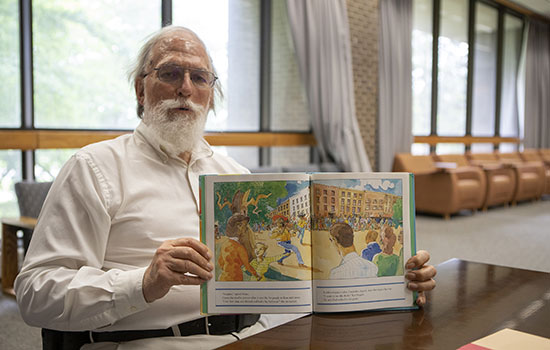
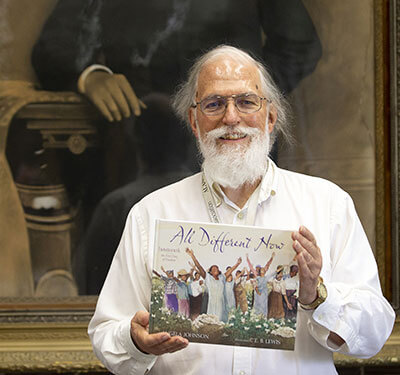
“And I looked under every rock I could think of,” says Ridinger, a professor and subject specialist librarian at Northern Illinois University’s Founders Memorial Library. “I knew what the holiday was, so I was expecting a more historical treatment, but almost everything that’s been written … is children’s books.”
Ridinger sees one positive result of that imbalance – “In a way, it’s good, because that gets them into more public libraries,” he says – and understands why the serious topic translates well to a younger audience.
“One is the very coherent subject: It’s easily described. It’s limited in scope. It’s something that happened once that has had long-term impact. It’s something that kids are able to buy into,” he says. “And there are a lot of good stories that came out of it; some talk about a child going to his very first Juneteenth celebration, what it is and why it’s important.”
Juneteenth marks June 19, 1865, the day that word of the Emancipation Proclamation and its freedom for enslaved African Americans finally reached Galveston, Texas, and the ears of the country’s final group to learn of President Lincoln’s action more than two years earlier.
“The people of Texas are informed that, in accordance with a proclamation from the executive of the United States, all slaves are free. This involves an absolute equality of personal rights and rights of property between former masters and slaves.”
Opal Lee, a 95-year-old former teacher and longtime champion of that cause, joined Biden at the signing ceremony in Washington, D.C. Five years earlier, the then-89-year-old walked from Fort Worth, Texas, to the nation’s capital to bring attention to the issue.
Lee is the subject of one of those children’s books: “Opal Lee and What It Means to be Free: The True Story of the Grandmother of Juneteenth,” by author Alice Faye Duncan and illustrator Keturah A. Bobo.
Another biography also has connections to the event.
“General Gordon Granger: The Savior of Chickamauga and the Man Behind ‘Juneteenth’ ” is author Robert C. Conner’s 2013 account of the life of the commander of U.S. troops in Texas who finally brought the news to Galveston.
Beyond those, Ridinger says, the list of “serious” histories is fairly short considering the 157 years that have passed:
“Hidden Black History: From Juneteenth to Redlining” by Amanda Green Jackson.
“Island of Color: Where Juneteenth Started” by Izola Ethel Fedford Collins.
“Juneteenth at Comanche Crossing” by Doris Hollis Pemberton.
“Juneteenth! Celebrating Freedom in Texas” by Anna Pearl Barrett.
“Juneteenth Texas: Essays in African-American Folklore” by Francis Edward Abernethy.
“Juneteenth: Ring the Bell of Freedom” by Lula Briggs Galloway.
“On Juneteenth” by Annette Gordon-Reid.
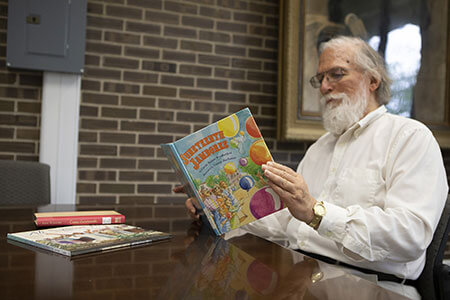
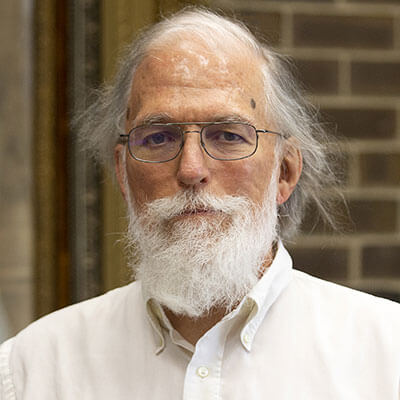
Robert Ridinger
However, books on Juneteenth that are geared to children are plentiful – and, in the new millennium, coming frequently.
Ridinger’s list begins in 1978 with “Let’s Pretend: Mae Dee and Her Family Join the Juneteenth Celebration,” the third in a series of stories by Ada DeBlanc Simond with drawings by Sarochin Shannon.
Five more children’s books that touch on Juneteenth followed before 2000, he found, but that number quintupled with another 25 published since 2002.
“That’s only been happening recently, which is part of the retrieval of African American history. It fits right into the whole genre of, ‘Let’s go back and dig this up to make certain that everybody knows about it so that it can’t be lost and forgotten again,’ ” says Ridinger, who used the WorldCat database for his search.
“Now, in this case, with Juneteenth finally being made a national holiday, it’s not going to be forgotten. But with that, it means people are going to be asking, ‘What is it, and why is it important? Why did the president find it necessary to make this date a national holiday?’ – so I would expect to see a lot more books,” he adds.
“Unless you know African Americans, and you’ve learned about it from them, you’re not going to know what this is all about. For those of us who weren’t fortunate enough to be born Black, we’re going to need to have books on this. And if they’re children’s books, so be it – as long as people can learn. I suspect we’ll see a whole bunch of new stuff coming out in the next five to 10 years just because the demand will be there.”
Robert Ridinger
Ridinger, who joined NIU in 1981 and is the subject specialist librarian for African American Studies (among 11 other topics), is curious to know how many of the out-of-print books he found might enjoy new life in reissue or electronically.
Some of the existing works are currently available at Founders, and he has supplied his complete list to Leanne VandeCreek, the library’s associate dean for Public Services with oversight of the on-campus collection.
He also is confident that the DeKalb and Sycamore public libraries will have some of the books on their shelves, and points interested readers to the PrairieCat Library Catalog that serves 21 counties in northern Illinois as another avenue to borrow books.
“Fortunately, searching our catalog for something on Juneteenth is a very unique search term. You can’t possibly get anything that isn’t relevant. Juneteenth has everything, wrapped in one term,” Ridinger says. “If people use that as a search term, whether it’s with us or statewide, they’ll pull up whatever it out there, which is good.”
Northern Illinois University is a student-centered, nationally recognized public research university, with expertise that benefits its region and spans the globe in a wide variety of fields, including the sciences, humanities, arts, business, engineering, education, health and law. Through its main campus in DeKalb, Illinois, and education centers for students and working professionals in Chicago, Naperville, Oregon and Rockford, NIU offers more than 100 areas of study while serving a diverse and international student body.
Date posted: June 1, 2022 | Author: Mark McGowan | Comments Off on On this day in 1865
compiled by Robert Ridinger,
NIU University Libraries, rridinger@niu.edu
Histories
1983 “Juneteenth at Comanche Crossing,” by Doris Hollis Pemberton | Austin, Texas | Eakin Publications, c1983.1996
“Juneteenth Texas: Essays in African-American Folklore,” by Francis Edward Abernethy | Denton, Texas | University of North Texas Press, 1966.
1998 “Juneteenth: Ring the Bell of Freedom,” by Lula Briggs Galloway [edited by Lula Briggs Galloway, Audrey Beatty, 1st ed. (Saginaw, Mich.) ] | National Association of Juneteenth Lineage, c1998
1999 “Juneteenth! Celebrating Freedom in Texas,” by Anna Pearl Barrett | Austin, Texas | Eakin Press, c1999.
The author recalls her childhood in Galveston, Texas, describing the town’s celebration of Juneteenth, in honor of the day Texas granted its African slaves freedom.
2004 “Island of Color: Where Juneteenth Started,” by Izola Ethel Fedford Colllins | Bloomington, Ind. | AuthorHouse, 2004.
On this island called Galveston, Texas, African Americans have a unique position in the history of the world. Natives of this city, and incoming residents, who were people of color, were the pioneers of much of the civilization that occurred in this part of the world. “Juneteenth” has become a term used by persons all over the nation who recognize the validity of the term now synonymous with freedom of the former black-skinned slaves. This term comes from the fact that, in Galveston, Texas, General Granger arrived by ship with orders that were read to the public at Ashton Villa on June 19, 1865. He arrived in the harbor on June 17, 1865, and the news leaked out from the deckhands on that date. But the dates are both worthy of the title “Juneteenth,” which is the way the former slaves passed down the news to their progeny. This news came from the official document called the Emancipation Proclamation, which was a law signed by President Abraham Lincoln on January 1, 1863, and sent to the southern states involved in the Confederacy. Texas was the first of these states to receive this law, and Galveston was the entry port, and therefore had the distinction of being the first place to embrace the freedom of persons of color in the southern part of the new United States of America. There were free men and women of color in Galveston before this announcement was made, so the progress of the city toward racial harmony was already underway. Pioneers of all kinds of institutions and businesses came from Galveston. It is no accident that Galveston has been a city of “firsts.” The titles of “first” have been proven for the state of Texas, because these were recorded and documented in many journals and publications. Some visionaries of African descent have been recorded by name, but since the freed persons of color usually could not read or write (they were forbidden to learn to read or write in slavery), there is little written from their perspective. It is the purpose of this book to reveal what was written by a man of color, my grandfather, who came to Galveston with his family as a small child, immediately after freedom was declared. His words are proven to be true by later documentation of official sources in the city. In addition, recorded words of interviews with numbers of citizens who were alive when this book was begun have been used and preserved on audio tapes. Quite a few persons who contributed to this book were African Americans who were imported to Galveston for the sole purpose of educating its segregated citizens in their churches and schools.
2013 “General Gordon Granger: The Savior of Chickamauga and the Man behind ‘Juneteenth,’ ” by Robert C. Conner | Casemate | 2013
This is the first full-length biography of the Civil War general who saved the Union Army from catastrophic defeat at the Battle of Chickamauga and went on to play major roles in the Chattanooga and Mobile campaigns. Immediately after the war, as commander of U.S. troops in Texas, his actions sparked the “Juneteenth” celebrations of slavery’s end, which continue to this day.
2021 “Hidden Black History: From Juneteenth to Redlining,” by Amanda Green Jackson | Minneapolis, Minn. | Lerner Publications, 2021
Many important moments in history have not been taught in schools or explored in the mainstream media. These events often include people of color and involve Black history. This “whitewashing” of history, intentional or not, puts all Americans at a disadvantage. Learn about Black history moments that shaped America, from the arrival of the first enslaved Africans in Virginia in 1619 to the Freedom Summer of 1964 and read about efforts to reshape how we teach Black history in schools in the 21st century.
“On Juneteenth,” by Annette Gordon-Reid | New York | Liveright, 2021
“It is staggering that there is no date commemorating
the end of slavery in the United States.” – Annette Gordon-Reed
The essential, sweeping story of Juneteenth’s integral importance to American history, as told by a Pulitzer Prize-winning historian and Texas native. Interweaving American history, dramatic family chronicle, and searing episodes of memoir, Annette Gordon-Reed, the descendant of enslaved people brought to Texas in the 1850s, recounts the origins of Juneteenth and explores the legacies of the holiday that remain with us. From the earliest presence of black people in Texas-in the 1500s, well before enslaved Africans arrived in Jamestown-to the day in Galveston on June 19, 1865, when General Gordon Granger announced the end of slavery, Gordon-Reed’s insightful and inspiring essays present the saga of a “frontier” peopled by Native Americans, Anglos, Tejanos and Blacks that became a slaveholder’s republic. Reworking the “Alamo” framework, Gordon-Reed shows that the slave-and race-based economy not only defined this fractious era of Texas independence, but precipitated the Mexican-American War and the resulting Civil War. A commemoration of Juneteenth and the fraught legacies of slavery that still persist, “On Juneteenth” is stark reminder that the fight for equality is ongoing.
“Opal Lee and What It Means to be Free: The True Story of the Grandmother of Juneteenth,” by Alice Faye Duncan; illustrations by Keturah A. Bobo | Nashville, Tenn. | Thomas Nelson, 2021
The true story of Black activist Opal Lee and her vision of Juneteenth as a holiday for everyone celebrates Black joy and inspires children to see their dreams blossom. Growing up in Texas, Opal knew the history of Juneteenth, but she soon discovered that many Americans had never heard of the holiday that represents the nation’s creed of “freedom for all.” Every year, Opal looked forward to the Juneteenth picnic – a drumming, dancing, delicious party. She knew from Granddaddy Zak’s stories that Juneteenth celebrated the day the freedom news of President Lincoln’s Emancipation Proclamation finally sailed into Texas in 1865, over two years after the president had declared it! But Opal didn’t always see freedom in her Texas town. Then one Juneteenth day, when Opal was 12, an angry crowd burned down her brand new home. This was not freedom at all. She had to do something! Opal Lee spent the rest of her life speaking up for equality and unity. She became a teacher, a charity worker and a community leader. At the age of 89, she walked from Fort Worth, Texas to Washington, D.C., to gain national recognition for Juneteenth. She was present at the signing of the proclamation by President Joseph Biden in June 2021 that made Juneteenth a national federal holiday and fulfilled her dream.
Children’s Books
1978 “Let’s Pretend: Mae Dee and her Family join the Juneteenth Celebration,” the third in a series of stories by Ada DeBlanc Simond; drawings by Sarochin Shannon | Austin, Texas | Stevenson Press, c1978.
During the early 1900s, a young Black girl and her family participate in the annual Emancipation celebration in Austin, Texas.
1993 “The Day God Came,” by T. Berry; illustrated by Paul Hoffman | Winston-Derek, 1993.
A book about freedom, faith and how one Black woman kept her family from losing hope during their years in bondage.
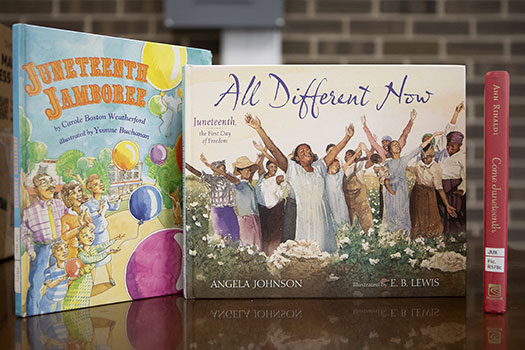
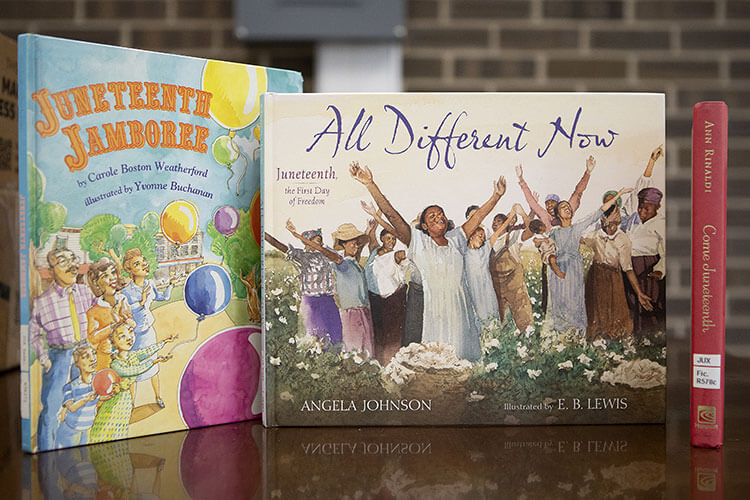
1995 “Juneteenth Jamboree,” by Carole Boston Weatherford and Yvonne Buchanan | New York | Lee & Low Books, c1995.
Cassandra and her family have moved to her parents’ hometown in Texas, but it doesn’t feel like home to Cassandra until she experiences Juneteenth, a Texas tradition celebrating the end of slavery.
1996 “African-American Holidays,” by Faith Winchester | Bridgestone Books, c1996.
1997 “Freedom’s Gifts: A Juneteenth Story,” by Valerie Wesley; illustrated by Sharon Wilson | Simon & Schuster Books for Young Readers, c1997.
Juneteenth – the day Texan slaves found out they had been freed, two years after Abraham Lincoln issued the Emancipation Proclamation – is June’s favorite holiday. This year, though, her cousin Lillie will be there for the Juneteenth picnic. That could spoil everything. Lillie is used to celebrating the Fourth of July, like everyone else, and has no interest in Southern traditions. But Aunt Marshall, the girls’ great-great-aunt, knows the significance of Juneteenth – she was about June’s age on June 19, 1865, when the celebration began in Texas – and she just may be able to convince Lillie that Juneteenth is not a dumb old slave holiday, but a part of her heritage, and the first of many of freedom’s gifts.
1998 “Juneteenth Freedom Day,” by Muriel Branch Miller | New York | Cobblehill Books, 1998.
Provides the story of how this holiday, marking the Emancipation Proclamation, spontaneously began on June 19, 1865, in Galveston, Texas, and grew from there into a nationwide celebration of freedom among African Americans.
2002 “Juneteenth: A Celebration of Freedom,” by Charles A. Taylor with illustrations by Charles A. Taylor II | Greensboro, N.C. | Open Hand Publishing, c2002.
“Juneteenth: A Celebration of Freedom” expresses the jubilation that occurred June 19, 1865 when African American people in Texas were the last to be freed from the horrors of U.S. slavery, over two months after the end of the Civil War and two-and-a-half years after Abraham Lincoln’s Emancipation Proclamation.
2003 “Juneteenth: A Day to Celebrate Freedom from Slavery,” by Angela Leeper | Enslow, 2003
On June 19, 1865, slaves in Texas were formally notified that they had been emancipated or given their freedom. This day became an annual holiday known as Juneteenth, and it is celebrated today with food, fireworks and community and family parties that commemorate the end of slavery in the United States. Author Angela Leeper explains the history of slavery from the first arrival in Jamestown in 1619 to the end of the Civil War and describes Juneteenth celebrations held today all across the country. Full-color photographs and a craft section help the reader understand more about Juneteenth, and why all Americans should celebrate freedom
“Juneteenth Day,” by Denise M. Jordan | Heinemann Library, 2003
Each book in the Holiday Histories series describes one of America’s holidays for very young readers by exploring the history of each one and showing the reasons why it is important. In this particular volume, Denise M. Jordan explains how Juneteenth Day is the oldest African American holiday that celebrates the very last day of slavery in the United States. Although Abraham Lincoln ordered in the Emancipation Proclamation that all slaves were to be freed on January 1, 1863, the slaves in Texas were not told until June 19, 1865. Jordan explains how it was against the law to teach slaves how to read and write, which resulted in them pronouncing some words differently, why is how during the telling and retelling of the last days of slavery June 19 became Juneteenth. This book provides a summary of slavery in the United States, covering how the argument over slavery eventually started the Civil War. But most of the book focuses on how the rumors of freedom and the presence of Union troops in Texas finally resulted in Union General Gordon Granger reading an order declaring “all slaves are free.” The last part of the book looks at how freedom was celebrated both then and now, as the celebrations that started in the churches eventually became big parades in cities like Houston, Dallas and Fort Worth. Each page of this book contains a paragraph of simple text and either a historic illustration or contemporary photograph. The back of the book includes a list of important dates related to the topic of Juneteenth, from 1860 when Lincoln was elected president to 1994 when a movement started to make Juneteenth Day a national holiday. There is also a glossary of key words and a trio of books where very young readers can read more about the holiday. Other books in the series look at not only the “main” holidays like Halloween, Independence Day, and Thanksgiving Day, but the ones that do not always get mentioned like Cinco de Mayo and Columbus Day. This is a nice series of books for introducing the holidays to younger students
“Juneteenth: Celebrating the End of Slavery,” by Janey Levy, 1st ed. | New York | Rosen Pub. Group, 2003.
Explores the roots of the Juneteenth holiday that celebrates the end of slavery in the United States
2005 “Juneteenth,” by Natalie M. Rosinsky | Compass Point Books, 2005
Describes how the holiday of Juneteenth began and discusses its traditions, symbols, how the holiday has changed and how it is observed today.
2006 “Juneteenth,” by Vaunda Micheaux Nelson and Drew Nelson, illustrations by Mark Schroder | Millbrook Press, 2006
June 19, 1865, began as another hot day in Texas. Enslaved African Americans worked in fields, in barns and in the homes of the white people who owned them. Then a message arrived. Freedom! Slavery had ended! The Civil War had actually ended in April. It took two months for word to reach Texas. Still the joy of that amazing day has never been forgotten. Every year, people all over the United States come together June 19 to celebrate the end of slavery. Join in the celebration of Juneteenth, a day to remember and honor freedom for all people.
2007 “Come Juneteenth,” by Ann Rinaldi | Orlando, Florida | Harcourt, 2007.
Sis Goose is a beloved member of Luli’s family, even though she was born a slave. But the family is harboring a terrible secret. And when Union soldiers arrive on their Texas plantation to announce that slaves have been declared free for nearly two years, Sis Goose is horrified to learn that the people she called family have lied to her for so long. She runs away – but her newly found freedom has tragic consequences.
“Juneteenth: Jubilee for Freedom,” by June Preszler | Capstone Press, 2007
Describes the history and meaning of the holiday known as Juneteenth, and how it is celebrated today.
2008 “Juneteenth,” by Denise M. Jordan, 2nd ed. | Chicago | Heinemann Library, c2008.
It is June 19 and you see a parade with music and dancing. But do you know why? It is Juneteenth, of course!
2010 “Juneteenth,” by Robin Nelson | Lerner Publications Co., 2010
Examines the history of Juneteenth and describes some of the ways the holiday is celebrated.
“Juneteenth,” by Lynn Peppas | Crabtree Pub. Co., 2010
Every year on June 19, people of all backgrounds celebrate the day that African Americans were freed from slavery in the United States. The occasion is marked by picnics and even rodeos that celebrate famous Black cowboys!
2012 “Juneteenth,” by Julie Murray | ABDO Pub., 2012
Easy-to-read text paired with colorful photos and informative captions introduces readers to a meaningful holiday, Juneteenth. Readers will learn the history of Juneteenth, including slavery in the United States, the American Civil War and the birth of Juneteenth as a Texas state holiday.
2014 “All Different Now: Juneteenth, the First Day of Freedom,” by Angela Johnson; illustrated by Earl B. Lewis | New York | Simon & Schuster Books for Young Readers, 2014.
In 1865, members of a family start their day as slaves, working in a Texas cotton field, and end it celebrating their freedom on what came to be known as Juneteenth.
“Journey to Galveston,” by Melodie A. Cuate | Lubbock, Texas | Texas Tech University Press, 2014
A struggle over a bowl of popcorn begins another time-traveling adventure for Nick, Jackie and Hannah. When Mr. Barrington’s trunk magically appears on the Taylors’ kitchen table, a family of slaves steps out, followed by a snapping dog. Jackie is mistaken for an escaped slave and kidnapped by a hideous man. Trying to save her, Hannah and Nick are transported back to June 1865 only to discover that even though the Civil War has ended months before, many Texas plantation owners still own slaves. Befriended by twins Sam and Lily, the time travelers witness horrific truths of plantation life: whippings, beatings, and families being torn apart. After Lily is sold to another plantation in Galveston, they devise with Sam a plan to rescue her. Their race against time takes them through a spooky graveyard and over a river teeming with alligators, with vicious hounds in close pursuit. With the absorbing pace and historic detail that Mr. Barrington’s Mysterious Trunk fans have come to expect, Cuate leads her protagonists, and her young readers, to the first Juneteenth.
2015 “Juneteenth for Mazie,” by Floyd Cooper | Capstone Young Readers, a Capstone imprint, 2015
Mazie is ready to celebrate liberty. She is ready to celebrate freedom. She is ready to celebrate a great day in American history – the day her ancestors were no longer slaves. Mazie remembers the struggles and the triumph, as she gets ready to celebrate
“The Story of Juneteenth: An Interactive History Adventure,” by Steven Otfinoski | Capstone Press, a Capstone imprint, 2015
The Emancipation Proclamation and the Civil War have brought an official end to slavery, yet some Southern slave owners are refusing to comply. The road to freedom is still long and hard for many African Americans, but you’re not giving up. Will you: Overcome obstacles as you make your way north from Texas, looking to begin a new life of freedom? Seek out your family, from whom you were separated as a child, after emancipation? Fight back when you take work as an apprentice but find that you’re still treated as a slave? YOU CHOOSE offers multiple perspectives on history, supporting Common Core reading standards and providing readers a front-row seat to the past.
2016 “The History of Juneteenth,” by Maximilian Smith | Gareth Stevens Pub., 2016
Juneteenth is usually celebrated June 19. It honors the day in 1865 when Union troops swept into Galveston, Texas, and told the elated slaves there that they were free. This accessible volume delves into the American Civil War, the Emancipation Proclamation and the events that led to this special holiday for African Americans and everyone who celebrates the end of slavery in the United States. Carefully chosen photographs reflect this special commemoration, both in the past and today.
2017 “Juneteenth,” by R.J. Bailey | Bullfrog Books, 2017
A preschool and up nonfiction book about the African American holiday of Juneteenth when the slaves in Texas found out they were free including how to celebrate and the meaning of the holiday.
“Juneteenth,” by Joanna Ponto and Angela Leeper | Enslow Publishing, 2017
This book is a great overview of the history of Juneteenth for reading aloud to kids in lower- and mid-elementary. It has a few pictures but is more text-heavy. It has enough background on slavery in the U.S. to help explain the importance of the holiday even for kids who haven’t heard much of the history before. It also explains current Juneteenth celebrations around the nation and includes a recipe for corn bread and a craft idea.
2018 “Let’s celebrate Emancipation Day & Juneteenth,” by Barbara deRubertis | Kane Press, 2018
In the 1800s, abolitionists like Harriet Tubman, Frederick Douglass and Sojourner Truth fought for freedom from slavery for all African Americans. They fought with speeches, songs, newspapers, and even with daring rescue missions! Every year on both Emancipation Day and Juneteenth we honor and continue their fight for freedom and equality. Holidays & Heroes brings to life the people whose holidays we celebrate throughout the year. Enriched with colorful historical images, books in this series will engage children in the stories behind our holidays and the people they honor.
2019 “Juneteenth,” by Rachel Grack | Bellwether Media, 2019
On June 19, 1865 – two years after the Emancipation Proclamation – Galveston, Texas, became the last place in the country to learn the slaves were free. Today, Juneteenth is a joyful occasion with parades, speeches, music and more! This engaging book teaches the fascinating origins and traditions of Juneteenth, honoring the freedom of African Americans.
2020 “The Story behind Juneteenth,” by Jack Reader | PowerKids Press, 2020
Juneteenth, which is celebrated each year on June 19, commemorates the end of slavery in the United States. This holiday began in 1865, more than two years after President Lincoln issued the Emancipation Proclamation. News spread much slower back then, and when slaves in Texas finally learned of their freedom, the holiday was born. In this book, readers are given an in-depth look at the history of Juneteenth, including the events leading up to its creation. Readers will love learning about how this important moment in U.S. history is celebrated each year.
2021 “Juneteenth,” by Lisa A. Crayton | North Mankato, Minnesota | Pebble, 2021.
Juneteenth celebrates the emancipation of enslaved people in the United States. Across the country, people observe the day with speeches, poetry readings, festivals, picnics, street fairs, and family reunions. It is a day for people to come together and continue working toward equality. Readers will discover how a shared holiday can have multiple traditions and be celebrated in all sorts of ways – provided by publisher.
“Juneteenth,” by Emily Dolbear | The Child’s World, 2021
Learn the basics about Juneteenth, also called Emancipation Day or Freedom Day, and how the holiday celebrates the emancipation of slaves in the United States. Additional features include detailed captions and sidebars, critical-thinking questions, a phonetic glossary, an index and sources for further research.
“Celebrating Juneteenth,” by Jody Jensen Shaffer and Kathleen Petelinsek | Mankato | The Child’s World, 2021.
Juneteenth, also called Freedom Day and Emancipation Day, commemorates the ending of slavery in the United States. Readers will discover the history behind the day and find out ways to celebrate on their own. Additional features to aid comprehension include activities and poetry, informative sidebars, a table of contents, a phonetic glossary, sources for further research, an index and an introduction to the author and illustrator.
Date posted: June 1, 2022 | Author: Mark McGowan | Comments Off on Juneteenth Reading List
Tutors hired by NIU will focus on math and reading with children in third- through eighth-grades.
DeKalb, Ill. — The Northern Illinois University College of Education is teaming with the State of Illinois to provide tutoring that will support students whose learning has been impacted by the COVID-19 pandemic.
Priority is given to school districts that were disproportionately affected by the pandemic. Each district will identify its students who need tutors, the areas in which they need help and the in-person or online method of delivery.
Funding for the program comes from the federal government’s investment of nearly $8 billion in pandemic relief for Illinois schools; 90% was distributed directly to school districts.
NIU was awarded $3.4 million to serve as the coordinating hub for Region 2, which includes 16 counties in the northwest corner of the state: Boone, Bureau, Carroll, DeKalb, Henry, Jo Daviess, La Salle, Lee, Marshall, Ogle, Putnam, Rock Island, Stark, Stephenson, Whiteside and Winnebago.
Responsibilities include the hiring, training and oversight of hundreds of people who will provide “high-impact” tutoring – an evidence-based practice that accelerates student learning – either one-on-one or in small groups of no more than three students each.
Qualified tutors can include candidates in teacher-licensure programs, which will allow NIU students to gain real-world experience while still in school.
Tutors hired by NIU will focus on math and reading with children in third- through eighth-grades, said Jennifer Johnson, senior director of the Office of Student Success in the NIU College of Education.
“This is high-impact tutoring. This is not ‘homework help.’ This is acceleration, not remediation,” Johnson said. “This is directly aligned with curriculum and with strategies identified in the Illinois State Board of Education’s Learning Renewal initiative.”
Math and reading are “foundational content areas that form the basis of students’ preparation to succeed in all other academic areas,” said Laurie Elish-Piper, dean of the NIU College of Education.
NIU’s selection as the Region 2 hub acknowledges “how we have been identified as a leader in the field of education and in ways that we can partner with school districts to support their needs and the needs of their students,” Elish-Piper said.
Such support also extends to NIU students.
“I’m excited for our teacher-candidates because this give them an additional opportunity for meaningful preparation toward becoming teachers and, because these are paid experiences, a way to help them pay for their education,” Elish-Piper said.
“Our hope is that, down the road in Year Two, we will incorporate some of these experiences into required clinical experiences so that students will complete paid internships where they’ll get academic credit,” she added. “They also will build relationships with individual students or small groups of students to develop their repertoire of instructional strategies.”
Elish-Piper also plans to collaborate with community college partners to offer jobs to their students interested in education careers “to get them involved, to build their own professional preparation and to help connect them to NIU, which would lead to smoother transfers.”
Northern Illinois University is a student-centered, nationally recognized public research university, with expertise that benefits its region and spans the globe in a wide variety of fields, including the sciences, humanities, arts, business, engineering, education, health and law. Through its main campus in DeKalb, Illinois, and education centers for students and working professionals in Chicago, Naperville, Oregon and Rockford, NIU offers more than 100 areas of study while serving a diverse and international student body.
Date posted: February 22, 2022 | Author: Mark McGowan | Comments Off on ‘Acceleration, not remediation’: NIU College of Education tapped to help COVID-driven Illinois Tutoring Initiative
DeKalb, Ill. — Northern Illinois University has pledged to enroll at least 160 new students – or more – through participation in the state’s Early Childhood Access Consortium for Equity Program.
The new Huskies will complete bachelor’s degrees in either Early Childhood Education, which would qualify them to teach PreK-2 in school settings, or in Human Development and Family Sciences’ (HDFS) child development emphasis to teach, or work with, infants and young children in community-based settings.
Funded by a federal investment of $200 million for the state of Illinois, the program subsidizes additional training, mentorships and scholarships for members of the “incumbent workforce” over the next two years.
“Adults in the incumbent workforce can now earn their bachelor’s degree in Early Childhood Education with professional educator licensure – and with no out-of-pocket costs, courses designed for their busy schedules and a success coach to ensure they persist and graduate,” Elish-Piper said.
“We are working with partner school districts to identify their paraprofessionals who qualify for the program,” she added, “which means they will be able to keep working and being paid while completing the program.”
Young children and their families also will benefit from the funding that “will go a long way to address the shortage of early childhood teachers,” Elish-Piper said.
“Because our graduates will also earn the Special Education and ESL/Bilingual endorsements, they will be extremely well-prepared to be great teachers,” she said. “I am hopeful that the success of this program inspires additional investments in preparing teachers by making programs accessible to working adults who will help Illinois diversify and grow the teaching workforce.”
Lynda Ransdell
Ransdell shares that goal.
“It represents an opportunity for engagement related to a very important societal issue – the education of young children,” the dean said.
Her college’s HDFS program also offers its students hands-on learning at the award-winning Child Development and Family Center, where one-on-one mentoring and support is provided daily by faculty and master teachers who are experts in the field.
“The center is a learning space where students can apply their knowledge to the education of young children, initiate the process of professional development and observe and engage in a variety of early education program models,” Ransdell said. “These include the implementation of an emergent curriculum model and community-level programming in the Preschool for All Expansion program.”
Both of their departments are already recruiting students who might qualify for the Early Childhood Access Consortium for Equity and are seeking the opportunity to enhance their careers.
As many or most prospective students are juggling work and family responsibilities, they will enjoy the assistance of “completion coaches” who will provide support for “how to do college,” including study skills, technology training, time management and tips for taking tests.
“Many early childhood workers find themselves ‘stuck’ in relatively low-paying positions, but they stay in the field because of their dedication to, and passion for, working with young children,” Hedin said.
At the same time, she added, “they find it difficult to move forward in their careers because of the financial burden of tuition, and the difficulty of working full-time while also attending classes. The consortium eliminates the financial barrier for the incumbent workforce.”
Thomas Pavkov
Pavkov agrees.
“The professional development challenges facing individuals in the incumbent workforce are significant,” Pavkov said. “The consortium will provide both a range of options for potential students to upskill their credentials and will also provide the crucial financial support needed to pay for educational expenses for individuals who may not have adequate financial resources to further their education.”
His HDFS faculty colleagues deliver curriculum “grounded in science and what we know about early childhood development and education.”
And, thanks to the degree’s emphasis on strong relationships between teacher-and-child, parent-and-child and teacher-and-parent, graduates have the skills to engage in relationships to facilitate the development and education of young children beyond the classroom.
“Our educational philosophy embraces methodological approaches that engage young children in active learning through play and exploration guided by their interests with teachers who serve as partners in their learning,” Pavkov said. “This approach is consistent with evidence-based practice, and equips our students to become employed in high-quality early education programming where these practices are implemented.”
Northern Illinois University is a student-centered, nationally recognized public research university, with expertise that benefits its region and spans the globe in a wide variety of fields, including the sciences, humanities, arts, business, engineering, education, health and law. Through its main campus in DeKalb, Illinois, and education centers for students and working professionals in Chicago, Naperville, Oregon and Rockford, NIU offers more than 100 courses of study while serving a diverse and international student body.
Date posted: November 29, 2021 | Author: Mark McGowan | Comments Off on NIU participating in statewide effort to bolster early childhood workforce
DeKalb, Ill. — Northern Illinois University is among only 46 four-year institutions saluted in the 2021 roster of “Great Colleges to Work For,” one of the country’s largest and most respected workplace recognition programs.
The university made its debut on the national list, which was unveiled Sept. 12, thanks to excellent results in categories of shared governance; faculty experience; and diversity, equity and belonging.
“This recognition highlights the things that make NIU an amazing and rewarding place to work, and confirms for me that our university community reflects our core values,” Freeman said.
“Giving our employees a strong voice to guide the direction of the university, and fostering a diverse, inclusive and welcoming community, are integral to the success of NIU, our faculty, staff and students,” she added. “I hope all Huskies share my pride in this acknowledgement. And, I hope that the recognition inspires us to keep working together to solve complex problems and to provide an equitable work environment.”
Scores are based on feedback collected from the ModernThink Higher Education Insight Survey administered to faculty, administrators, exempt professional and non-exempt staff, and the ModernThink Higher Education Institution Questionnaire (IQ), which captures employment data and workplace policies and practices.
Although the final results reflect a two-part assessment process, employee feedback provides the primary factor in determining whether institutions receive recognition.
One hundred and ninety-six institutions participated during this 14th year of the survey, with 70 (including 24 two-year colleges) of those earning places on the list.
Richard K. Boyer, principal and managing partner at ModernThink, credits Freeman and her counterparts at the institutions honored by Great Colleges to Work For.
“Leadership in crisis is both art and science. The leaders at this year’s recognized institutions guided their institutions through unprecedented challenges with vision and transparency, all while modeling a spirit of partnership and genuine care for their fellow colleagues,” Boyer said.
“It takes courage to lead, and the 2021 Great Colleges to Work For participants demonstrated remarkable courage, commitment and optimism in their decisions to participate in a ‘great place to work program’ in the midst of a world-wide pandemic,” he added. “There’s much to learn from these remarkable institutions and their inspirational leaders.”
More about NIU’s top categories:
Shared Governance. The concept of shared governance is one of the most widely valued and deeply respected traditions within higher education. For many faculty, it is a core part of their experience. Consequently, this recognition category is based on faculty responses to the survey items on collaborative governance processes and decision-making.
Faculty Experience. Faculty have a unique role in the life of a university and there are some elements of their specific employment experience – the support for advancement and promotion opportunities and the perceived balance of teaching, service and research, for example – that are uniquely viewed through the faculty lens. This recognition category is based on the faculty responses to the survey items addressing these topics.
Diversity, Inclusion and Belonging. This recognition category is reserved for program participants who are demonstrating an institutionalized commitment to diversity, as reported through the experiences of faculty and staff. It is based on measures of individual experiences of inclusion and belonging, as well as measures of the impact of institutional diversity policies and procedures at the individual level. This recognition category is based on the responses of all employees at an institution, and does not necessarily reflect the specific employment experience of any one demographic group of any protected class of employees.
Northern Illinois University is a student-centered, nationally recognized public research university, with expertise that benefits its region and spans the globe in a wide variety of fields, including the sciences, humanities, arts, business, engineering, education, health and law. Through its main campus in DeKalb, Illinois, and education centers for students and working professionals in Chicago, Naperville, Oregon and Rockford, NIU offers more than 100 courses of study while serving a diverse and international student body.
Date posted: September 29, 2021 | Author: Mark McGowan | Comments Off on NIU debuts on national ‘Great Colleges to Work For’ list